






Table of Contents
- Key Points
- Understanding the Alphabetical Strings Problem
- Deque: The Ideal Data Structure
- Step-by-Step Guide to Solving Alphabetical Strings
- Pricing
- Pros and Cons of Using a Deque for Alphabetical Strings
- Core Features of codeforces
- Use Cases
- Frequently Asked Questions
- Related Questions



Understanding the Alphabetical Strings Problem
What is an Alphabetical String?
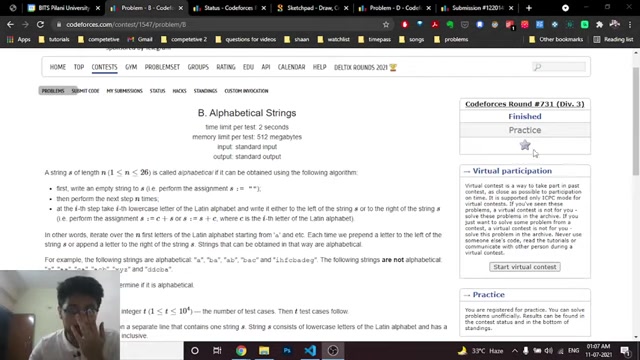
The 'Alphabetical Strings' problem
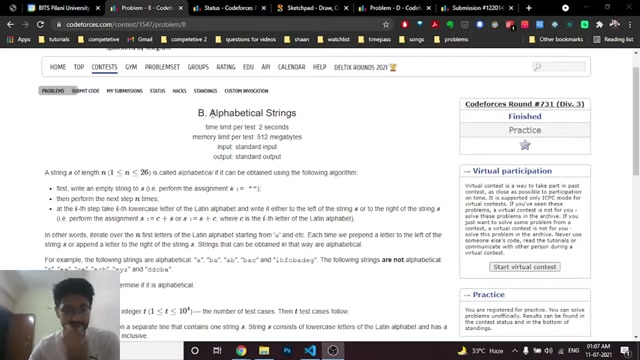
defines an alphabetical string as one that can be built using a specific algorithm. You start with an empty string, then iteratively add lowercase letters from 'a' up to a certain letter. At each step, you have the choice of adding the letter to the left or right end of the current string. The string's length, n, ranges from 1 to 26 (inclusive).
For instance, 'a', 'ba', 'ab', 'bac', and 'ihfcbadeg' are all alphabetical strings. Conversely, 'z', 'ayya', and 'dsdciba' are not. The challenge is: given a string, determine if it's alphabetical according to this definition.
This problem requires a deep understanding of string manipulation and algorithmic thinking. A key insight is to reverse the process and try to deconstruct the given string back to its origin – an empty string or the single character 'a'. This is where the deque data structure shines, allowing us to efficiently add and remove characters from both ends.
Breaking Down the Algorithm
The algorithm essentially provides a recipe for creating alphabetical strings. Understanding it is crucial for devising a solution to the problem. Here's a formal breakdown:
- Initialization: Start with an empty string s.
- Iteration: Repeat the following n times, where n is the desired length of the string:
- Let c be the i-th lowercase letter of the Latin alphabet (starting from 'a').
- Append c to either the left or right of the string s.
It’s important to note that the string must be composed of consecutive alphabetical characters starting from 'a'. That is, 'a', then 'b', then 'c', and so on, up to a certain limit.
Analyzing the constraints – a maximum string length of 26 – suggests that an efficient algorithm is possible. Exhaustive search might be too computationally expensive, but leveraging data structures can offer a more optimized solution. The core idea is to work backward, checking if we can iteratively remove characters from the ends of the string until we are left with an empty string or the character 'a'.
Deque: The Ideal Data Structure
Why Choose a Deque?
A deque (double-ended queue) is a generalized queue that allows insertion and deletion of elements from both the front and the rear
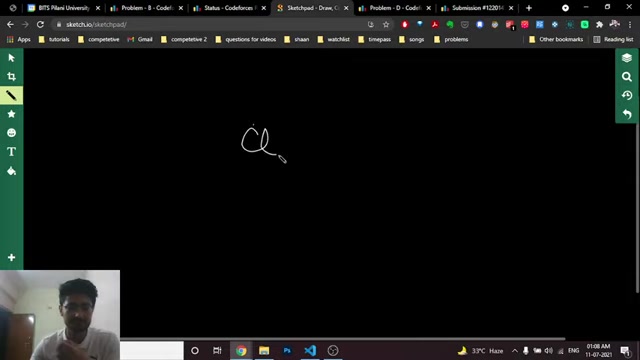
. This bi-directional capability makes it an ideal choice for solving the 'Alphabetical Strings' problem. We need to simulate adding (and, in reverse, removing) characters from both ends of the string, a perfect fit for the deque’s functionality.
Think of a deque as a dynamic array that can grow or shrink at both ends. Standard operations include:
push_front(x): Inserts element x at the front of the deque.push_back(x): Inserts element x at the rear of the deque.pop_front(): Removes the element at the front of the deque.pop_back(): Removes the element at the rear of the deque.front(): Accesses the element at the front of the deque.back(): Accesses the element at the rear of the deque.empty(): Checks if the deque is empty.size(): Returns the number of elements in the deque.
With these operations, we can easily simulate the construction and deconstruction of alphabetical strings, which is essential for solving this problem efficiently.
Algorithm Implementation with Deque
To solve the 'Alphabetical Strings' problem using a deque, we will follow these steps:
-
Initialization:
- Read the input string s.
- Create a deque of characters dq.
- Push all characters of s into the deque dq.
- Find the maximum character in the string s. This will be our starting point for validation.
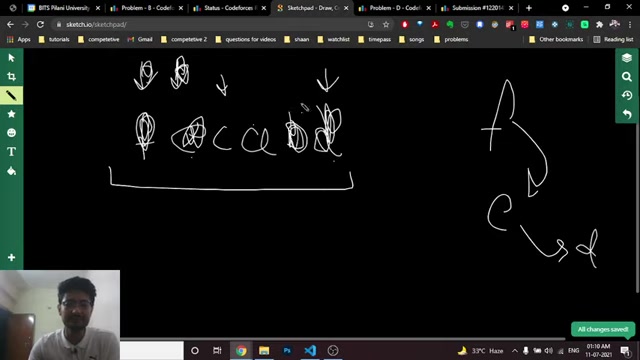
Because, we will be going from that character to the beginning.
-
Validation:
- Iterate from the maximum character down to 'a'.
- At each iteration, check if the front or back of the deque matches the current character.
- If the front matches, pop the front. If the back matches, pop the back.
- If neither matches, the string is not alphabetical; return false.
-
Termination:
- If the deque is empty after iterating through all characters down to 'a', the string is alphabetical; return true.
- If the deque is not empty or any character fails to match during iteration, the string is not alphabetical; return false.
By following this approach, we can efficiently determine whether a given string is alphabetical according to the problem's definition. A step-by-step guide is given below in How to Use module.
Consider the string “fecàbd”. We first identify ‘f’ as the maximum character. We then attempt to match ‘f’ at either end of the deque. If matched, we pop the corresponding end and proceed to ‘e’, and so on. If, at any point, we cannot find the expected character at either end, or if the deque isn't empty when reaching 'a', we conclude it's not an alphabetical string.
Core Features of codeforces
Key features to take into consideration for codeforces
Codeforces has been known to be a great platform for programming. This section presents the key features of codeforces:
-
Regular Contests: Codeforces hosts regular competitive programming contests. These contests are typically held several times a month and offer a variety of problems with varying difficulty levels. Participating in these contests allows you to test your skills, improve your problem-solving abilities, and compete against other programmers from around the world.
-
Problem Archive: The platform maintains an extensive archive of past contest problems. This archive is a valuable resource for practicing and improving your skills. Problems are categorized by difficulty, topic, and contest, making it easy to find problems that suit your needs.
-
Educational Resources: Codeforces provides a wealth of educational resources to help you learn new concepts and improve your programming skills. These resources include tutorials, articles, and problem sets covering a wide range of topics, such as data structures, algorithms, and mathematical techniques.
-
Community Features: The platform fosters a vibrant community of programmers. Users can connect with each other, share their knowledge, and collaborate on projects through forums, blogs, and user profiles. This community support can be invaluable for learning and growth.
-
Rating System: Codeforces uses a rating system to track the performance of its users. Your rating is updated after each contest based on your performance. This rating system provides a measure of your skill level and allows you to compare yourself to other programmers.
-
Practice and Training: The platform offers various tools and features to help you practice and train for contests. These include virtual contests, where you can simulate the experience of participating in a real contest, and the Codeforces Gym, where you can practice on past contest problems.
Use Cases
Different use cases for codeforces
Codeforces, as a competitive programming platform, serves numerous use cases for programmers of all levels. Whether you're a student honing your skills or a professional looking to stay sharp, Codeforces offers valuable opportunities.
- Skill Development: Codeforces is an excellent platform for developing and improving your programming skills. The regular contests and extensive problem archive provide ample opportunities to practice and learn new concepts.
By participating in contests and solving problems, you can enhance your problem-solving abilities, algorithmic thinking, and coding proficiency.
- Competitive Programming Training: If you're interested in competitive programming, Codeforces is a must-use platform. The contests are designed to mimic real-world programming competitions, providing valuable experience and training. The rating system allows you to track your progress and compete against other programmers of similar skill levels.
- Interview Preparation: Many companies use programming problems in their technical interviews. Codeforces can be a valuable resource for preparing for these interviews. The problem archive contains a wide variety of problems that are similar to those found in technical interviews. By practicing these problems, you can improve your chances of success in your job search.
- Staying Sharp: Even if you're not actively participating in contests, Codeforces can be a great way to stay sharp and keep your programming skills up-to-date. The problem archive provides a constant source of new challenges, and the educational resources can help you learn about new technologies and techniques.
- Community Engagement: Codeforces provides a platform for connecting with other programmers, sharing your knowledge, and collaborating on projects. The forums and blogs can be great resources for learning new things and getting help with your coding problems. By engaging with the community, you can expand your network and build valuable relationships.


Most people like





































Report
Please select a reason for reporting
- 13 Reasons to Switch from Snapchat to Text Messaging
- 7 Powerful Speech to Text Apps to Boost Productivity
- 10 Best Speech to Text Tools for Effortless Transcription
- 13 Free Tools to Easily Transcribe Audio to Text
- 15 Surprising Ways Google's Speech-to-Text Boosts Productivity
- 7 Best Free Online Audio to Text Transcription Tools
- 9 Tips to Transcribe Speech to Text Faster and Better
- 13 Best Speech to Text Software for Windows 10 in 2023
- 7 Tips for Choosing the Best Transcriber for Audio to Text
- 11 Reasons Why Dragon Speech-to-Text Apps are Game-Changers
- 6 Secrets to Enhance Your Speech to Text Transcription
- 6 Brilliant Ways to Boost Productivity with Talk-to-Text on Your MacBook
- 6 Ways Transcription Software Converts Audio to Text
- 8 Tips to Transcribe Speech to Text Like a Pro
- 6 Reasons IBM Watson Speech to Text is a Game-Changer
- 14 Powerful Ways Talk-to-Text Improves Your Workflow
- 12 Top Windows Speech-to-Text Software for Efficient Transcription
- 12 Game-Changing Benefits of Apple's Speech to Text Technology
- 9 Powerful Use Cases for AWS Speech to Text Technology
- 10 Easy Steps to Transcribe YouTube Videos to Text
- transcription audio en texte
- online audio transcription
- free audio file transcription
- free ai audio transcription
- audio transcription service
- audio transcription online free
- audio transcription free online
- audio to transcription software
- audio and transcript
- ai audio transcription free
- voice recording to text converter
- translate voice recording to text
- record voice to text
- audio recording to text converter
- voice recording and transcription
- chatgpt voice to text
- gmail voice to text
- speech to text reader
- speech to text ai free
- speech to talk
- Twitter/X API Alternatives for AI Agents and Developers in 2026
- ChatGPT Knows Ford. It Just Doesn't Quote Ford
- Meshy AI: How to Create 3D Models from Text and Images
- How SEO and Marketing Dashboards Empower Agencies to Drive Results
- How to Use AI Tools to Find Internal Linking Opportunities Across a Business Website
- Discover Your Perfect Haircut with AI Hairstyle Apps
- Free Reputation Calculator Tools: How They're Adapting to Score AI Visibility, Not Just Rankings
- Design Professional Flyers for Free on Your Phone
- Best Free Flyer Maker Apps for Android: Design Like a Pro
- How to Know If Your Business Is Ready for an AI Customer Service Agent
- Download Website Source Code: A Comprehensive Guide
- Top 10 AI Marketing Tools Content Creators Need in 2025
- Top 5 Cold Email Software: Maximize Your Outreach in 2025
- Testing Audio-Visual Realism: An In-Depth Look at Modern Facial Re-Animation
- Inside Motion Sync: A Real-World Test of AI Character Animation
- Twitter/X API Alternatives for AI Agents and Developers in 2026
- Your Business Data Could Be Worth Up to $4M. Find Out Without Uploading a Single File.
- Can an eSIM Plan Save You Time During Travel Setup?
- AI Video Editor Review: A Hands-On Look at Prompt-Based Video Editing
- Keep Characters Consistent Across Scenes With Image-to-Video AI

Copyright ©2026 toolify