































Mastering PC Part Selection


Table of Contents
- Introduction to PC Part Picking
- Understanding Budget Allocation 💰
- Selecting the CPU and Motherboard Combo 💻
- Navigating RAM Choices 🧠
- Storage Solutions: SSDs vs. HDDs 🛠️
- Graphics Card Selection: Balancing Power and Budget 🎮
- Deciphering Power Supply Requirements ⚡
- The Role of the Case: Form vs. Function 📦
- Building for Performance: Cooling and Airflow 🌬️
- Finalizing the Build: Accessories and Add-ons 🛒
Introduction to PC Part Picking
Hey there, tech enthusiasts! Today, we're diving into the intricate world of PC building. Whether you're a seasoned pro or a newbie in the realm of hardware, understanding how to pick the right parts for your rig is crucial. So, buckle up as we embark on a journey through the maze of components and considerations.
Understanding Budget Allocation 💰
Let's kick things off by addressing the elephant in the room: budget. Deciding how much to spend on each component requires careful consideration. Typically, you'll want to allocate a significant portion of your budget to key components like the CPU, GPU, and RAM, while ensuring you have enough left over for peripherals and accessories.
Pros:
- Allows for informed decision-making.
- Ensures optimal performance within budget constraints.
Cons:
- Requires thorough research and planning.
- May involve trade-offs between performance and cost.
Selecting the CPU and Motherboard Combo 💻
The heart and soul of any PC build lies in its CPU and motherboard combo. This dynamic duo determines the system's performance, compatibility, and upgradability. When selecting these components, factors like socket type, chipset compatibility, and future-proofing play pivotal roles.
Pros:
- Provides the foundation for the entire system.
- Enables seamless integration of other components.
Cons:
- Compatibility issues may arise if not carefully chosen.
- Upgrading may require replacing both CPU and motherboard.
Navigating RAM Choices 🧠
RAM, or Random Access Memory, is your system's short-term memory. Choosing the right RAM involves considerations such as capacity, speed, and latency. Strike a balance between performance and affordability by opting for modules that meet your system's requirements without breaking the bank.
Pros:
- Enhances system responsiveness and multitasking capabilities.
- Offers flexibility for future upgrades.
Cons:
- Faster RAM comes at a premium price.
- Excessive capacity may be unnecessary for casual users.
Storage Solutions: SSDs vs. HDDs 🛠️
Storage is where your data resides, and choosing between Solid State Drives (SSDs) and Hard Disk Drives (HDDs) can be daunting. SSDs offer blazing-fast speeds but come at a higher cost per gigabyte, while HDDs provide ample storage at a fraction of the price. Consider your storage needs and budget constraints when making this decision.
Pros:
- SSDs deliver superior speed and performance.
- HDDs offer cost-effective storage solutions for bulk data.
Cons:
- SSDs are more expensive per gigabyte compared to HDDs.
- HDDs are prone to mechanical failures and slower read/write speeds.
Graphics Card Selection: Balancing Power and Budget 🎮
The graphics card is the workhorse of any gaming rig, translating visual data into stunning imagery. When choosing a GPU, factors like performance, price-to-performance ratio, and future-proofing should be top of mind. Strike a balance between raw power and affordability to ensure an immersive gaming experience without breaking the bank.
Pros:
- Delivers unparalleled gaming performance and visual fidelity.
- Enables smooth gameplay and high frame rates.
Cons:
- High-end GPUs come with a hefty price tag.
- Availability may be limited due to market demand and supply constraints.
Deciphering Power Supply Requirements ⚡
The power supply unit (PSU) is often overlooked but plays a critical role in ensuring system stability and reliability. When selecting a PSU, factors like wattage, efficiency rating, and modular vs. non-modular design come into play. Choose a PSU that meets your system's power requirements while allowing for future upgrades.
Pros:
- Provides reliable and stable power delivery to all components.
- Ensures efficient energy utilization and reduces heat output.
Cons:
- Overspending on wattage may lead to unnecessary expenses.
- Low-quality PSUs can jeopardize system integrity and performance.
The Role of the Case: Form vs. Function 📦
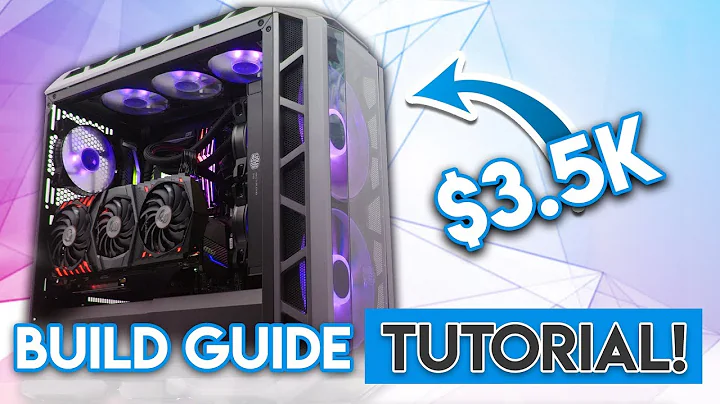
While often overshadowed by more glamorous components, the PC case plays a crucial role in housing and protecting your hardware. When selecting a case, factors like form factor, airflow, cable management, and aesthetics should be considered. Choose a case that strikes the right balance between functionality and style, ensuring optimal airflow and component compatibility.
Pros:
- Provides housing and protection for internal components.
- Allows for efficient airflow and cooling through strategic design features.
Cons:
- Aesthetics may prioritize over functionality in some cases.
- Limited space and poor cable management can hinder build quality.
Building for Performance: Cooling and Airflow 🌬️
Effective cooling is essential for maintaining optimal performance and prolonging the lifespan of your components. Consider investing in aftermarket CPU coolers, case fans, and liquid cooling solutions to keep temperatures in check during intense gaming Sessions or CPU-intensive tasks. Prioritize airflow optimization to prevent thermal throttling and ensure stable operation under load.
Pros:
- Improves system stability and longevity.
- Reduces the risk of overheating and component failure.
Cons:
- Additional cooling solutions can add to overall build cost.
- Overclocking may void warranties and increase risk of component damage.
Finalizing the Build: Accessories and Add-ons 🛒
With the core components in place, it's time to add the finishing touches to your build. Consider accessories like RGB lighting, custom cables, and ergonomic peripherals to personalize your setup and enhance user experience. Don't forget essential add-ons like thermal paste, cable ties, and anti-static wrist straps to streamline the building process and ensure proper assembly.
Pros:
- Adds aesthetic Flair and customization options to your build.
- Enhances functionality and ergonomics for an immersive computing experience.
Cons:
- Additional expenses may exceed budget constraints.
- Compatibility issues with aftermarket accessories may arise.
Highlights
- Budget Allocation: Strike a balance between performance and affordability by allocating budget wisely.
- Component Compatibility: Ensure seamless integration of
















Most people like































Report
Please select a reason for reporting
- 13 Reasons to Switch from Snapchat to Text Messaging
- 7 Powerful Speech to Text Apps to Boost Productivity
- 10 Best Speech to Text Tools for Effortless Transcription
- 13 Free Tools to Easily Transcribe Audio to Text
- 15 Surprising Ways Google's Speech-to-Text Boosts Productivity
- 7 Best Free Online Audio to Text Transcription Tools
- 9 Tips to Transcribe Speech to Text Faster and Better
- 13 Best Speech to Text Software for Windows 10 in 2023
- 7 Tips for Choosing the Best Transcriber for Audio to Text
- 11 Reasons Why Dragon Speech-to-Text Apps are Game-Changers
- 6 Secrets to Enhance Your Speech to Text Transcription
- 6 Brilliant Ways to Boost Productivity with Talk-to-Text on Your MacBook
- 6 Ways Transcription Software Converts Audio to Text
- 8 Tips to Transcribe Speech to Text Like a Pro
- 6 Reasons IBM Watson Speech to Text is a Game-Changer
- 14 Powerful Ways Talk-to-Text Improves Your Workflow
- 12 Top Windows Speech-to-Text Software for Efficient Transcription
- 12 Game-Changing Benefits of Apple's Speech to Text Technology
- 9 Powerful Use Cases for AWS Speech to Text Technology
- 10 Easy Steps to Transcribe YouTube Videos to Text
- transcription audio en texte
- online audio transcription
- free audio file transcription
- free ai audio transcription
- audio transcription service
- audio transcription online free
- audio transcription free online
- audio to transcription software
- audio and transcript
- ai audio transcription free
- voice recording to text converter
- translate voice recording to text
- record voice to text
- audio recording to text converter
- voice recording and transcription
- chatgpt voice to text
- gmail voice to text
- speech to text reader
- speech to text ai free
- speech to talk
- 2026别再为 Claude多花冤枉钱了,ClaudeAPI.com国内直连让我每月省下 ¥780
- 5 Best AI Chat Apps for Mac in 2026
- What Makes Happy Horse 1.0 Different from Basic AI Video Tools
- Key Features of Happy Horse 1.0 AI Video Generator You Should Know
- 爱翻译功能全面解析:核心优势及主要功能
- Best AI Humanizers for SEO Content Writers in 2026
- Seedance 2.0 Prompting 101: The 6 Parameters You Need to Master (by Topview)
- Top 5 AI Text-to-Video Generators: A 2025 Review
- Create Professional UGC Videos with AI: Introducing Magic Ads
- Top 5 Browsers for Managing Multiple Accounts in 2026: What Actually Works
- Transforming AI Videos: A Comprehensive Guide to 3D Spatial Conversion
- We Tested 15+ AI Headshot Generators - Here's the Verdict
- AI Dropshipping in 2026: How Automation Is Changing Ecommerce
- Mastering Meeting Minutes: A Comprehensive Guide for Efficiency
- The Dangers of Deepfake for K-Pop: From Idol to Porn Star
- Key Metrics Used in AI Benchmarking for Enterprise Systems
- Top Free AI Video Generators: Latest Tools Compared!
- Top 5 Free AI Video Generators: Unlimited Options in 2025
- Top AI Video Generators: Ranking the Best Tools for 2025
- Top AI Video Generators: Create Stunning Videos Effortlessly

Copyright ©2026 toolify