































Table of Contents
- Key Points
- Using OpenAI's AI Text Classifier for Code Detection
- Real-World Examples and Case Studies
- Step-by-Step Guide to Using the AI Text Classifier
- Pros and Cons of Using OpenAI's AI Text Classifier
- FAQ
- Related Questions



Using OpenAI's AI Text Classifier for Code Detection
Overview of OpenAI's AI Text Classifier
OpenAI's AI Text Classifier is a valuable tool for distinguishing between human-written and AI-generated text, including code. The AI Text Classifier is a fine-tuned GPT model that predicts how likely it is that a piece of text was generated by AI from a variety of sources, such as ChatGPT.
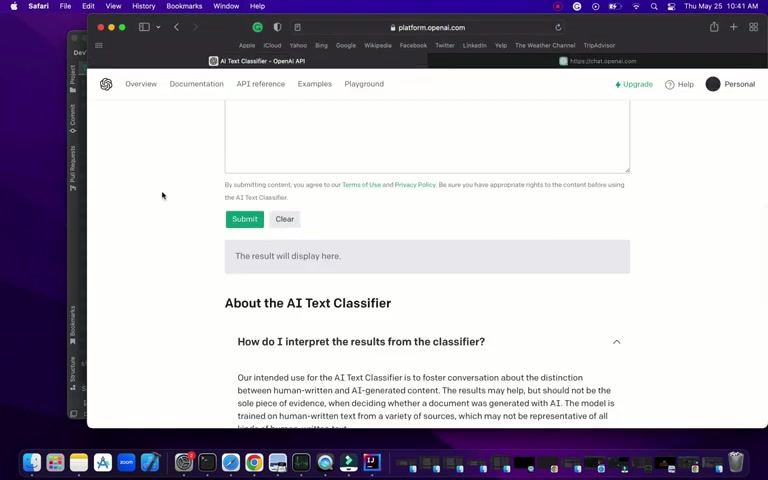
This classifier is available as a free tool designed to foster discussion on AI literacy. This classifier is available as a free tool to spark discussions on AI literacy. For more information on ChatGPT’s capabilities, limitations, and considerations in educational settings, visit their documentation.
It analyzes the input text and provides a probability score indicating the likelihood that it was generated by AI. This score can help developers quickly assess whether a code fragment might have originated from an AI model like ChatGPT. The classifier’s analysis provides insights into the origin of the text, helping maintain transparency and accountability in code development projects. However, developers must be aware of its limitations to avoid misinterpretations and ensure reliable results.
One of the key advantages of the AI Text Classifier is its accessibility. It can be easily integrated into existing development workflows, allowing developers to quickly check code fragments for AI origin. The tool is designed to be user-friendly, with a straightforward interface that provides clear results. By incorporating the classifier into their processes, developers can enhance code review and ensure that all code meets the required standards for quality and security.
How to Use the AI Text Classifier for Code
Using OpenAI's AI Text Classifier for code detection is a straightforward process. First, navigate to the AI Text Classifier website.
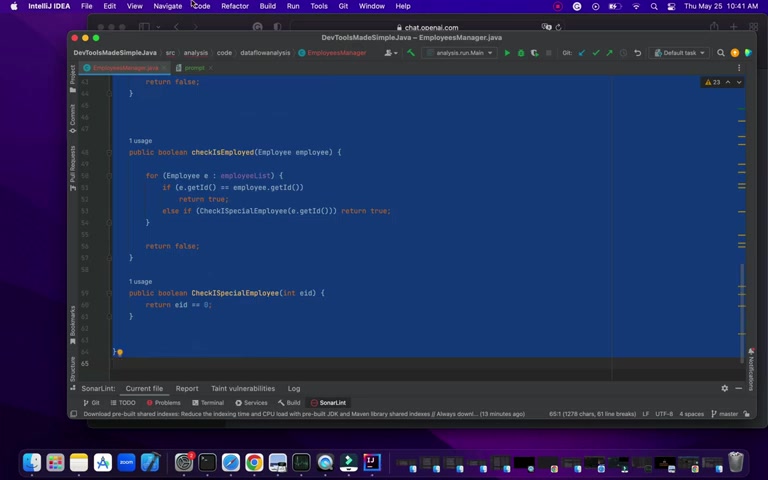
Once on the site, you will find a text input area where you can paste the code fragment you want to analyze. It’s essential to ensure that the code is properly formatted and free of any extraneous characters that might affect the classifier's accuracy.
After pasting the code, submit it for analysis. The classifier will process the text and provide a result indicating the likelihood that the code was generated by AI. The result is presented as a probability score, typically ranging from 'very unlikely' to 'likely AI-generated'. It's important to note that the classifier is not always accurate and can sometimes mislabel human-written code as AI-generated or vice versa.
To get the most accurate results, it's recommended to use the classifier in conjunction with other code review practices. Human review is crucial for verifying the classifier's findings and ensuring that the code meets the required standards for quality, security, and compliance. By combining automated tools with human expertise, developers can effectively identify and manage AI-generated code in their projects. Remember to check their documentation for more details.
Real-World Examples and Case Studies
Analyzing Human Written Code
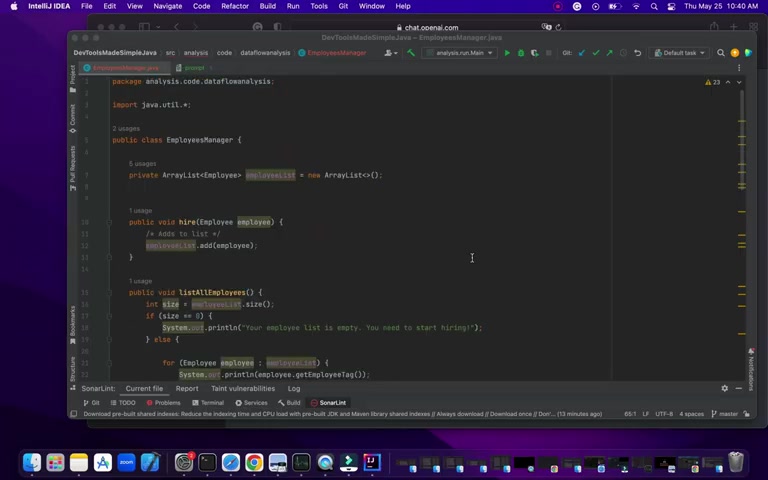
Analyzing Human Written Code by using OpenAI's AI Text Classifier. The individual copied a fragment of human written code into the classifier. This code fragment includes boolean, return statements, and other things. This is how to test the classifier to tell whether it can distinguish human written code versus AI generated code. The classifier output that the text is unclear if it is AI-generated. The classifier was not sure about this set of code. The individual notes that this is interesting.
Testing AI Generated Code
The individual pastes into ChatGPT instructions to create manager class.
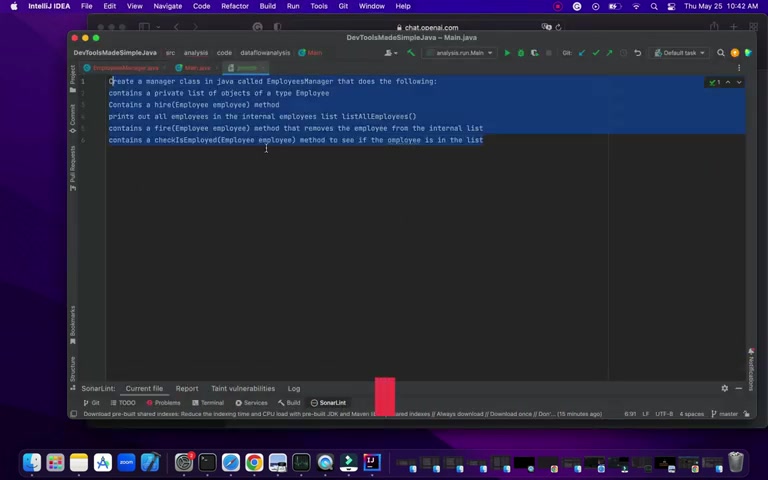
The instructions provide the manager class with details such as contains a private list of objects, hire, fire, and check is employee method. After generating this code the individual tests it to see if the classifier can correctly identify it. The individual copys the AI generated code into the classifier. Because the code was less then one thousand characters the first time, the AI could not make an accurate detection. To ensure a more accurate result, the individual will add the additional test driver code that AI made in conjunction with the original generated code. Once done the classifier identifies the set of code as likely AI-generated. The individual notes that this was a successful detection.
Testing Human Written Code Again
To further test the model. The individual copies more human written code, this time all related to phone number generation to be added to an employee class. This set of code included the creation of strings. Upon analysis by the classifier, it identified the text as unclear if it is AI-generated. The individual says this is thought provoking.
Step-by-Step Guide to Using the AI Text Classifier
Accessing the AI Text Classifier
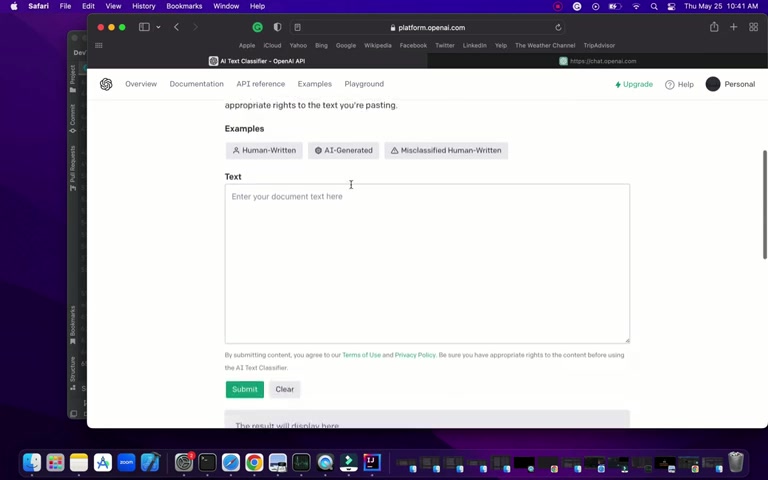
- Navigate to the OpenAI Platform: Open your web browser and go to the OpenAI AI Text Classifier webpage.
- Locate the Text Input Area: On the AI Text Classifier page, find the text input area labeled 'Enter your document text here.'
Pasting the Code Fragment
- Copy the Code: From your code editor, copy the code fragment you want to analyze.
- Paste into the Input Area: Paste the copied code into the text input area on the OpenAI platform. Ensure the code is correctly formatted.
Submitting for Analysis
- Click the Submit Button: After pasting the code, click the 'Submit' button below the input area. The classifier will begin analyzing the text.
- Wait for the Results: The analysis may take a few moments. Once completed, the results will be displayed below the submit button.
Interpreting the Results
- Review the Output: The classifier will provide a statement indicating the likelihood that the text is AI-generated. The possible results include:
- Very Unlikely AI-Generated
- Unlikely AI-Generated
- Unclear if it is AI-Generated
- Possibly AI-Generated
- Likely AI-Generated
- Consider the Score: Use the output to assess the likelihood of AI involvement in generating the code. Remember to consider the classifier's limitations.





Most people like






































Report
Please select a reason for reporting
- 13 Reasons to Switch from Snapchat to Text Messaging
- 7 Powerful Speech to Text Apps to Boost Productivity
- 10 Best Speech to Text Tools for Effortless Transcription
- 13 Free Tools to Easily Transcribe Audio to Text
- 15 Surprising Ways Google's Speech-to-Text Boosts Productivity
- 7 Best Free Online Audio to Text Transcription Tools
- 9 Tips to Transcribe Speech to Text Faster and Better
- 13 Best Speech to Text Software for Windows 10 in 2023
- 7 Tips for Choosing the Best Transcriber for Audio to Text
- 11 Reasons Why Dragon Speech-to-Text Apps are Game-Changers
- 6 Secrets to Enhance Your Speech to Text Transcription
- 6 Brilliant Ways to Boost Productivity with Talk-to-Text on Your MacBook
- 6 Ways Transcription Software Converts Audio to Text
- 8 Tips to Transcribe Speech to Text Like a Pro
- 6 Reasons IBM Watson Speech to Text is a Game-Changer
- 14 Powerful Ways Talk-to-Text Improves Your Workflow
- 12 Top Windows Speech-to-Text Software for Efficient Transcription
- 12 Game-Changing Benefits of Apple's Speech to Text Technology
- 9 Powerful Use Cases for AWS Speech to Text Technology
- 10 Easy Steps to Transcribe YouTube Videos to Text
- transcription audio en texte
- online audio transcription
- free audio file transcription
- free ai audio transcription
- audio transcription service
- audio transcription online free
- audio transcription free online
- audio to transcription software
- audio and transcript
- ai audio transcription free
- voice recording to text converter
- translate voice recording to text
- record voice to text
- audio recording to text converter
- voice recording and transcription
- chatgpt voice to text
- gmail voice to text
- speech to text reader
- speech to text ai free
- speech to talk
- Meshy AI: How to Create 3D Models from Text and Images
- How SEO and Marketing Dashboards Empower Agencies to Drive Results
- How to Use AI Tools to Find Internal Linking Opportunities Across a Business Website
- Discover Your Perfect Haircut with AI Hairstyle Apps
- Free Reputation Calculator Tools: How They're Adapting to Score AI Visibility, Not Just Rankings
- Design Professional Flyers for Free on Your Phone
- Best Free Flyer Maker Apps for Android: Design Like a Pro
- How to Know If Your Business Is Ready for an AI Customer Service Agent
- Revolutionizing Storytelling: From Novels to Screenplays with AI
- Create Engaging Animated Explainer Videos with a Free AI Tool
- Meshy AI: How to Create 3D Models from Text and Images
- ASOMobile Helps Teams Benchmark App Store Screenshots Against Competitors
- How to Match LMS Software With Your Organization's Training Plan
- Revolutionizing Email Marketing Agency with AI
- How to Convert BTC to HNT
- Unleashing the Power of AI: Cognizant's Roadmap for Transformation
- Frame to Video Review: A Practical Look at Turning Two Still Frames Into Motion
- NVIDIA NIM: Revolutionizing Supply Chain Data Analysis with AI
- Top AI Tools That Help Brands Stand Out Offline (Not Just Online)
- Top 5 Cold Email Software: Maximize Your Outreach in 2025

Copyright ©2026 toolify