































Table of Contents
- Key Points
- Exploring AI Through Gamification
- How to Use the Games
- AI Gamification Pros and Cons
- Use Cases
- FAQ
- Related Questions



Exploring AI Through Gamification
The Power of Gamification in AI Education
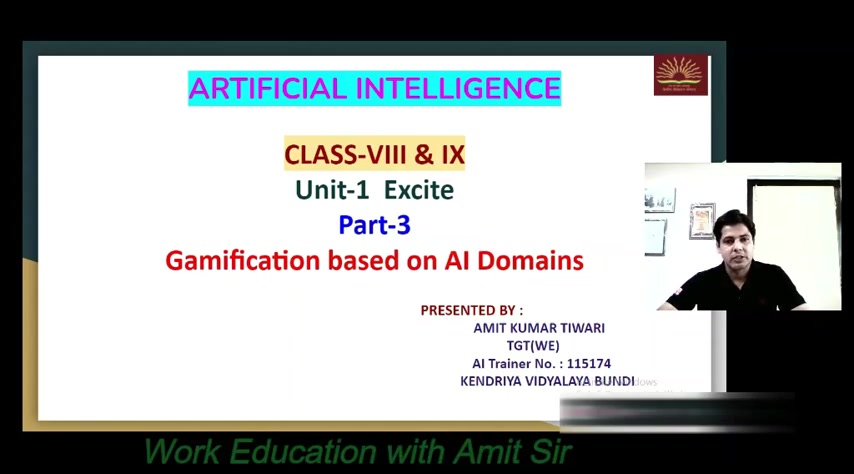
Gamification leverages game elements and game design techniques in non-Game contexts. When applied to AI education, it transforms abstract concepts into tangible and interactive experiences. This makes learning more engaging, memorable, and effective. By embedding AI principles into games, learners can actively participate in the learning process, fostering a deeper understanding and appreciation of AI's capabilities. This approach is particularly beneficial for students in the early stages of their AI education, as it sparks curiosity and provides a solid foundation for future learning.
The core idea is to make learning AI fun and accessible.
Game 1: Rock Paper Scissors (Data-Driven AI)
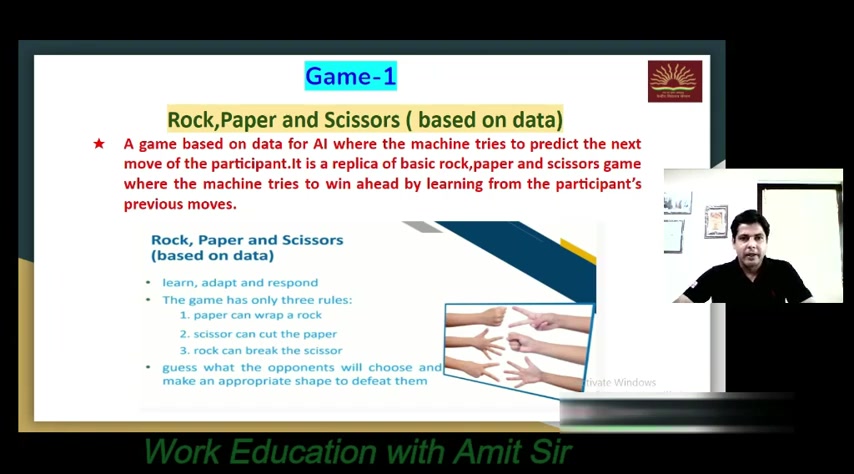
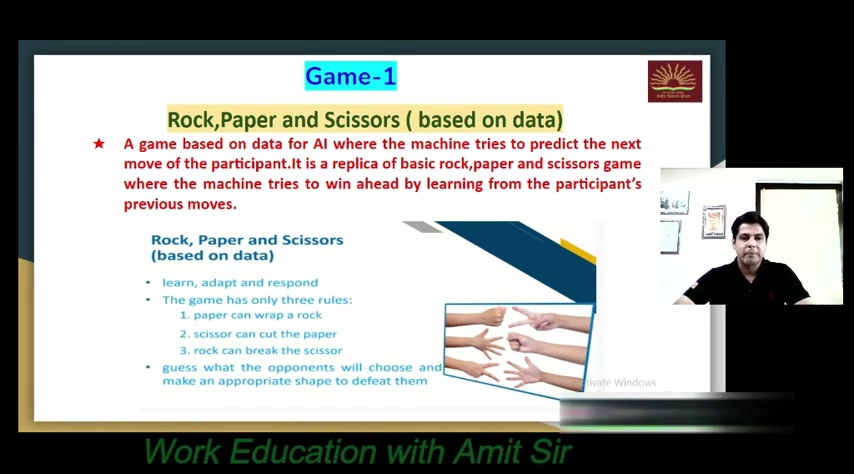
This classic game is reimagined with an AI twist. The Rock Paper Scissors game isn't just about random choices; it’s about data analysis and prediction. In this version, the AI tries to predict the participant's next move based on their previous moves. This illustrates how AI can learn from data and adapt its strategy to increase its chances of winning.
The AI employs algorithms that learn, adapt, and respond to the participant's patterns. It is a basic yet powerful demonstration of machine learning. By analyzing the data from the participant's previous moves, the AI attempts to identify patterns and predict future actions. This process mirrors how AI systems learn and improve over time with more data.
The Rules of the Game are Simple:
- Paper can wrap a rock.
- Scissors can cut the paper.
- Rock can break the scissors.
Website: https://www.afiniti.com/corporate/rock-paper-scissors
Objective: Attain a score of 20 against AI scores of 20 in the game of Rock, Paper & Scissors! This shows how to get started with data analysis for beginners.
How the AI Learns and Adapts in Rock Paper Scissors
The machine in this game uses historical data of your choices to try and predict your next move. You can 'trick' it by making the same choice a few times and then switching over to another, because then, with the new strategy, the AI would not have time to change its tactics. Over a period of time though, it would start guessing what you choose more precisely. Therefore, this game really demonstrates how AI can adapt and respond, making it fun for all the players involved.
Game 2: Mystery Animal (Natural Language Processing)
This game is based on Natural Language Processing (NLP), where the participant has to guess the animal by asking a maximum of 20 questions to the AI. The animal randomly gets selected for each game by AI, and the machine replies in either 'yes' or 'no'.
The game mirrors a simple twenty questions format. One player (in this case, the computer) pretends to be an animal, and the other player can ask up to 20 yes/no questions. Based on the answers, the player must guess the name of the animal. This is a simple game of deductive reasoning using AI Natural language Processing techniques.
Website: https://mysteryanimal.withgoogle.com/
Key Principles of Mystery Animal Game's NLP
By playing Mystery Animal, you engage with AI that processes and understands human language. The AI uses NLP techniques to analyze your questions and provide relevant answers. This demonstrates how machines can understand and respond to natural language, a core component of many AI applications such as chatbots and virtual assistants.
- The AI in Mystery Animal utilizes a Speech Recognition model.
- The game showcases AI working with human languages
- The main game premise is to guess the Mystery Animal in 20 yes/no questions.
Game 3: Emoji Scavenger Hunt (Computer Vision)
The Emoji Scavenger Hunt is a game based on computer vision, where the machine initiates the game by showing an emoji. The participant is expected to show a similar object in front of the camera while the machine keeps on guessing what is being shown to it. This is a practical application of computer vision, where the AI is trained to recognize and identify objects from visual input.
Website: https://emojiscavengerhunt.withgoogle.com/
Objective: Identify at least 6 objects correctly in a row!
The game also consists of the following:
- Finding the objects that match certain emojis within a time limit.
- Using a camera to click the images.
Computer vision empowers AI to 'see' and interpret the visual world, opening up possibilities like Image Recognition, object detection, and autonomous navigation. This is used across different industries such as logistics and transport.








Most people like

































Report
Please select a reason for reporting
- 13 Reasons to Switch from Snapchat to Text Messaging
- 7 Powerful Speech to Text Apps to Boost Productivity
- 10 Best Speech to Text Tools for Effortless Transcription
- 13 Free Tools to Easily Transcribe Audio to Text
- 15 Surprising Ways Google's Speech-to-Text Boosts Productivity
- 7 Best Free Online Audio to Text Transcription Tools
- 9 Tips to Transcribe Speech to Text Faster and Better
- 13 Best Speech to Text Software for Windows 10 in 2023
- 7 Tips for Choosing the Best Transcriber for Audio to Text
- 11 Reasons Why Dragon Speech-to-Text Apps are Game-Changers
- 6 Secrets to Enhance Your Speech to Text Transcription
- 6 Brilliant Ways to Boost Productivity with Talk-to-Text on Your MacBook
- 6 Ways Transcription Software Converts Audio to Text
- 8 Tips to Transcribe Speech to Text Like a Pro
- 6 Reasons IBM Watson Speech to Text is a Game-Changer
- 14 Powerful Ways Talk-to-Text Improves Your Workflow
- 12 Top Windows Speech-to-Text Software for Efficient Transcription
- 12 Game-Changing Benefits of Apple's Speech to Text Technology
- 9 Powerful Use Cases for AWS Speech to Text Technology
- 10 Easy Steps to Transcribe YouTube Videos to Text
- transcription audio en texte
- online audio transcription
- free audio file transcription
- free ai audio transcription
- audio transcription service
- audio transcription online free
- audio transcription free online
- audio to transcription software
- audio and transcript
- ai audio transcription free
- voice recording to text converter
- translate voice recording to text
- record voice to text
- audio recording to text converter
- voice recording and transcription
- chatgpt voice to text
- gmail voice to text
- speech to text reader
- speech to text ai free
- speech to talk
- How SEO and Marketing Dashboards Empower Agencies to Drive Results
- How to Use AI Tools to Find Internal Linking Opportunities Across a Business Website
- Discover Your Perfect Haircut with AI Hairstyle Apps
- Free Reputation Calculator Tools: How They're Adapting to Score AI Visibility, Not Just Rankings
- Design Professional Flyers for Free on Your Phone
- Best Free Flyer Maker Apps for Android: Design Like a Pro
- How to Know If Your Business Is Ready for an AI Customer Service Agent
- Revolutionizing Storytelling: From Novels to Screenplays with AI
- Create Engaging Animated Explainer Videos with a Free AI Tool
- Stop Multi-Subscribing: Benchmark Top AI Visual Models in One Canvas
- ASOMobile Helps Teams Benchmark App Store Screenshots Against Competitors
- How to Match LMS Software With Your Organization's Training Plan
- Revolutionizing Email Marketing Agency with AI
- How to Convert BTC to HNT
- Unleashing the Power of AI: Cognizant's Roadmap for Transformation
- Frame to Video Review: A Practical Look at Turning Two Still Frames Into Motion
- NVIDIA NIM: Revolutionizing Supply Chain Data Analysis with AI
- Top AI Tools That Help Brands Stand Out Offline (Not Just Online)
- Top 5 Cold Email Software: Maximize Your Outreach in 2025
- Magic School AI: Revolutionizing Quiz & Assessment Generation

Copyright ©2026 toolify