































Table of Contents
- Key Points
- Understanding the Core Concepts of AI
- Emerging AI Technologies
- Leveraging AI Technologies: Use Cases
- The Benefits and Challenges of AI
- Frequently Asked Questions (FAQ)
- Related Questions


Understanding the Core Concepts of AI
What is Artificial Intelligence (AI)?

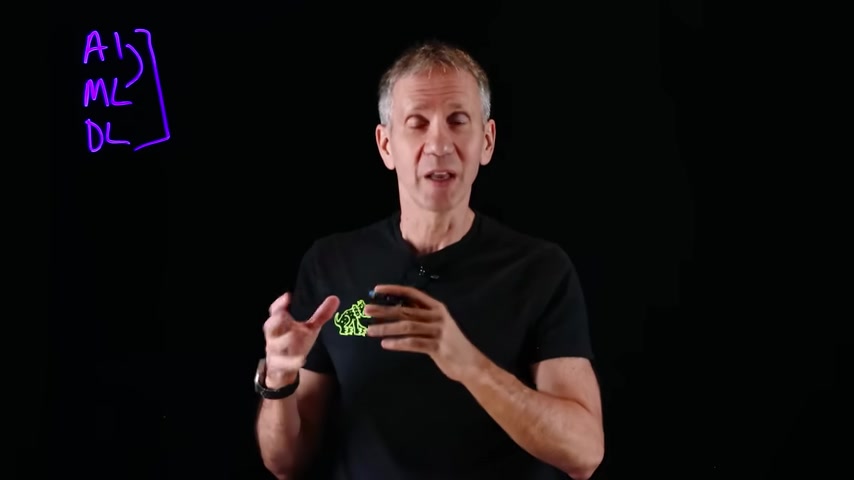
Artificial Intelligence (AI) at its core, represents the concept of machines mimicking human intelligence. The aim is to create systems that can perform tasks that typically require human intellect, such as problem-solving, learning, understanding natural language, and decision-making. The pursuit of AI has a rich history, dating back decades, with early attempts focusing on rule-based systems and expert systems. However, the field has dramatically evolved, leading to more sophisticated approaches. AI adoption began slowly, with many viewing it as a distant, futuristic concept. These early AI systems had limitations, struggling to handle complexity and uncertainty. It's about simulating, with a computer, human intelligence. Intelligences often thought of as the ability to learn to infer and to reason.
Keywords: Artificial Intelligence, AI, human intelligence, machine learning, problem-solving
Machine Learning (ML): A Subset of AI
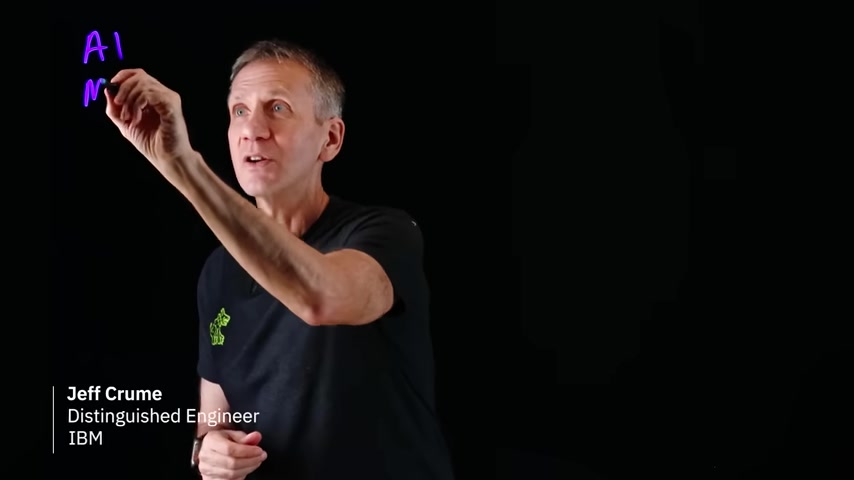
Machine Learning (ML) is a pivotal subset of Artificial Intelligence (AI). It empowers systems to learn from data without explicit programming. The underlying principle is to enable machines to identify patterns, make decisions, and improve their accuracy through experience, effectively learning from data sets. ML is about the machine learning. Instead of programming it give it lots of information and it observes things. Instead of needing the developer to hardcode everything, the system learns from its inputs. This approach contrasts with traditional programming, where every step must be pre-defined. This allows them to predict based on patterns.
Different types of machine learning algorithms exist, including supervised learning, unsupervised learning, and reinforcement learning.
- Supervised Learning: Requires labeled data for training, allowing the algorithm to learn a mapping function between input and output.
- Unsupervised Learning: Works with unlabeled data, aiming to discover patterns, structures, and relationships within the data.
- Reinforcement Learning: Trains an agent to make decisions in an environment to maximize a reward.
Keywords: Machine Learning, ML, algorithms, data, Supervised Learning, Unsupervised Learning, Reinforcement Learning.
Deep Learning (DL): The Next Evolution

Deep Learning (DL) is an advanced subset of Machine Learning (ML), employing artificial neural networks with multiple layers (deep neural networks). Inspired by the structure and function of the human brain, deep learning excels at extracting intricate patterns and representations from vast amounts of data. It’s called deep learning because we have multiple layers of those neural networks. With deep learning, we use neural networks that stimulate the way that the human brain works, in some cases we aren’t able to fully understand why we get to the results that we do.
These neural networks are composed of interconnected nodes (neurons) that process information and transmit it to subsequent layers. The 'depth' of the network refers to the number of layers, with each layer capable of learning different levels of abstraction. Deep Learning is used a lot with the foundation models.
Keywords: Deep Learning, DL, neural networks, deep neural networks, foundation models, human brain, patterns, representations.
Emerging AI Technologies
Generative AI: Creating New Content
Generative AI represents a significant leap in artificial intelligence, enabling machines to create new content, whether it be text, images, audio, or video. Generative AI isn’t really generating; these technologies are regurgitating existing information and putting it in different formats. It works in the same way new Music is made; every note has already been invented. With generative AI, you feed a large language model and from that language model you create new content. This capability stems from deep learning models trained on massive datasets, allowing them to understand and replicate underlying patterns and styles.
Generative AI isn’t really generative, they’re regurgitating existing information and putting it in different formats. For instance, Large Language Models can be trained to generate realistic text, mimicking the writing style of a particular author or creating original stories based on specific prompts. Generative AI is a useful space and there’s more to come!
Keywords: Generative AI, new content, large language models, text, images, audio, video, generative models.
Large Language Models (LLMs) and Foundation Models

Large Language Models (LLMs) are a specific type of deep learning model designed for language-based tasks. These models are trained on vast amounts of text data, enabling them to understand, generate, and manipulate human language. They are really really great at predictions, it’s kind of an auto complete, and can predict sentences, paragraphs, or entire documents. LLMs are used for machine learning. Foundation Models (FM) has really caused everyone to pay attention to AI.
Key capabilities of LLMs include:
- Natural Language Generation: Producing coherent and contextually relevant text.
- Text Summarization: Condensing large amounts of text into concise summaries.
- Question Answering: Providing accurate answers to questions based on the input text.
- Translation: Converting text from one language to another.
Foundation Models provide a base for other areas of AI. With LLMs being foundation models, there’s been an exponential leap in adoption.
Keywords: Large Language Models, LLMs, text data, Natural Language Generation, Text Summarization, Question Answering,Translation.
Deepfakes: The Power and Peril

Deepfakes represent a fascinating yet potentially dangerous application of deep learning. A Deepfake is new audio video and images and deepfakes can be used in entertainment situations and parodies. But there can also be a lot of cases of abuse. Deepfakes are synthetic media generated using DL techniques, enabling the creation of highly realistic fake videos or audio recordings that are difficult to distinguish from genuine content. This technology has significant implications for misinformation, propaganda, and reputation manipulation.
Creating deepfakes typically involves training deep learning models on large datasets of images and videos. The models learn to recognize and replicate facial expressions, speech patterns, and other visual and auditory characteristics.
It can be great if someone loses their voice; then you could type and you’d be able to hear it in their voice. But also there can be cases where that is abused.
Keywords: Deepfakes, synthetic media, misinformation, propaganda, reputation manipulation, video, audio, deep learning models.








Most people like


































Report
Please select a reason for reporting
- 13 Reasons to Switch from Snapchat to Text Messaging
- 7 Powerful Speech to Text Apps to Boost Productivity
- 10 Best Speech to Text Tools for Effortless Transcription
- 13 Free Tools to Easily Transcribe Audio to Text
- 15 Surprising Ways Google's Speech-to-Text Boosts Productivity
- 7 Best Free Online Audio to Text Transcription Tools
- 9 Tips to Transcribe Speech to Text Faster and Better
- 13 Best Speech to Text Software for Windows 10 in 2023
- 7 Tips for Choosing the Best Transcriber for Audio to Text
- 11 Reasons Why Dragon Speech-to-Text Apps are Game-Changers
- 6 Secrets to Enhance Your Speech to Text Transcription
- 6 Brilliant Ways to Boost Productivity with Talk-to-Text on Your MacBook
- 6 Ways Transcription Software Converts Audio to Text
- 8 Tips to Transcribe Speech to Text Like a Pro
- 6 Reasons IBM Watson Speech to Text is a Game-Changer
- 14 Powerful Ways Talk-to-Text Improves Your Workflow
- 12 Top Windows Speech-to-Text Software for Efficient Transcription
- 12 Game-Changing Benefits of Apple's Speech to Text Technology
- 9 Powerful Use Cases for AWS Speech to Text Technology
- 10 Easy Steps to Transcribe YouTube Videos to Text
- transcription audio en texte
- online audio transcription
- free audio file transcription
- free ai audio transcription
- audio transcription service
- audio transcription online free
- audio transcription free online
- audio to transcription software
- audio and transcript
- ai audio transcription free
- voice recording to text converter
- translate voice recording to text
- record voice to text
- audio recording to text converter
- voice recording and transcription
- chatgpt voice to text
- gmail voice to text
- speech to text reader
- speech to text ai free
- speech to talk
- How SEO and Marketing Dashboards Empower Agencies to Drive Results
- How to Use AI Tools to Find Internal Linking Opportunities Across a Business Website
- Discover Your Perfect Haircut with AI Hairstyle Apps
- Free Reputation Calculator Tools: How They're Adapting to Score AI Visibility, Not Just Rankings
- Design Professional Flyers for Free on Your Phone
- Best Free Flyer Maker Apps for Android: Design Like a Pro
- How to Know If Your Business Is Ready for an AI Customer Service Agent
- Revolutionizing Storytelling: From Novels to Screenplays with AI
- Create Engaging Animated Explainer Videos with a Free AI Tool
- Stop Multi-Subscribing: Benchmark Top AI Visual Models in One Canvas
- ASOMobile Helps Teams Benchmark App Store Screenshots Against Competitors
- How to Match LMS Software With Your Organization's Training Plan
- Revolutionizing Email Marketing Agency with AI
- How to Convert BTC to HNT
- Unleashing the Power of AI: Cognizant's Roadmap for Transformation
- Frame to Video Review: A Practical Look at Turning Two Still Frames Into Motion
- NVIDIA NIM: Revolutionizing Supply Chain Data Analysis with AI
- Top AI Tools That Help Brands Stand Out Offline (Not Just Online)
- Top 5 Cold Email Software: Maximize Your Outreach in 2025
- Magic School AI: Revolutionizing Quiz & Assessment Generation

Copyright ©2026 toolify