































Table of Contents



Understanding Artificial Intelligence and Creativity
What is Artificial Intelligence?
At its core, artificial intelligence refers to The Simulation of human intelligence processes by computer systems. These processes include learning, reasoning, problem-solving, Perception, and, increasingly, creativity.
The idea of AI isn't new; it’s nearly as old as computers themselves. Alan Turing, a pioneer in computer science, proposed the concept of a binary computer and theorized that any logical or mathematical process could be represented using ones and zeros. His groundbreaking work laid the foundation for AI development. To test if a machine could 'think,' Turing developed the Turing Test, which assesses a machine's ability to exhibit intelligent behavior equivalent to, or indistinguishable from, that of a human.
AI learns differently than humans. Instead of relying on intuition and lived experience, AI algorithms rely heavily on repetition and vast amounts of data. The system analyzes data, identifies patterns, and then stores those patterns. By repeating this process countless times, the AI system can reliably recognize and reproduce the patterns without explicit instruction. This approach, while powerful, raises questions about the nature of true creativity, which often involves breaking Patterns and exploring uncharted territories.
AI's Presence Today
Today, AI is woven into the Fabric of our daily lives. You encounter AI in many forms:
- Smartphones: From facial recognition to virtual assistants, AI powers many features on your phone.
- Gas Pumps: AI is used in transaction processing and security features at gas stations.
- Music Streaming Services: The shuffle function on Music platforms uses AI to personalize your listening experience.
- Predictive Text: The technology that suggests words and phrases as you type on your phone or in search engines.
Table: Examples of AI in everyday Life
| Application | AI Functionality |
|---|---|
| Smartphones | Facial recognition, virtual assistants, predictive text |
| Gas Pumps | Transaction processing, fraud detection |
| Music Streaming | Personalized playlists, song recommendations |
| Search Engines | Predictive text, Relevant search results |
| Spam Filters | Identification and filtering of unwanted emails |
| Medical Diagnosis | Image recognition for disease detection |
| Financial Services | Fraud detection, algorithmic trading |
| Self-Driving Cars | Object detection, path planning, autonomous navigation |
| Manufacturing | Robotic assembly, quality control |
| Customer Service | Chatbots, virtual assistants |
As AI continues to evolve, it’s increasingly influencing creative pursuits, blurring the lines between human and machine-generated content.
The Rise of Deep Learning and AI in Creative Fields
A key advancement in AI is deep learning, a subset of machine learning that uses artificial neural networks with multiple layers to analyze data and extract complex patterns. Deep learning algorithms are particularly well-suited for creative tasks, as they can learn from vast datasets of existing art, music, and literature to generate new works.
Examples of deep learning AI:
- Image Generation: AI can create realistic and imaginative images from text descriptions.
- Music Composition: AI can Compose original music in various styles.
- Story Writing: AI can generate coherent and engaging stories.
DeepAI's Text to Image API
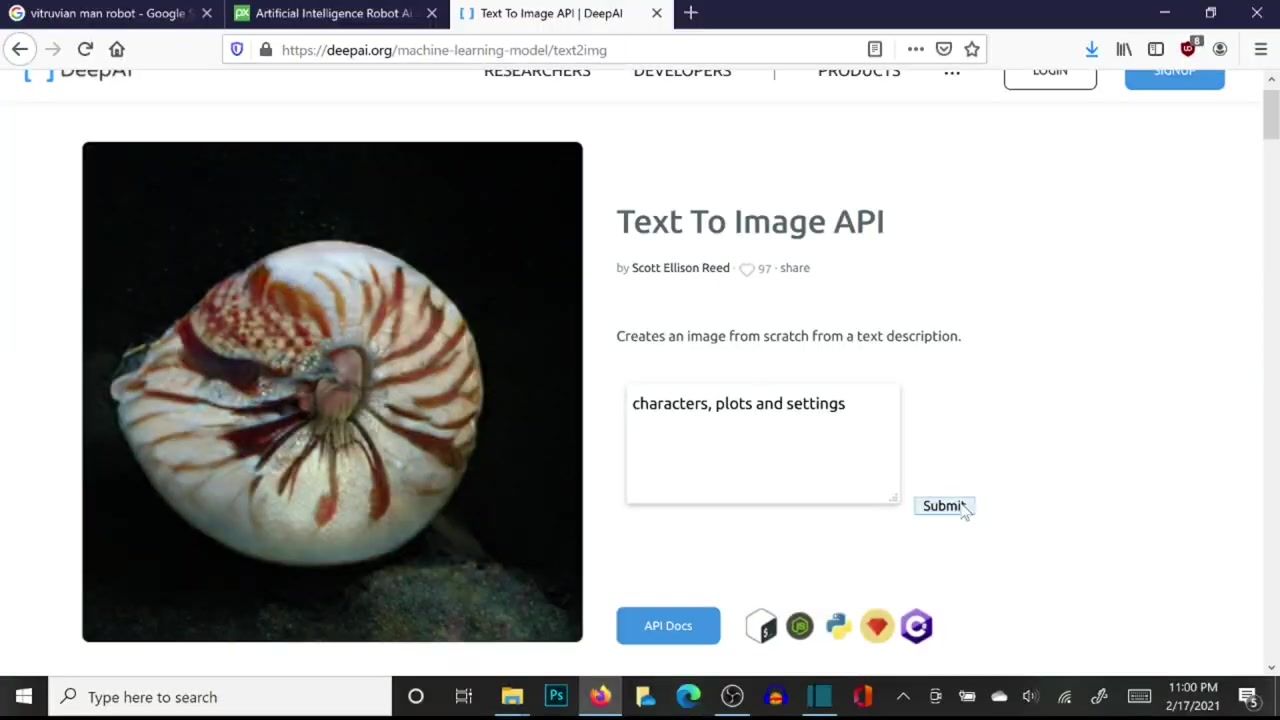
is one platform that showcases the potential of AI in image generation. This API allows users to input text descriptions, and the AI algorithm generates corresponding images. This tool is a gateway for anyone to explore AI's creative potential without requiring advanced programming skills.
Predictive Text demonstrates a more subtle, but equally impactful, application of AI in Creative Writing. As you type, AI algorithms analyze the patterns in your text and suggest words and phrases, streamlining the writing process and potentially inspiring new ideas.
The text to image API from DeepAI (deepai.org) generates images from scratch, based on a text description of characters, plots and settings. This text to image API is easy to use, with easy to find API docs, and a reasonable share rate, making it a great way to play with AI art generators. The AI recognizes, or tries to recognize, the patterns of what you are typing, and predicts what you will type next based on what you have Typed or searched before. These are often the AI used for captcha.
But how does AI recognize patterns? The key is the vast amounts of training data fed into the system. This data could include millions of images, songs, or books. The AI analyzes the data and identifies common features, styles, and structures. Through repeated analysis, the AI system becomes highly Adept at recognizing these patterns, even in new and unfamiliar data. This type of AI is really good at gatekeeping tasks, such as Captcha, because they can Instantly recognize the patterns they were taught.
random.org is used to generate random numbers for our next AI. Random number generation from a computer can take two routes. Algorithms, or outside stimuli. Algorithms may appear to be random, but are predictable if you know the algorithm. These number sets are called pseudo-random numbers. For true random numbers, the computer must track and remember outside feeds beyond the computer itself.
The data base of human faces is massive, and ever growing, which helps the AI learn more and more. The computer's accuracy in predicting face generation is increasing each day, making it more difficult to spot if AI generated. The more





Most people like





































Report
Please select a reason for reporting
- 13 Reasons to Switch from Snapchat to Text Messaging
- 7 Powerful Speech to Text Apps to Boost Productivity
- 10 Best Speech to Text Tools for Effortless Transcription
- 13 Free Tools to Easily Transcribe Audio to Text
- 15 Surprising Ways Google's Speech-to-Text Boosts Productivity
- 7 Best Free Online Audio to Text Transcription Tools
- 9 Tips to Transcribe Speech to Text Faster and Better
- 13 Best Speech to Text Software for Windows 10 in 2023
- 7 Tips for Choosing the Best Transcriber for Audio to Text
- 11 Reasons Why Dragon Speech-to-Text Apps are Game-Changers
- 6 Secrets to Enhance Your Speech to Text Transcription
- 6 Brilliant Ways to Boost Productivity with Talk-to-Text on Your MacBook
- 6 Ways Transcription Software Converts Audio to Text
- 8 Tips to Transcribe Speech to Text Like a Pro
- 6 Reasons IBM Watson Speech to Text is a Game-Changer
- 14 Powerful Ways Talk-to-Text Improves Your Workflow
- 12 Top Windows Speech-to-Text Software for Efficient Transcription
- 12 Game-Changing Benefits of Apple's Speech to Text Technology
- 9 Powerful Use Cases for AWS Speech to Text Technology
- 10 Easy Steps to Transcribe YouTube Videos to Text
- transcription audio en texte
- online audio transcription
- free audio file transcription
- free ai audio transcription
- audio transcription service
- audio transcription online free
- audio transcription free online
- audio to transcription software
- audio and transcript
- ai audio transcription free
- voice recording to text converter
- translate voice recording to text
- record voice to text
- audio recording to text converter
- voice recording and transcription
- chatgpt voice to text
- gmail voice to text
- speech to text reader
- speech to text ai free
- speech to talk
- How SEO and Marketing Dashboards Empower Agencies to Drive Results
- How to Use AI Tools to Find Internal Linking Opportunities Across a Business Website
- Discover Your Perfect Haircut with AI Hairstyle Apps
- Free Reputation Calculator Tools: How They're Adapting to Score AI Visibility, Not Just Rankings
- Design Professional Flyers for Free on Your Phone
- Best Free Flyer Maker Apps for Android: Design Like a Pro
- How to Know If Your Business Is Ready for an AI Customer Service Agent
- Revolutionizing Storytelling: From Novels to Screenplays with AI
- Create Engaging Animated Explainer Videos with a Free AI Tool
- Stop Multi-Subscribing: Benchmark Top AI Visual Models in One Canvas
- 5 Data Problems That Stall AI Projects in Financial Compliance
- Master Storyboard Drawing: Expert Tips for Non-artists
- The Future of Smart Glasses: Explained & Assembling Guide
- DeepL Translator: The AI-Powered Translation Tool
- AI Video Upscaling: Top Tools Compared for Enhanced Quality
- Bridging the Gap: How One Indie Developer Solved the "Art Asset Nightmare" Using AI Style Transfer
- How I Direct Consistent AI Clips: A Hands-On Guide to Multi-Model Generation
- My Honest Review of VideoAI: The Ultimate Character Voice Generator I've Been Using Lately
- Why do so many AI tools underdeliver for online stores?
- My Brand New Logo: AI-Powered Logo Design for Startups

Copyright ©2026 toolify