































Table of Contents
- Key Points
- Simplifying AI Workflows with Python and Model-LLM
- Refining Data Models for Better Output Quality
- How to Create Data Models and Connect to Large Language Models to Generate AI Workflows
- Model-LLM Pricing Considerations
- Pros and Cons of Using Model-LLM for AI Automation
- Key Features of Model-LLM for AI Workflows
- Practical Use Cases for AI Automation with Model-LLM
- FAQ
- Related Questions


Simplifying AI Workflows with Python and Model-LLM
Introducing Data Models to LLMs
The core of effective AI workflows lies in introducing your data models to Large Language Models (LLMs). By defining data structures clearly, LLMs can intelligently interpret and execute tasks. This approach minimizes the need for extensive coding, enabling developers to focus on the strategic aspects of automation.
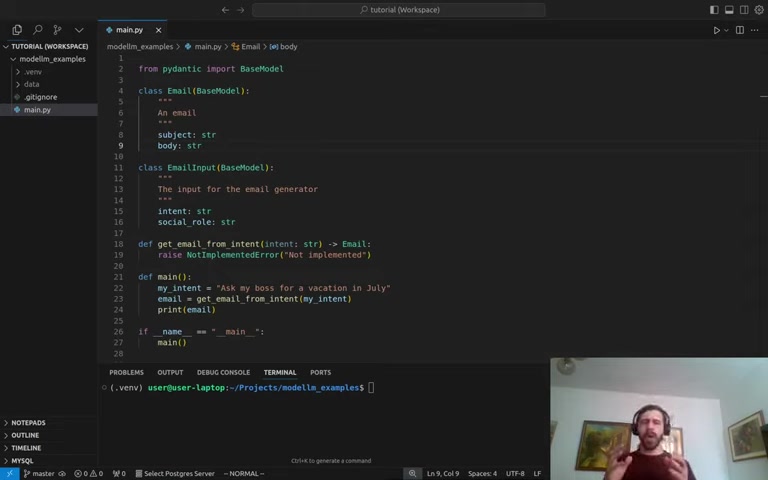
The Model-LLM library is used to introduce the data model to LLM. The use of data models to LLMs enables the ability to pick up on queues. Introducing data models to LLMs makes task automation more effective. Proper usage of data models and Large Language Models can allow for smooth transition and AI workflow.
Data modeling is the key to streamlining AI workflow creation, making AI more approachable.
Model-LLM Library Overview
The Model-LLM library empowers developers to create AI workflows with minimal lines of code. It's designed to simplify the process of data modeling and integration with LLMs. This library offers a balance between flexibility and simplicity, making it suitable for various automation tasks.
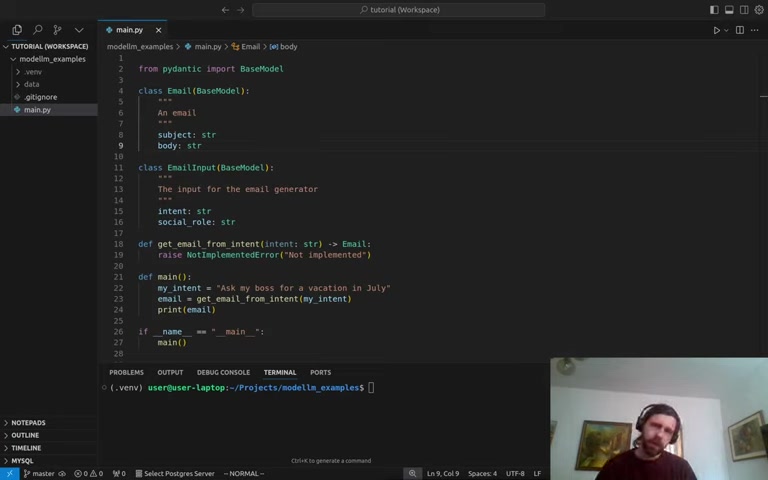
Using the library, users are able to generate an email from a small number of lines of code. This library is designed for ease of use and effectiveness. Model-LLM Library is the key to simplifying AI workflows and introduces you to AI automation.
The library also helps in the readability of AI workflows. Streamlining data transfer is more easily handled with Model-LLM Library.
Example: Email Generation with Intent
Let's explore an email generation example using a single sentence to express intent. This demonstrates how to generate an email by providing a single sentence of our intent. Here’s the line of code to begin with:
my_intent = "Ask my boss for a vacation in July"This input sentence serves as the basis for the email generation process.
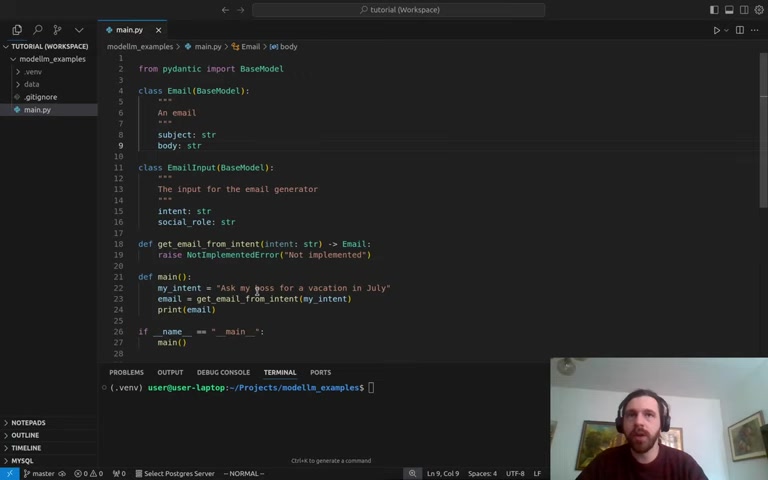
To help this work better, we need to import enough information for the emails to work. First, we want the text to get loaded into an object and then generate a proper email. To get started, the brains have to be initialized. The brains are initialized using this line of code:
from langchain.openai import ChatOpenAI import ChatOpenAI
llm = ChatOpenAI(model="gpt-4o")
By initalizing the brains of the Large Language Models, we can begin the process of generating these emails.
Refining Data Models for Better Output Quality
Importance of Data Input
The data input significantly impacts the quality of email output. Therefore, we need sufficient information for our email output to work well. Adding original text can provide valuable context to guide the LLM. To add the original text, add this to your code:
original_user_input: str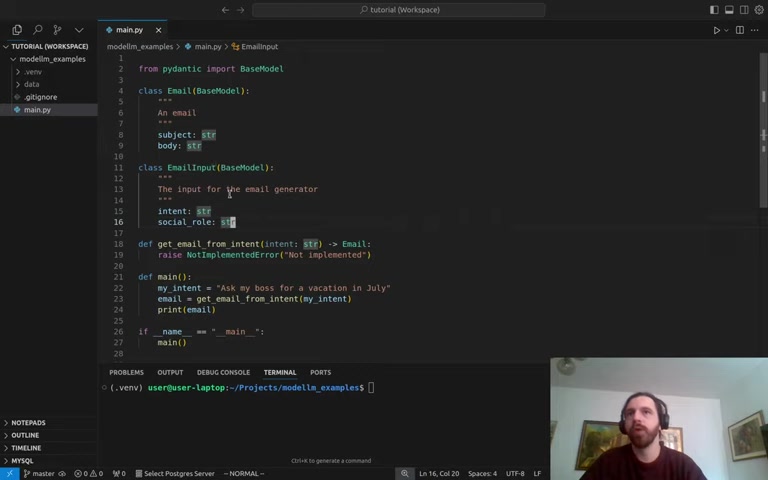
You should consider which email parts are the most relevant to the LLM to have a better generated email. Also, it should be remembered that the docstrings for pydantic models are our prompts. These steps all help in generating better results for each email.
Connecting the Data
To connect the whole process, we use Langchain in a simple way, this avoids any over complication, which makes it harder to maintain. This becomes simple by using only four lines of code to achive a desired goal. By simply importing an add_llm function and decorating pydantic models to enrich them, we will end up with our desired result. We will also add the Email class to create a smooth pipeline.
from modelLLM import add_llm

@add_LLM(LLM)
class Email (BaseModel):
Then the intent of the email string should be linked with the input and the email, ensuring better results when generating emails.
Reviewing generated email
It is important to recognize whether the quality of the generated email is what you need. Because Large Language Models are trained with trash data, or emails that aren't designed to be perfect in every way, there will likely be the need to fix your AI workflows. Just by editing your descriptions, it is possible to edit the functionality as well. That makes it important to learn about your audience to make your emails resonate more with them. That in turn will increase readablity of each email that you generate.
How to Create Data Models and Connect to Large Language Models to Generate AI Workflows
Step-by-step guide to AI Workflow Automation
Here's a comprehensive guide to creating effective AI workflows using data models and LLMs:
- Data Model Definition: Begin by clearly defining your data models. This involves specifying the structure and type of data the LLM will process.
- Import necessary libraies: The Model-LLM Library is imported using
from modelLLM import add_llm - LLM Initialization: Choose the right LLM (e.g., OpenAI's GPT-4o) and initialize it within your Python environment.
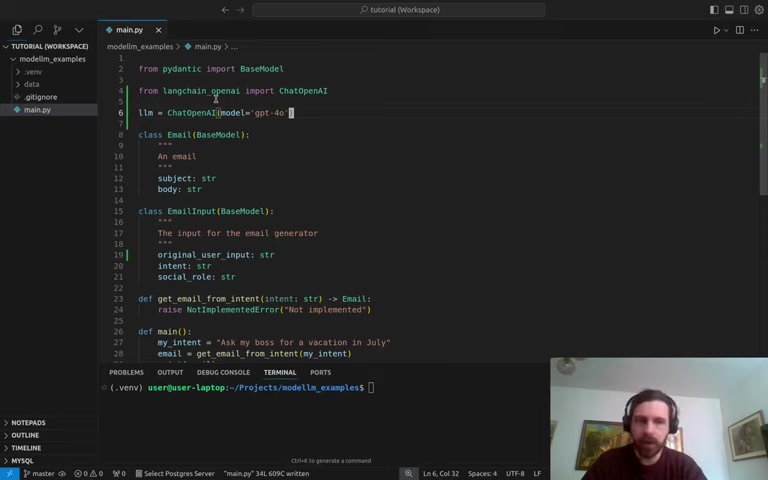
This line of code does just that:
from langchain.openai import ChatOpenAI import ChatOpenAI
llm = ChatOpenAI(model="gpt-4o")- Decorate with modelLLM: With the decorator, we can add more to the data models to refine it to the needs of large language models.
@add_LLM(LLM)
class Email (BaseModel):- Link intent, input, and email strings: Lastly, the intent of the email should have a pipeline that goes from email inputs, and from the email it needs to be introduced into the generated email.
This streamlined process empowers you to create tailored AI workflows quickly.
Key Features of Model-LLM for AI Workflows
Simplicity in Data Modeling and LLM Integration
Model-LLM streamlines the process of defining data models and integrating them with LLMs, reducing coding effort. The simplicity of Model-LLM is how it streamlines and connects data models to make the process easy to use for people of any skill level.
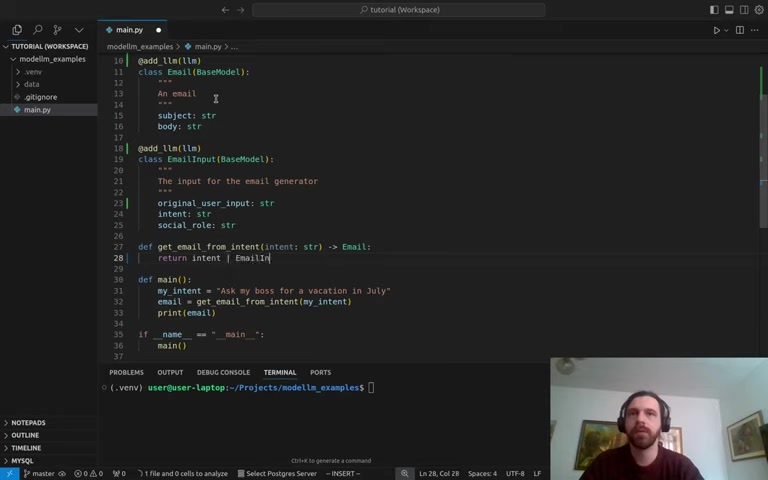
- Simplified Data Modeling
- Streamlining AI Workflow Creation
Streamlined Email Generation
With just a few lines of code, generate emails effectively by expressing intent in a single sentence. LangChain also greatly simplifies email generation.
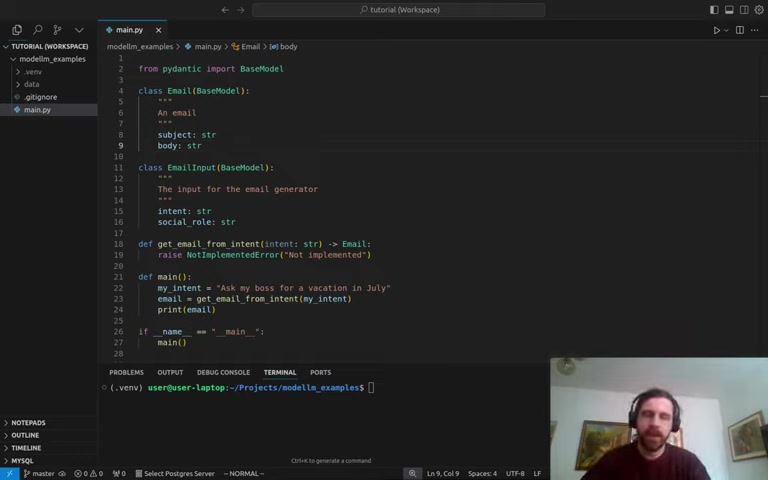
In order to get started, all that you need to do is introduce data models to LLM.
- Data-Driven Output
- Focuses on Data Structure
Practical Use Cases for AI Automation with Model-LLM
Automated Email Campaigns
Generate personalized email campaigns by training LLMs on specific data models. This ensures that each email resonates with the intended audience, improving engagement and conversion rates.
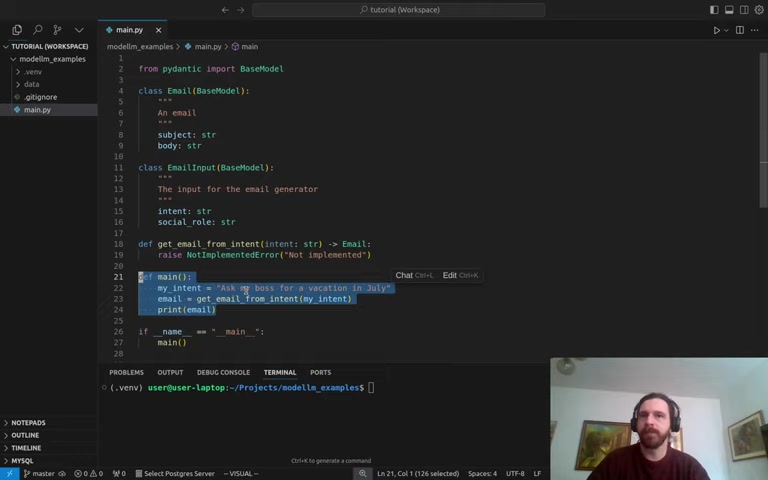
The use cases will be for email outputs to function better, which include:
- Intent of the email
- Roles of the people receiving it







Most people like

































Report
Please select a reason for reporting
- 13 Reasons to Switch from Snapchat to Text Messaging
- 7 Powerful Speech to Text Apps to Boost Productivity
- 10 Best Speech to Text Tools for Effortless Transcription
- 13 Free Tools to Easily Transcribe Audio to Text
- 15 Surprising Ways Google's Speech-to-Text Boosts Productivity
- 7 Best Free Online Audio to Text Transcription Tools
- 9 Tips to Transcribe Speech to Text Faster and Better
- 13 Best Speech to Text Software for Windows 10 in 2023
- 7 Tips for Choosing the Best Transcriber for Audio to Text
- 11 Reasons Why Dragon Speech-to-Text Apps are Game-Changers
- 6 Secrets to Enhance Your Speech to Text Transcription
- 6 Brilliant Ways to Boost Productivity with Talk-to-Text on Your MacBook
- 6 Ways Transcription Software Converts Audio to Text
- 8 Tips to Transcribe Speech to Text Like a Pro
- 6 Reasons IBM Watson Speech to Text is a Game-Changer
- 14 Powerful Ways Talk-to-Text Improves Your Workflow
- 12 Top Windows Speech-to-Text Software for Efficient Transcription
- 12 Game-Changing Benefits of Apple's Speech to Text Technology
- 9 Powerful Use Cases for AWS Speech to Text Technology
- 10 Easy Steps to Transcribe YouTube Videos to Text
- transcription audio en texte
- online audio transcription
- free audio file transcription
- free ai audio transcription
- audio transcription service
- audio transcription online free
- audio transcription free online
- audio to transcription software
- audio and transcript
- ai audio transcription free
- voice recording to text converter
- translate voice recording to text
- record voice to text
- audio recording to text converter
- voice recording and transcription
- chatgpt voice to text
- gmail voice to text
- speech to text reader
- speech to text ai free
- speech to talk
- How SEO and Marketing Dashboards Empower Agencies to Drive Results
- How to Use AI Tools to Find Internal Linking Opportunities Across a Business Website
- Discover Your Perfect Haircut with AI Hairstyle Apps
- Free Reputation Calculator Tools: How They're Adapting to Score AI Visibility, Not Just Rankings
- Design Professional Flyers for Free on Your Phone
- Best Free Flyer Maker Apps for Android: Design Like a Pro
- How to Know If Your Business Is Ready for an AI Customer Service Agent
- Revolutionizing Storytelling: From Novels to Screenplays with AI
- Create Engaging Animated Explainer Videos with a Free AI Tool
- Stop Multi-Subscribing: Benchmark Top AI Visual Models in One Canvas
- Top 5 Cold Email Software: Maximize Your Outreach in 2025
- Magic School AI: Revolutionizing Quiz & Assessment Generation
- Create Your Own Email Bot and Automate Your Email Tasks
- Beyond Pure Prompts: Optimizing Production with 'Text With Reference' Generation
- Stop Using Boring TTS: My Honest Deep Dive Into VideoAI and the Hunt for the Perfect Custom Voices
- AI & Elections: Defending Democracy Against Misinformation
- Navigating Political Discourse: AI, Deepfakes, and Reality Checks
- Detecting Political Bias in News Articles: A Powerful AI Algorithm
- AI Bias Unveiled: Political Leanings in ChatGPT & Beyond
- Revolutionize Learning: Discover Quizzes AI for Engaging Interactive Quizzes

Copyright ©2026 toolify