































Table of Contents
- Key Points
- Understanding Clinical Diagnostic Models
- Case Study: Sepsis Prediction
- Pros and Cons of AI Diagnostic Models
- FAQ
- Related Questions



Understanding Clinical Diagnostic Models
What is a Clinical Diagnosis?
A clinical diagnosis is the process of determining the disease or condition that explains a person's symptoms or signs.
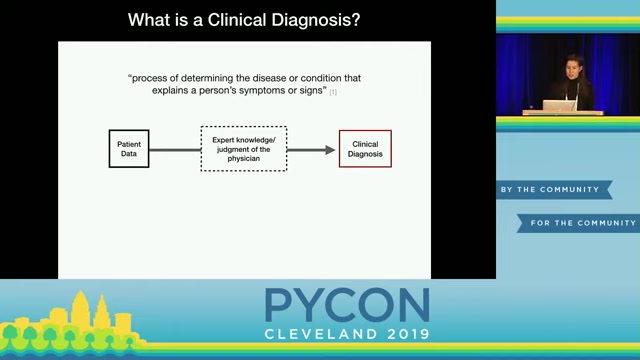
Traditionally, this involves expert knowledge, judgment of a physician, and years of medical training. The physician assesses patient data to make an informed decision, and only then they consider which treatment is best. In modern times, machine learning models can help aid in making informed decisions.
This process requires a thorough understanding of medicine and the ability to correlate patient data with possible underlying conditions. By replicating the thought process of a physician, a diagnostic model can help in improving patient outcomes, reducing risk, and saving money. Diagnostic models can save time and money. This allows doctors to see and treat more patients on the job, thus potentially saving lives and improving care.
Clinical diagnostic models can also help with the following:
- Triaging low-risk versus high-risk patients, allowing for quicker care for those most in need
- Identifying early-onset illnesses that might not be readily apparent
- Reducing the risk of misdiagnosis, leading to better treatment plans.
Case Study: Sepsis Prediction
The Urgency of Early Sepsis Detection
Sepsis serves as a powerful case study for illustrating the application and benefits of clinical diagnostic models.
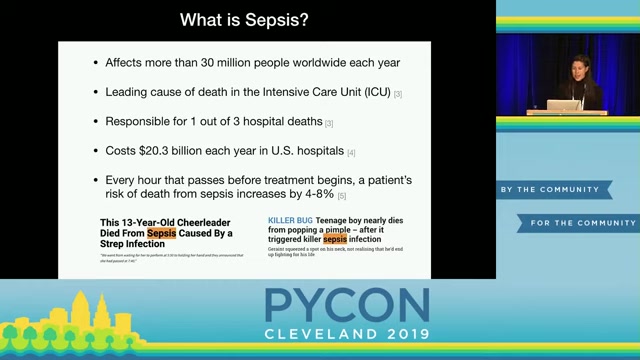
Sepsis is a life-threatening condition that arises when the body's response to an infection causes injury to its own tissues and organs. Without Timely treatment, sepsis can rapidly lead to tissue damage, organ failure, and death. The early symptoms of sepsis can be vague and easily confused with other conditions, making early diagnosis difficult. Since it can easily be mistaken for other problems, it makes it all the more important to build diagnostic tools to increase detection.
Sepsis can be triggered by a wide variety of infections, including pneumonia, the flu, or even a simple infected pimple. The condition affects more than 30 million people worldwide each year and is a leading cause of death in intensive care units (ICUs). This is why it is so important to get a diagnosis as early as possible. Early diagnosis is paramount, because as this diagnosis is delayed, the risk of death will increase by 4-8%.
The economic burden of sepsis is significant, costing billions of dollars annually in the United States alone. The costs come from:
- Prolonged hospital stays
- Intensive care requirements
- The cost of treatment.
Diagnostic models can help reduce the impact of sepsis by enabling earlier intervention, reducing the need for intensive care, and improving resource allocation.
Defining the Clinical Diagnostic Model Objective
In this case study, the main purpose will be creating a model which aims to predict the likelihood of a patient developing sepsis while in the ICU.
While there are various risk factors for sepsis, physicians can struggle to accurately predict which patients will develop sepsis when admitted to the ICU. By reliably identifying which patients are more at risk versus which are low-risk, it will help clinicians to make more informed decisions, and thus improve patient safety.
Building a Python-Based Sepsis Prediction Model
Building a good prediction model will likely involve the following steps.
-
Data Preparation: This includes harmonizing Electronic Medical Record (EMR) data.
-
Modeling: The next step involves selecting a model that works for the specific kind of model built.
-
Post-processing: This last step involves assessing the model's performance to better improve any weak areas.
Navigating Messy Medical Data: Data Harmonization
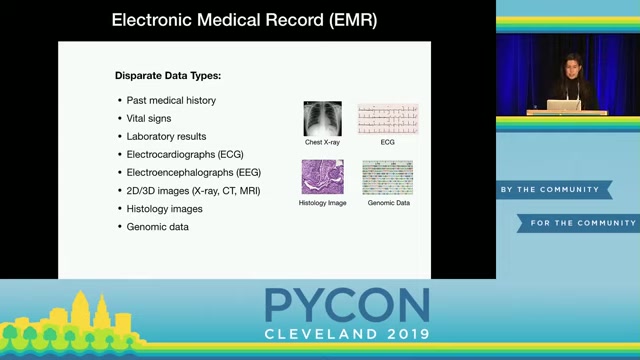
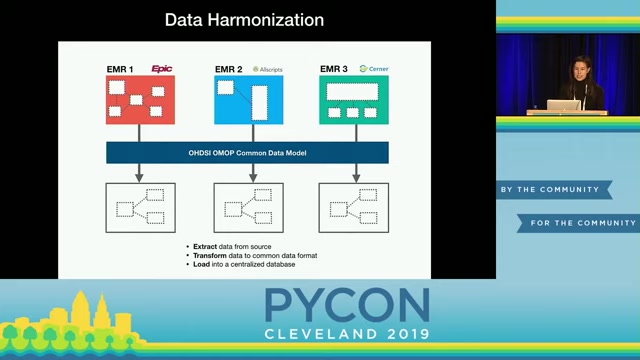
Electronic medical records are complex and disparate. There is currently no industry wide data scheme that all medical facilities adhere to, making it difficult to work with medical data. Data harmonization involves using ETL techniques.
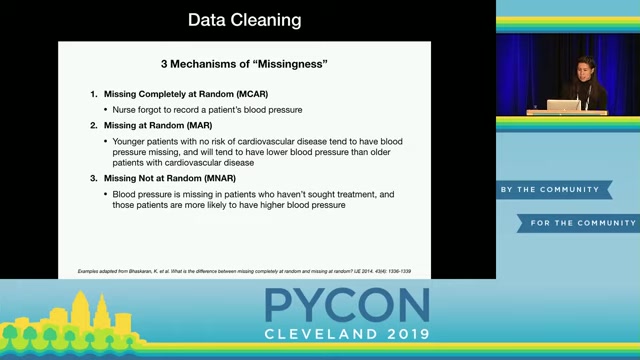
ETL stands for extract, transform, and load. This can involve cleaning data or correcting inconsistencies like incorrect spellings and so on.
Data harmonization is not simply about cleaning data. This process involves several things:
- Mapping data from different EMR sources to a common data format.
- Using data cleaning techniques like finding and replacing inconsistencies.
- Standardizing medical terms using data naming standards.
By performing these techniques, data will be properly transformed and available for the development of diagnostic models.
Data Cleaning Techniques: Missing Data
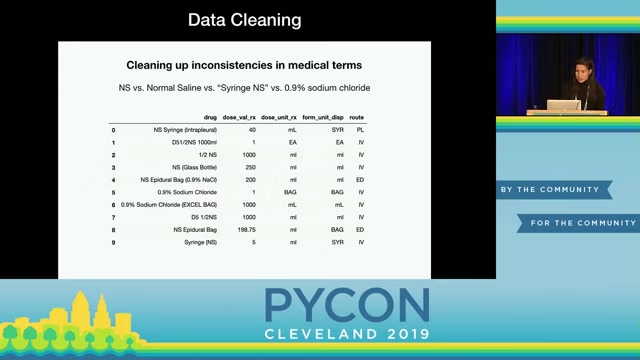
Missing data is an issue for medical records, and it needs to be handled accordingly. Some common techniques will be explored here.
-
Assessing Missing Values: It's important to assess missing values to check that they are in the correct format. The python missingno Package is excellent for getting a big-picture view.
-
Case Deletion: One of the easiest methods is to simply remove data that contains empty values. This process can cause major data loss and does not address the underlying issue causing the problem.
-
Imputation: A better method is imputation, which is filling in the data values that are missing. You can impute these using static methods like replacing each with the mean. One powerful form of imputation involves the last value carried forward method. In this method, each missing data point takes on the value of the last known value that existed.
Imputation is one of the better solutions for missing values. Here are some possible considerations when choosing an imputation method:
- KNN
- Iterative SVD
- Bayes GaussMI
- MICE
Data Cleaning Techniques: Standardizing Medical Terms
Standardizing medical terms is also an essential part of preparing data to be worked with. One example of this is related to drugs, where the exact same chemical compound has a different name based on branding and so on. Each doctor has a certain way of writing their notes, and may use different terms for different things. You may encounter, for example,
- Tylenol vs Acetaminophen
- Normal Saline vs 0.9% Sodium Chloride
- Morphine vs Morphine Sulfate
All these must be standardized for the model to produce quality results. Drug naming standards such as RxNorm and the National Drug Code can be used to ensure accuracy. When looking at different test data, there might be coding errors or simple syntax errors. The process of identifying Patterns with inconsistencies is crucial.
Feature Engineering for Machine Learning Success
Once medical data is properly collected and formatted, it can then be engineered into model features. One possible feature is a list of all extracted properties from all drug names in a study. In doing so, the model will know if the patient was given antibiotics. Another major problem is data bias, where data trends are skewed. These can include gender bias, such as in the prevalence of cardiac arrest. This must be accounted for when building the model so that there is not undue weight on a certain variable. It is important to account for and mitigate such a bias.
Model Selection for Optimal Performance
Before the model itself is built, there are two potential types of models that can be used:
-
Binary Classification Model: Did the patient get sepsis during the hospital stay, yes or no.
-
Time Series Classification Model: When did the patient get sepsis during the hospital stay?
To create a model that does well, it is crucial to have high-quality data. You get what you put in!
Ethical Considerations and Adversarial Attacks on Model Security
When building machine learning tools, we want them to accurately reflect the real world. This means that bias must be addressed, so the tool has equal opportunity. It is important to perform regular checks on real data to confirm and validate this. AI can be hacked, so it is important to make sure the data is secure and that you are regularly retraining the model.





Most people like





































Report
Please select a reason for reporting
- 13 Reasons to Switch from Snapchat to Text Messaging
- 7 Powerful Speech to Text Apps to Boost Productivity
- 10 Best Speech to Text Tools for Effortless Transcription
- 13 Free Tools to Easily Transcribe Audio to Text
- 15 Surprising Ways Google's Speech-to-Text Boosts Productivity
- 7 Best Free Online Audio to Text Transcription Tools
- 9 Tips to Transcribe Speech to Text Faster and Better
- 13 Best Speech to Text Software for Windows 10 in 2023
- 7 Tips for Choosing the Best Transcriber for Audio to Text
- 11 Reasons Why Dragon Speech-to-Text Apps are Game-Changers
- 6 Secrets to Enhance Your Speech to Text Transcription
- 6 Brilliant Ways to Boost Productivity with Talk-to-Text on Your MacBook
- 6 Ways Transcription Software Converts Audio to Text
- 8 Tips to Transcribe Speech to Text Like a Pro
- 6 Reasons IBM Watson Speech to Text is a Game-Changer
- 14 Powerful Ways Talk-to-Text Improves Your Workflow
- 12 Top Windows Speech-to-Text Software for Efficient Transcription
- 12 Game-Changing Benefits of Apple's Speech to Text Technology
- 9 Powerful Use Cases for AWS Speech to Text Technology
- 10 Easy Steps to Transcribe YouTube Videos to Text
- transcription audio en texte
- online audio transcription
- free audio file transcription
- free ai audio transcription
- audio transcription service
- audio transcription online free
- audio transcription free online
- audio to transcription software
- audio and transcript
- ai audio transcription free
- voice recording to text converter
- translate voice recording to text
- record voice to text
- audio recording to text converter
- voice recording and transcription
- chatgpt voice to text
- gmail voice to text
- speech to text reader
- speech to text ai free
- speech to talk
- Meshy AI: How to Create 3D Models from Text and Images
- How SEO and Marketing Dashboards Empower Agencies to Drive Results
- How to Use AI Tools to Find Internal Linking Opportunities Across a Business Website
- Discover Your Perfect Haircut with AI Hairstyle Apps
- Free Reputation Calculator Tools: How They're Adapting to Score AI Visibility, Not Just Rankings
- Design Professional Flyers for Free on Your Phone
- Best Free Flyer Maker Apps for Android: Design Like a Pro
- How to Know If Your Business Is Ready for an AI Customer Service Agent
- Revolutionizing Storytelling: From Novels to Screenplays with AI
- Create Engaging Animated Explainer Videos with a Free AI Tool
- Meshy AI: How to Create 3D Models from Text and Images
- ASOMobile Helps Teams Benchmark App Store Screenshots Against Competitors
- How to Match LMS Software With Your Organization's Training Plan
- Revolutionizing Email Marketing Agency with AI
- How to Convert BTC to HNT
- Unleashing the Power of AI: Cognizant's Roadmap for Transformation
- Frame to Video Review: A Practical Look at Turning Two Still Frames Into Motion
- NVIDIA NIM: Revolutionizing Supply Chain Data Analysis with AI
- Top AI Tools That Help Brands Stand Out Offline (Not Just Online)
- Top 5 Cold Email Software: Maximize Your Outreach in 2025

Copyright ©2026 toolify