






Table of Contents
- Key Points
- Understanding AI Detection and the Need for Bypassing It
- Advanced Tips and Best Practices
- Step-by-Step Guide to Bypassing AI Detection
- Pricing for Spinbot
- Pros and Cons of Using This Method
- Core Features of Spinbot
- Use Cases for Bypassing AI Detection
- Frequently Asked Questions (FAQ)
- Related Questions



Understanding AI Detection and the Need for Bypassing It
The Rise of AI Detection Tools
AI detection tools have become increasingly prevalent in academic, professional, and online content creation environments. These tools aim to identify content generated by AI models such as ChatGPT, GPT-4, and others. While their purpose is to ensure originality and prevent plagiarism, they often create challenges for those who legitimately use AI to assist in content creation.
AI detection relies on algorithms that analyze text for patterns, stylistic elements, and linguistic characteristics indicative of AI-generated content. These tools can identify common phrases, repetitive structures, and predictive patterns that distinguish ai writing from human writing. This has led to a need for methods that can transform AI-generated text into content that closely mimics human writing styles.
Why Bypass AI Detection?
There are several valid reasons to bypass AI detection. These include:
- Enhancing Content Quality: AI can assist in generating initial drafts, but refining this content to align with a specific tone, style, or audience requires human intervention.
- Avoiding False Positives: AI detection tools are not always accurate. They can sometimes flag human-written content as AI-generated, leading to unnecessary complications.
- Protecting Privacy: Some users may prefer not to disclose the use of AI Tools due to privacy concerns or professional reasons.
- Adapting to Specific Requirements: Certain platforms or institutions may have strict policies against AI-generated content, necessitating methods to circumvent these restrictions while still benefiting from AI assistance.
By bypassing AI detection, users can maintain control over their content, ensure its quality, and adapt it to specific requirements and standards.
Step-by-Step Guide to Bypassing AI Detection
Step 1: Generate the Initial Text with AI
Use an AI text generator such as ChatGPT or GPT-4 to create the initial content. For example, if you need an article on the effects of social media on children, input the Prompt and generate the text. Aim for a length that suits your requirements, such as 100 words or more.
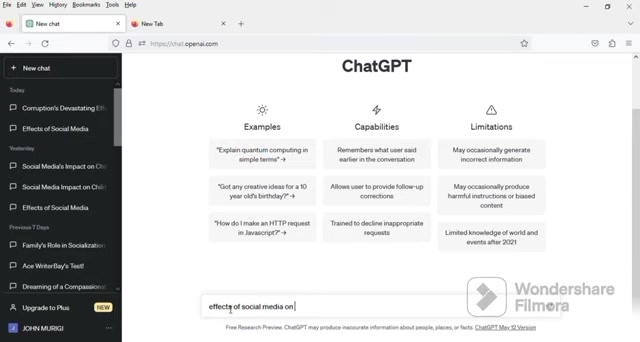
Prompt example: Effects of social media on children in 100 words.
Step 2: Translate the Text Using Google Translate
Copy the generated text and paste it into Google Translate. Translate the text from English to another language such as Hindi, then translate it back to English. Repeat this process with a third language like French before translating back to English again.
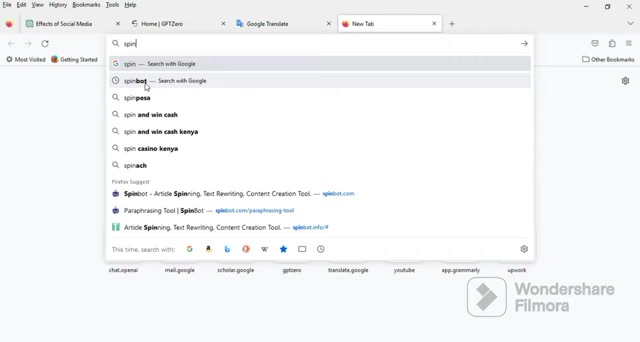
This multi-step translation process helps to alter the original text's structure and patterns, making it less detectable by AI detection tools. The changes in vocabulary and sentence construction during translation introduce variations that mimic human writing.
Step 3: Paraphrase the Text with Spinbot
After the translation process, copy the newly translated text and paste it into Spinbot. Use the “Basic Spin” function to paraphrase the content. Spinbot will replace words and phrases with synonyms and rephrase sentences to create unique and original content. This step further enhances the text's uniqueness and readability.
Spinbot provides two options for paraphrasing: Basic Spin and Advanced Paraphrase. Basic Spin is suitable for generating quick variations, while Advanced Paraphrase offers higher-quality output with more sophisticated rewriting. Consider using the Advanced Paraphrase option for better results.
Step 4: Test the Content with an AI Detection Tool
To ensure the effectiveness of the method, test the transformed content using an AI detection tool like GPTZero. Copy the final text and paste it into the tool to analyze its AI detection score. If the score indicates that the content is likely human-written, the method has been successful.
If the AI detection tool still identifies the content as AI-generated, consider repeating the translation and paraphrasing steps or manually editing the text to add more human-like elements.
Step 5: Finalize and Refine the Content
Once you have confirmed that the content bypasses AI detection, review and refine the text to ensure it meets your quality standards. Edit any awkward phrasing, correct grammatical errors, and adjust the tone to align with your intended audience.
This final step is crucial for ensuring that the content is not only undetectable by AI but also engaging and valuable for your readers.




Most people like


































Report
Please select a reason for reporting
- 13 Reasons to Switch from Snapchat to Text Messaging
- 7 Powerful Speech to Text Apps to Boost Productivity
- 10 Best Speech to Text Tools for Effortless Transcription
- 13 Free Tools to Easily Transcribe Audio to Text
- 15 Surprising Ways Google's Speech-to-Text Boosts Productivity
- 7 Best Free Online Audio to Text Transcription Tools
- 9 Tips to Transcribe Speech to Text Faster and Better
- 13 Best Speech to Text Software for Windows 10 in 2023
- 7 Tips for Choosing the Best Transcriber for Audio to Text
- 11 Reasons Why Dragon Speech-to-Text Apps are Game-Changers
- 6 Secrets to Enhance Your Speech to Text Transcription
- 6 Brilliant Ways to Boost Productivity with Talk-to-Text on Your MacBook
- 6 Ways Transcription Software Converts Audio to Text
- 8 Tips to Transcribe Speech to Text Like a Pro
- 6 Reasons IBM Watson Speech to Text is a Game-Changer
- 14 Powerful Ways Talk-to-Text Improves Your Workflow
- 12 Top Windows Speech-to-Text Software for Efficient Transcription
- 12 Game-Changing Benefits of Apple's Speech to Text Technology
- 9 Powerful Use Cases for AWS Speech to Text Technology
- 10 Easy Steps to Transcribe YouTube Videos to Text
- transcription audio en texte
- online audio transcription
- free audio file transcription
- free ai audio transcription
- audio transcription service
- audio transcription online free
- audio transcription free online
- audio to transcription software
- audio and transcript
- ai audio transcription free
- voice recording to text converter
- translate voice recording to text
- record voice to text
- audio recording to text converter
- voice recording and transcription
- chatgpt voice to text
- gmail voice to text
- speech to text reader
- speech to text ai free
- speech to talk
- Meshy AI: How to Create 3D Models from Text and Images
- How SEO and Marketing Dashboards Empower Agencies to Drive Results
- How to Use AI Tools to Find Internal Linking Opportunities Across a Business Website
- Discover Your Perfect Haircut with AI Hairstyle Apps
- Free Reputation Calculator Tools: How They're Adapting to Score AI Visibility, Not Just Rankings
- Design Professional Flyers for Free on Your Phone
- Best Free Flyer Maker Apps for Android: Design Like a Pro
- How to Know If Your Business Is Ready for an AI Customer Service Agent
- Revolutionizing Storytelling: From Novels to Screenplays with AI
- Create Engaging Animated Explainer Videos with a Free AI Tool
- Automate Lead Generation: A Comprehensive Guide with AI Agents
- Revideo.io: The Future of Reverse Video Search Technology
- Revolutionizing Email Marketing Agency with AI
- Breaking the Character Drift Dilemma: A Practical Test of Smart Shot
- Meshy AI: How to Create 3D Models from Text and Images
- ASOMobile Helps Teams Benchmark App Store Screenshots Against Competitors
- How to Match LMS Software With Your Organization's Training Plan
- How to Convert BTC to HNT
- Unleashing the Power of AI: Cognizant's Roadmap for Transformation
- Frame to Video Review: A Practical Look at Turning Two Still Frames Into Motion

Copyright ©2026 toolify