































Table of Contents
- Key Points
- Understanding Emotion Through Lyric Analysis
- Deepening Appreciation Through Vivid Imagery
- Benefits of Analyzing Song Lyrics
- Frequently Asked Questions
- Related Questions



Understanding Emotion Through Lyric Analysis
The Power of Lyrics in Evoking Emotion
Music is more than just a collection of notes; it's a conduit for emotions. At the heart of many emotionally impactful songs are the lyrics. Lyrics have the ability to tap into our deepest feelings, resonating with experiences and memories. The way songwriters choose words, create imagery, and structure their language contributes significantly to the emotional impact of a song. Understanding how these techniques work allows us to appreciate the artistry and intention behind the Music.
Think about a time when a song brought you to tears or filled you with joy. What was it about the lyrics that affected you so profoundly? Was it a specific WORD choice, a particular image, or the overall story being told? These are the questions that lyric analysis seeks to answer.
By delving deeper into the structure and intent of the lyrics, we can unravel the complex emotional tapestry woven by the songwriter. This analysis not only enhances our appreciation for the music, but also provides insights into the human condition and the shared experiences that connect us all. Exploring the nuances of lyrical expression will open up a new dimension of music appreciation.
The core elements that allow lyrics to evoke strong emotion include:
- Word Choice: Careful selection of words to enhance impact.
- Imagery: Painting mental pictures to strengthen connections.
- Language Choices: Using figurative language to give feelings deeper meaning.
The Role of Words, Imagery, and Language Choices
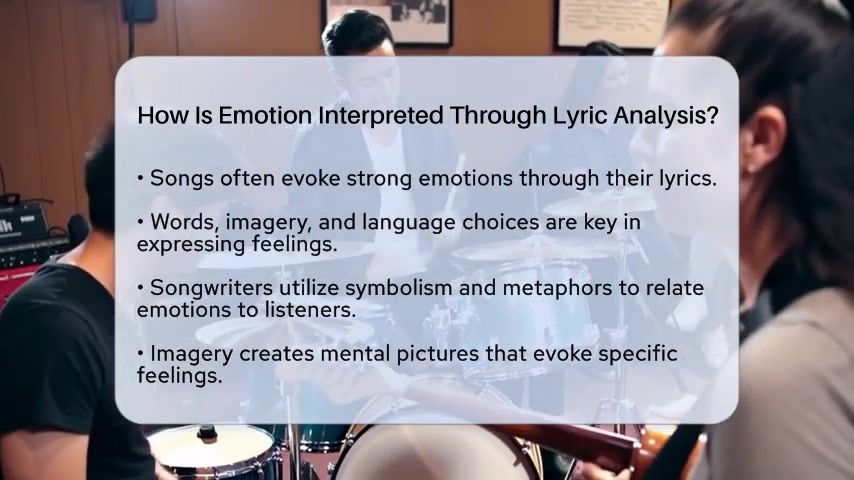
When we analyze song lyrics, we begin to notice that words, imagery, and language choices are paramount in expressing feelings. Each element works in concert to build a comprehensive emotional experience for the listener. The power of a song often lies not just in what is said, but how it is said.
-
Words: Words can carry so much meaning. The deliberate use of certain words, with their connotations and emotional weight, can immediately set the tone for a song. For example, the word 'melancholy' instantly evokes a feeling of sadness, while 'euphoria' suggests overwhelming joy.
-
Imagery: Imagery is used in lyrics to paint vivid mental pictures. These images help listeners visualize scenes and feelings, making the song more relatable and impactful. The imagery used can also be symbolic, representing deeper meanings and emotions.
-
Language Choices: Language choices refer to the techniques songwriters use to craft their lyrics. This includes using metaphors, similes, and other figurative language to enhance the expression of emotions. These techniques provide depth and layers of meaning, encouraging listeners to interpret and connect with the lyrics on a personal level.
Consider the difference between saying 'I am sad' and 'My heart is a lead weight in my chest.' The latter uses imagery and metaphor to convey the feeling of sadness in a much more powerful and evocative way.
Songwriters harness these tools to express complex emotions in a way that resonates deeply with their audience.
Symbolism and Metaphors: Relatability Through Association
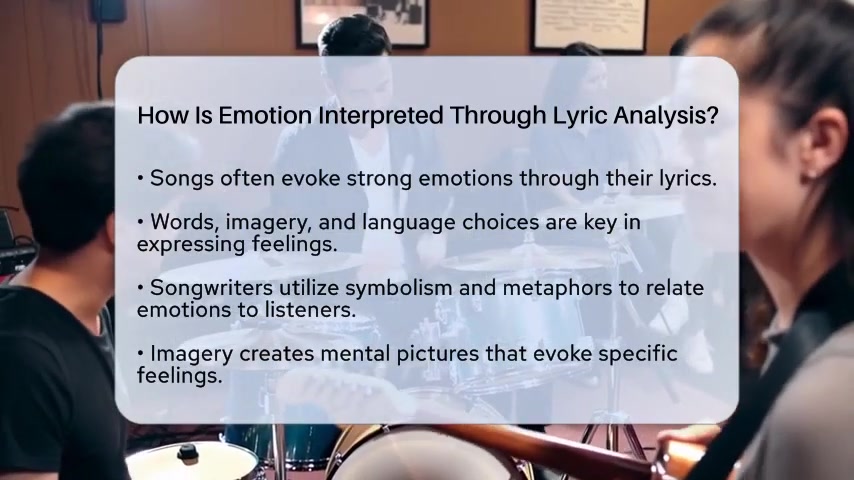
Songwriters often employ symbolism and metaphors as powerful tools to connect with their audience. By using these techniques, they can transform personal feelings into universal experiences. Symbolism involves using objects, people, or ideas to represent something else, while metaphors directly compare one thing to another to highlight common characteristics.
For instance, comparing sadness to rain is a common metaphor. Rain is often associated with gloom, tears, and cleansing. By equating sadness to rain, songwriters can help listeners understand and connect with the emotion on a more relatable level. The use of symbolism and metaphors adds layers of meaning to the lyrics, inviting listeners to interpret the song in a way that resonates with their personal experiences.
Here are some other common examples:
- A broken mirror might symbolize a shattered relationship or a damaged sense of self.
- A dark forest could represent confusion, fear, or the unknown.
- A soaring bird could symbolize freedom, hope, or escape.
The effectiveness of symbolism and metaphors lies in their ability to evoke a shared understanding. Listeners can draw from their own experiences to interpret these symbols and metaphors, making the song deeply personal and meaningful. Skilled songwriters choose symbols and metaphors that are both evocative and accessible, allowing their audience to engage with the song on multiple levels.
Imagery: Painting Mental Pictures That Evoke Feelings
Imagery is another crucial element in lyric analysis, serving as a potent tool to create vivid mental pictures that evoke specific feelings. Songwriters use descriptive language to stimulate the senses and transport listeners into the world of the song. This allows the audience to connect with the emotions being expressed on a deeper, more personal level.
Descriptions of nature, for example, can be particularly effective in creating imagery. A line describing a sunset can evoke warmth, nostalgia, and a sense of peace. The vibrant colors and the feeling of the sun setting can trigger pleasant memories and a sense of calm. On the other hand, descriptions of stormy nights can create tension, unease, and a sense of foreboding. The sound of thunder, the sight of lightning, and the feeling of wind and rain can evoke a range of emotions, from fear to excitement.
These vivid images help listeners immerse themselves in the mood intended by the artist. By engaging the senses through descriptive language, songwriters can create a powerful emotional connection with their audience. Analyzing the imagery used in lyrics can provide valuable insights into the artist's intentions and the emotional landscape they are seeking to create.
Here's a markdown table that summarizes common imagery and the emotions they typically evoke:
| Imagery | Emotion Evoked | Description |
|---|---|---|
| Sunset | Warmth, Nostalgia, Peace | Evokes a feeling of calm, reflection, and pleasant memories. |
| Stormy Night | Tension, Unease, Foreboding | Creates a sense of fear, excitement, and unpredictability. |
| Flowing River | Tranquility, Progress, Life | Symbolizes the passage of time, the flow of life, and a sense of calm. |
| Desolate Desert | Loneliness, Isolation, Struggle | Represents feelings of emptiness, hardship, and resilience. |
| Blooming Garden | Hope, Renewal, Beauty | Evokes feelings of joy, growth, and the beauty of life. |
Personal Anecdotes: Fostering Authenticity and Connection
Personal anecdotes in lyrics add a layer of authenticity, strengthening the connection between the artist and the listener. When artists share their own experiences and stories, they create a sense of vulnerability that invites listeners to relate on a more intimate level. These personal touches make the emotions in the song feel more genuine and relatable.
By sharing their own struggles, joys, and heartbreaks, artists can create a shared emotional landscape with their audience. This fosters a sense of empathy and understanding, making the song more meaningful and impactful. Authenticity is a key element in creating a lasting connection with listeners, and personal anecdotes are a powerful tool for achieving this.
This type of storytelling within lyrics resonates with the human desire for connection and understanding. When we hear someone else articulate experiences that mirror our own, it validates our feelings and reminds us that we are not alone.
Examples of common themes used in personal anecdotes include:
- Heartbreak: Sharing stories of lost love and emotional pain.
- Triumph: Celebrating moments of success and overcoming challenges.
- Struggle: Articulating personal battles with Mental Health, addiction, or adversity.
- Nostalgia: Reflecting on cherished memories and past experiences.
These experiences can then create a deeper resonance with listeners, allowing them to connect with the song on a more visceral level.
Cultural Context and Emotional Understanding
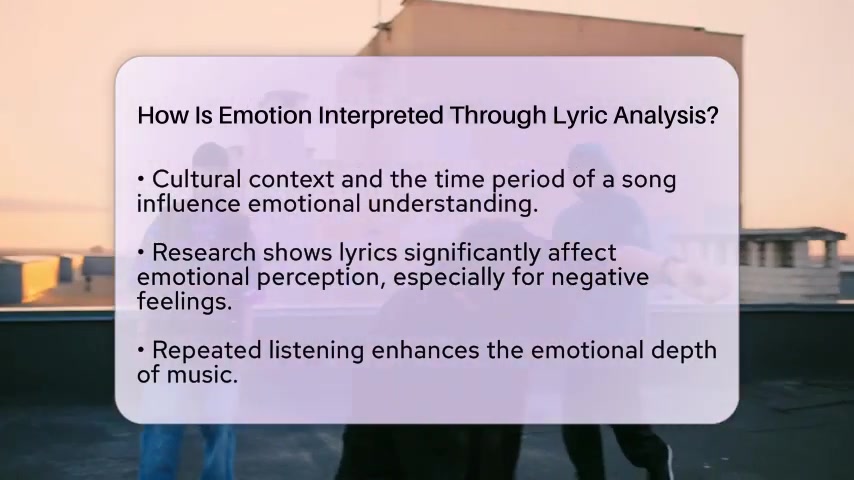
The cultural context in which a song is created and consumed plays a significant role in how emotions are interpreted. The time period, social norms, and prevailing attitudes influence both the songwriter's expression and the listener's understanding. A song written in the 1960s about social change will carry a different emotional weight than a song written today about the same topic.
Consider the impact of social movements, political events, and historical shifts on music. Songs that emerged during the civil rights movement, for example, often conveyed themes of hope, resilience, and determination. Understanding the cultural context of these songs enhances our appreciation of their emotional significance.
Furthermore, cultural differences can also affect emotional interpretation. Certain symbols, metaphors, or musical styles may hold different meanings in different cultures. For example, a melody that sounds mournful in one culture might be celebratory in another.
By considering the cultural context of a song, we can gain a deeper understanding of the artist's intentions and the emotional nuances embedded within the lyrics. This adds another layer of complexity to lyric analysis, enriching our appreciation for the power of music to reflect and shape cultural values and beliefs.
- Time Period: The era in which a song was written.
- Social Norms: Accepted behaviors and beliefs of a society.
- Prevailing Attitudes: Current viewpoints on social and political issues.
- Cultural Differences: Varying interpretations across different cultures.
Research on Lyrics and Emotional Perception
Research confirms that lyrics have a substantial impact on how we perceive emotion in music. Studies have shown that lyrics can amplify the emotional impact of a song, particularly for negative emotions. Words can intensify feelings of sadness, anger, or fear, making the listening experience more potent. Conversely, positive lyrics can uplift and inspire, creating a sense of joy and hope.
This effect is especially true when the lyrics align with the musical elements of the song. A sad melody combined with heart-wrenching lyrics can evoke a profound emotional response. The interplay between music and words creates a synergistic effect, enhancing the overall emotional experience.
Furthermore, research suggests that repeated listening can deepen the emotional connection with a song. As we become more familiar with the lyrics and the music, we begin to appreciate the nuances and subtleties that may have been missed on the first listen. This deepened understanding enhances the emotional impact of the song, making it even more meaningful over time.
Key research findings include:
- Lyrics amplify the emotional impact: Particularly for negative emotions.
- Interplay between music and words: Creates a synergistic effect.
- Repeated listening deepens emotional connection: Enhancing understanding of subtleties.
These research insights highlight the critical role of lyrics in shaping our emotional experiences with music. By understanding how lyrics affect our perception, we can gain a deeper appreciation for the artistry and intention behind the songs we love.
The Influence of Melody on Lyrical Interpretation
It's crucial to understand the influence of the melody itself on how we interpret lyrics. A happy melody can soften the impact of sad lyrics, while a somber tune can intensify the emotional weight of the words. This interplay between melody and lyrics adds another layer of complexity to emotional interpretation.
For example, a song with lyrics about heartbreak might feel less devastating if it's set to an upbeat tempo and a major key. The cheerful melody can provide a sense of hope or resilience, counteracting the sadness in the lyrics. On the other hand, a song with lyrics about loss can feel even more poignant if it's set to a slow tempo and a minor key. The somber melody amplifies the feelings of grief and despair.
This interaction between melody and lyrics is essential in shaping our overall emotional experience of a song. It's important to consider both elements when analyzing the emotional impact of music.
Examples include:
- Happy Melody, Sad Lyrics: Can provide a sense of hope.
- Somber Melody, Loss Lyrics: Can intensify grief.
By considering the interplay between melody and lyrics, we can gain a more nuanced understanding of the emotional landscape of a song. This approach allows us to appreciate the complexity and artistry of musical expression.
Practical Analysis: Identifying Literary Devices, Context, and Perspective
Analyzing lyrics effectively involves several key steps: identifying literary devices, understanding the song's context, and considering the listener's perspective. These elements provide a comprehensive framework for understanding the emotional impact of a song.
- Identifying Literary Devices: Look for metaphors, similes, symbols, and other figures of speech. Understanding these devices will help you uncover the deeper meanings and emotional layers in the lyrics.
- Understanding the Context: Consider the cultural, historical, and personal context of the song. Research the artist's background and the time period in which the song was written. This will provide valuable insights into the artist's intentions and the emotional landscape they are seeking to create.
- Considering the Listener's Perspective: Think about how different listeners might interpret the lyrics based on their own experiences and backgrounds. A song about heartbreak, for example, might resonate more deeply with someone who has recently experienced a similar loss.
By combining these analytical approaches, we can unlock a deeper understanding of the emotional power of lyrics. It allows to not only appreciate the music more, but also provide insight into the human experience.





Most people like





































Report
Please select a reason for reporting
- 13 Reasons to Switch from Snapchat to Text Messaging
- 7 Powerful Speech to Text Apps to Boost Productivity
- 10 Best Speech to Text Tools for Effortless Transcription
- 13 Free Tools to Easily Transcribe Audio to Text
- 15 Surprising Ways Google's Speech-to-Text Boosts Productivity
- 7 Best Free Online Audio to Text Transcription Tools
- 9 Tips to Transcribe Speech to Text Faster and Better
- 13 Best Speech to Text Software for Windows 10 in 2023
- 7 Tips for Choosing the Best Transcriber for Audio to Text
- 11 Reasons Why Dragon Speech-to-Text Apps are Game-Changers
- 6 Secrets to Enhance Your Speech to Text Transcription
- 6 Brilliant Ways to Boost Productivity with Talk-to-Text on Your MacBook
- 6 Ways Transcription Software Converts Audio to Text
- 8 Tips to Transcribe Speech to Text Like a Pro
- 6 Reasons IBM Watson Speech to Text is a Game-Changer
- 14 Powerful Ways Talk-to-Text Improves Your Workflow
- 12 Top Windows Speech-to-Text Software for Efficient Transcription
- 12 Game-Changing Benefits of Apple's Speech to Text Technology
- 9 Powerful Use Cases for AWS Speech to Text Technology
- 10 Easy Steps to Transcribe YouTube Videos to Text
- transcription audio en texte
- online audio transcription
- free audio file transcription
- free ai audio transcription
- audio transcription service
- audio transcription online free
- audio transcription free online
- audio to transcription software
- audio and transcript
- ai audio transcription free
- voice recording to text converter
- translate voice recording to text
- record voice to text
- audio recording to text converter
- voice recording and transcription
- chatgpt voice to text
- gmail voice to text
- speech to text reader
- speech to text ai free
- speech to talk
- How SEO and Marketing Dashboards Empower Agencies to Drive Results
- How to Use AI Tools to Find Internal Linking Opportunities Across a Business Website
- Discover Your Perfect Haircut with AI Hairstyle Apps
- Free Reputation Calculator Tools: How They're Adapting to Score AI Visibility, Not Just Rankings
- Design Professional Flyers for Free on Your Phone
- Best Free Flyer Maker Apps for Android: Design Like a Pro
- How to Know If Your Business Is Ready for an AI Customer Service Agent
- Revolutionizing Storytelling: From Novels to Screenplays with AI
- Create Engaging Animated Explainer Videos with a Free AI Tool
- Stop Multi-Subscribing: Benchmark Top AI Visual Models in One Canvas
- Top 5 Cold Email Software: Maximize Your Outreach in 2025
- Magic School AI: Revolutionizing Quiz & Assessment Generation
- Create Your Own Email Bot and Automate Your Email Tasks
- Beyond Pure Prompts: Optimizing Production with 'Text With Reference' Generation
- Stop Using Boring TTS: My Honest Deep Dive Into VideoAI and the Hunt for the Perfect Custom Voices
- AI & Elections: Defending Democracy Against Misinformation
- Navigating Political Discourse: AI, Deepfakes, and Reality Checks
- Detecting Political Bias in News Articles: A Powerful AI Algorithm
- AI Bias Unveiled: Political Leanings in ChatGPT & Beyond
- Revolutionize Learning: Discover Quizzes AI for Engaging Interactive Quizzes

Copyright ©2026 toolify