































Table of Contents
- Key Points for Digital Anime Art
- Fundamentals of Anime Character Anatomy
- Adding Clothing Details
- Drawing Anime: The Pros and Cons
- Frequently Asked Questions (FAQ)
- Related Questions


Fundamentals of Anime Character Anatomy
Understanding Basic Proportions
The foundation of any compelling character design is a solid grasp of anatomy. In anime, the proportions are often stylized and exaggerated, but they still need to be rooted in reality to be believable. This section focuses on the fundamentals of anime anatomy, emphasizing stylized proportions, dynamic poses, and facial features. Begin with a side profile and a torso. It is critical to visualize and draw all the body muscles in order to present the artwork most realistically and accurately. Start practicing poses from different angles to build your understanding of how the body moves and how clothes flow on it. Don't just think about making a side profile or ignore the hands. Everything matters, if you want to improve, you can’t ignore the hands. If you keep ignoring them, you will not be able to draw them well.
Key Takeaways:
-
Practice drawing the human form in various positions to enhance your understanding of anatomy.
-
Use simple shapes to create the framework of the body before adding details.
-
Focus on the flow of the pose to communicate movement and emotion.
Sketching a Side Profile
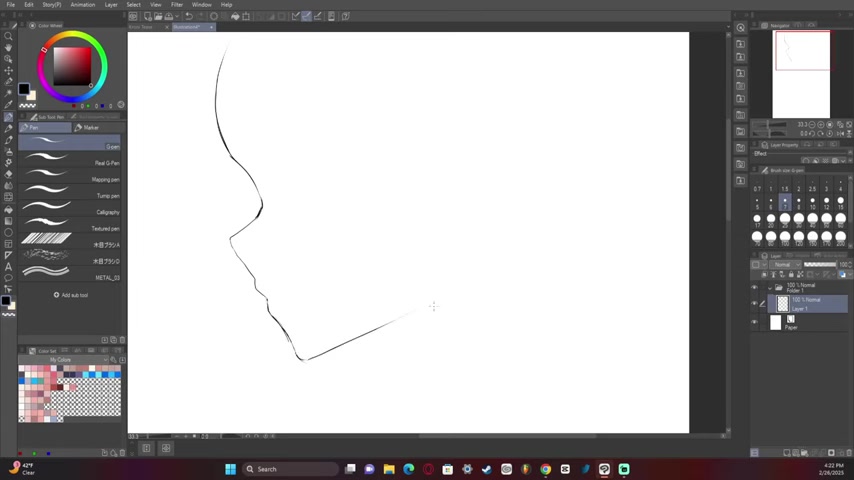
Sketching a side profile can be tough, so you need to get comfortable drawing it before attempting to draw an entire side view artwork. A side profile involves capturing the essential features of the face from a lateral perspective. First, roughly map out a circle to start drawing the head, then add the cheekbones, chin, nose and mouth on a new layer, and combine the layers together as a single layer. One way is to have that side profile, but also have a little bit of the other eye to be showing as well. Drawing the eyes in the side profile takes a bit of fiddling to figure it out. As it takes time to practice it, it will eventually improve.
Key Takeaways:
- Practice the curvature of the face from the forehead to the chin.
- Emphasize the shape and proportion of the nose and lips.
- Use simple shapes to create the framework of the body before adding details.







Most people like
































Report
Please select a reason for reporting
- 13 Reasons to Switch from Snapchat to Text Messaging
- 7 Powerful Speech to Text Apps to Boost Productivity
- 10 Best Speech to Text Tools for Effortless Transcription
- 13 Free Tools to Easily Transcribe Audio to Text
- 15 Surprising Ways Google's Speech-to-Text Boosts Productivity
- 7 Best Free Online Audio to Text Transcription Tools
- 9 Tips to Transcribe Speech to Text Faster and Better
- 13 Best Speech to Text Software for Windows 10 in 2023
- 7 Tips for Choosing the Best Transcriber for Audio to Text
- 11 Reasons Why Dragon Speech-to-Text Apps are Game-Changers
- 6 Secrets to Enhance Your Speech to Text Transcription
- 6 Brilliant Ways to Boost Productivity with Talk-to-Text on Your MacBook
- 6 Ways Transcription Software Converts Audio to Text
- 8 Tips to Transcribe Speech to Text Like a Pro
- 6 Reasons IBM Watson Speech to Text is a Game-Changer
- 14 Powerful Ways Talk-to-Text Improves Your Workflow
- 12 Top Windows Speech-to-Text Software for Efficient Transcription
- 12 Game-Changing Benefits of Apple's Speech to Text Technology
- 9 Powerful Use Cases for AWS Speech to Text Technology
- 10 Easy Steps to Transcribe YouTube Videos to Text
- transcription audio en texte
- online audio transcription
- free audio file transcription
- free ai audio transcription
- audio transcription service
- audio transcription online free
- audio transcription free online
- audio to transcription software
- audio and transcript
- ai audio transcription free
- voice recording to text converter
- translate voice recording to text
- record voice to text
- audio recording to text converter
- voice recording and transcription
- chatgpt voice to text
- gmail voice to text
- speech to text reader
- speech to text ai free
- speech to talk
- Meshy AI: How to Create 3D Models from Text and Images
- How SEO and Marketing Dashboards Empower Agencies to Drive Results
- How to Use AI Tools to Find Internal Linking Opportunities Across a Business Website
- Discover Your Perfect Haircut with AI Hairstyle Apps
- Free Reputation Calculator Tools: How They're Adapting to Score AI Visibility, Not Just Rankings
- Design Professional Flyers for Free on Your Phone
- Best Free Flyer Maker Apps for Android: Design Like a Pro
- How to Know If Your Business Is Ready for an AI Customer Service Agent
- Revolutionizing Storytelling: From Novels to Screenplays with AI
- Create Engaging Animated Explainer Videos with a Free AI Tool
- Meshy AI: How to Create 3D Models from Text and Images
- ASOMobile Helps Teams Benchmark App Store Screenshots Against Competitors
- How to Match LMS Software With Your Organization's Training Plan
- Revolutionizing Email Marketing Agency with AI
- How to Convert BTC to HNT
- Unleashing the Power of AI: Cognizant's Roadmap for Transformation
- Frame to Video Review: A Practical Look at Turning Two Still Frames Into Motion
- NVIDIA NIM: Revolutionizing Supply Chain Data Analysis with AI
- Top AI Tools That Help Brands Stand Out Offline (Not Just Online)
- Top 5 Cold Email Software: Maximize Your Outreach in 2025

Copyright ©2026 toolify