






Table of Contents
- Key Points
- Understanding Fractional Exponents and Radicals
- Advanced Tips and Tricks
- FAQ
- Related Questions



Understanding Fractional Exponents and Radicals
What are Fractional Exponents?
Fractional exponents are a way to represent powers and roots simultaneously. They provide an alternative to radical notation, offering a flexible way to express and manipulate mathematical expressions. A fractional exponent consists of a numerator and a denominator. The denominator indicates the root to be taken, and the numerator indicates the power to which the base is raised. For instance, x^(a/b) represents the b-th root of x raised to the power of a. This concept is crucial in algebra and calculus, allowing for the simplification and solving of equations that involve both powers and roots.
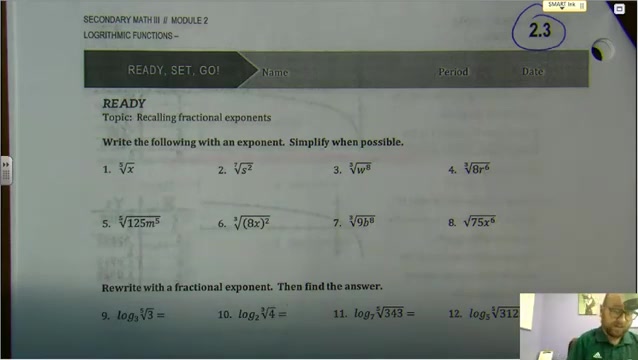
Converting between radical and fractional exponent forms is a fundamental skill in mathematics. This conversion allows for easier manipulation and simplification of expressions, especially when dealing with complex algebraic equations. A radical expression, such as the n-th root of x^m, can be directly converted to a fractional exponent expression as x^(m/n). The index 'n' of the radical becomes the denominator of the fractional exponent, and the power 'm' of the radicand becomes the numerator. Understanding this relationship enables students and professionals to transform complex expressions into more manageable forms for solving problems. This skill is particularly useful in calculus, where simplifying expressions is a crucial step in differentiation and integration.
For example, consider the expression √x, which represents the square root of x. In fractional exponent form, this is expressed as x^(1/2), where 2 is the understood index of the square root. Similarly, the cube root of x, written as ∛x, is equivalent to x^(1/3). When dealing with more complex radicals, such as the fifth root of x squared (⁵√x²), the fractional exponent form becomes x^(2/5). The ability to seamlessly convert between radical and fractional exponent forms not only simplifies algebraic manipulations but also provides a deeper understanding of the interconnectedness between powers and roots in mathematics. Mastering these conversions is a foundational skill for anyone working with advanced mathematical concepts.
Here is a table summarizing the conversion process:
| Radical Form | Fractional Exponent Form |
|---|---|
| √x | x^(1/2) |
| ∛x | x^(1/3) |
| ⁴√x | x^(1/4) |
| ⁵√x² | x^(2/5) |
| ⁿ√x^m | x^(m/n) |
Simplifying Expressions with Fractional Exponents
Simplifying expressions with fractional exponents involves applying various exponent rules to reduce the expression to its simplest form. These rules include the product rule, quotient rule, power rule, and the rule for negative exponents. Understanding and applying these rules is essential for efficiently manipulating and simplifying complex expressions involving fractional exponents. The goal is to eliminate negative exponents, combine like terms, and reduce the overall complexity of the expression. Mastering these simplification techniques is crucial for success in algebra, calculus, and other advanced mathematical fields.
The product rule states that when multiplying two expressions with the same base, you add their exponents. In other words, x^a x^b = x^(a+b). This rule is particularly useful when simplifying expressions involving fractional exponents. For example, consider the expression x^(1/2) x^(1/4). Applying the product rule, we add the exponents: 1/2 + 1/4 = 3/4. Therefore, the simplified expression is x^(3/4). This technique allows for combining multiple terms with the same base into a single, simplified term, making further calculations easier.
The quotient rule states that when dividing two expressions with the same base, you subtract their exponents. Mathematically, this is expressed as x^a / x^b = x^(a-b). This rule is the counterpart to the product rule and is equally important in simplifying expressions with fractional exponents. For instance, consider the expression x^(2/3) / x^(1/3). Applying the quotient rule, we subtract the exponents: 2/3 - 1/3 = 1/3. Thus, the simplified expression is x^(1/3). This rule is particularly useful for reducing complex fractions into simpler, more manageable forms.
The power rule states that when raising an expression with an exponent to another exponent, you multiply the exponents. This rule is written as (x^a)^b = x^(ab). The power rule is essential for simplifying expressions where a power is raised to another power. For example, consider the expression (x^(1/2))^3. Applying the power rule, we multiply the exponents: 1/2 3 = 3/2. Therefore, the simplified expression is x^(3/2). This rule is frequently used in calculus and advanced algebra to simplify complex terms and make differentiation and integration processes more straightforward.
Negative exponents indicate the reciprocal of the base raised to the positive exponent. The rule is x^(-a) = 1 / x^a. Dealing with negative exponents is a crucial aspect of simplifying algebraic expressions. For example, consider the expression x^(-1/2). Applying the negative exponent rule, we rewrite it as 1 / x^(1/2). This transformation eliminates the negative exponent, making the expression easier to work with. Similarly, if you have 1 / x^(-1/3), it can be rewritten as x^(1/3). Eliminating negative exponents is often a necessary step in simplifying expressions and preparing them for further mathematical operations.
Solving Logarithmic Equations with Fractional Exponents
Logarithmic equations can often involve radicals and fractional exponents, requiring a solid understanding of exponent rules and logarithmic properties to solve them effectively. The key to solving these equations lies in converting the logarithmic form to exponential form and then simplifying the resulting expression using the rules of exponents. Radicals can be rewritten as fractional exponents, and these exponents can be manipulated to isolate the variable. By applying these techniques, complex logarithmic equations can be transformed into simpler algebraic equations that are easier to solve.
Convert Logarithmic Form to Exponential Form: The first step in solving a logarithmic equation is to convert it from logarithmic form to exponential form. The general form of a logarithmic equation is log_b(x) = y, which can be converted to exponential form as b^y = x. This conversion is crucial because it transforms the logarithmic equation into a more manageable algebraic equation.
Rewrite Radicals as Fractional Exponents: When logarithmic equations involve radicals, rewriting these radicals as fractional exponents is a critical step. For example, if the equation contains √x, rewrite it as x^(1/2). This transformation allows you to apply exponent rules more easily and simplify the equation effectively. Fractional exponents make it possible to manipulate the expression using algebraic techniques that might not be obvious in radical form.
Apply Exponent Rules to Simplify: Once radicals are converted to fractional exponents and the equation is in exponential form, you can apply various exponent rules to simplify the expression. These rules include the product rule, quotient rule, and power rule. Using these rules, you can combine like terms, eliminate negative exponents, and reduce the overall complexity of the equation.
Solve the Resulting Algebraic Equation: After simplifying the equation using exponent rules, you should be left with a more straightforward algebraic equation that can be solved using standard algebraic techniques. This might involve isolating the variable, factoring, or using the quadratic formula, depending on the nature of the equation. The goal is to manipulate the equation until the variable is isolated on one side, giving you the solution.
Check for Extraneous Solutions: In solving logarithmic equations, it is essential to check for extraneous solutions. Extraneous solutions are solutions that satisfy the transformed equation but do not satisfy the original logarithmic equation. This can happen because logarithmic functions have domain restrictions (i.e., the argument of the logarithm must be positive). To check for extraneous solutions, plug each potential solution back into the original equation and verify that it holds true and that the arguments of all logarithms are positive.





Most people like


































Report
Please select a reason for reporting
- 13 Reasons to Switch from Snapchat to Text Messaging
- 7 Powerful Speech to Text Apps to Boost Productivity
- 10 Best Speech to Text Tools for Effortless Transcription
- 13 Free Tools to Easily Transcribe Audio to Text
- 15 Surprising Ways Google's Speech-to-Text Boosts Productivity
- 7 Best Free Online Audio to Text Transcription Tools
- 9 Tips to Transcribe Speech to Text Faster and Better
- 13 Best Speech to Text Software for Windows 10 in 2023
- 7 Tips for Choosing the Best Transcriber for Audio to Text
- 11 Reasons Why Dragon Speech-to-Text Apps are Game-Changers
- 6 Secrets to Enhance Your Speech to Text Transcription
- 6 Brilliant Ways to Boost Productivity with Talk-to-Text on Your MacBook
- 6 Ways Transcription Software Converts Audio to Text
- 8 Tips to Transcribe Speech to Text Like a Pro
- 6 Reasons IBM Watson Speech to Text is a Game-Changer
- 14 Powerful Ways Talk-to-Text Improves Your Workflow
- 12 Top Windows Speech-to-Text Software for Efficient Transcription
- 12 Game-Changing Benefits of Apple's Speech to Text Technology
- 9 Powerful Use Cases for AWS Speech to Text Technology
- 10 Easy Steps to Transcribe YouTube Videos to Text
- transcription audio en texte
- online audio transcription
- free audio file transcription
- free ai audio transcription
- audio transcription service
- audio transcription online free
- audio transcription free online
- audio to transcription software
- audio and transcript
- ai audio transcription free
- voice recording to text converter
- translate voice recording to text
- record voice to text
- audio recording to text converter
- voice recording and transcription
- chatgpt voice to text
- gmail voice to text
- speech to text reader
- speech to text ai free
- speech to talk
- Meshy AI: How to Create 3D Models from Text and Images
- How SEO and Marketing Dashboards Empower Agencies to Drive Results
- How to Use AI Tools to Find Internal Linking Opportunities Across a Business Website
- Discover Your Perfect Haircut with AI Hairstyle Apps
- Free Reputation Calculator Tools: How They're Adapting to Score AI Visibility, Not Just Rankings
- Design Professional Flyers for Free on Your Phone
- Best Free Flyer Maker Apps for Android: Design Like a Pro
- How to Know If Your Business Is Ready for an AI Customer Service Agent
- Revolutionizing Storytelling: From Novels to Screenplays with AI
- Create Engaging Animated Explainer Videos with a Free AI Tool
- Automate Lead Generation: A Comprehensive Guide with AI Agents
- Revideo.io: The Future of Reverse Video Search Technology
- Revolutionizing Email Marketing Agency with AI
- Breaking the Character Drift Dilemma: A Practical Test of Smart Shot
- Meshy AI: How to Create 3D Models from Text and Images
- ASOMobile Helps Teams Benchmark App Store Screenshots Against Competitors
- How to Match LMS Software With Your Organization's Training Plan
- How to Convert BTC to HNT
- Unleashing the Power of AI: Cognizant's Roadmap for Transformation
- Frame to Video Review: A Practical Look at Turning Two Still Frames Into Motion

Copyright ©2026 toolify