































Table of Contents
- Key Points
- Unveiling the Futuristic Answer Generator
- The Significance of Creative and Systems Thinking
- Step-by-Step Guide to Using the Futuristic Answer Generator
- Advantages and Disadvantages of the Futuristic Answer Generator
- Frequently Asked Questions
- Related Questions



Unveiling the Futuristic Answer Generator
What is the Futuristic Answer Generator?
The Futuristic Answer Generator is not just a program; it's a portal. Envisioned as a fusion of advanced technology and boundless imagination, it offers an immersive experience that transcends the ordinary. By seamlessly integrating visually stunning sci-fi elements, dynamically generated soundscapes, and imaginative responses, this generator invites users on an extraordinary journey into the realms of the unknown.

Whether one seeks cosmic insights or simply desires a glimpse into the fantastical realms of tomorrow, this generator serves as a gateway, offering a unique blend of anticipation and creativity. The project embodies the spirit of technological artistry, carefully crafted to inspire wonder and exploration.
Imagine a digital oracle that speaks in the language of science fiction, where every question unfolds into a multi-sensory experience. That’s precisely what this answer generator delivers—a unique intersection of technology and creative vision. It leverages the power of Python, a versatile programming language, to construct a graphical user interface (GUI) that is not only functional but also aesthetically engaging. In essence, it embodies the core principles of user-centric design while pushing the boundaries of creative technology.
Moreover, the project seamlessly integrates multimedia elements to enhance the overall user experience. Dynamic soundscapes, brought to life through the Pygame library, add an extra layer of immersion, drawing users deeper into the fantastical realms of tomorrow. The inclusion of captivating visual assets, sourced from resources like Giphy and refined using tools like D-ID, elevates the aesthetic appeal of the generator, making it a truly captivating experience from start to finish. It’s a project that celebrates the fusion of art and technology, carefully designed to ignite the imagination and inspire a sense of wonder.
How the Futuristic Answer Generator Works
The Futuristic Answer Generator operates on a principle of random selection from a pre-typed list of imaginative responses. This core functionality is achieved using Python's random library, ensuring each answer feels unique and spontaneous. The generator’s mechanics rely on pre-defined responses, but that is by design to allow for a bespoke experience. This approach empowers the user to feel as though the answer is being catered to their question, even though it is at random. The random selection mechanics also assist in creating unique iterations every time.
To elevate the user experience, the GUI is constructed using the Tkinter library, providing a visually appealing and user-friendly interface.

This combination allows users to effortlessly pose questions and receive answers within an immersive environment. Tkinter also helps create a seamless integration of visuals and sound, making interactions more engaging.
Sound generation utilizes the Pygame library to create cosmic soundscapes, adding an aural dimension that complements the visuals. This symphony is not just a set of random noises but a carefully designed sound profile that enhances the overall futuristic theme. Users can expect a blend of ethereal and technological sounds, designed to stir the imagination. Pygame allows for a nuanced approach to sound generation, enabling the integration of various audio effects that add depth and character to the user experience.
Furthermore, the generator addresses common technical challenges, such as static image displays, through innovative solutions like the integration of the Pillow library. The visual elements are meant to be captivating, and dynamic image display becomes essential to keeping users immersed. Integrating Pillow allows for the smooth and dynamic display of animated GIF frames, transforming what could have been a static visual into a lively, engaging component. The generator then becomes a tool for inspiration and creative exploration, a testament to the power of blending imagination with technical skill.
Step-by-Step Guide to Using the Futuristic Answer Generator
Step 1: Launch the Program
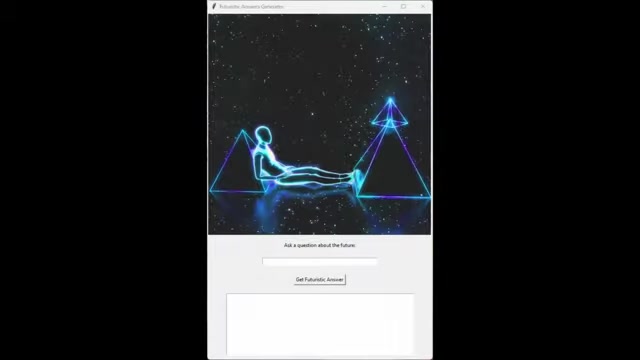
To begin your journey into the future, first, launch the Futuristic Answer Generator program. Ensure that you have successfully installed all necessary dependencies, including Python, Tkinter, Pygame, and Pillow. Upon launching the application, you'll be greeted with a visually engaging GUI, designed to transport you into a world of science fiction.
Step 2: Pose Your Question
In the text input field, type your question about the future. Whether you're seeking cosmic insights or a glimpse into tomorrow's possibilities, the generator is ready to provide an imaginative response. Make sure that you type the correct syntax in the field, as some answers will be more sensitive to prompts than others.
Step 3: Generate Your Futuristic Answer
Click the 'Get Futuristic Answer' button to initiate the answer generation process. The program will randomly select from a list of pre-typed answers, providing you with a unique response tailored to your inquiry. As the answer appears, immerse yourself in the dynamic soundscapes generated by Pygame, adding an auditory dimension to your experience. Read and consider the answer generated, and think about how it applies to your life.
Step 4: Repeat or Explore Further
Feel free to repeat the process as many times as you like, exploring different questions and receiving new, imaginative answers. Alternatively, you can delve deeper into the program’s code, experimenting with modifications and customizations to tailor the experience to your preferences. You can do this by opening the .py file in your text editor of choice. Some familiarity with the python libraries mentioned above will be essential for this task.





Most people like




































Report
Please select a reason for reporting
- 13 Reasons to Switch from Snapchat to Text Messaging
- 7 Powerful Speech to Text Apps to Boost Productivity
- 10 Best Speech to Text Tools for Effortless Transcription
- 13 Free Tools to Easily Transcribe Audio to Text
- 15 Surprising Ways Google's Speech-to-Text Boosts Productivity
- 7 Best Free Online Audio to Text Transcription Tools
- 9 Tips to Transcribe Speech to Text Faster and Better
- 13 Best Speech to Text Software for Windows 10 in 2023
- 7 Tips for Choosing the Best Transcriber for Audio to Text
- 11 Reasons Why Dragon Speech-to-Text Apps are Game-Changers
- 6 Secrets to Enhance Your Speech to Text Transcription
- 6 Brilliant Ways to Boost Productivity with Talk-to-Text on Your MacBook
- 6 Ways Transcription Software Converts Audio to Text
- 8 Tips to Transcribe Speech to Text Like a Pro
- 6 Reasons IBM Watson Speech to Text is a Game-Changer
- 14 Powerful Ways Talk-to-Text Improves Your Workflow
- 12 Top Windows Speech-to-Text Software for Efficient Transcription
- 12 Game-Changing Benefits of Apple's Speech to Text Technology
- 9 Powerful Use Cases for AWS Speech to Text Technology
- 10 Easy Steps to Transcribe YouTube Videos to Text
- transcription audio en texte
- online audio transcription
- free audio file transcription
- free ai audio transcription
- audio transcription service
- audio transcription online free
- audio transcription free online
- audio to transcription software
- audio and transcript
- ai audio transcription free
- voice recording to text converter
- translate voice recording to text
- record voice to text
- audio recording to text converter
- voice recording and transcription
- chatgpt voice to text
- gmail voice to text
- speech to text reader
- speech to text ai free
- speech to talk
- Meshy AI: How to Create 3D Models from Text and Images
- How SEO and Marketing Dashboards Empower Agencies to Drive Results
- How to Use AI Tools to Find Internal Linking Opportunities Across a Business Website
- Discover Your Perfect Haircut with AI Hairstyle Apps
- Free Reputation Calculator Tools: How They're Adapting to Score AI Visibility, Not Just Rankings
- Design Professional Flyers for Free on Your Phone
- Best Free Flyer Maker Apps for Android: Design Like a Pro
- How to Know If Your Business Is Ready for an AI Customer Service Agent
- Revolutionizing Storytelling: From Novels to Screenplays with AI
- Create Engaging Animated Explainer Videos with a Free AI Tool
- Meshy AI: How to Create 3D Models from Text and Images
- ASOMobile Helps Teams Benchmark App Store Screenshots Against Competitors
- How to Match LMS Software With Your Organization's Training Plan
- Revolutionizing Email Marketing Agency with AI
- How to Convert BTC to HNT
- Unleashing the Power of AI: Cognizant's Roadmap for Transformation
- Frame to Video Review: A Practical Look at Turning Two Still Frames Into Motion
- NVIDIA NIM: Revolutionizing Supply Chain Data Analysis with AI
- Top AI Tools That Help Brands Stand Out Offline (Not Just Online)
- Top 5 Cold Email Software: Maximize Your Outreach in 2025

Copyright ©2026 toolify