































Table of Contents
- Key Points
- Understanding Spatial Filtering and Image Sharpening
- Sharpening Spatial Filters: Derivative-Based Techniques
- Implementing Laplacian Sharpening
- Sobel Operators: Variants on the Laplacian
- Assessing Derivative Filters: Pros and Cons
- Frequently Asked Questions about Image Sharpening
- Related Questions


Understanding Spatial Filtering and Image Sharpening
Spatial Filtering Refresher
Spatial filtering involves applying a filter mask to each pixel in an image. The filter mask is a small matrix of coefficients that determines how the pixel's value is modified based on the values of its neighboring pixels.
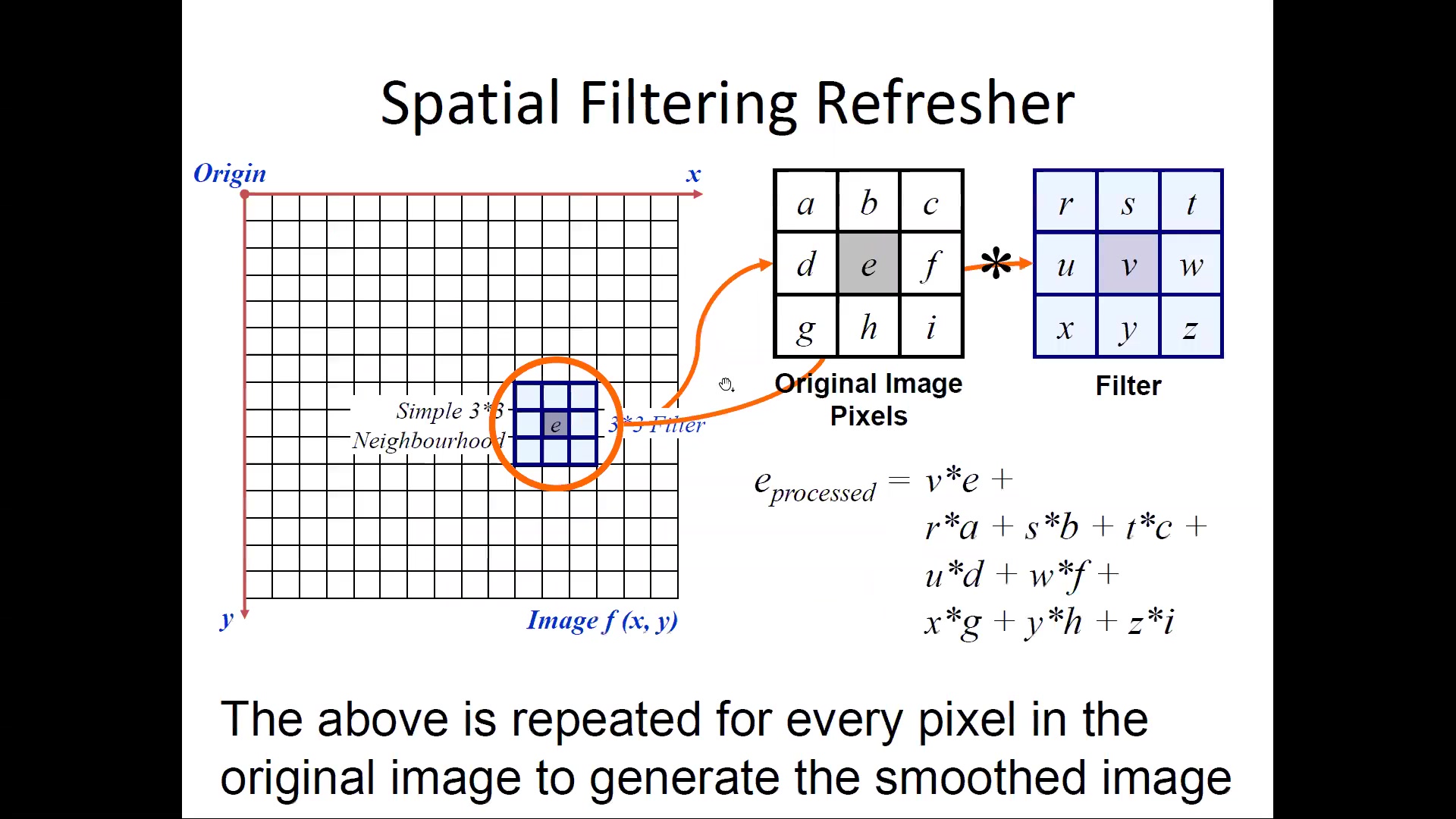
This process is repeated for every pixel, resulting in a transformed image.
Spatial filtering is performed directly on the image pixels, making it a spatial domain technique. This is in contrast to frequency domain filtering, which operates on the image's frequency components.
The core of spatial filtering lies in the convolution operation. This operation involves sliding the filter mask across the image, centering it on each pixel. The corresponding pixel values are multiplied by the filter coefficients, and the sum of these products becomes the new value for the center pixel. This process effectively modifies the pixel based on the characteristics defined by the filter mask, such as smoothing or sharpening. Smoothing Spatial filters were discussed previously. Now, let's shift to sharpening.
The Need for Image Sharpening
Image sharpening is essential for enhancing detail and Clarity in images.
Smoothing filters, while useful for noise reduction, often blur fine details. Sharpening filters, on the other HAND, aim to counteract this blurring effect and make edges and subtle features more prominent. This is particularly useful when:
- The image suffers from blurring, making details indistinct.
- Highlighting edges for object recognition or analysis is crucial.
- Improved visual Perception of details is desired.
By selectively amplifying high-frequency components, sharpening filters can significantly improve an image's visual impact and make subtle features more noticeable. This is especially helpful when working with medical images, satellite imagery, or forensic analysis where subtle details are critical for accurate interpretation. Image sharpening filters also seeks to highlight fine details of an image.
Sharpening Spatial Filters: Derivative-Based Techniques
Spatial Differentiation: The Core of Sharpening
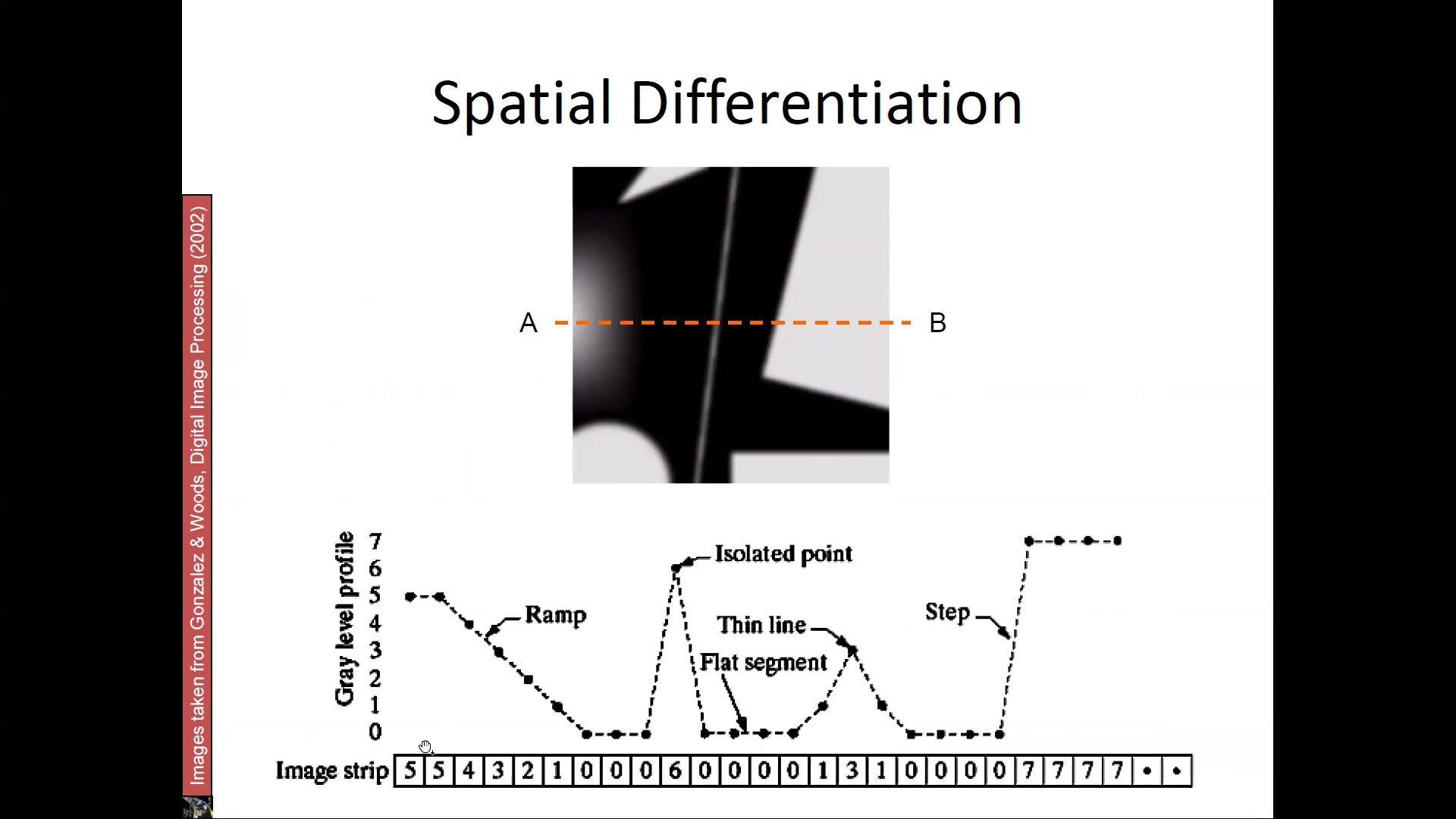
Sharpening filters rely on spatial differentiation, which measures the rate of change of pixel intensity values within an image.
Areas with high intensity gradients correspond to edges and sharp details, while areas with little change represent smooth regions. By emphasizing these gradients, sharpening filters can make edges and details more visible.
A simple 1-dimensional example can illustrate this concept. Consider a line of pixels with varying intensity values. Differentiation helps to identify the points where the intensity changes rapidly, corresponding to edges in the image. In more practical terms, differentiation pinpoints where blurring has occurred.
Spatial differentiation in the context of image processing focuses on measuring the change in pixel intensities across the spatial domain. Because images are digital representations, these changes are measured discretely. Spatial differentiation typically employs difference equations to approximate the continuous derivatives that characterize these intensity variations.
This approach makes it possible to analyze the rate at which pixel values change in relation to their neighbors, which is fundamental to edge detection and feature enhancement.
First Derivative Filters
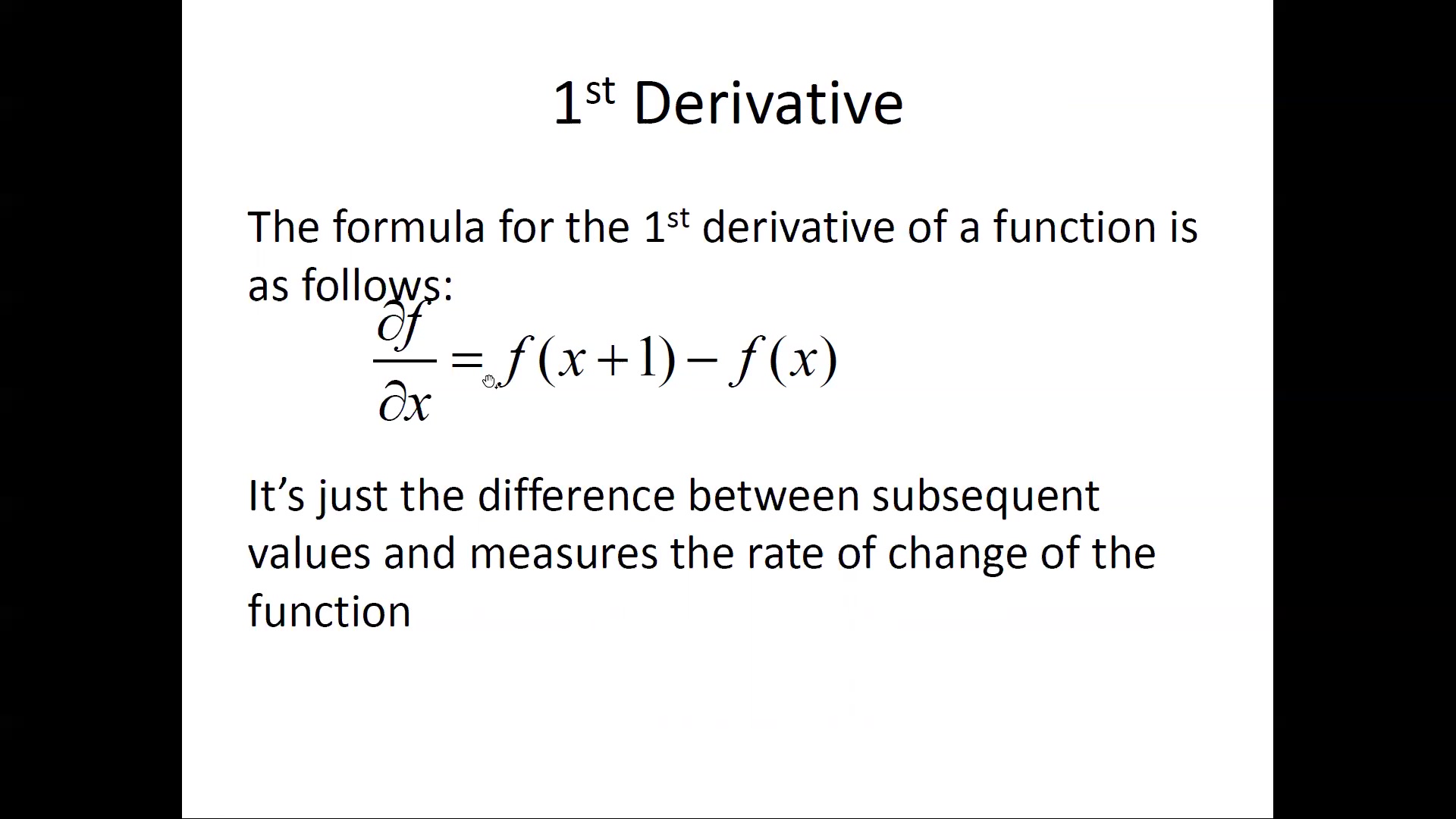
The first derivative of an image function measures the rate of change in pixel intensity along a particular direction.
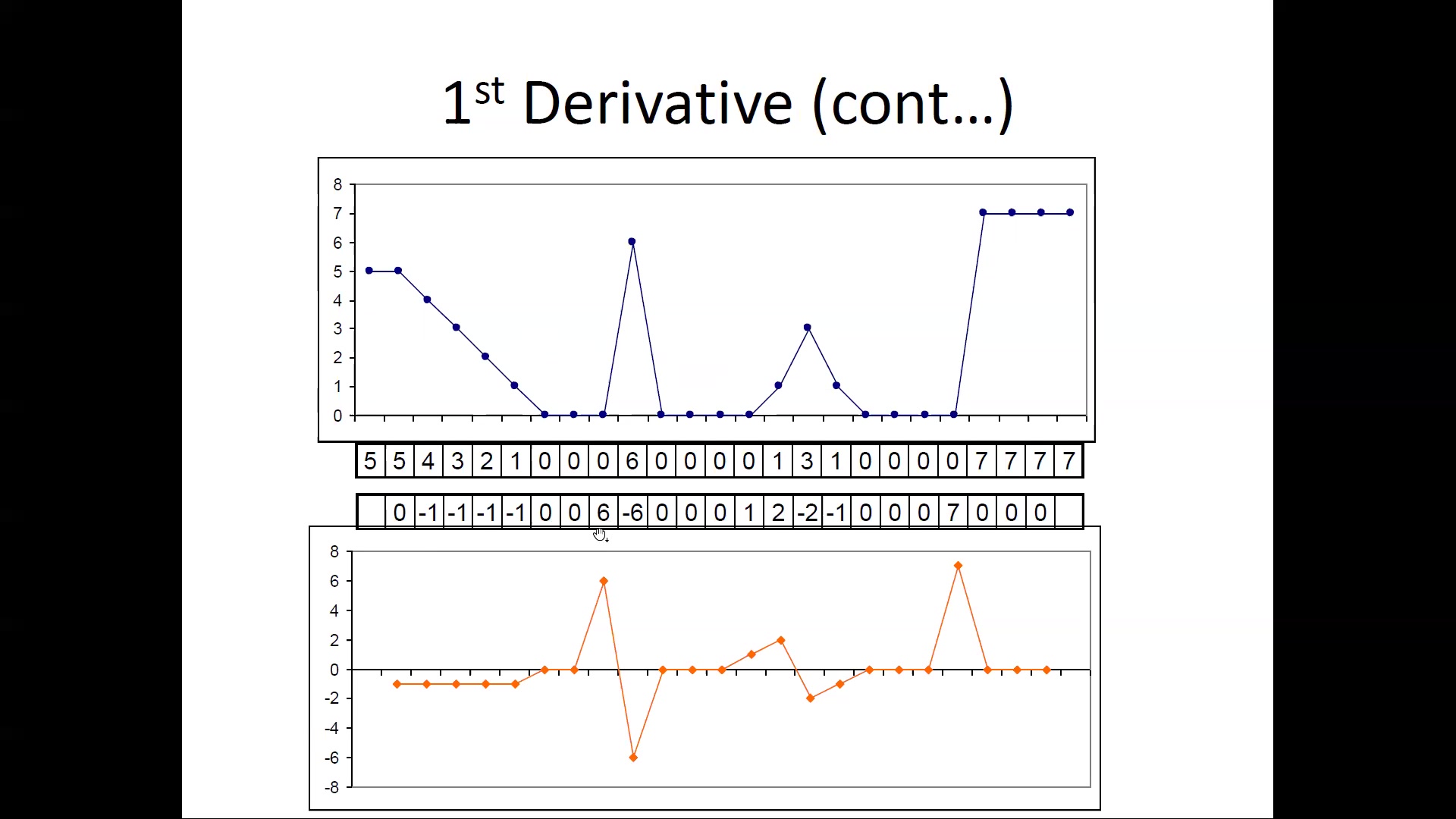
In a discrete setting, this is approximated by calculating the difference between adjacent pixel values. The formula for the first derivative in the x-direction is:
∂f/∂x = f(x+1) - f(x)
This simply means subtracting the intensity value of a pixel from the intensity value of its right neighbor. The absolute value of the result indicates the strength of the edge.
The first derivative's characteristics:
- Produces thicker edges
- Sensitive to noise
Due to its noise sensitivity, first-derivative filtering requires careful implementation or pre-processing steps, such as smoothing, to mitigate the amplification of noise. Edge detection using first derivatives is common, but it benefits from refinement to reduce inaccuracies caused by noise.
Second Derivative Filters
Second derivative filters measure the rate of change of the first derivative.
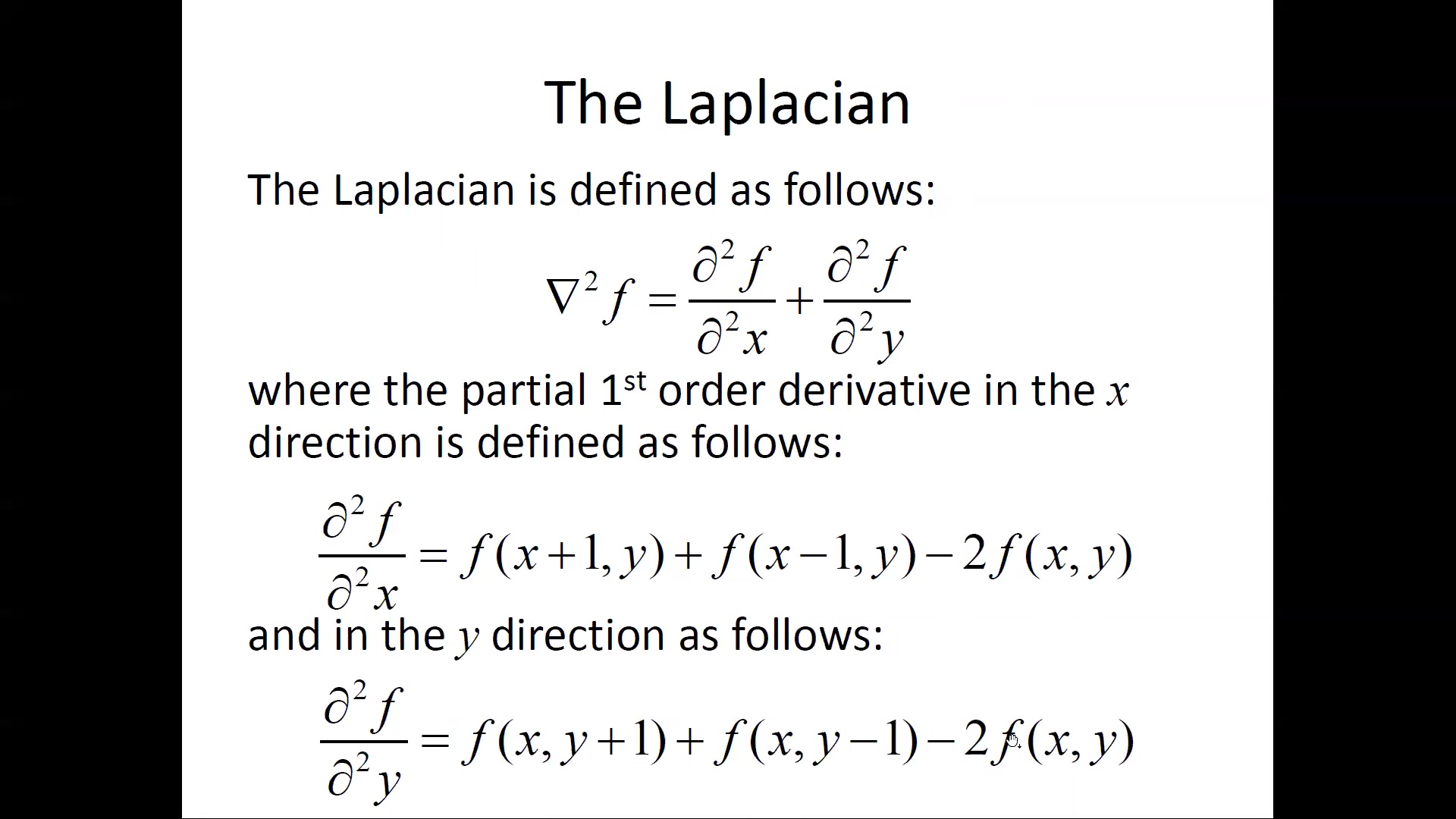
This effectively highlights points where the intensity gradient changes rapidly, corresponding to finer details and edges. The formula for the second derivative in the x-direction is:
∂²f/∂x² = f(x+1) + f(x-1) - 2f(x)
This involves taking the sum of the pixel's left and right neighbors and subtracting twice the pixel's value. The result is a more sensitive measure of changes in intensity gradient.
The second derivative’s characteristics:
- Enhances fine details
- Stronger response to noise
Second derivatives are more useful for detailing what is happening within an image. They're highly sensitive to noise and can enhance the image as a whole.







Most people like






























Report
Please select a reason for reporting
- 13 Reasons to Switch from Snapchat to Text Messaging
- 7 Powerful Speech to Text Apps to Boost Productivity
- 10 Best Speech to Text Tools for Effortless Transcription
- 13 Free Tools to Easily Transcribe Audio to Text
- 15 Surprising Ways Google's Speech-to-Text Boosts Productivity
- 7 Best Free Online Audio to Text Transcription Tools
- 9 Tips to Transcribe Speech to Text Faster and Better
- 13 Best Speech to Text Software for Windows 10 in 2023
- 7 Tips for Choosing the Best Transcriber for Audio to Text
- 11 Reasons Why Dragon Speech-to-Text Apps are Game-Changers
- 6 Secrets to Enhance Your Speech to Text Transcription
- 6 Brilliant Ways to Boost Productivity with Talk-to-Text on Your MacBook
- 6 Ways Transcription Software Converts Audio to Text
- 8 Tips to Transcribe Speech to Text Like a Pro
- 6 Reasons IBM Watson Speech to Text is a Game-Changer
- 14 Powerful Ways Talk-to-Text Improves Your Workflow
- 12 Top Windows Speech-to-Text Software for Efficient Transcription
- 12 Game-Changing Benefits of Apple's Speech to Text Technology
- 9 Powerful Use Cases for AWS Speech to Text Technology
- 10 Easy Steps to Transcribe YouTube Videos to Text
- transcription audio en texte
- online audio transcription
- free audio file transcription
- free ai audio transcription
- audio transcription service
- audio transcription online free
- audio transcription free online
- audio to transcription software
- audio and transcript
- ai audio transcription free
- voice recording to text converter
- translate voice recording to text
- record voice to text
- audio recording to text converter
- voice recording and transcription
- chatgpt voice to text
- gmail voice to text
- speech to text reader
- speech to text ai free
- speech to talk
- Revolutionizing Storytelling: From Novels to Screenplays with AI
- Create Engaging Animated Explainer Videos with a Free AI Tool
- Stop Multi-Subscribing: Benchmark Top AI Visual Models in One Canvas
- Best Seedance 2.5 API Provider: Every Price on the Market, Checked at Source
- AI OnlyFans: How to Generate $30,000/Month (Legally)
- Transform Your Script into an Engaging Video with AI Video Maker!
- AI Marketing Automation: A Comprehensive Guide for Small Businesses
- Midjourney Alternative for Anime Art Creators: Why PixAI May Be Better for Character Workflows
- 10 Things Most People Get Wrong About AI Image Search
- AI Girlfriend Apps: Top Choices Redefining Relationships 2025
- Top 4 AI Platforms to Extend Video: The Ultimate Comparison for Creators
- Top 8 Best AI Image Editor Tools for Creative Professionals in 2026
- Experience the Future of Virtual Assistants with F.R.I.D.A.Y. AI
- Learn How to Train an AI to Play Snake with Reinforcement Learning
- Creating a Unique AI Game Environment with Pygame
- Mastering the Classic Java Snake Game
- Discover the Power of Codex: Snake Game Created in Python
- Building an AI to Master Snake Game
- Revolutionize the Classic Snake Game with AI
- Websim AI: Create Games and Apps with Just a Few Prompts

Copyright ©2026 toolify