






















Leveraging Claude 3.7 Sonnet for AI-Powered PHP Application Development

Updated on Sep 01,2025

In the rapidly evolving landscape of artificial intelligence, ensuring the output from AI models sounds natural and human-written is paramount. This article dives into how to leverage Claude 3.7 Sonnet, a powerful AI model, to develop a PHP application that can analyze AI-generated content, remove robotic phrases, and enhance its human-like quality. We'll explore the process, challenges, and potential solutions for creating such an application, along with alternative approaches using API-based credits for flexibility and cost management. This approach ensures that the output not only meets the required standards but also can bypass various AI detection tools, thereby adding authenticity to the text. Throughout this guide, we will be using several keywords like Claude 3.7 Sonnet, PHP application development, AI-generated text analysis, and AI detection bypassing.

Key Points

Using Claude 3.7 Sonnet for building a PHP application to refine AI-generated text.

Analyzing AI articles to convert them into human-written content.

Ensuring the output passes AI detection tools.

Exploring the free version of Claude and its limitations.

Using the Anthropic console for API access and credit purchasing.

Setting up Claude API in Chatbox desktop version.

Considering OpenRouter as an alternative for pay-as-you-go API credits.

Building a PHP Application with Claude 3.7 Sonnet

The Goal: Humanizing AI-Generated Content

The primary objective is to develop a PHP application that can accept long-form text or articles generated by AI models and refine them to sound as if they were written by a human. This involves analyzing the text, identifying and removing phrases that sound robotic, and ensuring the final output can pass various AI detection tools. This aim is vital in maintaining authenticity and avoiding issues related to AI-generated content detection, which is becoming increasingly sophisticated. We will heavily rely on Claude 3.7 Sonnet for its advanced capabilities in natural language processing and text refinement. The development process will integrate PHP application development techniques combined with the AI analysis provided by Claude, enhancing the quality and credibility of the content.

This involves several complex steps:

  • Text Analysis: Breaking down the AI-generated text to identify patterns and phrases indicative of ai writing.
  • Phrase Removal: Replacing robotic or formulaic phrases with more natural language.
  • Text Enhancement: Adding human-like nuances and improving the overall flow and readability of the text.
  • AI Detection Bypassing: Implementing strategies to ensure the refined text avoids detection by common AI detection tools.

By achieving these steps, the application can create content that retains the informative aspects of the AI-generated text while sounding authentically human, addressing the challenges of modern content creation and management.

Using Claude 3.7 Sonnet: Initial Attempt with the Free Version

The initial approach involves using the free version of Claude 3.7 Sonnet directly through its web interface to assess its capabilities. The user copies the instructions for the desired PHP application into the Prompt field and submits the request. However, the free version often struggles with complex tasks due to resource limitations and high demand. The web interface is likely overloaded, especially soon after the release of 3.7 Sonnet, resulting in frequent failures. AI-generated text analysis requests could be processed if the server capacity allowed. This limitation underscores the need for alternative solutions such as upgrading to a pro plan or using API-based access through platforms like Anthropic Console.

While the free version provides a quick way to test basic functionalities, it is not suitable for resource-intensive tasks such as developing an entire application. Therefore, further steps need to be taken to find a robust solution.

The major limitation of the free version is the server overload. With many users trying to leverage Claude 3.7 Sonnet after its release, the free version often fails to deliver reliable results. This prompts the consideration of using API credits through the Anthropic console or other platforms like OpenRouter, which offer more consistent and scalable access to the AI model.

Anthropic Console: Accessing API and Purchasing Credits
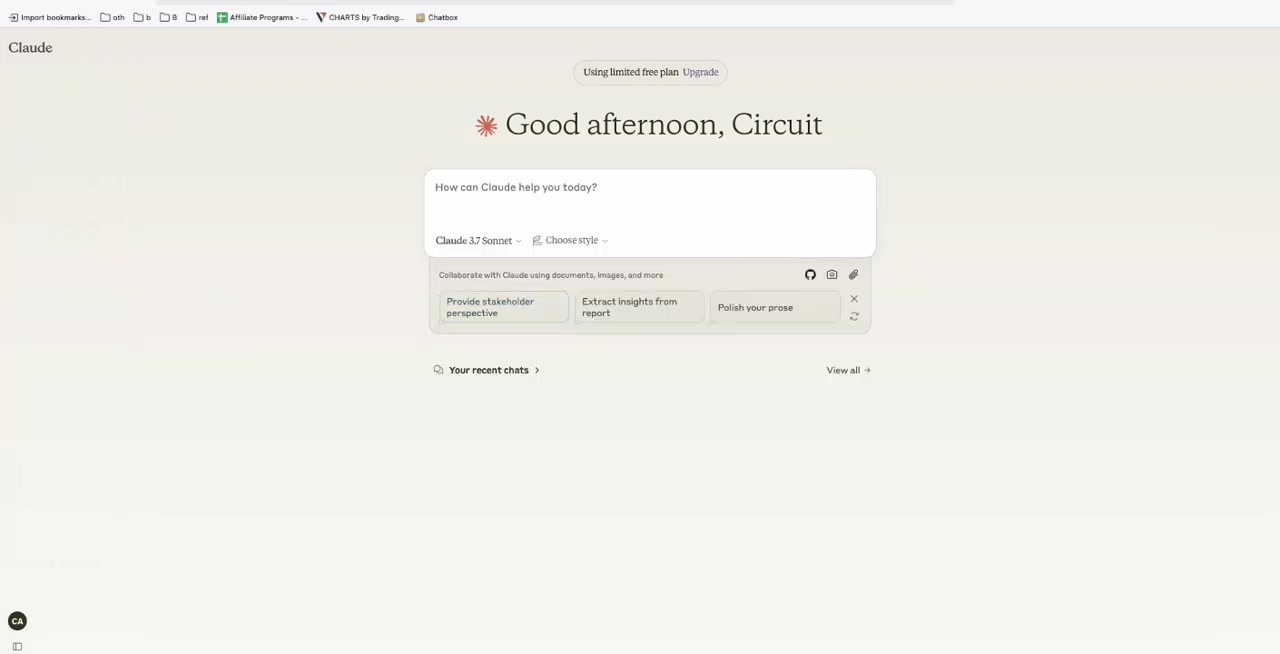
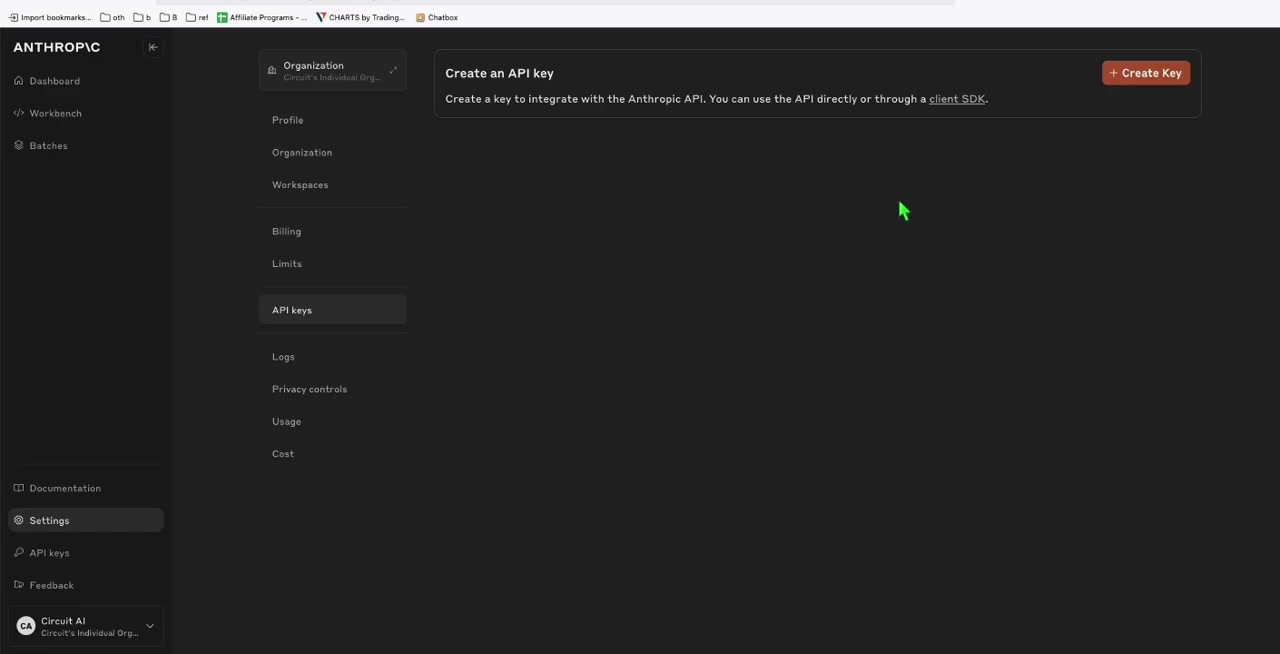
If the free version of Claude 3.7 Sonnet is insufficient, accessing the Anthropic console becomes necessary. The console allows users to manage API keys, purchase credits, and monitor usage. By navigating to the billing section, users can buy credits that are consumed based on API usage. This pay-as-you-go model is advantageous for users who require flexibility and do not want to commit to a subscription. Creating an API key within the console enables programmatic access to Claude 3.7 Sonnet, allowing for more sophisticated and reliable integration into the PHP application.

The steps for accessing the API and purchasing credits include:

  1. Creating an Account: Sign up or log in to the Anthropic console at console.anthropic.com.
  2. Navigating to Billing: Go to the billing section to view available credits and purchase options.
  3. Purchasing Credits: Select a credit package and complete the purchase.
  4. Generating API Key: Go to the API keys section and generate a new key.
  5. Integrating API Key: Use the API key in the PHP application to access Claude 3.7 Sonnet.

This approach provides a scalable solution for AI-generated text analysis and refinement. By using the API, developers can ensure that the PHP application reliably accesses Claude 3.7 Sonnet and processes text as needed. Moreover, the pay-as-you-go model offers a cost-effective way to manage resources without the constraints of the free version.

Chatbox Desktop Version: Configuring Claude API
Another alternative for using Claude 3.7 Sonnet with an API is through the Chatbox desktop application. The Chatbox desktop version provides a user-friendly interface to configure the Claude API and utilize it for various tasks. Unlike the web version, the desktop version supports selecting Claude 3.7 Sonnet if you are using the API. This is particularly useful when the free version is overloaded. Chatbox simplifies the process of integrating the API, enabling developers to efficiently refine AI-generated text. It also allows direct access to various AI models, making it an excellent option for testing and development. The desktop version has the functionality while the online version does not, making it the best pick.

The configuration process involves:

  • Installing Chatbox: Download and install the Chatbox desktop application.
  • Accessing Settings: Open Chatbox and go to the settings menu.
  • Selecting Claude API: Choose Claude API as the provider.
  • Entering API Key: Input the API key generated from the Anthropic console.
  • Choosing Model: Select Claude 3.7 Sonnet as the model.
  • Saving Settings: Save the configuration and start using the API.

Integrating Claude 3.7 Sonnet in Chatbox is a valuable strategy because the desktop version includes the latest functionality of the AI-generated text analysis tool. By configuring the PHP application development using the API with Chatbox desktop version, developers gain a reliable and efficient tool for processing and refining AI-generated content, ensuring high-quality and human-like text output.

Exploring OpenRouter: A Flexible API Credit Solution

OpenRouter provides a flexible way to access Claude 3.7 Sonnet and other AI models using pay-as-you-go API credits. This platform allows users to purchase credits and use them across various AI models without being tied to a single provider. It offers an alternative to the Anthropic console, particularly for users who want to diversify their AI resources. OpenRouter is a great option because it provides AI detection bypassing tools and resources.

The benefits of using OpenRouter include:

  • Diverse AI Models: Access to a wide range of AI models, not just Claude 3.7 Sonnet.
  • Flexible Credit Usage: Credits can be used across different models, providing more flexibility.
  • Competitive Pricing: OpenRouter often offers competitive pricing for API access.
  • Easy Integration: Simplified API integration process.

Implementing OpenRouter involves:

  1. Creating an Account: Sign up on the OpenRouter platform.
  2. Purchasing Credits: Buy API credits as needed.
  3. Configuring API Access: Obtain the API key and configure the PHP application.
  4. Using the API: Access Claude 3.7 Sonnet and other models through the API.

OpenRouter is particularly useful for developers who want to avoid the limitations of the free version and prefer not to commit to a subscription with a single provider. It provides a scalable and cost-effective solution for PHP application development, especially for AI-generated text analysis, allowing users to refine AI-generated text according to their needs.

How to Use Claude 3.7 Sonnet for Text Refinement

Step-by-Step Guide to Refine AI-Generated Text

To effectively use Claude 3.7 Sonnet for refining AI-generated text and ensuring it sounds human-like, follow these detailed steps:

  1. Prepare the AI-Generated Text: Gather the AI-generated content that needs refinement. Ensure the text is in a suitable format (e.g., plain text, markdown) that can be easily processed by the PHP application. This step involves making sure that all required inputs, like article titles and introductions, are complete.

  2. Integrate Claude 3.7 Sonnet API: Use the API key obtained from either the Anthropic console or OpenRouter to integrate Claude 3.7 Sonnet into the PHP application. This step involves setting up the necessary API calls to send the AI-generated text to Claude for analysis and refinement. Use cURL requests, or more user-friendly packages, which can be used for that purpose.
  3. Analyze the Text for Robotic Phrases: Implement an algorithm to identify and flag robotic phrases or patterns in the AI-generated text. This can be done by comparing the text against a database of common AI-generated phrases or by using machine learning models to detect unnatural language. For example, frequent repetition of certain sentence structures or the overuse of formal language might indicate AI generation.
  4. Refine the Text Using Claude: Send the identified robotic phrases, along with the surrounding text, to Claude 3.7 Sonnet for refinement. Use a specific prompt instructing Claude to rewrite the phrases in a more natural, human-like style. For example: 'Rewrite the following phrase to sound more human: 'As a result of the aforementioned factors...'.'
  5. Replace Robotic Phrases with Refined Text: Replace the original robotic phrases with the refined text provided by Claude. Ensure that the replacements seamlessly integrate into the surrounding content, maintaining the overall context and flow of the article. This step might require some manual adjustments to ensure grammatical correctness and coherence.
  6. Implement AI Detection Bypassing Techniques: Incorporate techniques to ensure that the refined text can bypass common AI detection tools. This can include: Varying sentence structures, Adding personal anecdotes or opinions, Using colloquial language and idioms. These tactics can make the text appear more human-written and less likely to be flagged by AI detection algorithms.
  7. Test and Iterate: Test the refined text with various AI detection tools to ensure it passes the detection tests. If the text is still flagged, iterate on the refinement process, adjusting the prompts and techniques used to achieve the desired human-like quality. This iterative process is crucial for continually improving the effectiveness of the refinement strategy.
  8. Final Review and Publication: After passing AI detection tests, conduct a final review of the refined text to ensure it meets the required quality standards. Check for grammatical errors, inconsistencies, and overall readability before publishing the content.

By following these steps, developers can effectively use Claude 3.7 Sonnet to transform AI-generated text into high-quality, human-like content that can bypass AI detection tools and maintain authenticity.

Claude 3.7 Sonnet Pricing Models

Understanding the Cost Structure

Claude 3.7 Sonnet offers flexible pricing models to accommodate various user needs. The primary options include the free version, which has limited capabilities and usage, and pay-as-you-go API credits. Understanding the cost structure is essential for effectively managing resources and optimizing the PHP application development budget.

  • Free Version: This option provides basic access to Claude 3.7 Sonnet through the web interface. It is suitable for initial testing and small-scale tasks. However, it is often overloaded and may not be reliable for resource-intensive tasks like developing a full application. Also, the free version has some restrictions on the number of daily requests.

  • Pay-As-You-Go API Credits: This model allows users to purchase API credits through the Anthropic console or platforms like OpenRouter. Credits are consumed based on API usage, providing a cost-effective solution for scalable text refinement. The pricing typically varies depending on the number of tokens processed, with different rates for input and output tokens.

The pricing for API credits typically includes:

  1. Input Tokens: The cost per token for sending text to Claude 3.7 Sonnet for analysis and refinement.
  2. Output Tokens: The cost per token for receiving the refined text back from Claude.

These credits are used to refine the AI article and turn it into a human written article that has the capability of AI detection bypassing. Here's an overview of pricing considerations:

Feature Description Cost
Input Tokens Cost per token for sending text to Claude. Varies; check current Anthropic pricing
Output Tokens Cost per token for receiving refined text from Claude. Varies; check current Anthropic pricing
OpenRouter Credits Alternative API access with potential cost savings. Varies; check current OpenRouter pricing
Chatbox Desktop API Using API with Chatbox desktop for more reliable integration. Anthropic API rates

By carefully analyzing the cost structure and usage patterns, developers can choose the pricing model that best fits their needs and ensures efficient resource allocation.

Pros and Cons of Using Claude 3.7 Sonnet

👍 Pros

High-quality text refinement capabilities.

Effective at removing robotic phrases and patterns.

Useful for bypassing AI detection tools.

Flexible pricing models with pay-as-you-go API credits.

Advanced NLP techniques for contextual understanding.

Reliable direct access through the Anthropic console.

👎 Cons

Free version has limited capabilities and frequent overloads.

API credit costs can add up for large-scale projects.

Requires technical expertise to integrate into PHP applications.

Other AI models may offer better performance for specific use cases.

Core Features of Claude 3.7 Sonnet for Text Analysis

Key Capabilities for Humanizing AI Content

Claude 3.7 Sonnet is equipped with several core features that make it ideal for analyzing and refining AI-generated text. These features enable the creation of PHP applications capable of producing human-like content that can bypass AI detection tools. This is particularly important in the field of PHP application development.

  • Natural Language Processing (NLP): Claude 3.7 Sonnet leverages advanced NLP techniques to understand and analyze text. This includes:

    • Tokenization: Breaking down text into individual words or tokens.
    • Part-of-Speech Tagging: Identifying the grammatical role of each WORD (e.g., noun, verb, adjective).
    • Named Entity Recognition: Identifying and classifying named entities (e.g., people, organizations, locations).
  • Sentiment Analysis: Determining the emotional tone or sentiment expressed in the text. This can be used to ensure that the refined text aligns with the intended emotional impact.

  • Text Summarization: Generating concise summaries of long-form text, allowing developers to quickly understand the main points and identify areas that need refinement.

  • Machine Learning Models: Claude 3.7 Sonnet utilizes machine learning models trained on vast amounts of text data to identify patterns, detect robotic phrases, and generate human-like text.

Specific features include:

  1. Robotic Phrase Detection: Identifying and flagging phrases that are commonly used in AI-generated content.
  2. Human-Like Text Generation: Rewriting robotic phrases in a more natural, human-like style.
  3. Sentence Structure Variation: Varying sentence structures to make the text sound more natural and less repetitive.
  4. Contextual Understanding: Ensuring that the refined text maintains the original context and meaning of the article.
  5. AI Detection Bypassing: Implementing strategies to ensure that the refined text can bypass common AI detection tools. These include:

    • Colloquial Language: Using informal or conversational language.
    • Idioms and Expressions: Incorporating common idioms and expressions.
    • Personal Anecdotes: Adding personal stories or experiences to make the text more relatable.

By leveraging these core features, developers can create PHP applications that effectively refine AI-generated text and produce high-quality, human-like content that resonates with readers.

Use Cases for Claude 3.7 Sonnet in Content Refinement

Applications in Various Content Creation Scenarios

Claude 3.7 Sonnet can be applied in various content creation scenarios to enhance and humanize AI-generated text. These use cases leverage its core features to ensure the output is high-quality, engaging, and capable of bypassing AI detection tools. These include AI-generated text analysis for more authentic PHP application development.

  • Blog Post Refinement: Transforming AI-generated blog posts into engaging, human-like articles that resonate with readers. This involves:

    • Removing robotic phrases and patterns.
    • Adding personal anecdotes and opinions.
    • Varying sentence structures for a more natural flow.
  • Marketing Content Enhancement: Refining marketing content to create compelling and persuasive messages that connect with target audiences. This includes:

    • Adding emotional tone and sentiment.
    • Using colloquial language and idioms.
    • Incorporating storytelling techniques.
  • Academic Paper Improvement: Humanizing AI-generated academic Papers to ensure they meet the required quality standards and avoid plagiarism detection. This involves:

    • Refining formal language to sound more natural.
    • Adding critical analysis and insights.
    • Varying citation styles to avoid repetitive patterns.
  • Website Content Optimization: Enhancing website content to improve user engagement and Search Engine rankings. This includes:

    • Adding keywords naturally within the text.
    • Creating concise summaries for meta descriptions.
    • Improving readability and overall user experience.

Claude 3.7 Sonnet can be applied to ensure high-quality results. Here's an overview of practical uses:

Use Case Description Benefits
Blog Post Refinement Transforming AI-generated blog posts into engaging articles by removing robotic phrases, adding personal anecdotes, and varying sentence structures. Increased reader engagement, improved content quality, and better alignment with target audience preferences.
Marketing Content Enhancement Refining marketing content to create compelling messages by adding emotional tone, using colloquial language, and incorporating storytelling techniques. Enhanced audience connection, persuasive messaging, and improved campaign performance.
Academic Paper Improvement Humanizing AI-generated academic papers to meet quality standards and avoid plagiarism by refining formal language, adding critical analysis, and varying citation styles. Improved credibility, reduced plagiarism risk, and increased acceptance by academic peers.
Website Content Optimization Enhancing website content to improve user engagement and search engine rankings by adding keywords, creating concise summaries, and improving readability. Increased user engagement, better search engine visibility, and improved overall website performance.
AI Detection Bypassing Tools Integrating techniques to refine content that can be effectively passed through ai detector tool to make sure they are not flagged as AI generated content. Reduced risk of automated flagging and ensures content integrity and authenticity.

These are just a few examples of how Claude 3.7 Sonnet can be used to enhance AI-generated content and create high-quality, engaging, and human-like articles across various domains. The PHP application development becomes more advanced because of these scenarios.

Frequently Asked Questions

Can I use the free version of Claude 3.7 Sonnet for developing a complete PHP application?
While the free version of Claude 3.7 Sonnet is useful for basic testing, it has limitations that make it unsuitable for developing a complete PHP application. The free version often suffers from server overload and may not provide reliable access for resource-intensive tasks. For developing a full application, it is recommended to use API credits through the Anthropic console or platforms like OpenRouter. The reliability is why the PHP application development should be done with the API. Also, Claude 3.7 Sonnet has the greatest potential when used through its API. The free version restricts full potential.
How do I purchase API credits for Claude 3.7 Sonnet?
API credits for Claude 3.7 Sonnet can be purchased through the Anthropic console or platforms like OpenRouter. To purchase credits through the Anthropic console, you need to create an account, navigate to the billing section, select a credit package, and complete the purchase. For OpenRouter, you sign up on the platform and buy API credits as needed. The Anthropic console and OpenRouter are different, but are both valid locations for you to make the purchase of API credits. Once you obtain the API you can then utilize it for AI-generated text analysis.
Can Claude 3.7 Sonnet really help in bypassing AI detection tools?
Yes, Claude 3.7 Sonnet can assist in bypassing AI detection tools by refining the AI-generated text to sound more human-like. This involves removing robotic phrases, varying sentence structures, adding personal anecdotes, and using colloquial language. By incorporating these techniques, the refined text can often pass common AI detection tests. AI detection bypassing is more easily accomplished by utilizing the PHP application development provided by Claude. This allows for the best results because it ensures that all techniques are utilized to their full extent.
What is the difference between using Claude 3.7 Sonnet through the Anthropic console versus OpenRouter?
Using Claude 3.7 Sonnet through the Anthropic console involves directly accessing the API and managing credits through Anthropic’s platform. This provides a direct and reliable access to Claude 3.7 Sonnet. On the other hand, OpenRouter offers a broader range of AI models and allows you to use credits across different models. This provides more flexibility and may offer competitive pricing. Both platforms are valid depending on the situation. If you want direct access to Claude, Anthropic is the way. However, OpenRouter is the choice for a wider range of models.

Related Questions

Are there other AI models besides Claude 3.7 Sonnet that can be used for refining AI-generated text?
Yes, there are several other AI models that can be used for refining AI-generated text, each with its own strengths and weaknesses. Some popular alternatives include: GPT-4: Developed by OpenAI, GPT-4 is a powerful language model that can generate high-quality, human-like text. It excels in understanding context and producing coherent and engaging content. GPT-4 is commonly utilized and is a great alternative. However, it is often utilized more so Claude 3.7 Sonnet has the better edge on PHP application development and ensuring AI detection bypassing. Bard: Google's Bard is another notable language model that can be used for text refinement. It is designed to be creative and helpful, and can assist in rewriting robotic phrases and varying sentence structures. AI-generated text analysis is very easy with Bard, but it also is better suited for certain situations and applications. However, it still has its restrictions and limitations. Llama 2: Meta's Llama 2 is an open-source language model that can be fine-tuned for specific tasks. It provides more control and customization options compared to closed-source models like GPT-4 and Bard. Model Developer Description GPT-4 OpenAI A powerful language model that excels in generating high-quality, human-like text with strong contextual understanding and coherence. Bard Google A creative and helpful language model designed for rewriting robotic phrases and varying sentence structures to enhance text refinement. Llama 2 Meta An open-source language model that can be fine-tuned for specific tasks, offering more control and customization options compared to closed-source models. Cohere Cohere Provides enterprise-grade NLP models for text generation, summarization, and analysis, with a focus on scalability and reliability. When selecting an AI model for text refinement, consider factors such as: Text Quality: The ability of the model to generate high-quality, human-like text. Contextual Understanding: The model’s understanding of context and its ability to maintain coherence. Customization Options: The availability of fine-tuning and customization options. Pricing: The cost of using the model, whether through API credits or subscription plans. By carefully evaluating these factors, you can choose the AI model that best suits your needs and ensures the creation of high-quality, engaging, and authentic content.

Most people like













