































Table of Contents
- Key Points
- Understanding Image Prompts in Midjourney
- The Nuances of Cref: Controlling Variables for Consistency
- Cheat on My Homework: A Consistent Approach
- The Benefits and Drawbacks of Cref: A Balanced View
- Frequently Asked Questions
- Related Questions



Understanding Image Prompts in Midjourney
What is the Midjourney Image Prompt?
Midjourney uses image prompts as a way to influence the image it generates.
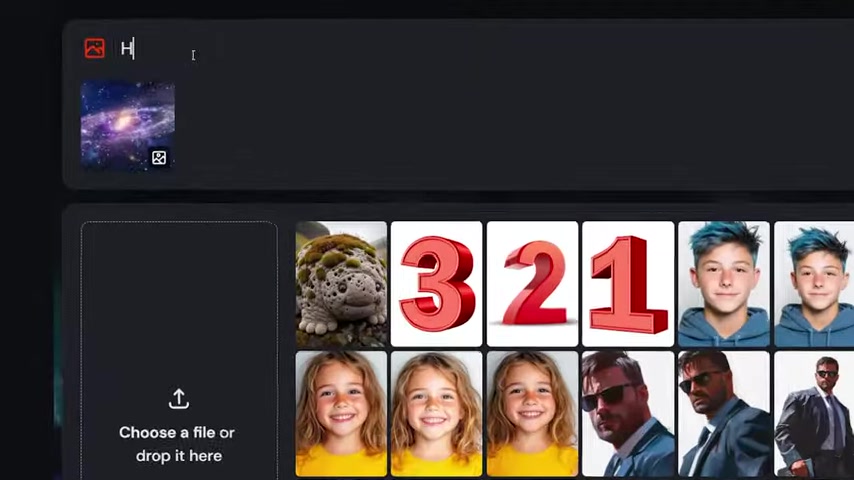
This is done by uploading an image and using it as a reference for the AI. The AI then uses the visual information from the image to adjust the Prompt you have written.
Think of it as providing a visual cue to Midjourney. Instead of writing hundreds of descriptive words, you are simply uploading an image with all that data within. Midjourney takes that visual data and turns it into a series of values that it understands to be visual data.
This visual data is treated as an adjustment to your written prompt. That’s how Midjourney balances your idea with its own creative process. The text descriptions are combined with the visual data to create a cohesive image.
It's important to note that with the classic image prompt, everything from the color and luminosity, right down to the most minute details, can end up being expressed in the generated image. For instance, if you upload an image of a galaxy, and you want it to be a handsome man, the result will be a handsome man, as well as the color and texture and luminosity, but with the character's look and feel combined from the data that's been scraped from the Internet.
Style References in Midjourney: Emphasizing Aesthetics
Style references in Midjourney allow you to impart the aesthetic elements of an existing image onto your new creations.
Midjourney is only encoding the style information from the image.
However, that does not mean that there is nothing from the image. The difference between an image prompt and a style prompt is that, in a style prompt, any tokens that relate to the subject background or contact, the subject’s character, their age, or anything related to anything besides pure aesthetic style will be removed, so the AI knows only to take the aesthetic elements.
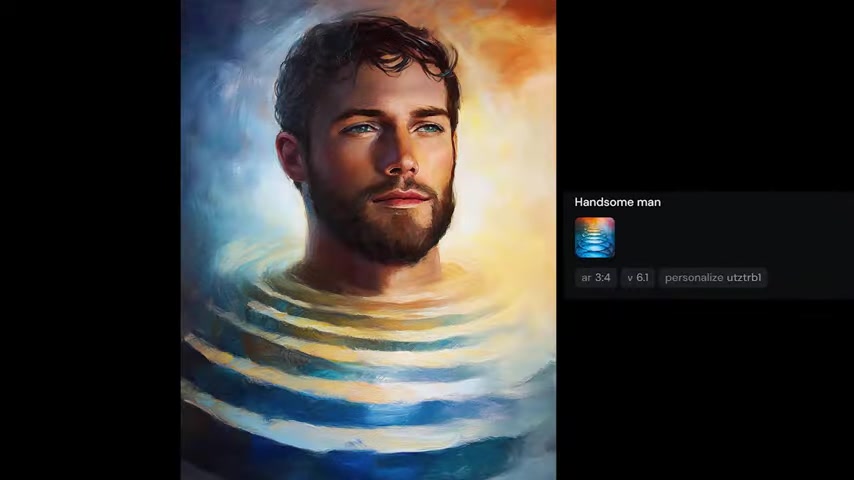
To see how Style Prompts work, consider this scenario. You want to prompt an image of a handsome man. You can provide this image to Midjourney as a style prompt and the AI will create various images that are in a purple style.
Midjourney’s Cref: Character Consistency Unleashed
Character Reference or Cref prompts are a subset of tokenized image data. With Style references, the aesthetic style matters most, but with Cref, the specific details are prioritized and made to stay for the image prompt. This means that elements describing the subject, background, or other context are kept in place, while much of the aesthetic elements are let go.
The character reference feature is essential for maintaining consistent characters across multiple scenes in Midjourney. This allows users to generate images of the same person or character, but with slight differences every time.
The Nuances of Cref: Controlling Variables for Consistency
Tips for Character Reference Prompts
While the Cref feature in Midjourney is powerful, it’s not a magic bullet.
Consistent characters still require careful attention to your prompts. Here are five tips to achieve more reliable character consistency:
- Fully Define Prompts. This reduces the randomness in Midjourney's output. When you use clearly defined prompts, it is much less likely that it will override it with added visuals.
- Setting Seed. Setting the seed helps get results when generating many similar images. The random number generator from the first generated image is used to create all subsequent prompts.
- Generate Close-Ups of the Characters. It is essential to always generate the character's features prominently so Midjourney knows who to identify.
- Use Multiple Cref. The use of multiple Cref helps Midjourney narrow down on what it wants to see. This requires experimentation to see what is optimal.
-
Follow A Prompt Framework. Following a prompt framework is important to maintain your character's likeness.
By following these guidelines, you will be able to make your character look how it is intended.





Most people like





































Report
Please select a reason for reporting
- 13 Reasons to Switch from Snapchat to Text Messaging
- 7 Powerful Speech to Text Apps to Boost Productivity
- 10 Best Speech to Text Tools for Effortless Transcription
- 13 Free Tools to Easily Transcribe Audio to Text
- 15 Surprising Ways Google's Speech-to-Text Boosts Productivity
- 7 Best Free Online Audio to Text Transcription Tools
- 9 Tips to Transcribe Speech to Text Faster and Better
- 13 Best Speech to Text Software for Windows 10 in 2023
- 7 Tips for Choosing the Best Transcriber for Audio to Text
- 11 Reasons Why Dragon Speech-to-Text Apps are Game-Changers
- 6 Secrets to Enhance Your Speech to Text Transcription
- 6 Brilliant Ways to Boost Productivity with Talk-to-Text on Your MacBook
- 6 Ways Transcription Software Converts Audio to Text
- 8 Tips to Transcribe Speech to Text Like a Pro
- 6 Reasons IBM Watson Speech to Text is a Game-Changer
- 14 Powerful Ways Talk-to-Text Improves Your Workflow
- 12 Top Windows Speech-to-Text Software for Efficient Transcription
- 12 Game-Changing Benefits of Apple's Speech to Text Technology
- 9 Powerful Use Cases for AWS Speech to Text Technology
- 10 Easy Steps to Transcribe YouTube Videos to Text
- transcription audio en texte
- online audio transcription
- free audio file transcription
- free ai audio transcription
- audio transcription service
- audio transcription online free
- audio transcription free online
- audio to transcription software
- audio and transcript
- ai audio transcription free
- voice recording to text converter
- translate voice recording to text
- record voice to text
- audio recording to text converter
- voice recording and transcription
- chatgpt voice to text
- gmail voice to text
- speech to text reader
- speech to text ai free
- speech to talk
- Meshy AI: How to Create 3D Models from Text and Images
- How SEO and Marketing Dashboards Empower Agencies to Drive Results
- How to Use AI Tools to Find Internal Linking Opportunities Across a Business Website
- Discover Your Perfect Haircut with AI Hairstyle Apps
- Free Reputation Calculator Tools: How They're Adapting to Score AI Visibility, Not Just Rankings
- Design Professional Flyers for Free on Your Phone
- Best Free Flyer Maker Apps for Android: Design Like a Pro
- How to Know If Your Business Is Ready for an AI Customer Service Agent
- Revolutionizing Storytelling: From Novels to Screenplays with AI
- Create Engaging Animated Explainer Videos with a Free AI Tool
- Meshy AI: How to Create 3D Models from Text and Images
- ASOMobile Helps Teams Benchmark App Store Screenshots Against Competitors
- How to Match LMS Software With Your Organization's Training Plan
- Revolutionizing Email Marketing Agency with AI
- How to Convert BTC to HNT
- Unleashing the Power of AI: Cognizant's Roadmap for Transformation
- Frame to Video Review: A Practical Look at Turning Two Still Frames Into Motion
- NVIDIA NIM: Revolutionizing Supply Chain Data Analysis with AI
- Top AI Tools That Help Brands Stand Out Offline (Not Just Online)
- Top 5 Cold Email Software: Maximize Your Outreach in 2025

Copyright ©2026 toolify