































Table of Contents
- Key Points
- Unpacking LeetCode Weekly Contest 272
- Detailed Analysis of the Problems
- Pros and Cons of Problem-Solving Approaches
- FAQ
- Related Questions



Unpacking LeetCode Weekly Contest 272
2108. Find First Palindromic String in the Array
The first problem of the contest, Find First Palindromic String in the Array, presents a straightforward challenge: given an array of strings, identify and return the first palindromic string encountered. A palindromic string is one that reads the same forwards and backward. If no such string exists, the function should return an empty string.
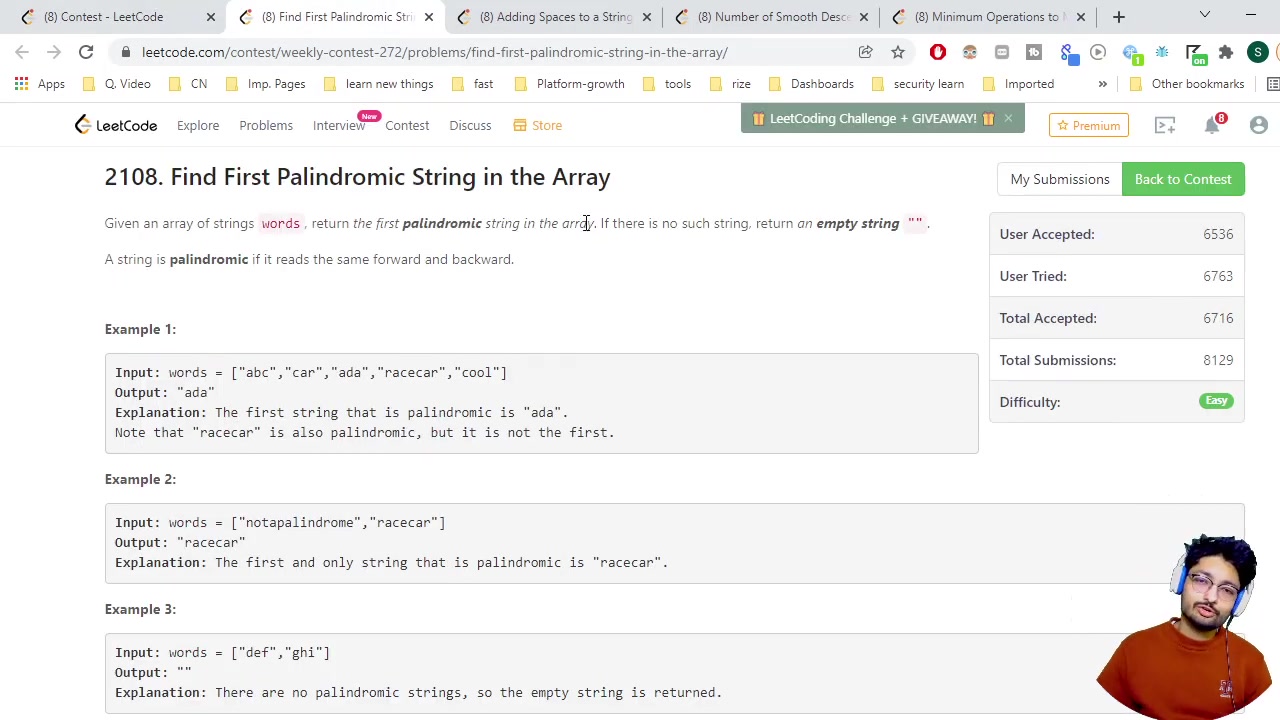
To tackle this, you can iterate through the array and apply a palindrome check on each string. This check can be performed by comparing the string to its reversed version. This method ensures that you can efficiently determine whether a string is a palindrome and retrieve the first one found.
Strategies for Palindrome Detection:
- Two-Pointer Approach: This method involves using two pointers, one starting from the beginning and the other from the end of the string. The characters at these pointers are compared, and if they differ, the string is not a palindrome. This continues until the pointers meet in the middle.
- Reverse and Compare: A more direct approach is to reverse the string and then compare it with the original. If both are identical, the string is a palindrome. C++ provides functionalities like
std::reverseto facilitate this.
Example C++ Code:
class Solution {
public:
    string firstPalindrome(vector<string>& words) {
        for (string word : words) {
            string reversedWord = word;
            reverse(reversedWord.begin(), reversedWord.end());
            if (word == reversedWord) {
                return word;
            }
        }
        return "";
    }
};
Keywords: Palindrome, String manipulation, Array iteration, Two-pointer approach, Reverse and compare
2109. Adding Spaces to a String
The second problem, Adding Spaces to a String, requires you to insert spaces into a given string at specified indices.
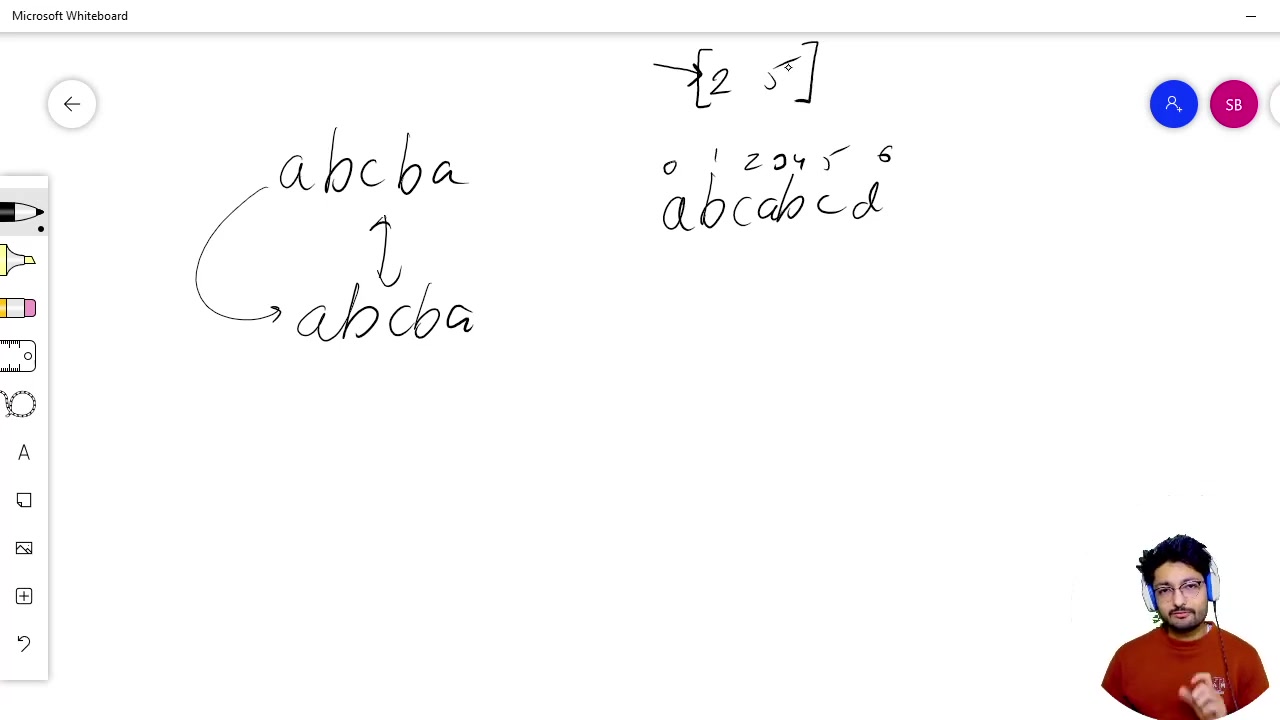
You are provided with a string s and an array spaces that contains the indices where spaces should be inserted. Your task is to modify the original string by adding spaces at these locations.
Strategies for Space Insertion:
- Iterative Approach: Iterate through the original string, and before each character, check if the current index is present in the spaces array. If it is, insert a space before adding the character to the modified string. This approach ensures that all spaces are inserted correctly.
- Two-Pointer Technique: Use two pointers, one to iterate through the spaces array and another to iterate through the original string. When the pointer in the spaces array matches the current index in the string, insert a space.
Example C++ Code:
class Solution {
public:
    string addSpaces(string s, vector<int>& spaces) {
        string result = "";
        int spaceIndex = 0;
        for (int i = 0; i < s.length(); ++i) {
            if (spaceIndex < spaces.size() && i == spaces[spaceIndex]) {
                result += ' ';
                spaceIndex++;
            }
            result += s[i];
        }
        return result;
    }
};
Keywords: String insertion, Index manipulation, Array traversal, String building
2110. Number of Smooth Descent Periods of a Stock
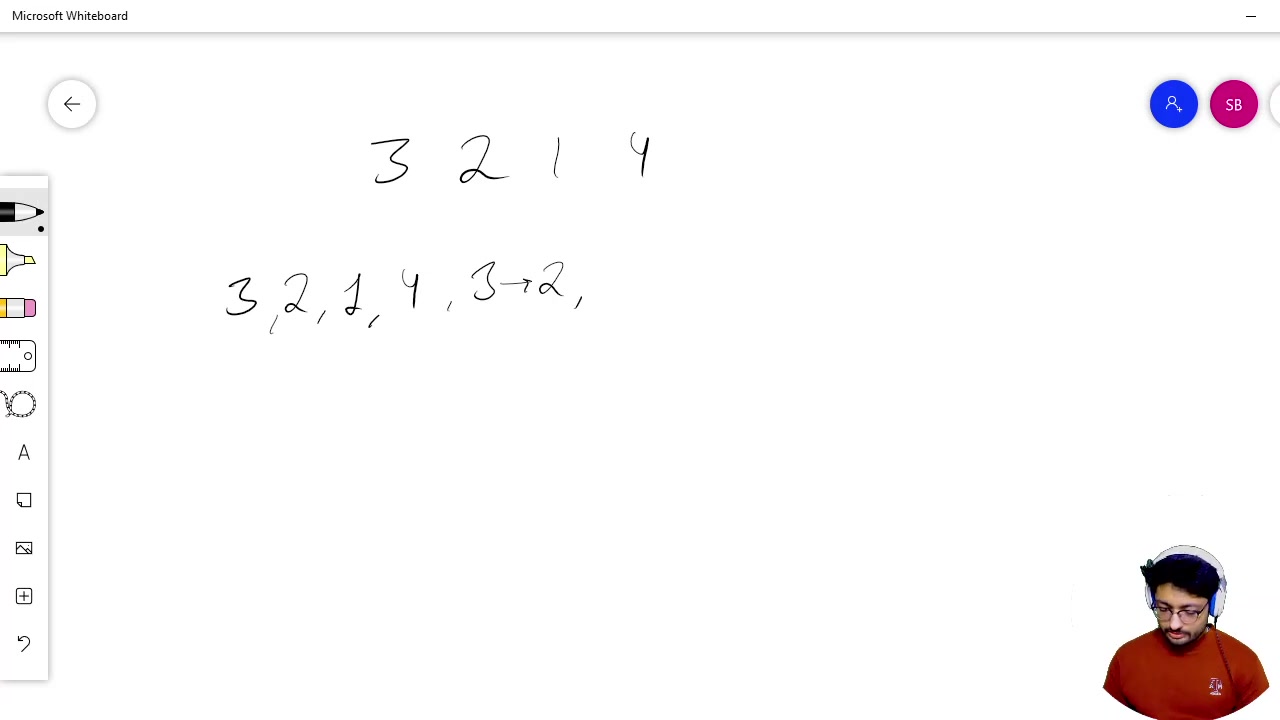
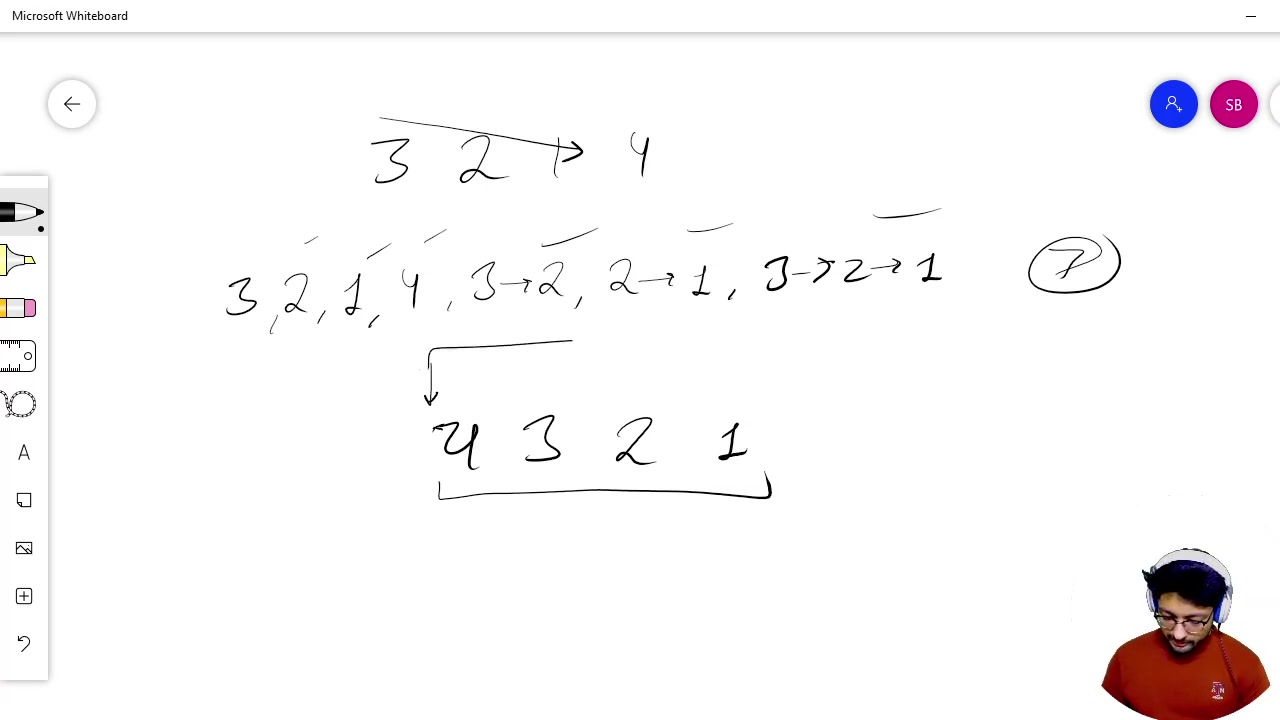
The third problem, Number of Smooth Descent Periods of a Stock, challenges you to calculate the number of smooth descent periods in a stock's price history. A smooth descent period is defined as a contiguous sequence of days where each day’s price is exactly one less than the previous day’s price.
This requires identifying consecutive days where the stock price decreases by exactly one. The first day of any such period is always included in the count, as it initiates the descent.
Strategies for Counting Descent Periods:
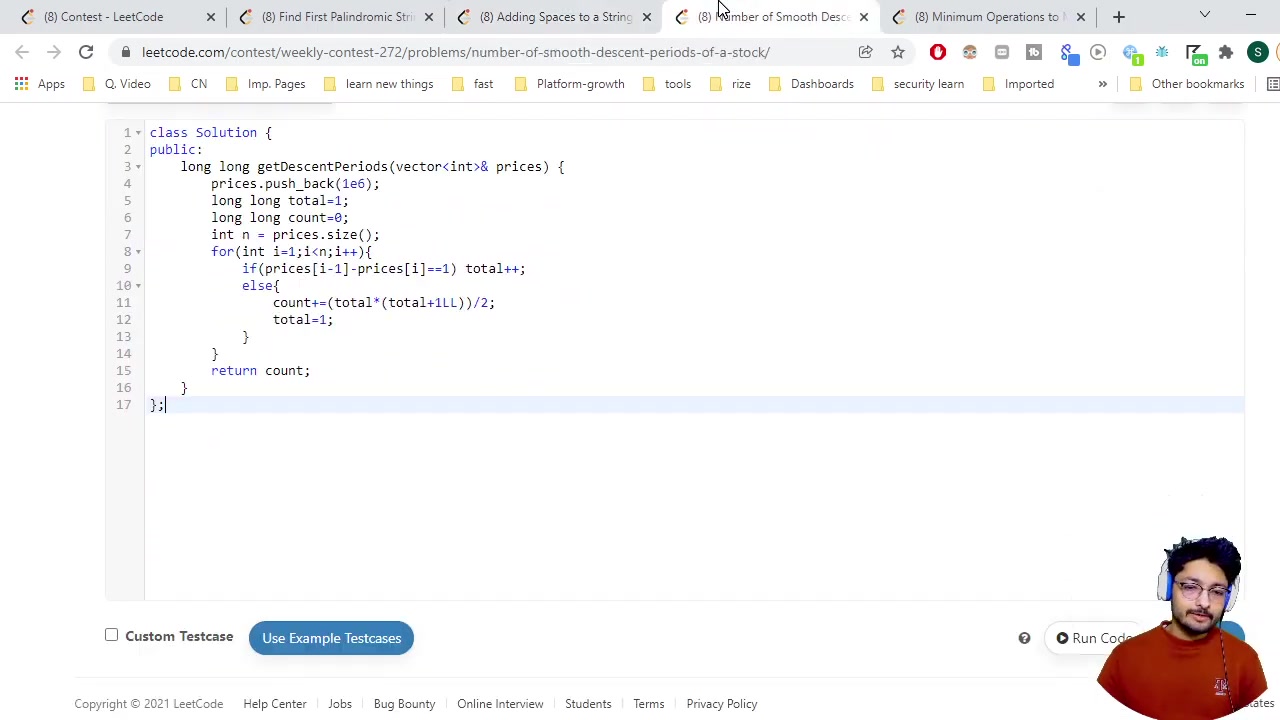
- Dynamic Programming: Maintain a counter that increments as long as the price difference between consecutive days is one. When the difference changes, apply the formula
n * (n + 1) / 2to the counter, which calculates the number of descent periods ending at that point. - Iterative Counting: Iterate through the prices array, tracking the length of current descent periods. Update the total count of smooth descent periods based on the length of these periods.
Example C++ Code:
class Solution {
public:
    long long getDescentPeriods(vector<int>& prices) {
        long long total = 0, count = 0;
        for (int i = 1; i < prices.size(); ++i) {
            if (prices[i] == prices[i - 1] - 1) {
                count++;
            } else {
                total += (count * (count + 1)) / 2;
                count = 0;
            }
        }
        total += (count * (count + 1)) / 2;
        return total + prices.size();
    }
};
Keywords: Stock prices, Contiguous sequence, Dynamic programming, Price difference calculation, Algorithmic trading
2111. Minimum Operations to Make the Array K-Increasing
The fourth problem, Minimum Operations to Make the Array K-Increasing, involves determining the fewest operations to make an array K-increasing. An array is K-increasing if, for every index i, the element at i - k is less than or equal to the element at i.
To solve this problem efficiently, you will need to identify the longest increasing subsequence within specific sub-arrays defined by intervals of k. The operation count is the difference between the total number of elements and the length of the longest increasing subsequence.
Strategies for K-Increasing Conversion:
- Dynamic Subsequence Counting: Iterate over each of the
ksub-arrays and compute the Longest Increasing Subsequence (LIS) for each. The total number of changes equals the original sub-array size minus its LIS. - Binary Search Optimization: Optimize LIS computation with binary search. This can reduce time complexity from O(n^2) to O(n log n) for larger arrays.
Example C++ Code:
class Solution {
public:
    int kIncreasing(vector<int>& arr, int k) {
        int total = 0;
        int n = arr.size();
        for (int i = 0; i < k; ++i) {
            vector<int> sub;
            for (int j = i; j < n; j += k) {
                sub.push_back(arr[j]);
            }
            total += sub.size() - lis(sub);
        }
        return total;
    }

    int lis(vector<int>& nums) {
        vector<int> dp;
        for (int num : nums) {
            auto it = upper_bound(dp.begin(), dp.end(), num);
            if (it == dp.end()) {
                dp.push_back(num);
            } else {
                *it = num;
            }
        }
        return dp.size();
    }
};
Keywords: K-Increasing array, Longest increasing subsequence, Dynamic programming, Operation count optimization, Binary search algorithm
Detailed Analysis of the Problems
Core Concepts & Algorithmic Strategies
These challenges emphasize the need for efficiency, clarity, and the ability to handle array and string manipulations effectively. Understanding the nuances of palindrome detection, string manipulation, dynamic programming, and algorithmic trading will help coders perform well in similar contexts. The efficient insertion of spaces and calculation of the Longest Increasing Subsequence (LIS) demonstrate practical algorithmic techniques crucial for problem-solving in coding interviews.
Understanding dynamic programming's applications and binary search enhances algorithm efficiency and solution reliability.
These fundamental ideas are essential for anyone looking to improve their abilities to solve challenging coding questions, regardless of experience level.






Most people like
































Report
Please select a reason for reporting
- 13 Reasons to Switch from Snapchat to Text Messaging
- 7 Powerful Speech to Text Apps to Boost Productivity
- 10 Best Speech to Text Tools for Effortless Transcription
- 13 Free Tools to Easily Transcribe Audio to Text
- 15 Surprising Ways Google's Speech-to-Text Boosts Productivity
- 7 Best Free Online Audio to Text Transcription Tools
- 9 Tips to Transcribe Speech to Text Faster and Better
- 13 Best Speech to Text Software for Windows 10 in 2023
- 7 Tips for Choosing the Best Transcriber for Audio to Text
- 11 Reasons Why Dragon Speech-to-Text Apps are Game-Changers
- 6 Secrets to Enhance Your Speech to Text Transcription
- 6 Brilliant Ways to Boost Productivity with Talk-to-Text on Your MacBook
- 6 Ways Transcription Software Converts Audio to Text
- 8 Tips to Transcribe Speech to Text Like a Pro
- 6 Reasons IBM Watson Speech to Text is a Game-Changer
- 14 Powerful Ways Talk-to-Text Improves Your Workflow
- 12 Top Windows Speech-to-Text Software for Efficient Transcription
- 12 Game-Changing Benefits of Apple's Speech to Text Technology
- 9 Powerful Use Cases for AWS Speech to Text Technology
- 10 Easy Steps to Transcribe YouTube Videos to Text
- transcription audio en texte
- online audio transcription
- free audio file transcription
- free ai audio transcription
- audio transcription service
- audio transcription online free
- audio transcription free online
- audio to transcription software
- audio and transcript
- ai audio transcription free
- voice recording to text converter
- translate voice recording to text
- record voice to text
- audio recording to text converter
- voice recording and transcription
- chatgpt voice to text
- gmail voice to text
- speech to text reader
- speech to text ai free
- speech to talk
- Meshy AI: How to Create 3D Models from Text and Images
- How SEO and Marketing Dashboards Empower Agencies to Drive Results
- How to Use AI Tools to Find Internal Linking Opportunities Across a Business Website
- Discover Your Perfect Haircut with AI Hairstyle Apps
- Free Reputation Calculator Tools: How They're Adapting to Score AI Visibility, Not Just Rankings
- Design Professional Flyers for Free on Your Phone
- Best Free Flyer Maker Apps for Android: Design Like a Pro
- How to Know If Your Business Is Ready for an AI Customer Service Agent
- Revolutionizing Storytelling: From Novels to Screenplays with AI
- Create Engaging Animated Explainer Videos with a Free AI Tool
- Meshy AI: How to Create 3D Models from Text and Images
- ASOMobile Helps Teams Benchmark App Store Screenshots Against Competitors
- How to Match LMS Software With Your Organization's Training Plan
- Revolutionizing Email Marketing Agency with AI
- How to Convert BTC to HNT
- Unleashing the Power of AI: Cognizant's Roadmap for Transformation
- Frame to Video Review: A Practical Look at Turning Two Still Frames Into Motion
- NVIDIA NIM: Revolutionizing Supply Chain Data Analysis with AI
- Top AI Tools That Help Brands Stand Out Offline (Not Just Online)
- Top 5 Cold Email Software: Maximize Your Outreach in 2025

Copyright ©2026 toolify