































Table of Contents
- Key Points
- Understanding Missing Values in Machine Learning
- Deletion Techniques for Handling Missing Values
- Imputation Methods: Replacing Missing Values
- Pricing
- Pros and Cons of Different Methods
- Core Features
- Use Cases
- Frequently Asked Questions
- Related Questions



Understanding Missing Values in Machine Learning
The Importance of Handling Missing Data
In the realm of machine learning, the quality of data directly impacts the performance of predictive models. Missing values, a common issue in real-world datasets, can introduce bias, reduce statistical power, and ultimately compromise the accuracy of your models. Addressing missing values is thus a fundamental step in data preprocessing, essential for building robust and reliable machine learning solutions. Ignoring or mishandling these gaps can lead to skewed results and unreliable insights, underscoring the need for effective strategies to manage them.

In real-time data cleaning, dealing with missing values is a routine task. Unfortunately, there's no single, Universally applicable cheat sheet to guide this process. This article bridges that gap by presenting a comprehensive approach to handling missing values in your data, ensuring a more effective and accurate machine-learning workflow. It's about understanding the landscape and developing strategies that best fit your data and project goals. Proper handling ensures that your machine learning models produce reliable and valid predictions.
The methods discussed will assist in making informed decisions during the data preprocessing stage. Addressing missing values can transform datasets from unusable to insightful, enabling more accurate and Meaningful machine learning outcomes.
Types of Missing Data: MCAR, MAR, and MNAR
Before delving into techniques for handling missing values, it's critical to understand the different types of missing data
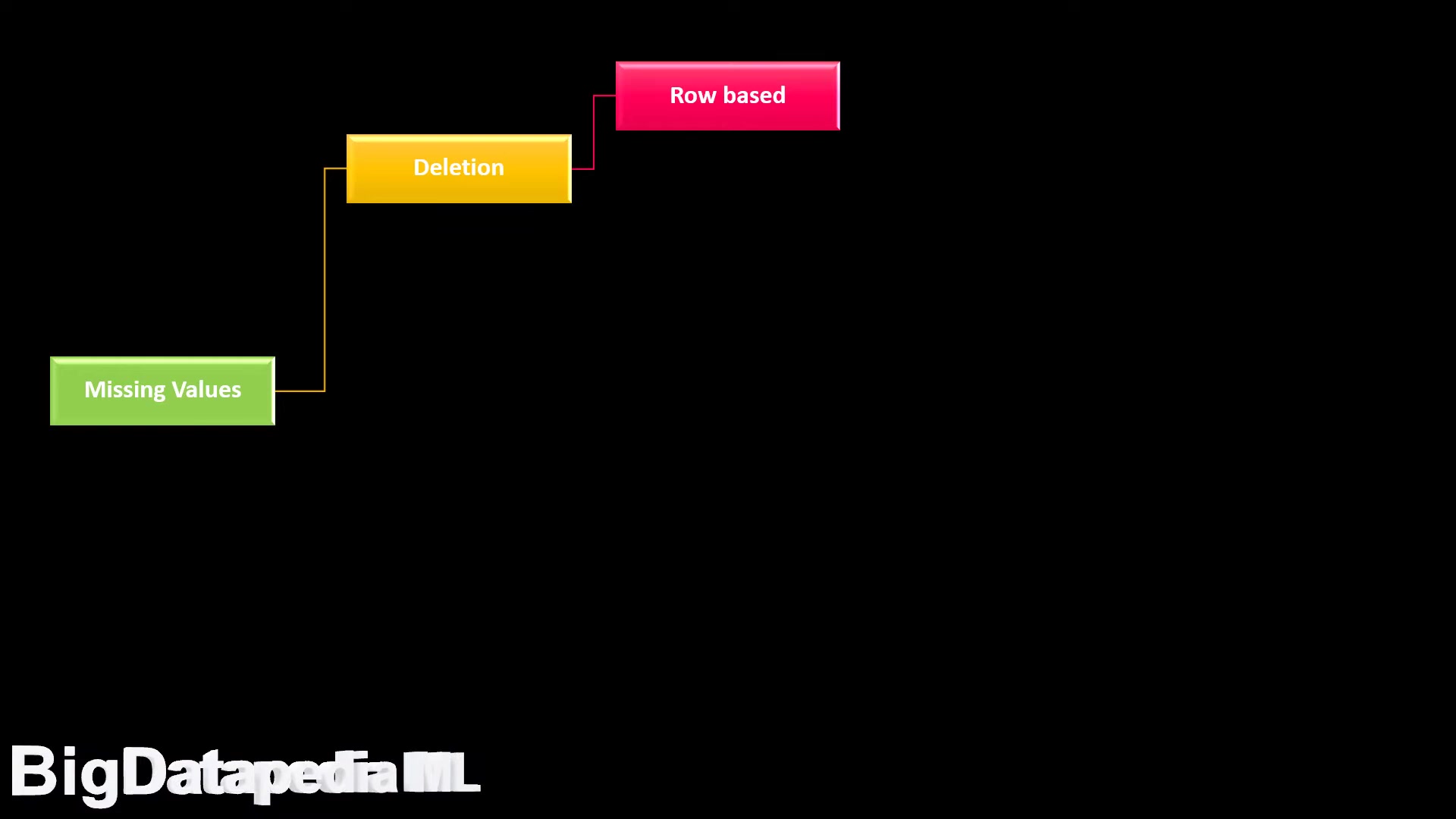
. This classification guides the choice of appropriate methods, ensuring that you address the problem effectively and minimize potential biases.
- Missing Completely at Random (MCAR): This occurs when the probability of a value being missing is unrelated to both the observed and unobserved data. In other words, there's no systematic reason for the missingness.
- Missing at Random (MAR): Here, the probability of a value being missing depends on the observed data, but not on the unobserved data. For instance, if men are less likely to report their weight, the missingness depends on the gender, which is observed.
- Missing Not at Random (MNAR): This is the most complex Scenario, where the probability of a value being missing depends on the unobserved data itself. For example, individuals with higher incomes might be less likely to disclose their financial details. Identifying this type is difficult, and it often requires domain expertise and careful analysis.
Understanding these distinctions allows you to tailor your data cleaning approach to the specific nature of missingness in your dataset. Choosing the correct handling technique, informed by the type of missing data, can significantly improve your machine learning results.
Deletion Techniques for Handling Missing Values
Row-Based Deletion: Pairwise and Listwise Deletion
When faced with missing data, one of the simplest strategies is to remove the incomplete entries.

Row-based deletion involves deleting rows (observations) containing missing values. While this method is straightforward, it can lead to significant data loss, especially if missingness is widespread. There are two primary approaches to row-based deletion:
- Pairwise Deletion: In pairwise deletion, only the missing places can be deleted based on correlation between features, an analysis is conducted using only the available values for each pair of variables. This approach preserves more data than listwise deletion but can lead to inconsistencies if different analyses are based on different subsets of the data. MCAR and MAR are verified before applying this method.
-
Listwise Deletion: Also known as complete-case analysis, listwise deletion removes any row with one or more missing values across all variables. While this ensures that all analyses are based on the same dataset, it can substantially reduce the sample size, potentially affecting the statistical power and generalizability of your results. This method is commonly implemented using the
dropnafunction in many data analysis libraries.Below are the scenarios for this method to be considered:
| Criteria | Description |
|---|---|
| Data Missingness | Missing Completely at Random (MCAR) or Missing at Random (MAR) |
| Sample Size | Large enough to withstand the data loss |
| Impact on Analysis | Minimal bias introduced by the removal of incomplete cases |
| Objective | Unbiased estimates using only complete data points |
| Data Integrity | Does not alter or impute original data, preserving integrity |
Choosing between pairwise and listwise deletion depends on the extent and pattern of missingness in your dataset. If the data is MCAR or MAR and the sample size is large enough to withstand the loss, listwise deletion might be a viable option. However, pairwise deletion might be preferred if you want to retain more data and can tolerate potential inconsistencies.
Column-Based Deletion: When to Remove Features
Another approach to dealing with missing values is to remove entire columns (features) from your dataset. This technique, known as column-based deletion, is typically employed when a feature has a high proportion of missing values. However, it's crucial to exercise caution, as removing a feature can eliminate valuable information, potentially affecting the performance of your machine learning models.
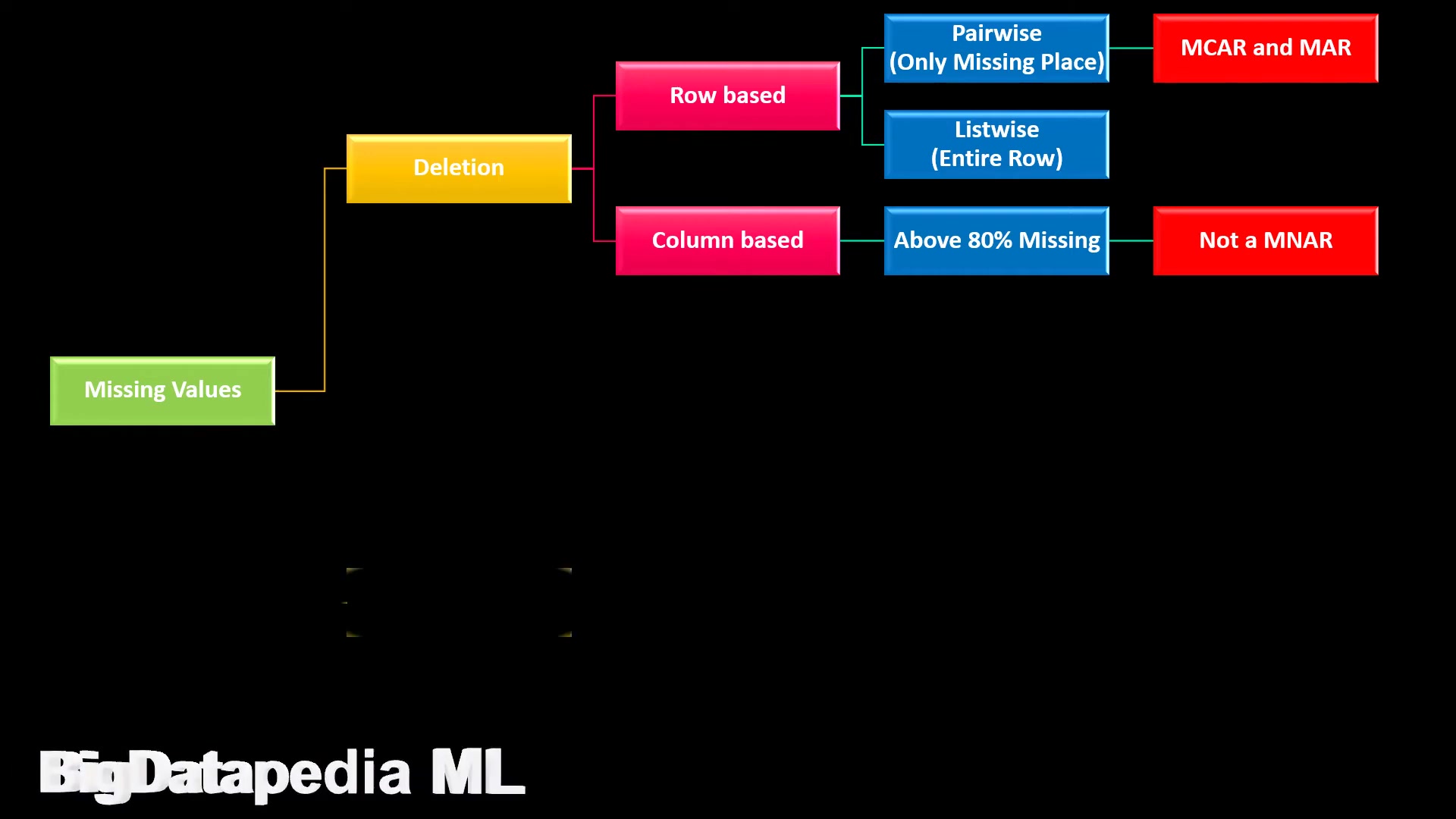
The threshold for removing a column is subjective, but a common guideline is to consider deletion when more than 80% of the data is missing, and no data correlation is Present. Furthermore, it's important to ensure that the missingness is not MNAR, meaning that the missing values are not systematically related to the unobserved data itself.
This technique is considered when : | Criteria | Description |
|---|---|
| High Percentage of Missing Values (e.g., >80%) | If a column contains a large proportion of missing entries, it may not provide enough useful information for modeling. |
| Missing Not at Random (MNAR) Issues | The reason for missing values is inherent to the data point and can't be predicted from other data |
| No Correlation with Other Features | The feature does not correlate with other variables, and its removal does not impact the information captured by other features |
| Redundancy or Low Importance | If a feature is redundant or has low importance in the context of the problem, removing it may simplify the model without significant loss of predictive power. |
| Potential Data Integrity Issues | In real-world scenarios, such as data aggregation from multiple sources or data entry errors, certain columns may consistently have missing values across different datasets, indicating underlying problems with data integrity. |
Before removing a column, carefully assess its importance and potential impact on your analysis. Consider alternative strategies, such as imputation, to preserve valuable information. Data-driven decision making is critical.
Imputation Methods: Replacing Missing Values
Basic Imputation: Constant Values, Mean, Median, and Mode
In contrast to deletion techniques, imputation involves replacing missing values with estimated ones. This approach aims to preserve valuable information and maintain the sample size.
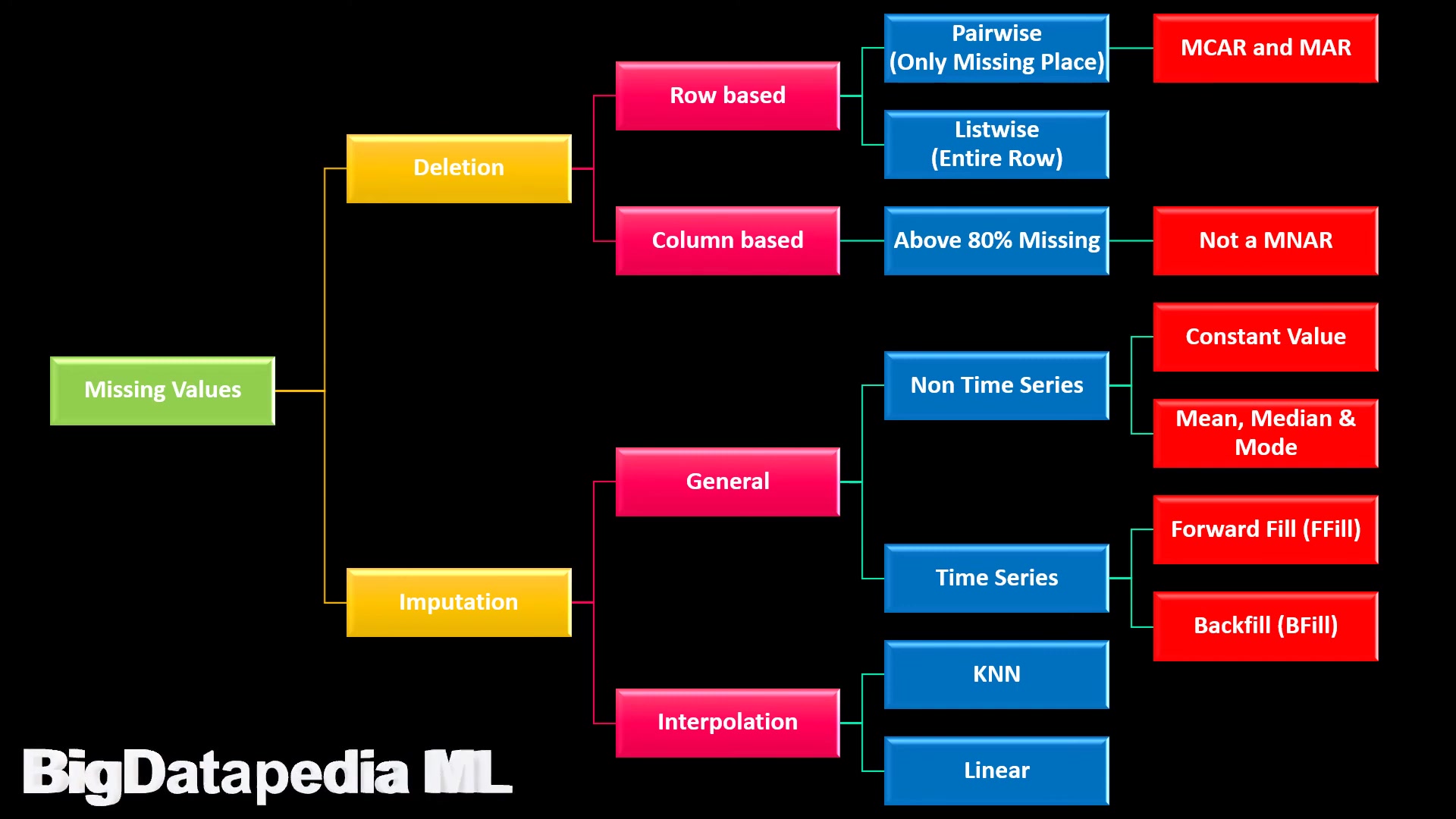
There are several basic imputation methods, each with its own strengths and weaknesses:
- Constant Value Imputation: This replaces missing values with a predefined constant, such as 0 or -1. While simple, this method can introduce artificial Patterns and distort the distribution of the data.
- Mean Imputation: This replaces missing values with the mean of the observed values for that feature. It's easy to implement but can reduce variance and underestimate standard errors.
- Median Imputation: Similar to mean imputation, this replaces missing values with the median of the observed values. Median imputation is more robust to outliers than mean imputation and is often preferred for skewed distributions.
-
Mode Imputation: For categorical features, this replaces missing values with the mode (most frequent value). It's a simple and intuitive approach for handling missingness in categorical data.
The following steps will help you apply Basic Imputation:
Step 1: Choose the Imputation Method. Decide whether to use mean, median, or mode based on your data's distribution. If your data is skewed, median is generally preferable. Step 2: Calculate the Imputation Value. Calculate the mean, median, or mode of the non-missing values for the selected feature.
Step 3: Apply the Imputation. Replace all missing values in the feature with the calculated value.
These basic imputation methods are easy to implement but may not always be the most accurate. For more complex datasets, consider advanced imputation techniques, such as model-based imputation.
Time Series Imputation: Forward Fill and Backward Fill
For time series data, where observations are collected over time, specific imputation techniques can leverage the temporal structure of the data. Time series imputation methods are particularly useful for filling gaps in time-dependent data, preserving the underlying trends and patterns.
- Forward Fill (FFill): This replaces missing values with the most recent observed value. It's suitable for data with positive autocorrelation, where values tend to be similar to their immediate predecessors.
- Backward Fill (BFill): This replaces missing values with the next observed value. It's appropriate for data with negative autocorrelation or when you want to anticipate future trends.
When implementing time series imputation, consider the frequency and regularity of your data. Irregularly spaced or highly volatile data may require more sophisticated methods, such as interpolation or model-based imputation.
The following steps will assist in appying this method:
**Step 1:** Choose the Imputation Direction.  Select forward fill if you believe the current value is best approximated by the previous value. Choose backward fill if you think the next value is more indicative.
**Step 2:** Apply the chosen fill method to the feature. Use `.ffill()` for forward fill and `.bfill()` for backward fill.
**Step 3:** Assess the Impact. Evaluate the imputed values to ensure they are reasonable in the context of your time series data.
These are efficient methods to fill gaps in a time series. Understanding which direction of fill is most appropriate for your data ensures better quality predictions.
Advanced Interpolation: KNN and Linear Regression
When basic imputation methods fall short, advanced interpolation techniques can provide more accurate estimates of missing values. These methods leverage the relationships between variables to make informed predictions. Two popular advanced interpolation techniques are K-Nearest Neighbors (KNN) and linear regression.
- K-Nearest Neighbors (KNN) Imputation: This replaces missing values with the average of the K-nearest neighbors, based on a distance metric. KNN imputation can capture complex relationships but requires careful selection of the number of neighbors (K) and the distance metric.
- Linear Regression Imputation: This builds a linear regression model to predict missing values based on other features. Linear regression imputation assumes a linear relationship between the variables but can provide accurate estimates when this assumption holds.
The best use case of this method is when:
| Criteria | Description |
|---|---|
| Model Accuracy | The model is able to accurately predict missing values using other features. |
| Variable Relationships | The model takes advantage of significant relationships between variables to improve imputation accuracy. |
| Data Distribution | The data is suitable for the underlying assumptions of the imputation method (e.g., linear regression assumes linear relationships). |
| Robustness | The model is robust and does not significantly overfit or underfit the data, even with imputed values. |
| Computational Efficiency | The model can handle large datasets and impute missing values within a reasonable time frame. |
Choosing between KNN and linear regression depends on the nature of your data and the relationships between variables. KNN imputation is suitable for non-linear relationships, while linear regression imputation is appropriate for linear relationships. Both methods require careful tuning and validation to ensure accurate and reliable imputation.




Most people like




























Report
Please select a reason for reporting
- 13 Reasons to Switch from Snapchat to Text Messaging
- 7 Powerful Speech to Text Apps to Boost Productivity
- 10 Best Speech to Text Tools for Effortless Transcription
- 13 Free Tools to Easily Transcribe Audio to Text
- 15 Surprising Ways Google's Speech-to-Text Boosts Productivity
- 7 Best Free Online Audio to Text Transcription Tools
- 9 Tips to Transcribe Speech to Text Faster and Better
- 13 Best Speech to Text Software for Windows 10 in 2023
- 7 Tips for Choosing the Best Transcriber for Audio to Text
- 11 Reasons Why Dragon Speech-to-Text Apps are Game-Changers
- 6 Secrets to Enhance Your Speech to Text Transcription
- 6 Brilliant Ways to Boost Productivity with Talk-to-Text on Your MacBook
- 6 Ways Transcription Software Converts Audio to Text
- 8 Tips to Transcribe Speech to Text Like a Pro
- 6 Reasons IBM Watson Speech to Text is a Game-Changer
- 14 Powerful Ways Talk-to-Text Improves Your Workflow
- 12 Top Windows Speech-to-Text Software for Efficient Transcription
- 12 Game-Changing Benefits of Apple's Speech to Text Technology
- 9 Powerful Use Cases for AWS Speech to Text Technology
- 10 Easy Steps to Transcribe YouTube Videos to Text
- transcription audio en texte
- online audio transcription
- free audio file transcription
- free ai audio transcription
- audio transcription service
- audio transcription online free
- audio transcription free online
- audio to transcription software
- audio and transcript
- ai audio transcription free
- voice recording to text converter
- translate voice recording to text
- record voice to text
- audio recording to text converter
- voice recording and transcription
- chatgpt voice to text
- gmail voice to text
- speech to text reader
- speech to text ai free
- speech to talk
- Create Engaging Animated Explainer Videos with a Free AI Tool
- Stop Multi-Subscribing: Benchmark Top AI Visual Models in One Canvas
- Best Seedance 2.5 API Provider: Every Price on the Market, Checked at Source
- AI OnlyFans: How to Generate $30,000/Month (Legally)
- Transform Your Script into an Engaging Video with AI Video Maker!
- AI Marketing Automation: A Comprehensive Guide for Small Businesses
- Midjourney Alternative for Anime Art Creators: Why PixAI May Be Better for Character Workflows
- 10 Things Most People Get Wrong About AI Image Search
- AI Girlfriend Apps: Top Choices Redefining Relationships 2025
- How to Reduce Quoting Errors in Salesforce with AI-Assisted Quote Creation
- AI Resume Builders: EnhanceCV, ResumeNerd AI, & Teal Compared
- ResumeAI: Crafting ATS-Optimized Resumes with AI
- AI in Resume Writing: A New Era for Job Seekers
- AI Resume Tools: Streamline Your Job Search and Land Your Dream Role
- AI Resume Optimization: The Right Way to Land Interviews
- Crafting a Killer Resume with AI: A Step-by-Step Guide
- Crafting a Winning Resume: AI Tools and Expert Tips
- AI Job Search: Level Up Your Career with AI Automation
- Empower Your Career Journey: Dynamic Resumes with AI
- AI Resume Builder: Create Professional Resumes Effortlessly

Copyright ©2026 toolify