






Table of Contents
- Key Points
- Understanding the Basics of Proportions
- Deep Dive: Calculating Time to Count to One Billion
- Practical Application: How to Use Proportions in Everyday Situations
- Understanding Proportions: Cost-Effective Skill for Life
- Pros and Cons of Using Proportions for Problem-Solving
- Key Features of Proportional Reasoning: Mastering a Powerful Mathematical Tool
- Diverse Use Cases of Proportions in Various Fields
- Frequently Asked Questions About Proportions
- Related Questions and Advanced Applications



Understanding the Basics of Proportions
What is a Proportion?
A proportion is simply a statement that two ratios are equal. It's a powerful tool that allows us to find unknown quantities when we know a relationship between two sets of values. Proportions are used extensively in various fields, from cooking and baking to engineering and finance. In mathematics, they provide a straightforward way to solve problems where direct relationships exist.

Let’s look at the formula of setting up a proportion: a/b = c/d. To make this more concrete, consider this example: if one apple costs $2, we want to know how much 10 apples cost. Here, the proportion is set up as 1 apple / $2 = 10 apples / X, where X is the unknown total cost of 10 apples. Understanding this foundational principle is the first step to mastering proportional problem-solving.
Setting Up the Initial Proportion
The key to solving problems with proportions is to set them up correctly. This involves identifying the known relationships and the unknown quantity you want to find. It is crucial to keep the units consistent on both sides of the equation. For instance, if you are comparing apples to cost, ensure that apples are in the numerators and cost in the denominators on both sides.
Consistent Units: Maintain uniformity on both sides of the equation.
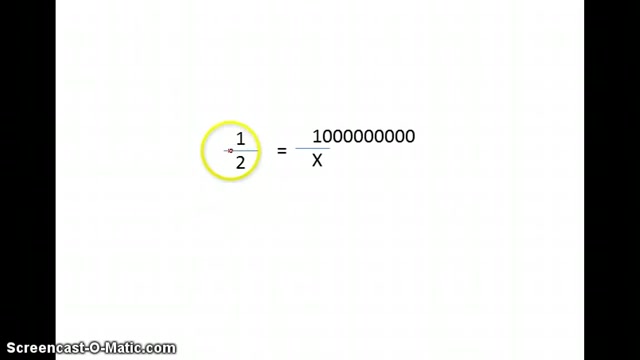
For example, imagine you want to calculate how long it takes to count to one billion, allowing 2 seconds for each number. We set up the proportion: 1 number / 2 seconds = 1,000,000,000 numbers / X seconds. This setup lets us solve for X, the total time in seconds.
Deep Dive: Calculating Time to Count to One Billion
Step 1: Setting Up the Proportion for Counting
To determine how long it takes to count to one billion, given that each number takes two seconds to pronounce, the initial proportion is crucial. It links the known rate (one number per two seconds) to the total count (one billion numbers) and the unknown total time (X seconds).
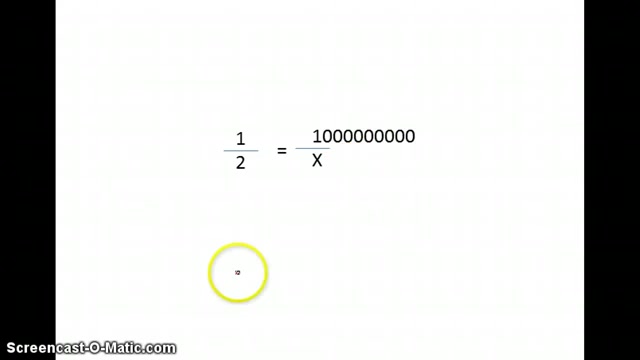
This sets the stage for solving the problem and forms the foundation for all further calculations.
The proportion is structured as: (1 number) / (2 seconds) = (1,000,000,000 numbers) / (X seconds).
Step 2: Cross-Multiplication and Solving for X
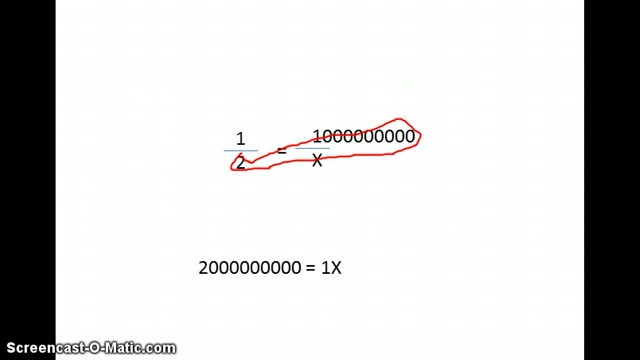
Cross-multiplication is a mathematical technique used to solve proportions. It involves multiplying the numerator of one ratio by the denominator of the other ratio and setting those products equal. This method is based on the fundamental property of proportions: if a/b = c/d, then ad = bc.
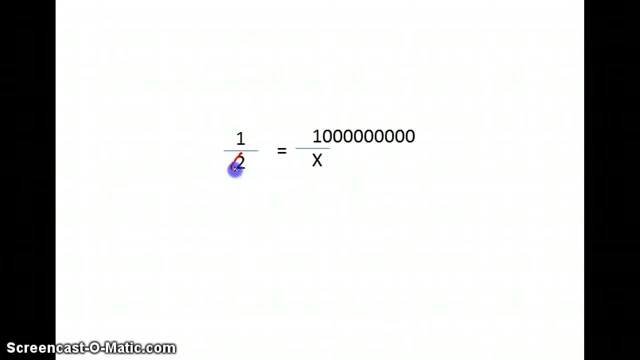
Apply Cross-Multiplication: Multiply 2 seconds by 1,000,000,000 numbers, which equals 2,000,000,000. This means 2,000,000,000 = 1X. To solve for X, simply divide both sides by 1 (which is trivial in this case), yielding X = 2,000,000,000 seconds.
Therefore, it takes 2 billion seconds to count to 1 billion if you allow 2 seconds for each number.
Step 3: Converting Seconds to Minutes
While knowing the time in seconds is accurate, it’s not particularly intuitive. Converting seconds to minutes provides a more relatable understanding of the duration. Knowing that there are 60 seconds in a minute, we divide the total seconds by 60.
Formula: Total seconds / 60 = Total minutes
Using our result of 2,000,000,000 seconds, we calculate: 2,000,000,000 / 60 = 33,333,333.33 minutes. The result means it would take approximately 33,333,333 minutes and 20 seconds (0.33 of a minute) to count to one billion. This is a significant amount of time, but let’s put this into an even larger time scale.
Step 4: Converting Minutes to Hours
Converting minutes to hours gives us an even better perspective on the monumental time involved in counting to a billion. There are 60 minutes in an hour, so we divide the total minutes by 60.
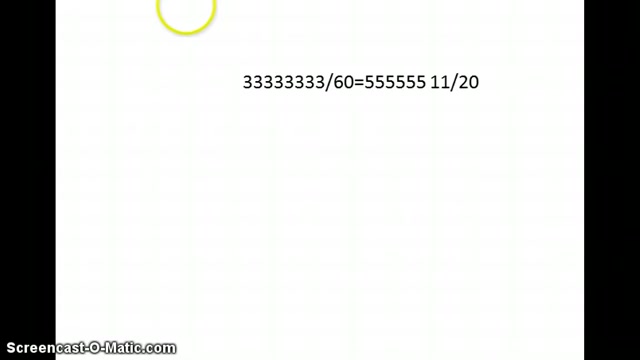
Formula: Total minutes / 60 = Total hours
We had approximately 33,333,333.33 minutes, so we calculate: 33,333,333.33 / 60 = 555,555.55 hours. Again, we have a fraction, which needs to be converted to minutes. 0.55 of an hour is approximately 33 minutes (0.55 * 60). This means it would take roughly 555,555 hours and 33 minutes to count to one billion.
Step 5: Converting Hours to Days
To continue scaling up our understanding of the time, we convert hours into days. There are 24 hours in a day, so we divide the total hours by 24.
Formula: Total hours / 24 = Total days
We had approximately 555,555.55 hours, so we calculate: 555,555.55 / 24 = 23,148.14 days. The remainder is 0.14 of a day. Multiplying this by 24 gives you the hours. 0.14 24 = 3.33 hours. Multiplying the 0.33 by 60 gives you the minutes. 0.33 60 = 20. This means it would take 23,148 days and approximately 3 hours, and 20 minutes to count to one billion.
Step 6: Converting Days to Years
Finally, let’s convert days to years to truly grasp the scale of this undertaking. There are approximately 365 days in a year, so we divide the total days by 365.
Formula: Total days / 365 = Total years
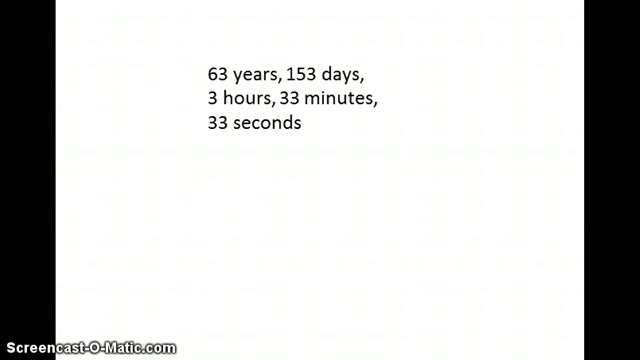
We had approximately 23,148 days, so we calculate: 23,148 / 365 = 63.41 years. The 0.41 of a year is approximately 153 days. *0.41 365 = 150**. This means it would take approximately 63 years and 150 days to count to one billion.


Most people like




































Report
Please select a reason for reporting
- 13 Reasons to Switch from Snapchat to Text Messaging
- 7 Powerful Speech to Text Apps to Boost Productivity
- 10 Best Speech to Text Tools for Effortless Transcription
- 13 Free Tools to Easily Transcribe Audio to Text
- 15 Surprising Ways Google's Speech-to-Text Boosts Productivity
- 7 Best Free Online Audio to Text Transcription Tools
- 9 Tips to Transcribe Speech to Text Faster and Better
- 13 Best Speech to Text Software for Windows 10 in 2023
- 7 Tips for Choosing the Best Transcriber for Audio to Text
- 11 Reasons Why Dragon Speech-to-Text Apps are Game-Changers
- 6 Secrets to Enhance Your Speech to Text Transcription
- 6 Brilliant Ways to Boost Productivity with Talk-to-Text on Your MacBook
- 6 Ways Transcription Software Converts Audio to Text
- 8 Tips to Transcribe Speech to Text Like a Pro
- 6 Reasons IBM Watson Speech to Text is a Game-Changer
- 14 Powerful Ways Talk-to-Text Improves Your Workflow
- 12 Top Windows Speech-to-Text Software for Efficient Transcription
- 12 Game-Changing Benefits of Apple's Speech to Text Technology
- 9 Powerful Use Cases for AWS Speech to Text Technology
- 10 Easy Steps to Transcribe YouTube Videos to Text
- transcription audio en texte
- online audio transcription
- free audio file transcription
- free ai audio transcription
- audio transcription service
- audio transcription online free
- audio transcription free online
- audio to transcription software
- audio and transcript
- ai audio transcription free
- voice recording to text converter
- translate voice recording to text
- record voice to text
- audio recording to text converter
- voice recording and transcription
- chatgpt voice to text
- gmail voice to text
- speech to text reader
- speech to text ai free
- speech to talk
- Meshy AI: How to Create 3D Models from Text and Images
- How SEO and Marketing Dashboards Empower Agencies to Drive Results
- How to Use AI Tools to Find Internal Linking Opportunities Across a Business Website
- Discover Your Perfect Haircut with AI Hairstyle Apps
- Free Reputation Calculator Tools: How They're Adapting to Score AI Visibility, Not Just Rankings
- Design Professional Flyers for Free on Your Phone
- Best Free Flyer Maker Apps for Android: Design Like a Pro
- How to Know If Your Business Is Ready for an AI Customer Service Agent
- Revolutionizing Storytelling: From Novels to Screenplays with AI
- Create Engaging Animated Explainer Videos with a Free AI Tool
- Automate Lead Generation: A Comprehensive Guide with AI Agents
- Revideo.io: The Future of Reverse Video Search Technology
- Revolutionizing Email Marketing Agency with AI
- Breaking the Character Drift Dilemma: A Practical Test of Smart Shot
- Meshy AI: How to Create 3D Models from Text and Images
- ASOMobile Helps Teams Benchmark App Store Screenshots Against Competitors
- How to Match LMS Software With Your Organization's Training Plan
- How to Convert BTC to HNT
- Unleashing the Power of AI: Cognizant's Roadmap for Transformation
- Frame to Video Review: A Practical Look at Turning Two Still Frames Into Motion

Copyright ©2026 toolify