































Table of Contents
- Key Points
- Association vs. Causation: Unveiling the Statistical Truth
- Frequently Asked Questions
- Related Questions



Association vs. Causation: Unveiling the Statistical Truth
The Core Difference: Association and Causation
When examining data, statisticians often aim to predict future outcomes based on observed patterns. Sometimes, the primary goal is simply to understand if one variable is related, or associated, with another.
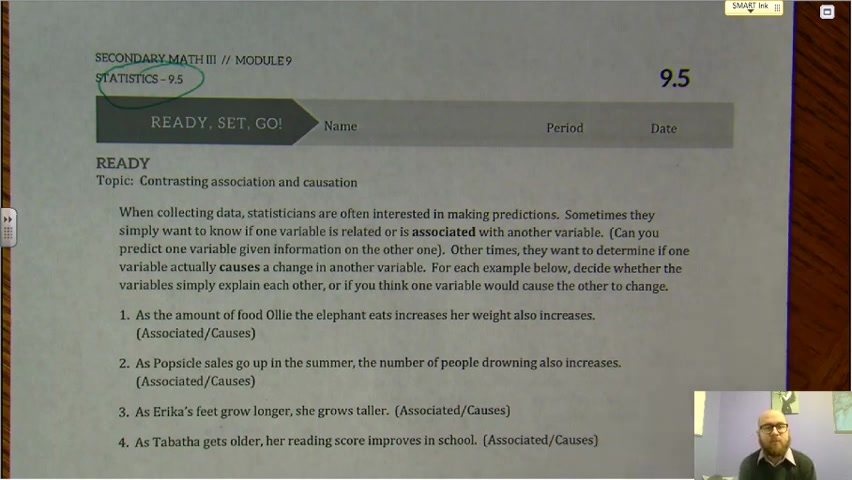
This suggests a predictable relationship, where knowing one variable’s value allows you to anticipate the other. For example, ice cream sales and crime rates might rise together during the summer months. They are associated.
However, it is crucial to avoid the trap of assuming causation. Causation occurs when a change in one variable directly causes a change in another. Establishing causation is much more difficult and requires rigorous testing to rule out confounding factors. The rise in ice cream sales doesn't cause crime; a third variable, like warmer weather, drives both.
Understanding the difference is fundamental for making informed decisions. Confusing association with causation can lead to ineffective strategies and flawed conclusions. Proper statistical analysis seeks to clarify these relationships, separating correlation from genuine influence.
Examples to Illustrate the Concepts
Let’s consider a few examples to solidify the distinction between association and causation.
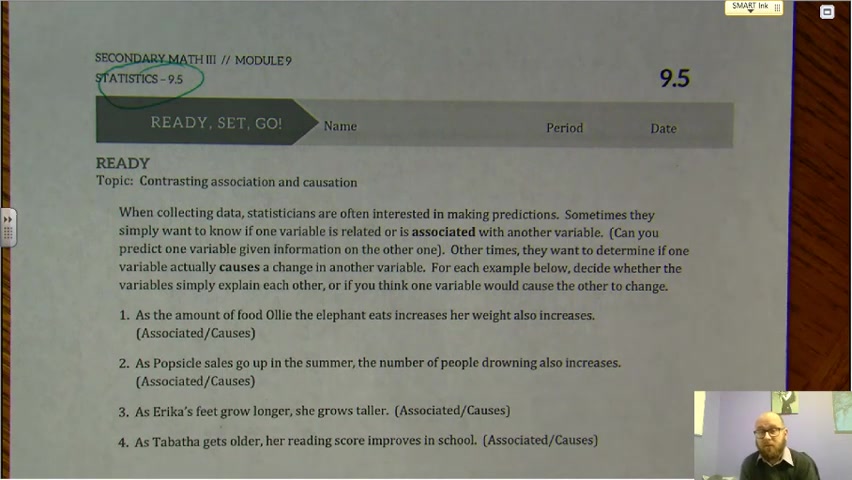
- Ollie the Elephant: As the amount of food Ollie the elephant eats increases, her weight also increases. Is this association or causation? Here, the amount of food directly causes a change in Ollie's weight. This is a clear case of causation.
- Popsicle Sales and Drowning: Popsicle sales go up in the summer, and the number of people drowning also increases. Is this association or causation? While the variables are related, popsicle sales don’t cause drowning. A third variable, summer heat, influences both. Thus, this is merely an association.
- Erika's Feet and Height: As Erika's feet grow longer, she grows taller. Is this association or causation? The growth of feet and height are connected by the fact that Erika is growing, so there is a correlation. We can make the argument that there is a causal relationship, that growth plates in the feet cause them to grow, and growth plates in the long bones will cause the bones to grow.
- Tabatha's Reading and Age: As Tabatha gets older, her reading score improves in school. Is this association or causation? As Tabatha ages, she gets more schooling and more experience, so that would mean that this would be causation. We can argue that this is caused by her schooling.





Most people like






































Report
Please select a reason for reporting
- 13 Reasons to Switch from Snapchat to Text Messaging
- 7 Powerful Speech to Text Apps to Boost Productivity
- 10 Best Speech to Text Tools for Effortless Transcription
- 13 Free Tools to Easily Transcribe Audio to Text
- 15 Surprising Ways Google's Speech-to-Text Boosts Productivity
- 7 Best Free Online Audio to Text Transcription Tools
- 9 Tips to Transcribe Speech to Text Faster and Better
- 13 Best Speech to Text Software for Windows 10 in 2023
- 7 Tips for Choosing the Best Transcriber for Audio to Text
- 11 Reasons Why Dragon Speech-to-Text Apps are Game-Changers
- 6 Secrets to Enhance Your Speech to Text Transcription
- 6 Brilliant Ways to Boost Productivity with Talk-to-Text on Your MacBook
- 6 Ways Transcription Software Converts Audio to Text
- 8 Tips to Transcribe Speech to Text Like a Pro
- 6 Reasons IBM Watson Speech to Text is a Game-Changer
- 14 Powerful Ways Talk-to-Text Improves Your Workflow
- 12 Top Windows Speech-to-Text Software for Efficient Transcription
- 12 Game-Changing Benefits of Apple's Speech to Text Technology
- 9 Powerful Use Cases for AWS Speech to Text Technology
- 10 Easy Steps to Transcribe YouTube Videos to Text
- transcription audio en texte
- online audio transcription
- free audio file transcription
- free ai audio transcription
- audio transcription service
- audio transcription online free
- audio transcription free online
- audio to transcription software
- audio and transcript
- ai audio transcription free
- voice recording to text converter
- translate voice recording to text
- record voice to text
- audio recording to text converter
- voice recording and transcription
- chatgpt voice to text
- gmail voice to text
- speech to text reader
- speech to text ai free
- speech to talk
- How SEO and Marketing Dashboards Empower Agencies to Drive Results
- How to Use AI Tools to Find Internal Linking Opportunities Across a Business Website
- Discover Your Perfect Haircut with AI Hairstyle Apps
- Free Reputation Calculator Tools: How They're Adapting to Score AI Visibility, Not Just Rankings
- Design Professional Flyers for Free on Your Phone
- Best Free Flyer Maker Apps for Android: Design Like a Pro
- How to Know If Your Business Is Ready for an AI Customer Service Agent
- Revolutionizing Storytelling: From Novels to Screenplays with AI
- Create Engaging Animated Explainer Videos with a Free AI Tool
- Stop Multi-Subscribing: Benchmark Top AI Visual Models in One Canvas
- AI & Elections: Defending Democracy Against Misinformation
- Navigating Political Discourse: AI, Deepfakes, and Reality Checks
- Detecting Political Bias in News Articles: A Powerful AI Algorithm
- AI Bias Unveiled: Political Leanings in ChatGPT & Beyond
- Revolutionize Learning: Discover Quizzes AI for Engaging Interactive Quizzes
- From AI-Generated to Audience-Ready: How Quillbot Humanize AI Is Changing the Content Editing Process
- Building an AI Writing Stack in 2026: LLMs, Detectors, and Humanizers
- 7 Top AI-Powered Database Assistant Platforms
- An Objective Look at Modern Web-Based Visual Modifications
- My Honest Experience with VideoAI: The Secret Weapon for Creators Who Need Character Voices

Copyright ©2026 toolify