































Table of Contents
- Key Points
- Optimizing Image Segmentation Projects with DVC
- Open Source Advantage with DVC
- Setting Up and Using DVC for Image Segmentation
- Pros and Cons of Using DVC
- Frequently Asked Questions
- Related Questions


Optimizing Image Segmentation Projects with DVC
The Core Challenges in Deep Learning Image Segmentation
Deep learning Image Segmentation presents unique challenges due to the nature of the data and models involved. These challenges significantly impact project timelines and the quality of the final product.
-
Large Datasets: Image segmentation often requires vast amounts of labeled data to train effective models. Managing, storing, and versioning these datasets can be a logistical nightmare.
-
Long Training Times: Training deep learning models for image segmentation can take hours or even days, demanding significant computational resources and efficient experiment tracking.
-
Large Models: The resulting models can be sizable binary artifacts, requiring robust version control to avoid corruption and ensure proper lineage tracking.
These factors make it crucial to adopt tools and practices that enhance efficiency and reliability throughout the project lifecycle.
Why DVC is a Game Changer for Image Segmentation
DVC provides a set of tools and practices tailored to manage the complexities of machine learning projects, particularly those involving image segmentation. It addresses the key challenges by providing solutions for data versioning, pipeline management, and experiment tracking.
-
Data Versioning: DVC integrates seamlessly with Git to version control data without storing the actual data in the Git repository. This allows for efficient tracking of changes to large image datasets. DVC handles large files by storing them externally (e.g., in cloud storage like AWS S3 or Google Cloud Storage) and then tracking the versions of these files
-
ML Pipelines: DVC allows creating ML pipelines, linking each stage to others and enabling you to change code in one stage then easily rerun other parts of the pipeline.
-
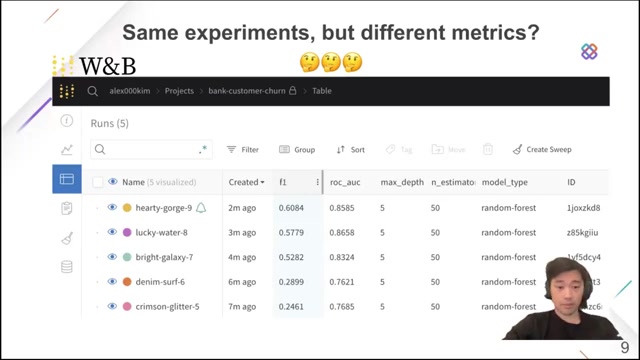
Experiment Management: DVC helps log all ML Experiment parameters.
-
Reproducibility: DVC ensures that projects can be replicated accurately, even with complex dependencies and lengthy training processes.
These features, combined with its open-source nature, make DVC a valuable asset for any team working on deep learning image segmentation.
A Real-World Example: Pool Segmentation from Satellite Imagery
Consider a project aimed at segmenting swimming pools from satellite imagery, such as the real-world example of France leveraging Google to spot undeclared pools. This application has significant value for tax authorities, requiring precise image segmentation and reliable model performance.
Challenges in such a project include:
- Acquiring and managing high-resolution satellite imagery: This imagery constitutes large datasets.
- Ensuring the model accurately identifies pools: Model training must be carefully tracked and versions to ensure consistent results.
- Scalability: Deploying the model to process vast geographic areas requires an efficient infrastructure.
DVC addresses these challenges by enabling:
- Efficient data versioning: To manage satellite images and maintain data integrity.
- Experiment tracking: To compare model performance, such as precision, recall, and F1-score during different training runs.
- Simplified deployment: To make the overall process more efficient and easily scaleable.
Open Source Advantage with DVC
Open Source Advantage with DVC
Embracing open-source tools like DVC offers distinct advantages for data science teams involved in machine learning projects:
-
Community and Support: Robust support from a wide community of developers.
-
Cost-Effectiveness: Open source softwares offer low or zero cost which provides an excellent way to start ML projects.
-
Transparent Roadmap: Transparency and discussion on public roadmap to allow better planning based on it.
Setting Up and Using DVC for Image Segmentation
Step-by-Step guide on Leveraging DVC
The following steps outline how to integrate DVC into an image segmentation project:
-
Install DVC: Begin by installing DVC using pip:
pip install dvc. This command installs DVC into your machine.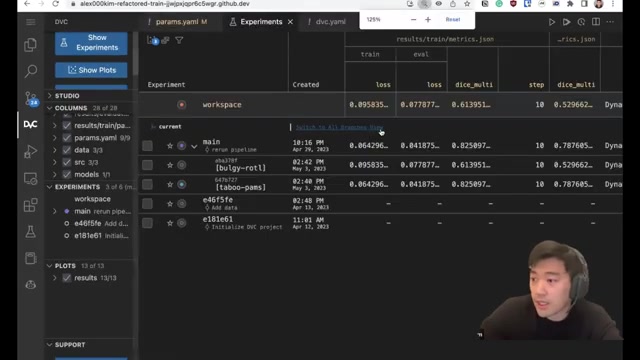
-
Initialize DVC: Navigate to your project directory and initialize DVC with
dvc init. This sets up the DVC environment, creates a .dvc directory and modifies .gitignore. You can now start versioning file system data. -
Configure Remote Storage: Configure a remote storage location (e.g., AWS S3, Google Cloud Storage) to store your data. Connect and configure remote by running
dvc remote add -d storage s3://<your_bucket_name>and then upload by runningdvc push. -
Create DVC Pipelines: Refactor machine learning processes into steps that can then be managed using the command line. These pipelines define the sequence of actions in your data processing. A basic pipeline will have the following code: data loading, data preprocessing, model training and model evaluation. These steps are combined into one with dvc pipelines.
-
Visualize Experiments: Run DVC, using
dvc exp showto see experiments.









Most people like



























Report
Please select a reason for reporting
- 13 Reasons to Switch from Snapchat to Text Messaging
- 7 Powerful Speech to Text Apps to Boost Productivity
- 10 Best Speech to Text Tools for Effortless Transcription
- 13 Free Tools to Easily Transcribe Audio to Text
- 15 Surprising Ways Google's Speech-to-Text Boosts Productivity
- 7 Best Free Online Audio to Text Transcription Tools
- 9 Tips to Transcribe Speech to Text Faster and Better
- 13 Best Speech to Text Software for Windows 10 in 2023
- 7 Tips for Choosing the Best Transcriber for Audio to Text
- 11 Reasons Why Dragon Speech-to-Text Apps are Game-Changers
- 6 Secrets to Enhance Your Speech to Text Transcription
- 6 Brilliant Ways to Boost Productivity with Talk-to-Text on Your MacBook
- 6 Ways Transcription Software Converts Audio to Text
- 8 Tips to Transcribe Speech to Text Like a Pro
- 6 Reasons IBM Watson Speech to Text is a Game-Changer
- 14 Powerful Ways Talk-to-Text Improves Your Workflow
- 12 Top Windows Speech-to-Text Software for Efficient Transcription
- 12 Game-Changing Benefits of Apple's Speech to Text Technology
- 9 Powerful Use Cases for AWS Speech to Text Technology
- 10 Easy Steps to Transcribe YouTube Videos to Text
- transcription audio en texte
- online audio transcription
- free audio file transcription
- free ai audio transcription
- audio transcription service
- audio transcription online free
- audio transcription free online
- audio to transcription software
- audio and transcript
- ai audio transcription free
- voice recording to text converter
- translate voice recording to text
- record voice to text
- audio recording to text converter
- voice recording and transcription
- chatgpt voice to text
- gmail voice to text
- speech to text reader
- speech to text ai free
- speech to talk
- Create Engaging Animated Explainer Videos with a Free AI Tool
- Stop Multi-Subscribing: Benchmark Top AI Visual Models in One Canvas
- Best Seedance 2.5 API Provider: Every Price on the Market, Checked at Source
- AI OnlyFans: How to Generate $30,000/Month (Legally)
- Transform Your Script into an Engaging Video with AI Video Maker!
- AI Marketing Automation: A Comprehensive Guide for Small Businesses
- Midjourney Alternative for Anime Art Creators: Why PixAI May Be Better for Character Workflows
- 10 Things Most People Get Wrong About AI Image Search
- AI Girlfriend Apps: Top Choices Redefining Relationships 2025
- How to Reduce Quoting Errors in Salesforce with AI-Assisted Quote Creation
- AI Resume Builders: EnhanceCV, ResumeNerd AI, & Teal Compared
- ResumeAI: Crafting ATS-Optimized Resumes with AI
- AI in Resume Writing: A New Era for Job Seekers
- AI Resume Tools: Streamline Your Job Search and Land Your Dream Role
- AI Resume Optimization: The Right Way to Land Interviews
- Crafting a Killer Resume with AI: A Step-by-Step Guide
- Crafting a Winning Resume: AI Tools and Expert Tips
- AI Job Search: Level Up Your Career with AI Automation
- Empower Your Career Journey: Dynamic Resumes with AI
- AI Resume Builder: Create Professional Resumes Effortlessly

Copyright ©2026 toolify