































Table of Contents
- Key Points
- Understanding the Landscape of Large Language Models
- Web Rephrase Augmented Pre-training (WRAP): A Novel Approach
- Implementing WRAP in Your Language Modeling Pipeline
- Understanding the Cost Implications of WRAP
- Unpacking the Advantages and Disadvantages of WRAP
- Key Features That Make WRAP Stand Out
- Diverse Use Cases for WRAP in NLP
- FAQ
- Related Questions


Understanding the Landscape of Large Language Models
Challenges with Training LLMs on Web Data
Large Language Models (LLMs) have become a cornerstone in various NLP applications, from content generation to complex problem-solving. However, the prevalent method of training these models on extensive web scrapes presents several challenges. One of the foremost issues is the unstructured and noisy nature of the data. Web data often lacks consistency, contains numerous errors, and can be poorly phrased, leading to inefficiencies during the training process.
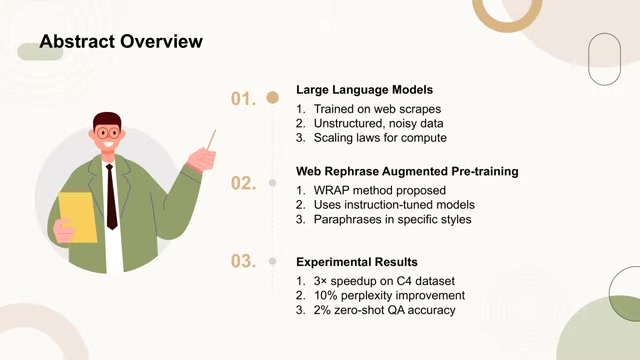
Another critical challenge is the immense computational cost associated with training LLMs. As model size increases, the demand for compute and data resources grows exponentially, making it impractical for many organizations to develop or even fine-tune state-of-the-art models. This highlights the need for more efficient and sustainable methods for language modeling.
Furthermore, current scaling laws indicate that continued expansion of model size and dataset volume may not always yield proportional gains in performance. This suggests that data quality and training methodologies are becoming increasingly important factors. As such, there is a growing interest in techniques that can improve the utility of training data and reduce the computational overhead. The WRAP method offers a promising avenue for achieving these goals.
The Compute and Data Bottleneck in Language Modeling
The pursuit of ever-larger language models is increasingly hampered by the compute and data bottleneck. Current scaling laws dictate that training these massive models requires exorbitant amounts of computational power, measured in terms of GPU hours, and terabytes upon terabytes of data. This is not only costly but also environmentally unsustainable. The data bottleneck is equally concerning. High-quality training data is becoming increasingly scarce, and the returns from simply scaling up datasets are diminishing. To overcome these limitations, innovative approaches are needed that can enhance data utility and reduce the computational burden. Techniques that can enable LLMs to learn more efficiently from less data are essential for democratizing access to advanced NLP capabilities.
The focus is shifting from brute-force scaling to methodological innovations that can maximize the information density of training data. This includes strategies such as curriculum learning, active learning, and, as explored in this article, data rephrasing. Data rephrasing aims to transform unstructured and noisy web data into a more digestible and informative format for LLMs, thereby improving learning efficiency and overall model performance.
Web Rephrase Augmented Pre-training (WRAP): A Novel Approach
Introducing the WRAP Methodology
To address the challenges outlined above, the Web Rephrase Augmented Pre-training (WRAP) method offers a Novel solution. WRAP proposes an innovative strategy for enhancing the utility of web data by rephrasing it into more structured and informative formats. This process involves leveraging instruction-tuned models to paraphrase web documents in specific styles, such as Wikipedia-like or question-answer formats. By transforming the data, WRAP aims to improve the learning efficiency of LLMs and reduce the need for vast amounts of raw, unstructured web data.
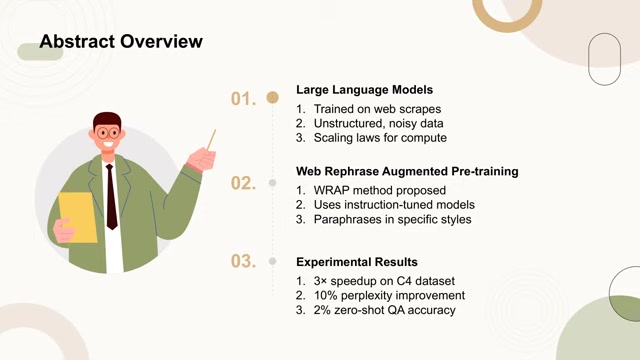
WRAP's core concept is centered on the idea that instruction-tuned models can be used to create high-quality synthetic data. These models are adept at following specific instructions and generating text that adheres to particular style guidelines. This allows for the creation of training datasets that are not only cleaner and more structured but also tailored to specific learning objectives. The result is a more focused and efficient training process, leading to improved model performance and generalization capabilities. WRAP can significantly accelerate pre-training on noisy datasets, enhancing the capabilities of the LLM and reducing computational costs.
The Recipe for Compute and Data Efficiency with WRAP
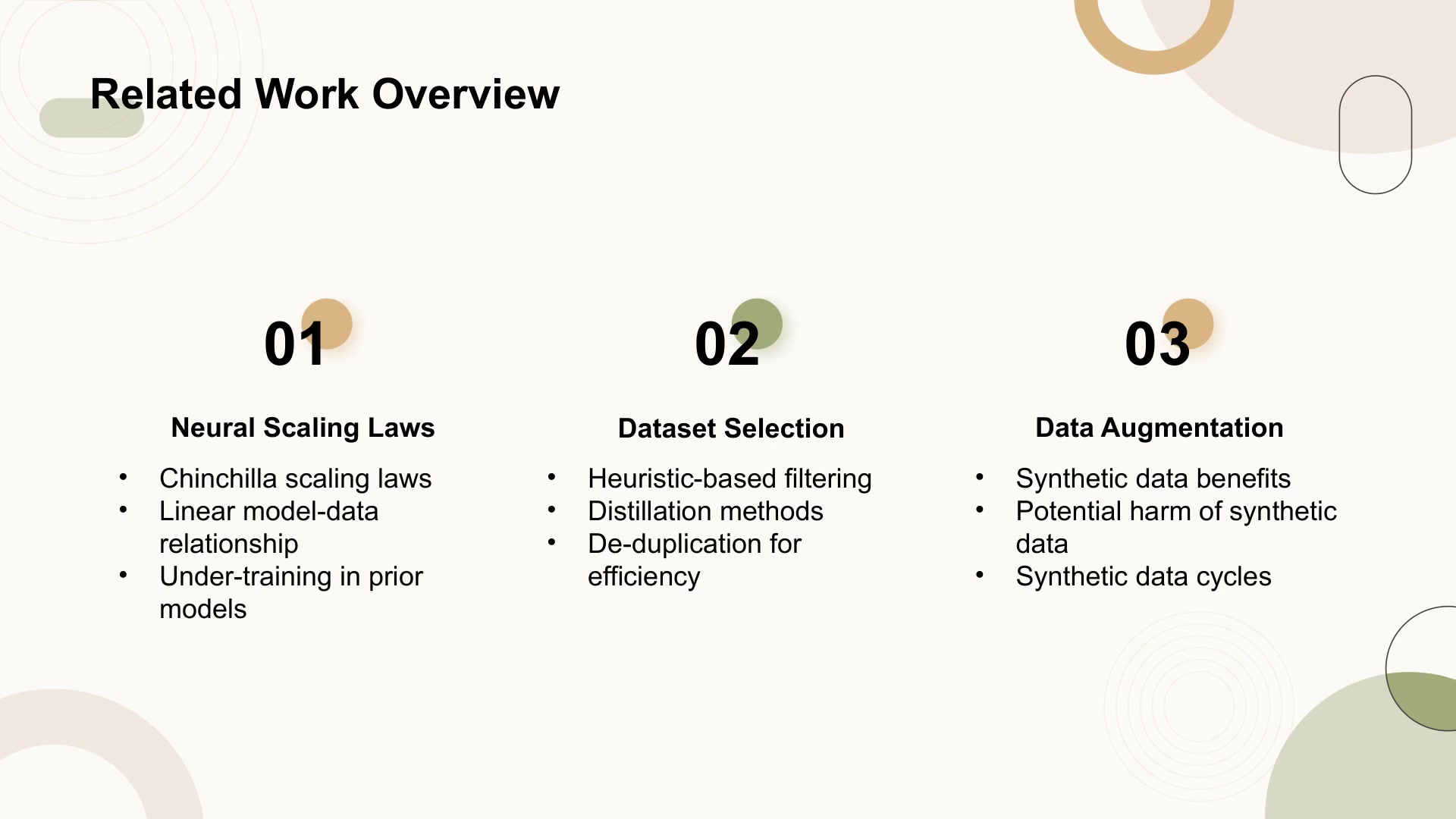
The WRAP method follows a well-defined recipe to ensure compute and data efficiency. This recipe can be broken down into several key steps:
-
Off-the-Shelf LLM for Web Article Rephrasing: An instruction-tuned model is used to paraphrase web articles, converting them into more structured and informative formats. This helps to clean up noisy web data and enhance its utility for language model training.
-
Mixture of Real and Synthetic Data for LLM Pre-training: Both real web data and the synthetically rephrased data are combined to pre-train the LLM. This ensures a balance between exposure to authentic language patterns and the benefits of cleaner, structured data. The combination helps prevent overfitting to the synthetic data and allows the model to generalize better.
-
Zero-Shot Performance and Perplexity Analysis: The pre-trained model is evaluated based on zero-shot performance and perplexity. This provides insights into the model's generalization capabilities and its ability to understand and generate coherent text. It also helps to fine-tune the rephrasing process and optimize the data mixture.
-
Style Diversity: Rephrasing web data into Wikipedia-like or question-answer formats introduces valuable style diversity. This enables the LLM to learn different writing styles and adapt to various tasks, enhancing its overall flexibility and performance.
-
Iterative Human Feedback: Gathering iterative human feedback further refines the synthetic data generation process. This ensures the quality of the rephrased data is high and aligned with specific learning objectives. Human feedback can help identify biases and improve the model's ability to generate accurate and informative content.
By following this recipe, WRAP can effectively reduce the compute and data requirements for LLM training while enhancing model performance. This offers a sustainable and scalable approach to language modeling, democratizing access to advanced NLP capabilities.
Implementing WRAP in Your Language Modeling Pipeline
Step 1: Data Acquisition and Selection
The first step involves gathering your initial web data. Consider using datasets like the C4 dataset, which is commonly used for pre-training LLMs. Ensure your data source is diverse and representative of the kinds of language patterns you want your model to learn. Begin by identifying and acquiring the web documents that will serve as the foundation for your training dataset. Prioritize sources known for their breadth of content and relevance to the desired language capabilities.
Employ filtering techniques to remove irrelevant or low-quality content. This may involve setting thresholds for metrics like text length, readability scores, and the presence of specific keywords. High-quality data at this stage drastically reduces the workload downstream. Consider using heuristic-based filtering techniques to automatically identify and remove noisy or irrelevant data. This involves setting thresholds for metrics such as text length, readability scores, and the presence of specific keywords. De-duplication is another crucial step to ensure that your model does not overfit to repeated content.
Step 2: Setting Up The Environment
Setting up your environment is crucial for implementing WRAP effectively. Start by ensuring you have access to the necessary hardware and software resources, including GPUs and the latest versions of Python and PyTorch. Install all required libraries, such as Transformers, Datasets, and any other NLP-specific tools. Configure your environment to optimize GPU utilization, which can significantly speed up the rephrasing process.
After the hardware, set up the software environment:
- Make sure you have access to a suitable environment. You will need to ensure you can use the required LLMs.
- Consider utilizing tools such as Anaconda or Docker to create a containerized environment, which can help manage dependencies and ensure reproducibility.
- Install the most recent versions of the important packages.
Step 3: Rephrasing Web Documents with Instruction-Tuned Models
Leverage an off-the-shelf, instruction-tuned LLM (like Mistral-7B) to rephrase the selected web documents. These models are specifically trained to follow instructions and generate text in a desired style. Create a Prompt that instructs the LLM to paraphrase the input text while maintaining its original meaning. Experiment with prompts to achieve the best results, and consider rephrasing the same document multiple times with different prompts to increase diversity. Before running all data, test rephrasing techniques on a subset of your data to identify any potential issues or biases in the rephrased content. Review the generated text for accuracy, coherence, and adherence to the desired style guidelines.
Step 4: Data Combination and Training
Combine the original web data with the rephrased data to create a training dataset for your LLM. You can adjust the ratio of real to synthetic data to optimize performance. A 1:1 ratio is generally recommended. Next, proceed to train your target LLM on the combined dataset. Monitor perplexity and other relevant metrics during training to ensure that the model is learning effectively. It is recommended to track a variety of datasets during this process.
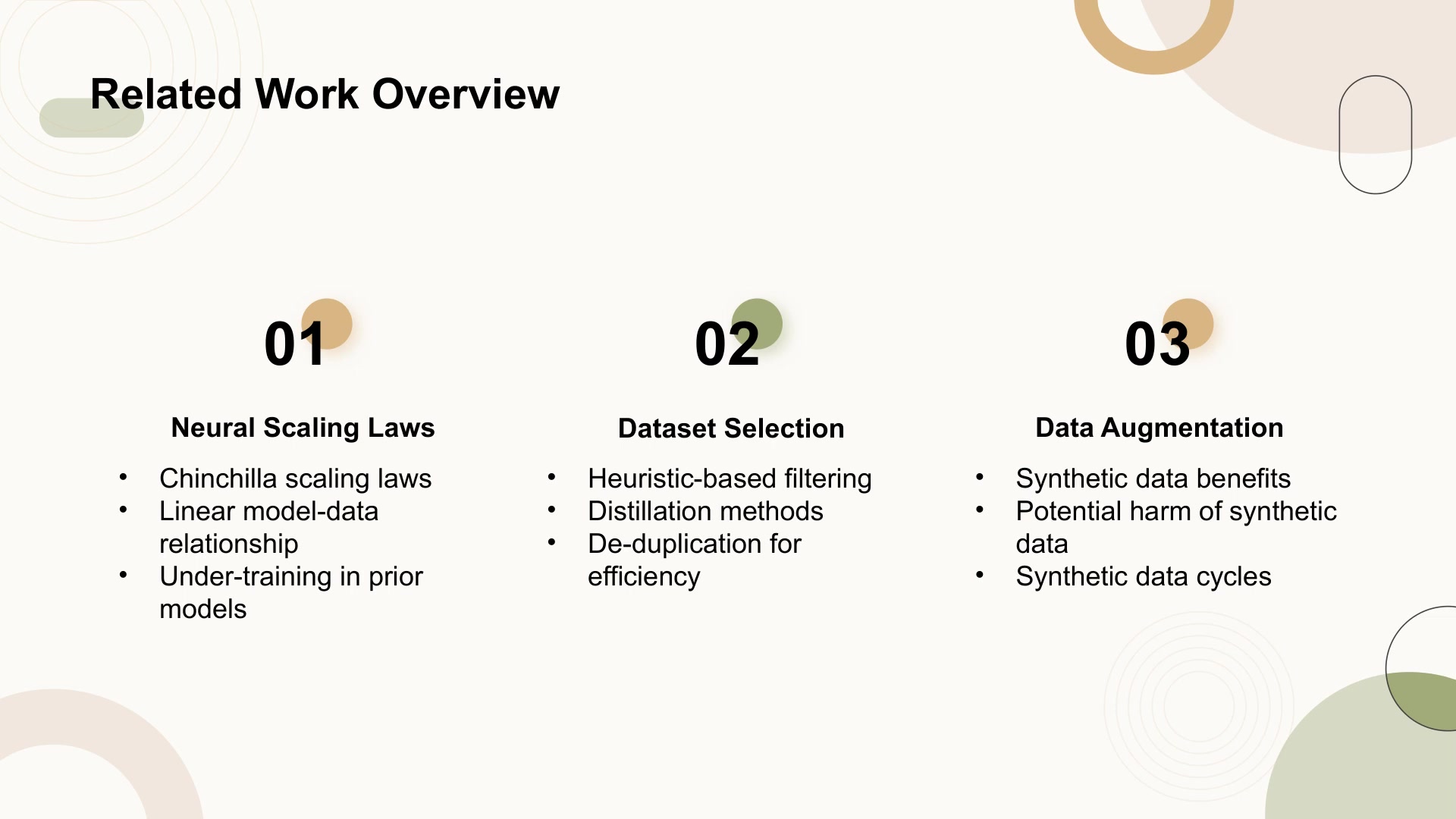
Continue to track perplexity as the process runs and review it with each iteration.
- Evaluation Setup:
- 21 Pile Sub-Domains.
- First 10,000 Documents
- Appendix D Details
- Model Training:
- C4 Dataset Training
- Synthetic Rephrases
- Perplexity on Pile
Step 5: Style-Aware Training
Experiment with different rephrasing styles to understand their impact on model performance. Try rephrasing documents into Wikipedia-like articles, question-answer pairs, or other relevant styles. Use style tags to label different categories of each input so that the model begins to understand the style as a parameter.
- Rephrasing Styles:
- Easy: Toddler-Understandable
- Medium: Wikipedia-Like Quality
- Hard: Terse, Abstruse Language







Most people like

































Report
Please select a reason for reporting
- 13 Reasons to Switch from Snapchat to Text Messaging
- 7 Powerful Speech to Text Apps to Boost Productivity
- 10 Best Speech to Text Tools for Effortless Transcription
- 13 Free Tools to Easily Transcribe Audio to Text
- 15 Surprising Ways Google's Speech-to-Text Boosts Productivity
- 7 Best Free Online Audio to Text Transcription Tools
- 9 Tips to Transcribe Speech to Text Faster and Better
- 13 Best Speech to Text Software for Windows 10 in 2023
- 7 Tips for Choosing the Best Transcriber for Audio to Text
- 11 Reasons Why Dragon Speech-to-Text Apps are Game-Changers
- 6 Secrets to Enhance Your Speech to Text Transcription
- 6 Brilliant Ways to Boost Productivity with Talk-to-Text on Your MacBook
- 6 Ways Transcription Software Converts Audio to Text
- 8 Tips to Transcribe Speech to Text Like a Pro
- 6 Reasons IBM Watson Speech to Text is a Game-Changer
- 14 Powerful Ways Talk-to-Text Improves Your Workflow
- 12 Top Windows Speech-to-Text Software for Efficient Transcription
- 12 Game-Changing Benefits of Apple's Speech to Text Technology
- 9 Powerful Use Cases for AWS Speech to Text Technology
- 10 Easy Steps to Transcribe YouTube Videos to Text
- transcription audio en texte
- online audio transcription
- free audio file transcription
- free ai audio transcription
- audio transcription service
- audio transcription online free
- audio transcription free online
- audio to transcription software
- audio and transcript
- ai audio transcription free
- voice recording to text converter
- translate voice recording to text
- record voice to text
- audio recording to text converter
- voice recording and transcription
- chatgpt voice to text
- gmail voice to text
- speech to text reader
- speech to text ai free
- speech to talk
- How SEO and Marketing Dashboards Empower Agencies to Drive Results
- How to Use AI Tools to Find Internal Linking Opportunities Across a Business Website
- Discover Your Perfect Haircut with AI Hairstyle Apps
- Free Reputation Calculator Tools: How They're Adapting to Score AI Visibility, Not Just Rankings
- Design Professional Flyers for Free on Your Phone
- Best Free Flyer Maker Apps for Android: Design Like a Pro
- How to Know If Your Business Is Ready for an AI Customer Service Agent
- Revolutionizing Storytelling: From Novels to Screenplays with AI
- Create Engaging Animated Explainer Videos with a Free AI Tool
- Stop Multi-Subscribing: Benchmark Top AI Visual Models in One Canvas
- Top 5 Cold Email Software: Maximize Your Outreach in 2025
- Magic School AI: Revolutionizing Quiz & Assessment Generation
- Create Your Own Email Bot and Automate Your Email Tasks
- Beyond Pure Prompts: Optimizing Production with 'Text With Reference' Generation
- Stop Using Boring TTS: My Honest Deep Dive Into VideoAI and the Hunt for the Perfect Custom Voices
- AI & Elections: Defending Democracy Against Misinformation
- Navigating Political Discourse: AI, Deepfakes, and Reality Checks
- Detecting Political Bias in News Articles: A Powerful AI Algorithm
- AI Bias Unveiled: Political Leanings in ChatGPT & Beyond
- Revolutionize Learning: Discover Quizzes AI for Engaging Interactive Quizzes

Copyright ©2026 toolify