































Table of Contents
- Key Points
- Understanding SEO Transparency and Website Performance
- Reflections and Future Steps
- Step-by-Step Guide to Inspecting Google Search Console
- Advantages and Disadvantages of Directory-Style Websites
- Frequently Asked Questions (FAQ)
- Related Questions



Understanding SEO Transparency and Website Performance
The Importance of SEO Transparency
Unlike many in the SEO field, I make a conscious effort not to conceal the realities of SEO work. It’s crucial to be upfront about what works, and equally important to acknowledge when things don't go as planned. Honesty builds trust and provides a more realistic understanding of SEO's complexities. This approach fosters a more supportive community where challenges are shared and overcome together.

I prioritize clarity, detailing strategies that initially worked but later faltered. This level of candor is essential for shared learning and continuous improvement within the SEO community.
SEO is not just about highlighting successes; it's equally about acknowledging setbacks. When strategies fail, transparency becomes even more critical. Hiding failures deprives others of valuable insights and lessons learned. Instead, openly discussing these experiences creates a collaborative environment, allowing everyone to benefit from shared knowledge and collective problem-solving.
By focusing on transparency, we can collectively debunk the myth of easy, overnight SEO success. The reality is that SEO involves constant experimentation, adaptation, and learning from both victories and defeats. This honest approach builds trust and credibility within the digital marketing community.
Transparency in SEO also means being open about the tools and methods used, even if they don’t always yield the expected results. By detailing the specific tools and steps taken, it empowers others to replicate the process, evaluate its effectiveness, and adapt it to their unique situations. This level of detail helps foster a culture of continuous improvement and innovation in the field.
Ultimately, transparency in SEO is about fostering a community of informed and empowered digital marketers. By sharing both the triumphs and tribulations, we create an environment where knowledge is freely exchanged, strategies are continuously refined, and everyone benefits from the collective wisdom.
The Find a Business UK Case Study: A Performance Dive
I'm sharing a candid update about 'findabusinessuk.com', a UK business directory project that initially showed promising results. The expectation was to achieve 100,000 to 200,000 impressions daily, with around 1,000 clicks.

However, the website's performance has significantly declined, prompting a deeper investigation into the reasons behind this drop. It’s vital to understand that SEO success isn't always linear and that unforeseen issues can arise, requiring adaptability and problem-solving.
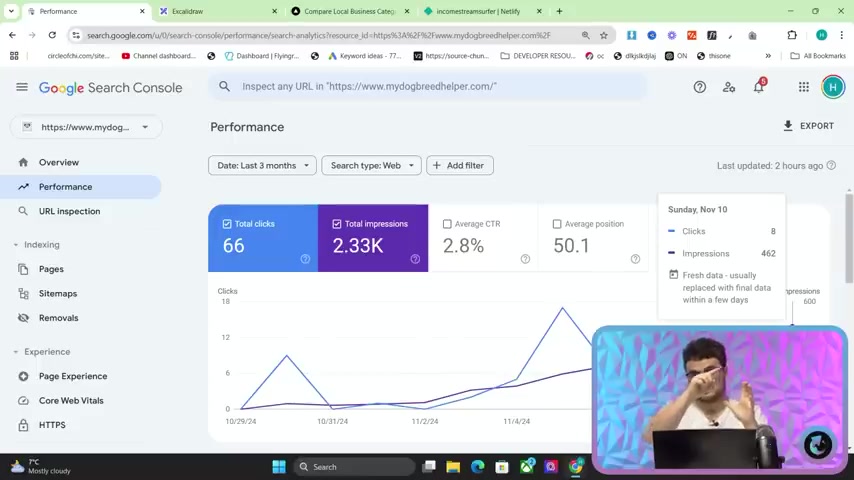
The journey of 'findabusinessuk.com' began with high hopes and optimism. The initial launch saw encouraging traffic, with impressions quickly climbing to around 12,000 within just four days. This initial success fueled expectations of continued growth and visibility.
However, this upward trajectory was short-lived. Shortly after the initial surge, a noticeable drop in impressions occurred. On November 7th, the website recorded 12,874 impressions, but the following days saw a significant decline, reaching as low as 431 impressions and then 362. Such a drastic drop raised immediate concerns and prompted a thorough investigation.
In a world where many prefer to hide setbacks, it's essential to highlight these challenges. Sharing these experiences provides an honest perspective on the realities of SEO and digital marketing. Success isn't just about celebrating wins; it's also about learning from failures and sharing those lessons with others.
While the dramatic decline in impressions was unexpected, it presented an opportunity for further learning and refinement of SEO strategies. By openly discussing the issues encountered with 'findabusinessuk.com', the goal is to provide actionable insights and help others avoid similar pitfalls. This transparent approach to SEO is critical for collective growth and knowledge-sharing within the industry.
Identifying Potential Causes: Server Connectivity and Google Crawlers
I dug into Google Search Console to identify the root cause of the problem. Within the crawl stats, the key discovery was the recurrent ‘problems last week’ status.

This indicates that Google's crawlers struggled to access the website consistently. The host status revealed a significant issue: server connectivity. Server connectivity shows High fail rate last week, which Google was not always able to reach your content last week. This suggests that the server hosting 'findabusinessuk.com' experienced connectivity problems, hindering Google's ability to crawl and index the site effectively.
To confirm whether the connectivity was due to my code problems or server problems, I went to Settings and then Crawl stats. In that place, I found two links:
- www.findabusinessuk.com (host name)
- findabusinessuk.com (another host name)
The number of crawl requests was 89,354 for www.findabusinessuk.com compared to 18 crawl request. After opening the report, I could confirm that there were some problems the last week.
When Google's crawlers can’t reliably access a website, it impacts the site's indexing, ranking, and overall visibility in search results. The higher the fail rate, the more likely it is that Google will deem the site as unreliable and lower its ranking.
Poor server connectivity not only affects Google's ability to crawl the site but also impacts user experience. If visitors encounter frequent errors, slow loading times, or intermittent access, they're likely to abandon the site, increasing bounce rates and decreasing time on page—both critical SEO metrics.
Addressing the server connectivity issues involves several steps. The first is to communicate the problems with the hosting provider, asking them to investigate the server’s stability and performance. If the issues persist, it may be necessary to switch to a more reliable hosting solution.
It's also essential to ensure the website's code is optimized for performance. Large image files, poorly structured code, and excessive scripts can all contribute to slow loading times and connectivity issues. Optimizing these aspects can reduce the load on the server and improve Google's ability to crawl and index the site.
Comparing Hosting Platforms: Verifying Vercel vs. Netlify
To further illustrate the impact of hosting on SEO, I compared 'findabusinessuk.com' with another project, 'findatradespersonireland.com'. The latter is hosted on Netlify.

I also considered Netlify as a platform with stable performance, confirming how hosting can significantly influence SEO outcomes.
One of the most critical differences between these two sites is their host status. While 'findatradespersonireland.com' showed no problems in the last 90 days, 'findabusinessuk.com' had a host that reported ongoing server connectivity issues. These issues directly impact Google's ability to crawl and index the site, affecting its search rankings. The server connectivity with findatradespersonireland.com is 100% without any problems last 90 days.
To ensure optimal website performance and SEO, it’s crucial to choose a hosting provider that offers robust infrastructure and reliable uptime. Different hosting platforms vary in their performance capabilities, scalability, and support for various technologies. Therefore, it's essential to evaluate these factors when selecting a hosting solution.
Netlify, for example, is renowned for its speed and reliability, offering features like global CDN (Content Delivery Network), continuous deployment, and automated scaling. These features contribute to faster loading times, better user experiences, and improved SEO. In contrast, cheaper hosting options may lack the resources and infrastructure to handle traffic and server loads effectively, leading to connectivity issues and reduced SEO performance.
Moreover, the choice of hosting platform can also impact website development workflows. Platforms like Netlify support modern development practices like Git-based deployments, serverless functions, and automated builds. These tools can streamline the development process, enhance website performance, and reduce the risk of errors. These features provide seamless deployment and continuous delivery, ensuring any changes or updates can be rapidly deployed without disrupting the site's performance.
Restructuring Find a Business UK: Refinement and Optimization
Acknowledging past mistakes, the plan is to rebuild 'findabusinessuk.com' with a refined structure and improved content. This involves scaling down to the top 500 categories. I think with a limited number of categories and towns it may be better.
I also want to try out a few ideas for a better SEO score. This focused approach allows for better management of resources, more targeted SEO efforts, and improved crawlability for search engines. The lessons learned highlight the need for adaptability and strategic thinking when scaling a website.
By scaling down to the top 500 categories, the website can focus on providing the most relevant and valuable content to its users. This approach ensures that the content aligns with the most sought-after business categories in the UK, improving user engagement and Search Engine rankings. Rather than spreading resources thinly across numerous categories, focusing on the top 500 ensures that each category receives the attention and optimization it deserves.
Restructuring the site also involves refining its content strategy. Creating high-quality, unique, and engaging content for each category and location is essential. This content should be optimized for relevant keywords, providing valuable information to users, and encouraging longer time-on-site and lower bounce rates. Content optimization includes:
- Keyword optimization
- Unique and engaging content
- High-quality images and videos
- Structured data markup
- Internal and external linking
Implementing these content optimization strategies will improve search engine crawlability and indexing, leading to better rankings and increased organic traffic.
After all, having too many categories can easily be a case of the SEO keyword density is too low and thus there is no use of a 17 billion website (as the website would have been with all the cities).
The most important thing, it's having a clear plan before starting to use the tools and the strategy to improve SEO.
Cautionary Note: Ad Platforms Like Ezoic
It's important to note the ad platform Ezoic might have also been the reason that the SEO declined on Google. I added Ezoic to 'findabusinessuk.com',.
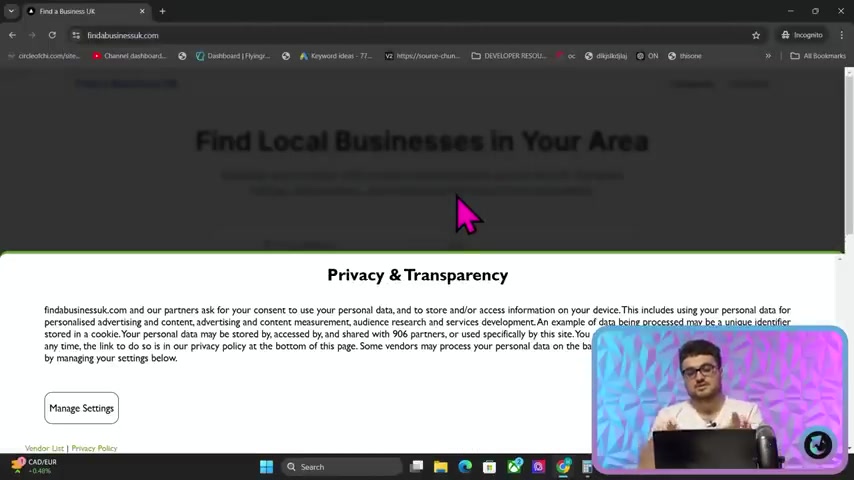
This resulted in the addition of a cookie agreement, which could have hindered Google’s crawling capabilities. While ad platforms can generate revenue, it’s crucial to weigh their potential impact on SEO performance. Before implementing such tools, consider the trade-offs and potential risks. I tried adding Ezoic and it added a Privacy & Transparency setting which I think that stop Google from crawling.
The addition of ad platforms like Ezoic can introduce various SEO challenges. While these platforms aim to monetize website traffic, they often add complex scripts and codes that can slow down loading times and disrupt the user experience. Slow loading times not only frustrate visitors but also negatively impact search engine rankings, as speed is a critical SEO factor.
Ad platforms can also affect website crawlability. The scripts and codes added by these platforms may interfere with search engine crawlers, making it difficult for them to index the site’s content effectively. This can lead to decreased visibility in search results, reducing organic traffic.
Moreover, some ad platforms may employ intrusive ad formats that detract from the user experience. Pop-up ads, interstitial ads, and auto-playing videos can annoy visitors, leading to higher bounce rates and lower time-on-site. Search engines like Google consider these user engagement metrics when ranking websites, so a poor user experience can have a direct impact on SEO.
Despite these potential drawbacks, ad platforms can still be used effectively if implemented thoughtfully. It’s crucial to:
- Optimize ad placement
- Minimize script and code bloat
- Monitor user engagement metrics
- Prioritize user experience
In brief, always keep in mind that monetization is essential for sustainability, the balance with SEO best practices and user experience should always be the ultimate priority.







Most people like
































Report
Please select a reason for reporting
- 13 Reasons to Switch from Snapchat to Text Messaging
- 7 Powerful Speech to Text Apps to Boost Productivity
- 10 Best Speech to Text Tools for Effortless Transcription
- 13 Free Tools to Easily Transcribe Audio to Text
- 15 Surprising Ways Google's Speech-to-Text Boosts Productivity
- 7 Best Free Online Audio to Text Transcription Tools
- 9 Tips to Transcribe Speech to Text Faster and Better
- 13 Best Speech to Text Software for Windows 10 in 2023
- 7 Tips for Choosing the Best Transcriber for Audio to Text
- 11 Reasons Why Dragon Speech-to-Text Apps are Game-Changers
- 6 Secrets to Enhance Your Speech to Text Transcription
- 6 Brilliant Ways to Boost Productivity with Talk-to-Text on Your MacBook
- 6 Ways Transcription Software Converts Audio to Text
- 8 Tips to Transcribe Speech to Text Like a Pro
- 6 Reasons IBM Watson Speech to Text is a Game-Changer
- 14 Powerful Ways Talk-to-Text Improves Your Workflow
- 12 Top Windows Speech-to-Text Software for Efficient Transcription
- 12 Game-Changing Benefits of Apple's Speech to Text Technology
- 9 Powerful Use Cases for AWS Speech to Text Technology
- 10 Easy Steps to Transcribe YouTube Videos to Text
- transcription audio en texte
- online audio transcription
- free audio file transcription
- free ai audio transcription
- audio transcription service
- audio transcription online free
- audio transcription free online
- audio to transcription software
- audio and transcript
- ai audio transcription free
- voice recording to text converter
- translate voice recording to text
- record voice to text
- audio recording to text converter
- voice recording and transcription
- chatgpt voice to text
- gmail voice to text
- speech to text reader
- speech to text ai free
- speech to talk
- Meshy AI: How to Create 3D Models from Text and Images
- How SEO and Marketing Dashboards Empower Agencies to Drive Results
- How to Use AI Tools to Find Internal Linking Opportunities Across a Business Website
- Discover Your Perfect Haircut with AI Hairstyle Apps
- Free Reputation Calculator Tools: How They're Adapting to Score AI Visibility, Not Just Rankings
- Design Professional Flyers for Free on Your Phone
- Best Free Flyer Maker Apps for Android: Design Like a Pro
- How to Know If Your Business Is Ready for an AI Customer Service Agent
- Revolutionizing Storytelling: From Novels to Screenplays with AI
- Create Engaging Animated Explainer Videos with a Free AI Tool
- Meshy AI: How to Create 3D Models from Text and Images
- ASOMobile Helps Teams Benchmark App Store Screenshots Against Competitors
- How to Match LMS Software With Your Organization's Training Plan
- Revolutionizing Email Marketing Agency with AI
- How to Convert BTC to HNT
- Unleashing the Power of AI: Cognizant's Roadmap for Transformation
- Frame to Video Review: A Practical Look at Turning Two Still Frames Into Motion
- NVIDIA NIM: Revolutionizing Supply Chain Data Analysis with AI
- Top AI Tools That Help Brands Stand Out Offline (Not Just Online)
- Top 5 Cold Email Software: Maximize Your Outreach in 2025

Copyright ©2026 toolify