































Table of Contents
- Key Points
- Featured Open Source GitHub Projects
- Table of Key Features
- Frequently Asked Questions (FAQ)
- Related Questions



Featured Open Source GitHub Projects
SeleniumBase: The All-in-One Python Framework
SeleniumBase is a powerful, all-in-one Python framework designed to streamline web automation and testing. This isn't just another tool; it's a comprehensive solution that handles everything from website testing and Web Scraping to bypassing bot detection. What sets SeleniumBase apart is its all-encompassing nature and its ability to simplify complex tasks. Instead of relying on raw Selenium, which often requires manual setup, SeleniumBase provides a more structured and organized approach.
Simplified Web Automation: SeleniumBase simplifies complex tasks, reducing the need for manual setup and coding.
- It integrates test runners like Pytest, Pynose, and Behave, making test discovery and execution straightforward.
- Command-line options allow for easy adjustments, such as browser selection.
- The framework automatically downloads necessary web drivers and detects CSS selectors and XPath expressions, eliminating manual specification.
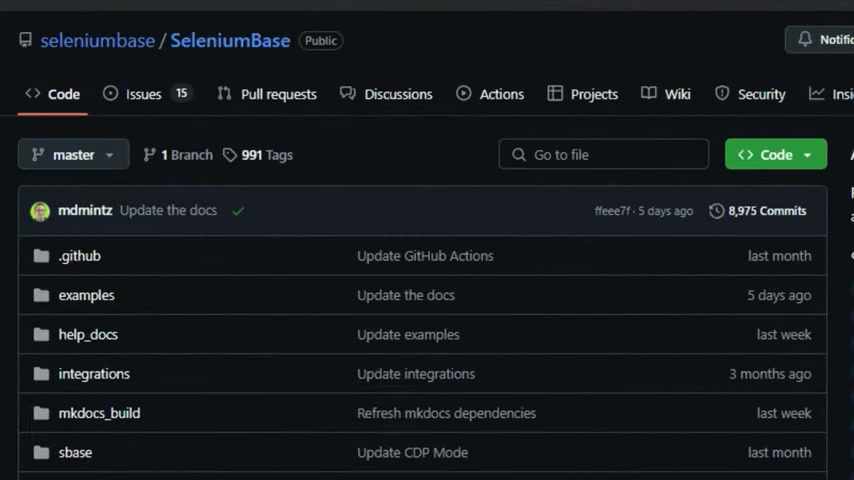
Key Features of SeleniumBase: SeleniumBase methods are designed to perform multiple actions, including waiting for elements to become visible before interacting with them, reducing code complexity. Furthermore, SeleniumBase offers clean error output for failed tests and features for generating test dashboards and reports. Additionally, SeleniumBase has tools for bypassing CAPTCHAs and includes a recorder for generating tests from manual browser actions. It offers test case management software called Case Plans and tools for building data apps with Chart Maker.
SeleniumBase supports major browsers and operating systems, as well as CI/CD platforms. Its demo mode slows down tests to allow users to see what is happening and highlights elements on the page being acted upon. Overall, SeleniumBase is a user-friendly framework that streamlines web automation, making it easier to manage and Scale automation tasks. With support for many platforms and key features, SeleniumBase stands out as a top choice for web automation. Its ability to bypass CAPTCHAs, integrate testing tools, and generate reports provides a structured and versatile approach. Whether testing website functionality, scraping data, or automating tasks, SeleniumBase is an invaluable asset for developers.
Hitems AI: Your One-Click Product Creation Platform
Hitem's AI is a revolutionary platform that empowers users to bring their product ideas to life with unprecedented ease. By harnessing the power of artificial intelligence, Hitem's AI streamlines the product design and creation process, making it accessible to anyone with an idea, regardless of technical expertise.
Challenging Events for Everyone: Hitem's AI goes beyond just design, offering challenging events where users can create unique products based on event themes and earn free products. In its launch time, Hitem's AI are running a challenging event for everyone.
With a user-friendly interface and intuitive tools, Hitem's AI empowers users to unleash their creativity and design products that reflect their unique vision. Whether you're a seasoned designer or a novice entrepreneur, Hitem's AI provides the resources and support you need to turn your dreams into reality. This platform emphasizes challenges and events, fostering a community where users can not only create but also participate and gain rewards. By logging in with an email ID, individuals can start designing in their own style and contributing to various themed challenges. This approach to product development makes Hitem's AI a compelling choice for those looking to innovate in a community-driven environment.
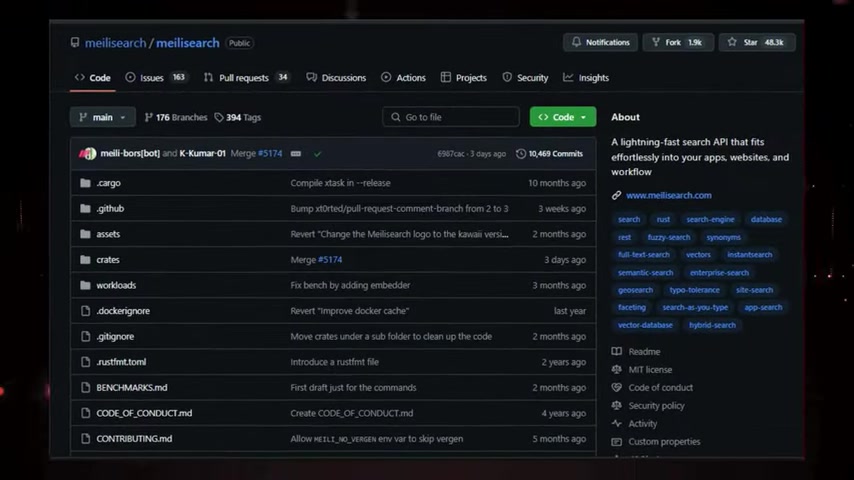
MeiliSearch: The Lightning-Fast Search API
MeiliSearch is a lightning-fast, open-source search API designed for modern apps and websites. It excels in delivering search-as-you-type results in less than 50 milliseconds, ensuring a smooth and efficient user experience. This speed is achieved through its hybrid search capabilities, which combine the best of semantic and full-text search, providing the most Relevant results. MeiliSearch’s standout features include:
Essential Functionality: Offering sorting and synonym support to improve search relevancy.
- Typo Tolerance: The API gives relative results, even when the search terms contain typos and misspellings
- Filtering and faceted Search: The feature can improve the user experience with custom filters and build a faceted search interface in a few lines of code
- Geo-Search Capabilities:The API can Filter and sort documents based on geographic data.
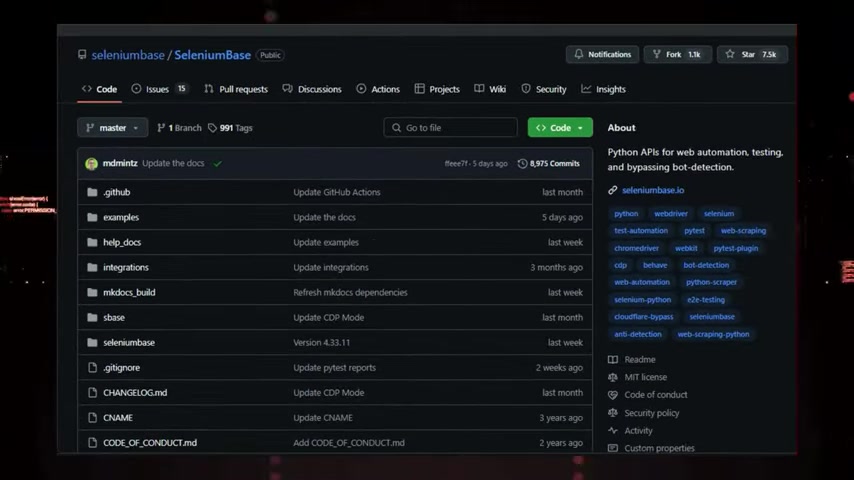
MeiliSearch supports major browsers and operating systems, and it's also user-friendly, with features that work out of the box for easy integration. The Search API is highly customizable, with a RESTful API for seamless integration with plugins and SDKs. Overall, MeiliSearch is a powerful and user-friendly tool that streamlines search functionality, making apps more intuitive and efficient. Whether you're building an e-commerce website, a content-rich application, or any other project that requires a robust search feature, MeiliSearch is an excellent choice.
Rig: The Modular Rust Library
Rig is a modular Rust library designed for building scalable LLM-powered applications, offering an efficient framework for integrating AI capabilities into your projects. Here’s how Rig stands out:
Rust-Based Design: As Mentioned previously, Rig is built with Rust, a known language for speed, memory efficiency, and reliability
- LLM Support: Rig supports full the completion of LLM and embedding workflows
- Abstractions over LLM providers: It has simple but powerful common abstractions over LLM providers. Model Provider is OpenAI and Cohere
- Data Storage:Vector stores are available as separate companion crates, it can be used for storing the model data in the long term. (e.g. MongoDB and in-memory).
Because of Rust, the library has a more scalable modular architecture for building, extending, and integration, while at the same time it is designed to be lightweight, with a primary goal to speed up manual testing with automation where manual testers can validate their validation. Integrating LLMs into your app is streamlined with minimal boilerplate code and offers options for command lines, which can also be used to perform multiple actions, such as waiting for elements to be visible before interacting with them. Rig is an important framework that can improve performance. It is one step towards more effective computing and pushing what’s possible.
Mainframe-Orchestra: Cognitive Architectures for Multi-Agent Teams
Mainframe-Orchestra is an open-source, Pythonic framework designed for constructing cognitive architectures for multi-agent systems. This is one project you’ll definitely be interested in. It offers a unique approach to agent orchestration that goes beyond basic routing, facilitating complex workflows with modularity:
Framework Highlights: cognitive load on LLMs is reduced through structured thinking Patterns as well as flexible task decomposition
- Architectures Support Easy Building:Mainframe-Orchestra features a modular that allows for easy building, extension, and integration of new components
- Agents in Mainframe can act as both executives and conductors to complete dynamic task decomposition
- The project runs as a Python code for easy integration
This unique feature is important because a big aspect of Mainframe is that it has easy tools for definition. This is done, specifically with Python docstring and is one way complexity is drastically reduced. The software comes with tools in all the LLMs, with easy integration points. It supports a large range of language models from different providers like Anthropic, OpenRouter, Ollama and has well defined functions that allow easy task completion for these tools. With its modular framework and straightforward orchestration and ease of task completion, the Mainframe is a great choice.
Agents: Build Real-Time Multimodal AI Applications
Agents offer a powerful and versatile structure designed to create server programs that are able to see, hear, speak, or respond from real-time audio, text or video. If you are interested in the complex AI models, it is a valuable framework to apply to the models and test them out.
Agents framework uses:
- Framework for integrating AI
- Voice pipeline agent to orchestrate the workflow
- Multimodal agent with conversation flows
- Function integrations for testing
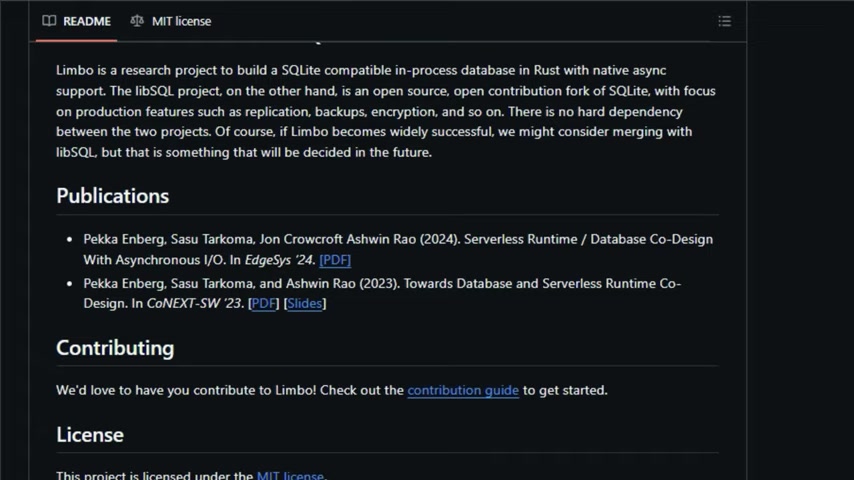
The agents offer open tools to run the entire stack on the individual servers for a real time flow. It is used on a multitude of platforms such as Windows or IOS to quickly test and make it more easily manageable. It is designed with high quality testing practices to ensure the framework is working properly. There are additional tools built to aid testing such as demo modes to help with running the actual validation and tests. Additionally, the clean layout provides well organized error messages when tests fail to give the users a clean error page.
Chatbox: Your Ultimate AI Copilot on the Desktop
Chatbox is designed to be your ultimate desktop AI COPILOT, by being user friendly and easy to maneuver, and offers more than enough services for you. If you are looking for a user-friendly AI Chatbot platform and have any issues then here are some key features:
- Supports multiple LLM providers such as OpenAI, ChatGPT, Claude and more.
- Enhanced prompting with specific hot keys to test for features.
- High quality markdown and latex highlighting
- Provides the necessary command blocks to work with the auto close options
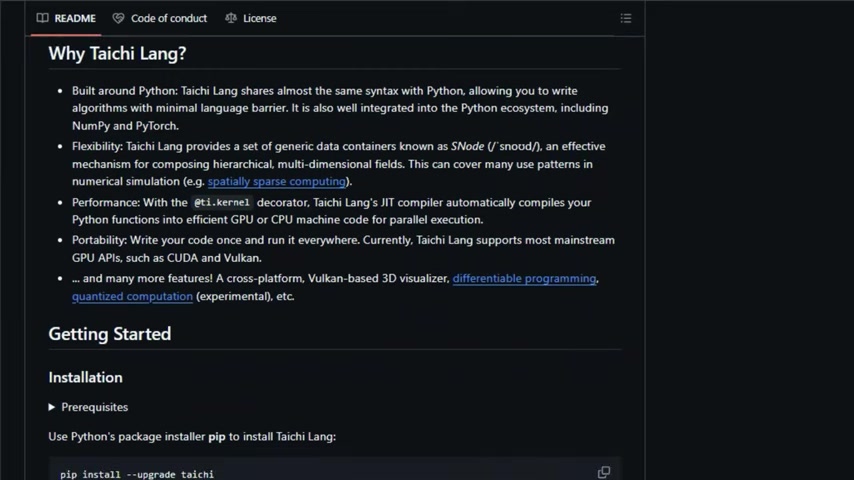
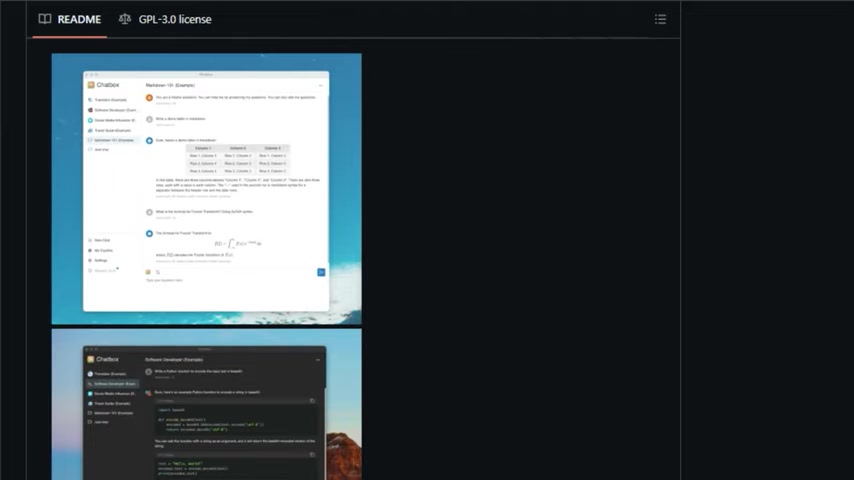
Chatboxs feature list is extensive and provides a solid set of useful functions for new and old projects. It is a quality application for assisting with almost every use case that an AI model can fit. The biggest unique point about Chatbox is that it allows for local data storage so users data does not get lost as well as the ability to use code to improve the messages and coding of the AI responses.
Limbo: In-Process Database Management with SQLite Compatibility
Limbo is an in-process OLTP database management system that maintains the function of the traditional terminal features with graphical capabilities.
Limbo Offers:
- A stable and open format that fits different databases
- A way to store and keep private your data
- Fast testing and easy navigation
The most prominent feature for Limbo is having high compatibility with the SQL language. This offers a higher compatibility with new operating systems that may not function right away, ensuring high access for users. What is most prevalent with the terminal is that it is easy to configure and use the system right away without much prior use.
Vitest: Next Generation Testing Framework Powered by Vite
Vitest is designed to be a modern testing and high efficiency framework that helps to utilize speed and performance for a coding workflow.
Vitest Features:
- Has a good layout so it can be easily used
- Utilizes the speed and flow of the Vite coding process
- Helps improve jest snapshots to make it a bit more easy to comprehend the details
What sets it apart is its Instant watch mode which is used similar to a module in order to give the best results for any code changes, ensuring stability in testing. In short, it is an excellent addition for any tests that are completed with Vite. It utilizes V8 or Istanbul to allow for the most robust coding framework.
Wave Terminal: Open-Source Cross-Platform Terminal
Wave Terminal can be considered an open source platform that connects traditional features with graphical capabilities while making browsing with AI assistance a simpler function. The project:
- Works smoothly with MacOS, Linux and Windows
- Is an easy way to integrate graphical tools with terminal commands
- Works quickly and makes for an optimized layout of tools
Unique benefits that Wave Terminal offers are in having the power to share data between the user, the terminal and the files. Customization for the commands is built into the UI and is well organized. Being multi-platform ready is also a very effective addition because it has high flexibility to meet all use cases and users.









Most people like






























Report
Please select a reason for reporting
- 13 Reasons to Switch from Snapchat to Text Messaging
- 7 Powerful Speech to Text Apps to Boost Productivity
- 10 Best Speech to Text Tools for Effortless Transcription
- 13 Free Tools to Easily Transcribe Audio to Text
- 15 Surprising Ways Google's Speech-to-Text Boosts Productivity
- 7 Best Free Online Audio to Text Transcription Tools
- 9 Tips to Transcribe Speech to Text Faster and Better
- 13 Best Speech to Text Software for Windows 10 in 2023
- 7 Tips for Choosing the Best Transcriber for Audio to Text
- 11 Reasons Why Dragon Speech-to-Text Apps are Game-Changers
- 6 Secrets to Enhance Your Speech to Text Transcription
- 6 Brilliant Ways to Boost Productivity with Talk-to-Text on Your MacBook
- 6 Ways Transcription Software Converts Audio to Text
- 8 Tips to Transcribe Speech to Text Like a Pro
- 6 Reasons IBM Watson Speech to Text is a Game-Changer
- 14 Powerful Ways Talk-to-Text Improves Your Workflow
- 12 Top Windows Speech-to-Text Software for Efficient Transcription
- 12 Game-Changing Benefits of Apple's Speech to Text Technology
- 9 Powerful Use Cases for AWS Speech to Text Technology
- 10 Easy Steps to Transcribe YouTube Videos to Text
- transcription audio en texte
- online audio transcription
- free audio file transcription
- free ai audio transcription
- audio transcription service
- audio transcription online free
- audio transcription free online
- audio to transcription software
- audio and transcript
- ai audio transcription free
- voice recording to text converter
- translate voice recording to text
- record voice to text
- audio recording to text converter
- voice recording and transcription
- chatgpt voice to text
- gmail voice to text
- speech to text reader
- speech to text ai free
- speech to talk
- Create Engaging Animated Explainer Videos with a Free AI Tool
- Stop Multi-Subscribing: Benchmark Top AI Visual Models in One Canvas
- Best Seedance 2.5 API Provider: Every Price on the Market, Checked at Source
- AI OnlyFans: How to Generate $30,000/Month (Legally)
- Transform Your Script into an Engaging Video with AI Video Maker!
- AI Marketing Automation: A Comprehensive Guide for Small Businesses
- Midjourney Alternative for Anime Art Creators: Why PixAI May Be Better for Character Workflows
- 10 Things Most People Get Wrong About AI Image Search
- AI Girlfriend Apps: Top Choices Redefining Relationships 2025
- How to Reduce Quoting Errors in Salesforce with AI-Assisted Quote Creation
- AI Resume Builders: EnhanceCV, ResumeNerd AI, & Teal Compared
- ResumeAI: Crafting ATS-Optimized Resumes with AI
- AI in Resume Writing: A New Era for Job Seekers
- AI Resume Tools: Streamline Your Job Search and Land Your Dream Role
- AI Resume Optimization: The Right Way to Land Interviews
- Crafting a Killer Resume with AI: A Step-by-Step Guide
- Crafting a Winning Resume: AI Tools and Expert Tips
- AI Job Search: Level Up Your Career with AI Automation
- Empower Your Career Journey: Dynamic Resumes with AI
- AI Resume Builder: Create Professional Resumes Effortlessly

Copyright ©2026 toolify