































Table of Contents
- Key Points
- The Essence of Artificial Intelligence
- Ethical Implications and Future of AI
- Pros and Cons of Artificial Intelligence
- Frequently Asked Questions About AI
- Related Questions


The Essence of Artificial Intelligence
What is Artificial Intelligence?
Artificial Intelligence, commonly known as AI, refers to the simulation of human intelligence processes by machines, especially computer systems. These processes include learning (the acquisition of information and rules for using the information), reasoning (using rules to reach approximate or definite conclusions), and self-correction.

Unlike the natural intelligence exhibited by humans and animals, AI is artificially created and implemented into various technologies to perform tasks that typically require human intelligence. In simple terms, AI strives to make machines think and act like humans. In Bangla, it is known as 'কৃত্রিম বুদ্ধিমত্তা' which translates directly to artificial intelligence.
The goal of AI is to create systems that can perform tasks independently, without explicit programming for each specific instance. This includes the ability to understand natural language, recognize patterns, solve problems, and make decisions based on available data. A machine embodies artificial intelligence when it completes a series of tasks that involves cognition, and problem solving.
While the term AI is now ubiquitous, it’s important to recognize its core purpose: to replicate or simulate human cognitive abilities. The complexities of AI stem from the need to mimic the nuances of human thought, making it a challenging yet intensely rewarding field of study.
Key Characteristics of AI:
- Learning from Data: AI systems learn from data, constantly refining their performance as they process more information.
- Decision Making: AI can make decisions based on the data it has learned, adapting its approach as new information becomes available.
- Problem-Solving: AI algorithms can solve complex problems, identifying patterns and solutions that humans might miss.
- Automation: AI enables automation of tasks, freeing up human workers for more creative and strategic activities.
These capabilities position AI as a transformative technology with the potential to reshape industries and redefine our interactions with the digital world. For better or for worse, these capabilities are slowly becoming very common.
A Brief History of Artificial Intelligence
The conceptual origins of AI can be traced back to the mid-20th century, a period marked by significant advancements in computer science.
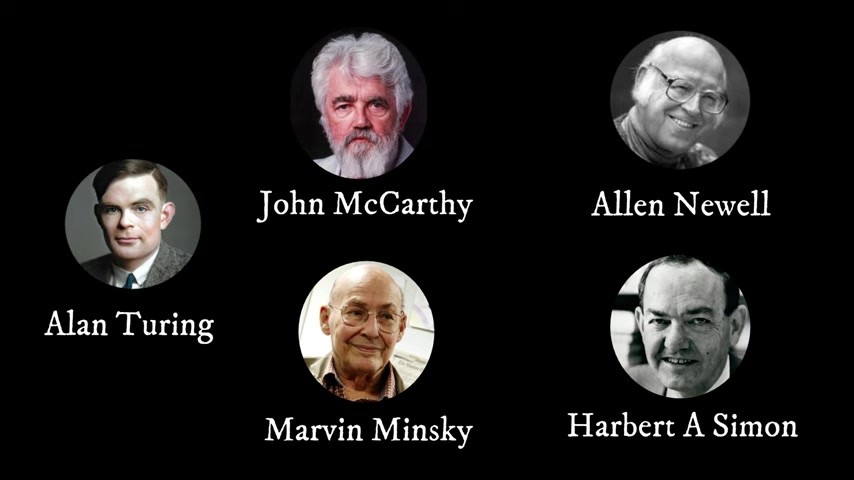
The modern concept of AI began in 1950 when Alan Turing, a pivotal figure in the history of computer science, published his groundbreaking research paper, ‘Computer Machinery and Intelligence.’ This work proposed what is now known as the Turing Test, a method for determining whether a machine can exhibit intelligent behavior equivalent to, or indistinguishable from, that of a human. The test involves a human evaluator judging natural language conversations between a human and a machine designed to generate human-like responses.
Alan Turing’s test is the first documented account of an attempt to analyze and test for computer competency. The Turing Test has set precedent for the future of AI.
In 1956, the term 'Artificial Intelligence' was officially coined at the Dartmouth Workshop, marking the formal birth of AI as a field of study. Key figures such as John McCarthy, Marvin Minsky, Allen Newell, and Herbert A. Simon were instrumental in establishing AI as a legitimate research area. Each of these computer scientist pioneers contributed to the world we know today.
The field experienced periods of optimism and setbacks, often referred to as “AI winters,” where funding and interest waned due to unmet expectations. However, advancements in algorithms, computing power, and data availability have fueled a resurgence in recent decades. The modern AI renaissance has been propelled by deep learning, neural networks, and the increasing accessibility of large datasets, which have unlocked new possibilities in areas such as Image Recognition, natural language processing, and robotics.
The timeline below presents AI’s landmark events.
| Year | Event | Significance |
|---|---|---|
| 1950 | Alan Turing publishes "Computing Machinery and Intelligence" | Introduces the Turing Test as a measure of machine intelligence. |
| 1956 | The Dartmouth Workshop, where the term "Artificial Intelligence" is officially coined. | Marks the birth of AI as a formal field of research. |
| 1966 | Joseph Weizenbaum creates ELIZA, an early natural language processing computer program. | Demonstrates early capabilities in natural language understanding and response generation. |
| 1972 | MYCIN, an expert system designed to diagnose bacterial infections, is developed. | Showcases the potential of AI in medical diagnostics. |
| 1997 | IBM's Deep Blue defeats Garry Kasparov in a chess match. | Highlights AI's ability to outperform humans in complex strategic tasks. |
| 2011 | IBM's Watson wins Jeopardy! | Demonstrates advanced natural language processing and question-answering capabilities. |
| 2012 | Deep learning breakthroughs in image recognition | Significant improvements in image recognition accuracy using deep learning techniques. |
| 2014 | Microsoft introduces Cortana, a virtual assistant. | Expands AI applications in personal computing and voice-based interaction. |
| 2016 | Google's AlphaGo defeats Lee Sedol in a Go match. | Underscores AI's ability to master intricate strategic games. |
| 2018 | Google introduces BERT, a natural language processing model. | Advances the state-of-the-art in natural language understanding. |
| 2020 | GPT-3, a language model created by OpenAI, is released. | Showcases the potential of AI in generating human-like text. |
| 2022 | OpenAI releases ChatGPT. | Revolutionizing AI and NLP with its conversational capabilities and broad applicability. |
| Today | AI is ubiquitous and rapidly changing. | AI’s future capabilities and integration will continue to redefine human intelligence and potential. |
Today, AI continues to evolve, pushing the boundaries of what machines can achieve. It continues to be a hot-button topic across the world.
How Does Artificial Intelligence Work?
Artificial Intelligence is not a monolithic entity but a collection of various techniques designed to enable machines to perform tasks that require human-like intelligence. At its core, AI works by analyzing vast amounts of data to identify patterns and make decisions based on those patterns.

Here are the general steps of how most AI systems work:
- Data Collection: AI systems require large amounts of data to train and improve their performance. This data can come from various sources, including databases, sensors, and human input.
- Data Analysis: Once the data is collected, AI algorithms analyze it to identify patterns and relationships. This often involves techniques such as statistical analysis, machine learning, and deep learning.
- Pattern Recognition: AI algorithms use the patterns they have identified to make predictions or decisions. For example, an AI system might use historical sales data to predict future demand for a product.
- Decision Making: Based on the predictions or decisions made, AI systems can take action. This might involve automating a task, providing recommendations to a human user, or controlling a physical device.
- Continuous Learning: AI systems continuously learn from new data, improving their performance over time. This is often achieved through feedback loops, where the system receives feedback on its decisions and adjusts its approach accordingly.
To use a different example from the video: If you were to train a model to recognize apples from a collection of fruit, you would have to show the program many apples in order for it to train. After having a huge data set of apples the program would be able to quickly, and accurately recognize apples in other datasets. If you have ever used an algorithm, this concept will seem more intuitive.
Machine learning (ML) algorithms are the backbone of modern AI. ML algorithms enable computers to learn from data without being explicitly programmed. Algorithms such as supervised learning, unsupervised learning, and reinforcement learning are used to train AI models for specific tasks.
Machine Learning: a computer has the capacity to learn without being coded for every possible instance. Neural Networks: a subset of machine learning, uses a human like network of nodes to analyze information. Deep Learning: has many layers of neural networks to train a system. These networks have an increased degree of complexity, which is beneficial.
AI continues to push boundaries and open new possibilities. AI is going to change the world for the better!
Ethical Implications and Future of AI
Navigating the Ethical Landscape of AI
As Artificial Intelligence becomes more pervasive, it's critical to address several ethical concerns to ensure its responsible and equitable use. One significant issue is job displacement. As AI systems automate tasks previously performed by humans, there’s a risk of widespread unemployment and economic disruption. Retraining and upskilling initiatives will be crucial to help workers adapt to new roles in an AI-driven economy.
Bias in AI algorithms is another major ethical challenge. AI models learn from data, and if that data reflects existing societal biases, the AI system will perpetuate and even amplify those biases. This can lead to unfair or discriminatory outcomes, particularly in areas such as hiring, lending, and criminal justice. Ensuring fairness and transparency in AI systems requires careful attention to data collection and algorithm design.
Ethical Considerations:
- Retraining
- Upskilling
- Bias collection
Protecting data privacy and security is also paramount. AI systems often require access to vast amounts of personal data to function effectively. Safeguarding this data from misuse and unauthorized access is essential to maintain trust and prevent harm. Strong data governance policies and robust security measures are necessary to protect individuals' privacy rights.
The Future of AI
The future of Artificial Intelligence holds both tremendous opportunities and certain risks.
While it is not in any way something that will cause harm to humanity, AI has its concerns, like any other form of revolutionary technology. However, a major concern for scientists currently is if AI can surpass a humans ability to think.
AI advancements promise to revolutionize various sectors. In Healthcare, AI can assist in diagnosis, personalized treatment, and drug discovery. Autonomous vehicles have the potential to transform transportation, making it safer and more efficient. AI can also drive innovation in areas such as energy, agriculture, and environmental conservation.
Despite these opportunities, it's essential to address the potential risks. As AI systems become more autonomous, we must consider the implications for human control and accountability. Ensuring that AI aligns with human values and goals is critical to prevent unintended consequences. Responsible AI development requires ongoing dialogue between researchers, policymakers, and the public to establish ethical guidelines and standards.
To quote the video: 'In the future, AI will be more ubiquitous than robots.' That is a telling statement, that reflects the potential power of algorithms in the world we live in. The video provides a balanced perspective, and reflects the potential for AI to improve lives across the world.
In short, the future of Artificial Intelligence is bright, filled with the promise of progress and innovation. By addressing ethical concerns and promoting responsible development, we can harness the transformative power of AI for the benefit of all humanity.







Most people like





























Report
Please select a reason for reporting
- 13 Reasons to Switch from Snapchat to Text Messaging
- 7 Powerful Speech to Text Apps to Boost Productivity
- 10 Best Speech to Text Tools for Effortless Transcription
- 13 Free Tools to Easily Transcribe Audio to Text
- 15 Surprising Ways Google's Speech-to-Text Boosts Productivity
- 7 Best Free Online Audio to Text Transcription Tools
- 9 Tips to Transcribe Speech to Text Faster and Better
- 13 Best Speech to Text Software for Windows 10 in 2023
- 7 Tips for Choosing the Best Transcriber for Audio to Text
- 11 Reasons Why Dragon Speech-to-Text Apps are Game-Changers
- 6 Secrets to Enhance Your Speech to Text Transcription
- 6 Brilliant Ways to Boost Productivity with Talk-to-Text on Your MacBook
- 6 Ways Transcription Software Converts Audio to Text
- 8 Tips to Transcribe Speech to Text Like a Pro
- 6 Reasons IBM Watson Speech to Text is a Game-Changer
- 14 Powerful Ways Talk-to-Text Improves Your Workflow
- 12 Top Windows Speech-to-Text Software for Efficient Transcription
- 12 Game-Changing Benefits of Apple's Speech to Text Technology
- 9 Powerful Use Cases for AWS Speech to Text Technology
- 10 Easy Steps to Transcribe YouTube Videos to Text
- transcription audio en texte
- online audio transcription
- free audio file transcription
- free ai audio transcription
- audio transcription service
- audio transcription online free
- audio transcription free online
- audio to transcription software
- audio and transcript
- ai audio transcription free
- voice recording to text converter
- translate voice recording to text
- record voice to text
- audio recording to text converter
- voice recording and transcription
- chatgpt voice to text
- gmail voice to text
- speech to text reader
- speech to text ai free
- speech to talk
- Revolutionizing Storytelling: From Novels to Screenplays with AI
- Create Engaging Animated Explainer Videos with a Free AI Tool
- Stop Multi-Subscribing: Benchmark Top AI Visual Models in One Canvas
- Best Seedance 2.5 API Provider: Every Price on the Market, Checked at Source
- AI OnlyFans: How to Generate $30,000/Month (Legally)
- Transform Your Script into an Engaging Video with AI Video Maker!
- AI Marketing Automation: A Comprehensive Guide for Small Businesses
- Midjourney Alternative for Anime Art Creators: Why PixAI May Be Better for Character Workflows
- 10 Things Most People Get Wrong About AI Image Search
- AI Girlfriend Apps: Top Choices Redefining Relationships 2025
- Python Random Name Generator Tutorial
- Generate Unique Names with Python Random Name Generator
- Code a JavaScript Name Generator
- Create a Fun Name Generator App - Easy JavaScript Project!
- Experience Roblox's Avatar Creation for Karl Jacobs!
- May TBR Game: How a Letter Generator Chooses My Reads
- AI Celebrity Chat: Hilarious Pick-Up Lines & Chatbot Chaos!
- Embrace Chaos with the Random Makeup Challenge
- Boost Audience Engagement with the Wheel of Names
- Engage Your Audience with the Wheel of Names!

Copyright ©2026 toolify