






Table of Contents
- Key Points
- Fundamentals of Face Recognition
- The Critical Role of Data: Labeled Training Data
- Key Steps in Face Recognition Deployment
- Face Recognition Technology: Weighing the Benefits and Drawbacks
- Frequently Asked Questions
- Related Questions


Fundamentals of Face Recognition
What is Face Recognition?
Face recognition represents the evolutionary step beyond simple face detection. After face detection identifies the facial region within an image

, face recognition technology advances to answer the question of identity: 'To whom does this face belong?'.
Face recognition seeks to attach an identity to a detected face. Face recognition transcends simple feature detection and delves into the specifics that uniquely identify an individual. Machine learning and artificial intelligence are crucial in this process.
Why Machine Learning is a MUST
Face recognition systems must be trained using large, labeled datasets that function as examples for the AI. Given a robust library of labeled faces, the AI can learn the unique visual characteristics that define individual identities. The power of AI and machine learning, in context of face recognition, is that they provide the only practical way to automate the task.
Face Detection vs. Face Recognition: Key Differences
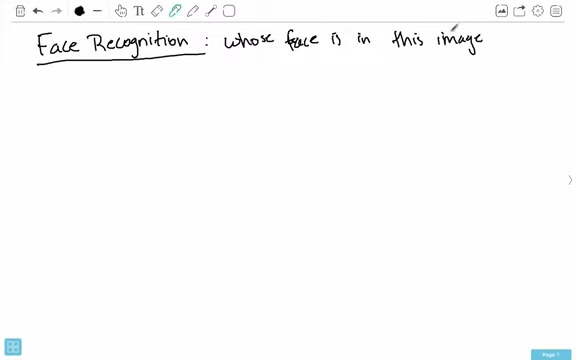
While both face detection and face recognition deal with faces in images, they serve distinct purposes, as the video explains
:
- Face Detection: Focuses on detecting whether a face is present in an image.
- Face Recognition: Answers the question of whose face it is.
Face detection serves as a preliminary step for face recognition . It isolates the region of interest—the area containing the face—before further analysis. Essentially, face detection is the foundation upon which face recognition builds. If the video were to continue on the topic of face detection, the content provided would describe steps such as the cascade classifier on the input images, etc. This article continues to focus on Face Recognition, instead.
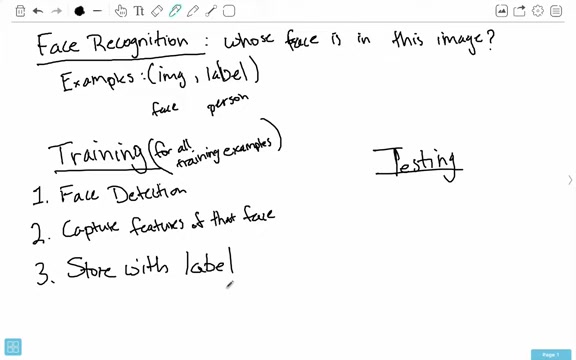
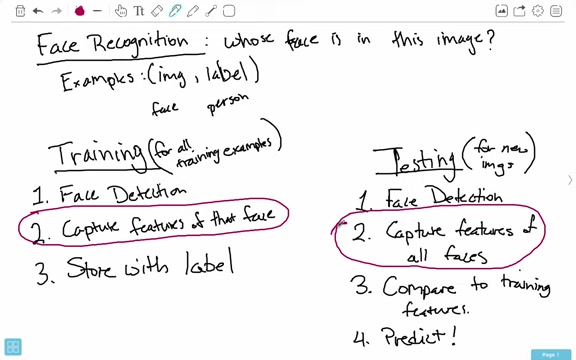
How Face Recognition Works: Training and Testing Phases
Developing a functional face recognition system involves two key phases:
-
**Training Phase
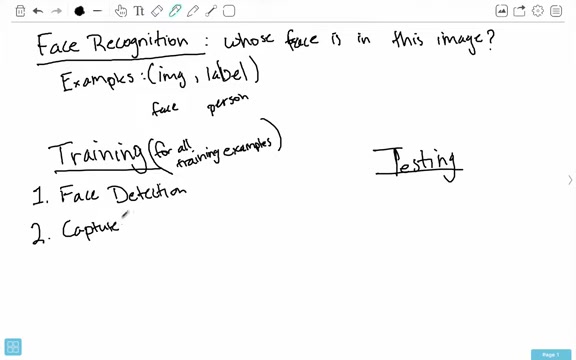
:** During training, the AI learns to recognize faces through exposure to labeled examples. The steps in the training phase are:
- Face Detection: In the training phase, we can use pre-built models, as a means to accelerate the process. However, the quality and nature of the datasets can affect results, here.
- Feature Extraction: The AI analyzes the detected face, extracting key features or characteristics.
- Data storage: The extracted features, coupled with the individual's identifying label (name, ID), are stored in an organized database.
-
Testing Phase: testing the trained AI model involves the following steps :
- Face Detection: Use the prior knowledge to detect faces that resemble the trained AI's model for what a face may look like.
- Feature Extraction: Extract key features from each detected face, using the same algorithm used in the training phase.
- Comparison & Prediction: Compares extracted features to the stored feature sets in its database to identify the closest match.
- Inference: Based on the closest match, the system predicts the identity of the individual in the image. A confidence score accompanies the prediction, reflecting the certainty of the match.
The Critical Role of Data: Labeled Training Data
Image and Label Requirements for AI construction
Face recognition systems necessitate labeled training data consisting of images paired with identity labels
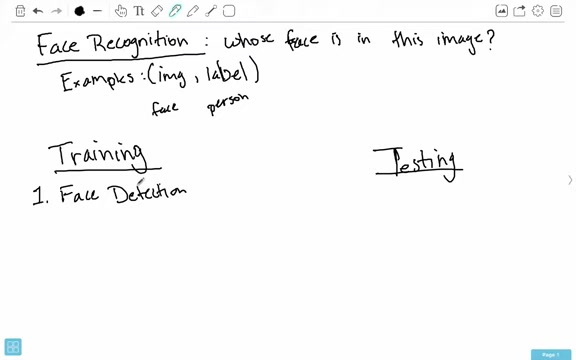
. These components are essential:
- Image: The actual facial image that will be detected.
- Label: Identifies the person in the image.
What You Should Know About the Dataset
It's a crucial choice
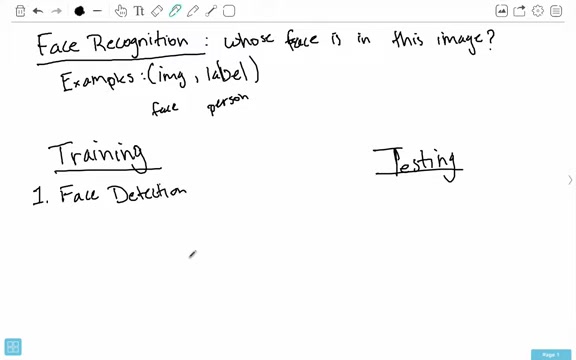
. The face recognition model will be different, depending on who's face you want to include in your dataset. For face detection, you can use pre-built models to accelerate the process of getting started. However, to train a model that suits a variety of image types, you have to carefully construct that model to be diverse, but still accurate.
In a future video, the content creator mentions they will review the details of Yale's database . Details and specifics can be described as:
| Data | Description |
|---|---|
| Image | The actual facial image to be identified by the model. |
| Label | The identity, often the person's name, associated with the facial image. |
| Facial State | The "Yale Face Database" features photos of people with different facial expressions. A person would be 'winking', 'frowning', 'smiling', etc. |
| Face angle | The facial data could vary in orientation, tilt and inclination, each adding more and more examples of the person's face. |
| Occlusion | The person's image might occlude different parts of their face, or the picture may be only of a fraction of the facial area. Data that covers every circumstance is useful. |
| Data Source URL | The link to obtain the data. Make sure you can use the data for your purposes. |
Key Steps in Face Recognition Deployment
Implementing Face Detection
Use a technique like Haar cascades classifier
to identify the coordinates of a face within an image. Code libraries like OpenCV provide pre-trained models to accelerate this process.
Dimensionality Reduction in Feature Capture
Dimensionality reduction will be covered in another video. The goal is to analyze and extract only the features that are important for identification
. Techniques like Principal Component Analysis (PCA) will be reviewed to filter out the non-relevant information.
Dimensionality reduction works because you can filter out other pieces of information. For example, consider the size of an image. An AI only needs to consider a single face, so the resolution of the surrounding area, background, etc., are useless. Thus, dimensionality reduction works in the training phase to reduce resources and accelerate learning and inferences during operation.


Most people like





































Report
Please select a reason for reporting
- 13 Reasons to Switch from Snapchat to Text Messaging
- 7 Powerful Speech to Text Apps to Boost Productivity
- 10 Best Speech to Text Tools for Effortless Transcription
- 13 Free Tools to Easily Transcribe Audio to Text
- 15 Surprising Ways Google's Speech-to-Text Boosts Productivity
- 7 Best Free Online Audio to Text Transcription Tools
- 9 Tips to Transcribe Speech to Text Faster and Better
- 13 Best Speech to Text Software for Windows 10 in 2023
- 7 Tips for Choosing the Best Transcriber for Audio to Text
- 11 Reasons Why Dragon Speech-to-Text Apps are Game-Changers
- 6 Secrets to Enhance Your Speech to Text Transcription
- 6 Brilliant Ways to Boost Productivity with Talk-to-Text on Your MacBook
- 6 Ways Transcription Software Converts Audio to Text
- 8 Tips to Transcribe Speech to Text Like a Pro
- 6 Reasons IBM Watson Speech to Text is a Game-Changer
- 14 Powerful Ways Talk-to-Text Improves Your Workflow
- 12 Top Windows Speech-to-Text Software for Efficient Transcription
- 12 Game-Changing Benefits of Apple's Speech to Text Technology
- 9 Powerful Use Cases for AWS Speech to Text Technology
- 10 Easy Steps to Transcribe YouTube Videos to Text
- transcription audio en texte
- online audio transcription
- free audio file transcription
- free ai audio transcription
- audio transcription service
- audio transcription online free
- audio transcription free online
- audio to transcription software
- audio and transcript
- ai audio transcription free
- voice recording to text converter
- translate voice recording to text
- record voice to text
- audio recording to text converter
- voice recording and transcription
- chatgpt voice to text
- gmail voice to text
- speech to text reader
- speech to text ai free
- speech to talk
- Meshy AI: How to Create 3D Models from Text and Images
- How SEO and Marketing Dashboards Empower Agencies to Drive Results
- How to Use AI Tools to Find Internal Linking Opportunities Across a Business Website
- Discover Your Perfect Haircut with AI Hairstyle Apps
- Free Reputation Calculator Tools: How They're Adapting to Score AI Visibility, Not Just Rankings
- Design Professional Flyers for Free on Your Phone
- Best Free Flyer Maker Apps for Android: Design Like a Pro
- How to Know If Your Business Is Ready for an AI Customer Service Agent
- Revolutionizing Storytelling: From Novels to Screenplays with AI
- Create Engaging Animated Explainer Videos with a Free AI Tool
- Automate Lead Generation: A Comprehensive Guide with AI Agents
- Revideo.io: The Future of Reverse Video Search Technology
- Revolutionizing Email Marketing Agency with AI
- Breaking the Character Drift Dilemma: A Practical Test of Smart Shot
- Meshy AI: How to Create 3D Models from Text and Images
- ASOMobile Helps Teams Benchmark App Store Screenshots Against Competitors
- How to Match LMS Software With Your Organization's Training Plan
- How to Convert BTC to HNT
- Unleashing the Power of AI: Cognizant's Roadmap for Transformation
- Frame to Video Review: A Practical Look at Turning Two Still Frames Into Motion

Copyright ©2026 toolify