































Table of Contents
- Key Points
- The Foundations of Perception
- Depth Perception: Seeing in 3D
- How to See Illusions
- What are the pros and cons of perception?
- Frequently Asked Questions
- Related Questions



The Foundations of Perception
What is Perception?
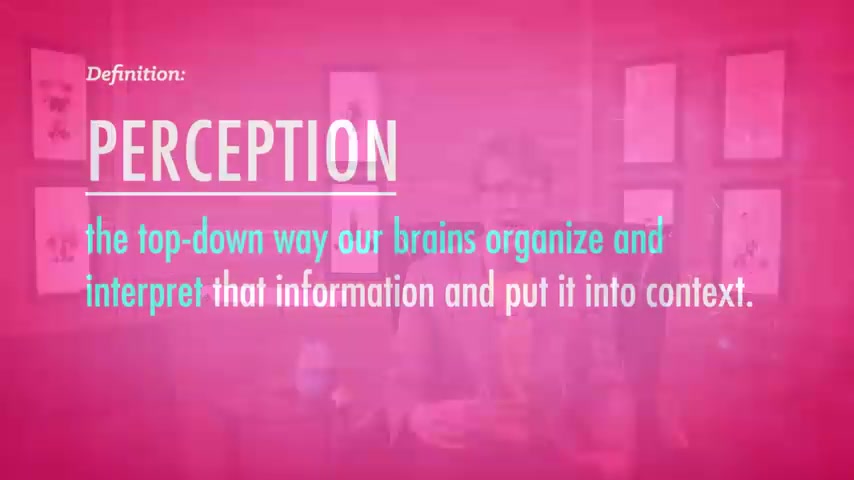
Perception is more than just receiving sensory input. It's the top-down way our brains organize and interpret that information, and put it into context. Think of it as your brain actively building a model of the world around you. Without perception, our sensory experiences would be meaningless chaos.
Perception enables us to differentiate between a toast and a grease fire. It enables you to recognize the face of your mother, and not just as a combination of shapes. It's the process that allows us to make meaning out of our senses and experience the world. Without it, your mother’s face is simply a collection of shapes, and scent is useless.
The Role of Expectations: Perceptual Sets
Our expectations play a huge role in how we perceive things. This is because our minds use experience to inform how our perception will operate. Our perceptual set is heavily influenced, biased even, by our expectations, experiences, moods, and even cultural norms. These factors act as a filter, shaping how we interpret the raw data our senses provide. This means that sometimes, what we see isn’t necessarily what’s actually there. Instead, it’s what our brains expect to see based on our past experiences.
Dissecting Vision: Form Perception and Beyond
Our senses mean little without our brain’s ability to organize and Translate data into meaningful perceptions. Form perception is a crucial aspect of visual processing, allowing us to distinguish objects from their surroundings. One key dynamic in form perception is the figure-ground relationship. This describes how we organize a visual field into objects (figures) that stand out from their surroundings (ground). A classic example is the faces-or-vase illusion, where you can perceive either two faces in profile or a vase, depending on which you focus on as the figure and which as the ground.
So, how do our minds begin this organizational journey? They use a number of strategies.
The Power of Grouping: Principles of Organization
Our brains are always looking for ways to create order out of chaos. Gestalt psychologists identified several principles of grouping that explain how we organize visual information:
- Proximity: We group nearby figures together. We’re prone to connecting those party goers standing in proximity, like they’re members of a team or a cohort.
- Continuity: We perceive smooth, continuous patterns rather than discontinuous ones.
- Closure: We fill in gaps to create a complete, whole object. In addition to that, there is an understanding that fast beats slow every time, and you always see what you get.
Depth Perception: Seeing in 3D
How We Perceive Depth
While our retinas receive two-dimensional images, our brains construct a three-dimensional view of the world using a combination of cues. Depth perception comes from a wide variety of things, notably two distinct queues: the monocular, and the binocular queues. Depth perception relies on depth cues, such as retinal disparity, that depend on the use of two eyes. Understanding these cues helps us appreciate the complexity of visual processing:
- Binocular Cues: Because our eyes are about 2.5 inches apart, each retina receives slightly different images. Our brains compare these images to judge distance – a phenomenon called retinal disparity.
- Monocular Cues: These cues are available to either eye alone and help us judge distances of objects far from us.
Monocular cues allow us to perceive the scale and distance, by using size, light, and interposition.
*   **Relative Size and Height:** Allows you to determine if your crush is supporting a tiny newborn chihuahua on their shoulder or is there a full-grown chihuahua in the back of the room?

*   **Linear Perspective:** Parallel lines appear to converge as they move into the distance.

*   **Texture Gradient:** Close objects appear more detailed, while distant ones appear less so.

*   **Interposition:** Closer objects block our view of objects further away, giving us a sense of relative distance.
In review, consider the information that relative height, linear perspective, texture gradient, and interposition can provide, for example.





Most people like





































Report
Please select a reason for reporting
- 13 Reasons to Switch from Snapchat to Text Messaging
- 7 Powerful Speech to Text Apps to Boost Productivity
- 10 Best Speech to Text Tools for Effortless Transcription
- 13 Free Tools to Easily Transcribe Audio to Text
- 15 Surprising Ways Google's Speech-to-Text Boosts Productivity
- 7 Best Free Online Audio to Text Transcription Tools
- 9 Tips to Transcribe Speech to Text Faster and Better
- 13 Best Speech to Text Software for Windows 10 in 2023
- 7 Tips for Choosing the Best Transcriber for Audio to Text
- 11 Reasons Why Dragon Speech-to-Text Apps are Game-Changers
- 6 Secrets to Enhance Your Speech to Text Transcription
- 6 Brilliant Ways to Boost Productivity with Talk-to-Text on Your MacBook
- 6 Ways Transcription Software Converts Audio to Text
- 8 Tips to Transcribe Speech to Text Like a Pro
- 6 Reasons IBM Watson Speech to Text is a Game-Changer
- 14 Powerful Ways Talk-to-Text Improves Your Workflow
- 12 Top Windows Speech-to-Text Software for Efficient Transcription
- 12 Game-Changing Benefits of Apple's Speech to Text Technology
- 9 Powerful Use Cases for AWS Speech to Text Technology
- 10 Easy Steps to Transcribe YouTube Videos to Text
- transcription audio en texte
- online audio transcription
- free audio file transcription
- free ai audio transcription
- audio transcription service
- audio transcription online free
- audio transcription free online
- audio to transcription software
- audio and transcript
- ai audio transcription free
- voice recording to text converter
- translate voice recording to text
- record voice to text
- audio recording to text converter
- voice recording and transcription
- chatgpt voice to text
- gmail voice to text
- speech to text reader
- speech to text ai free
- speech to talk
- Meshy AI: How to Create 3D Models from Text and Images
- How SEO and Marketing Dashboards Empower Agencies to Drive Results
- How to Use AI Tools to Find Internal Linking Opportunities Across a Business Website
- Discover Your Perfect Haircut with AI Hairstyle Apps
- Free Reputation Calculator Tools: How They're Adapting to Score AI Visibility, Not Just Rankings
- Design Professional Flyers for Free on Your Phone
- Best Free Flyer Maker Apps for Android: Design Like a Pro
- How to Know If Your Business Is Ready for an AI Customer Service Agent
- Revolutionizing Storytelling: From Novels to Screenplays with AI
- Create Engaging Animated Explainer Videos with a Free AI Tool
- Meshy AI: How to Create 3D Models from Text and Images
- ASOMobile Helps Teams Benchmark App Store Screenshots Against Competitors
- How to Match LMS Software With Your Organization's Training Plan
- Revolutionizing Email Marketing Agency with AI
- How to Convert BTC to HNT
- Unleashing the Power of AI: Cognizant's Roadmap for Transformation
- Frame to Video Review: A Practical Look at Turning Two Still Frames Into Motion
- NVIDIA NIM: Revolutionizing Supply Chain Data Analysis with AI
- Top AI Tools That Help Brands Stand Out Offline (Not Just Online)
- Top 5 Cold Email Software: Maximize Your Outreach in 2025

Copyright ©2026 toolify