































Table of Contents
- Key Points
- Understanding Image Segmentation
- U-Net's Wide-Ranging Applications
- Getting Started with U-Net: A Practical Guide
- Pros and Cons of Using U-Net
- The U-Net Pro Course: Your Path to Mastery
- Frequently Asked Questions about U-Net
- Related Questions on Image Segmentation



Understanding Image Segmentation
Object Detection vs. Object Segmentation: A Deep Dive
Object detection has become a popular tool in the world of computer vision, but the technique isn’t always practical for a project
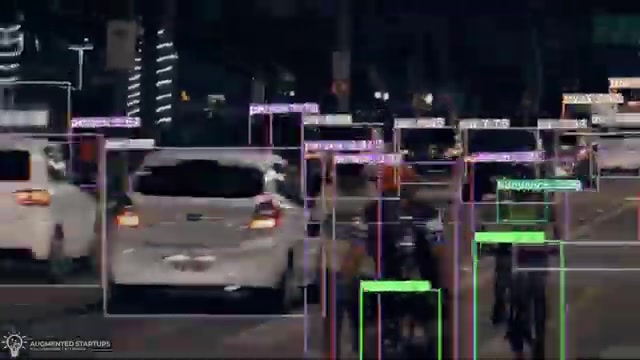
. Object detection is ideal to use for many AI computer vision applications.
Consider traffic monitoring where identifying individual cars, pedestrians, and traffic signals is crucial. Or applications within retail to monitor customer traffic and product placement. These can all be addressed with object detection.
However, a need for a deeper understanding often arises, rendering basic object detection insufficient. This is where object segmentation shines. Unlike object detection, which merely places a bounding box around an object, object segmentation precisely identifies which pixels belong to which object. Object segmentation offers key advantages over basic object detection.
Take the example of estimating damage to vehicles post-accident. Object detection can only identify the car itself, not the specific area or size of damage. Object segmentation is useful in irregular shapes and for estimating the area and size of objects .
Or consider cancer detection. Object detection can only identify if cancer is present. Object segmentation can help you visualize and find the boundary of the tumor, leading to better evaluation of the area of the tumor.
These can be applied in irregular shapes and for estimating the area and size of objects. Object segmentation provides advantages over basic object detection.
Therefore, object segmentation is not just about identifying objects but understanding their precise boundaries and shapes within an image. This capability unlocks a range of advanced applications.
What is Semantic Segmentation?
At the core of Image Segmentation lies the concept of semantic segmentation. Semantic segmentation involves classifying each pixel in an image into a specific category, effectively creating a pixel-level map of what the image contains.
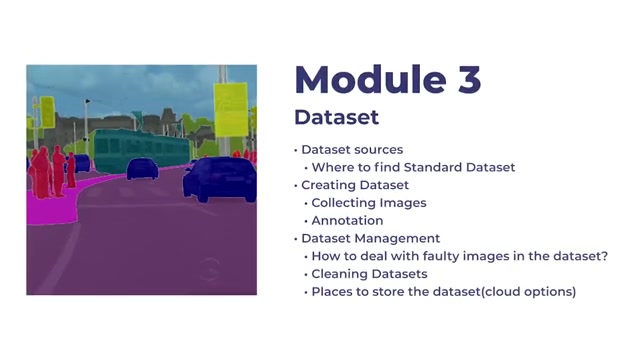
Think of it as painting an image with different colors, where each color represents a different object or area, such as roadways . This process allows machines to understand the context of an image, not just the objects present but also their spatial relationships and precise boundaries.
Semantic segmentation is the foundation for many advanced computer vision applications. From autonomous driving, where understanding the road layout and surrounding objects is critical for navigation, to medical imaging, where precise identification of tissues and anomalies aids in diagnosis, semantic segmentation plays a vital role.
There are many image segmentation algorithms available, but one stands out. That algorithm is called U-Net. The design is practical and was made for biomedical applications.
Its unique architecture and ability to provide accurate segmentation results have made it a favorite tool in the field. Semantic segmentation brings an easy introduction to get started with an image tile. Semantic segmentation compares how effective U-Net is and compares how its architecture is with other architecture.
Introducing U-Net: The Architecture and Functionality
U-Net is a convolutional neural network architecture specially designed for image segmentation tasks. Its architecture distinguishes it from other CNNs, making it particularly effective for tasks like biomedical image segmentation.
The "U" shape reflects its encoder-decoder structure.
- The Encoder (Contracting Path): This part of the network reduces the spatial dimensions of the input image while increasing the number of feature channels. This process captures the context of the image, identifying objects and their relationships.
- The Decoder (Expanding Path): The decoder recovers the spatial resolution of the image while reducing the number of feature channels. This allows for precise localization of objects, ensuring accurate segmentation.
The U-Net architecture's symmetrical design and skip connections allow the network to learn both context and precise localization, making it highly effective for image segmentation tasks. For this reason, the network is for fast and precise segmentation of images.
U-Net's Wide-Ranging Applications
From Healthcare to Entertainment: Diverse Applications
U-Net's versatile architecture allows it to be applied to various fields, making it an essential tool in the computer vision landscape.
- Medical Imaging: U-Net excels in segmenting medical images, aiding in diagnosing tumors, identifying organs, and analyzing cellular structures
. This leads to improved diagnostics and treatment planning .
- Agriculture: It is useful in analyzing crop health, detecting diseases, and optimizing irrigation by segmenting images of fields and plants . It helps with plant health, soil analysis and efficient resource management.
- Retail: This enables retailers to analyze customer behavior, optimize store layouts, and automate product recognition .
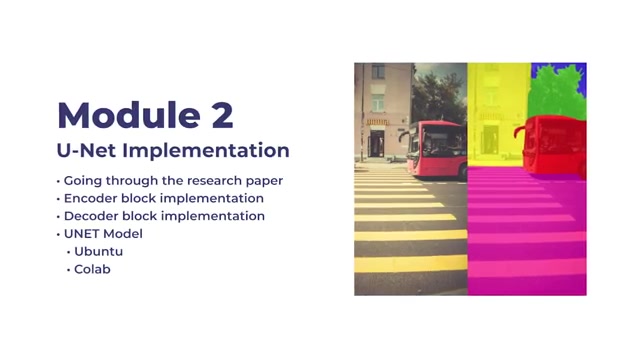
- Autonomous Driving: U-Net contributes to safe navigation by segmenting roads, traffic signs, pedestrians, and other vehicles in real-time .
- Augmented Reality (AR): This is used in creating immersive AR experiences by segmenting real-world objects and overlaying digital content seamlessly .
- Entertainment: U-Net helps in creating special effects, virtual backgrounds, and character segmentation .
- Sports: Analysis of player movement, ball tracking, and highlighting of the areas or specific actions are now easier with object segmentation .
These are just a few examples of U-Net's potential. As the field of computer vision continues to evolve, its applications are likely to expand even further.







Most people like

































Report
Please select a reason for reporting
- 13 Reasons to Switch from Snapchat to Text Messaging
- 7 Powerful Speech to Text Apps to Boost Productivity
- 10 Best Speech to Text Tools for Effortless Transcription
- 13 Free Tools to Easily Transcribe Audio to Text
- 15 Surprising Ways Google's Speech-to-Text Boosts Productivity
- 7 Best Free Online Audio to Text Transcription Tools
- 9 Tips to Transcribe Speech to Text Faster and Better
- 13 Best Speech to Text Software for Windows 10 in 2023
- 7 Tips for Choosing the Best Transcriber for Audio to Text
- 11 Reasons Why Dragon Speech-to-Text Apps are Game-Changers
- 6 Secrets to Enhance Your Speech to Text Transcription
- 6 Brilliant Ways to Boost Productivity with Talk-to-Text on Your MacBook
- 6 Ways Transcription Software Converts Audio to Text
- 8 Tips to Transcribe Speech to Text Like a Pro
- 6 Reasons IBM Watson Speech to Text is a Game-Changer
- 14 Powerful Ways Talk-to-Text Improves Your Workflow
- 12 Top Windows Speech-to-Text Software for Efficient Transcription
- 12 Game-Changing Benefits of Apple's Speech to Text Technology
- 9 Powerful Use Cases for AWS Speech to Text Technology
- 10 Easy Steps to Transcribe YouTube Videos to Text
- transcription audio en texte
- online audio transcription
- free audio file transcription
- free ai audio transcription
- audio transcription service
- audio transcription online free
- audio transcription free online
- audio to transcription software
- audio and transcript
- ai audio transcription free
- voice recording to text converter
- translate voice recording to text
- record voice to text
- audio recording to text converter
- voice recording and transcription
- chatgpt voice to text
- gmail voice to text
- speech to text reader
- speech to text ai free
- speech to talk
- How SEO and Marketing Dashboards Empower Agencies to Drive Results
- How to Use AI Tools to Find Internal Linking Opportunities Across a Business Website
- Discover Your Perfect Haircut with AI Hairstyle Apps
- Free Reputation Calculator Tools: How They're Adapting to Score AI Visibility, Not Just Rankings
- Design Professional Flyers for Free on Your Phone
- Best Free Flyer Maker Apps for Android: Design Like a Pro
- How to Know If Your Business Is Ready for an AI Customer Service Agent
- Revolutionizing Storytelling: From Novels to Screenplays with AI
- Create Engaging Animated Explainer Videos with a Free AI Tool
- Stop Multi-Subscribing: Benchmark Top AI Visual Models in One Canvas
- Frame to Video Review: A Practical Look at Turning Two Still Frames Into Motion
- NVIDIA NIM: Revolutionizing Supply Chain Data Analysis with AI
- Top AI Tools That Help Brands Stand Out Offline (Not Just Online)
- Top 5 Cold Email Software: Maximize Your Outreach in 2025
- Magic School AI: Revolutionizing Quiz & Assessment Generation
- Create Your Own Email Bot and Automate Your Email Tasks
- Beyond Pure Prompts: Optimizing Production with 'Text With Reference' Generation
- Stop Using Boring TTS: My Honest Deep Dive Into VideoAI and the Hunt for the Perfect Custom Voices
- AI & Elections: Defending Democracy Against Misinformation
- Navigating Political Discourse: AI, Deepfakes, and Reality Checks

Copyright ©2026 toolify