































Insights on Stablecoin Backings and Risks


Table of Contents
- Introduction
- Overview of Paxos and Stable Coins
- Importance of Stable Coin Reserves
- Cash and Cash Equivalents Reserves
- U.S. Treasury Bills Reserves
- Comparison to Tether
- Why Paxos Doesn't Hold Commercial Paper
- Regulatory Perspective on Stable Coin Reserves
- Worst Case Scenario and Potential Impact on Financial Markets
- Relationship with Binance and Delisting Concerns
- Regulatory Scrutiny and the Success of BUSD
- The Issue of Commercial Paper in Stable Coins
- Transparency and Substance of Disclosures
- The Fed's Potential Issuance of a Digital Dollar
Article
Introduction
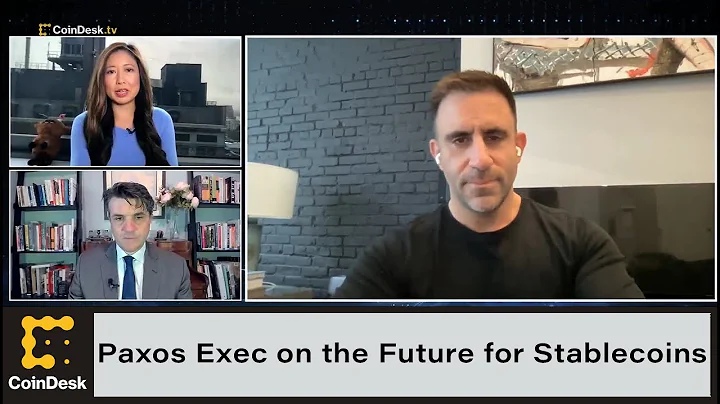
In the world of cryptocurrencies, stable coins have gained significant popularity due to their ability to maintain a fixed value against a specific asset, usually the US dollar. One such stable coin is Paxos, which has recently made headlines by disclosing the breakdown of the reserves backing its staple coins, PAX and BUSD. These disclosures have sparked a conversation around stable coin reserves and the need for transparency in the crypto industry. In this article, we will explore the importance of stable coin reserves, the composition of Paxos' reserves, and the regulatory implications surrounding stable coins.
Overview of Paxos and Stable Coins
Paxos is a crypto infrastructure firm that provides services for digital assets, including stable coins. Stable coins, such as PAX and BUSD, are digital tokens that are backed by a dollar. This means that for every dollar a user sends to Paxos, they receive one PAX or BUSD token in return. The crucial aspect of stable coins is that they are expected to hold the corresponding dollar as reserves to honor redemptions.
Importance of Stable Coin Reserves
Stable coin reserves play a vital role in ensuring the stability and reliability of these digital assets. Users and investors rely on the fact that there is a one-to-one backing of dollars for each stable coin issued. This assurance is essential for maintaining trust and confidence in the stability of the stable coin.
Cash and Cash Equivalents Reserves
According to Paxos' recent disclosure, 96% of its reserves are held in cash and cash equivalents. This means that the majority of their reserve assets are highly liquid and readily accessible. Cash and cash equivalents provide the necessary liquidity to honor redemptions promptly, ensuring that users can receive the corresponding dollar value when they redeem their stable coins.
U.S. Treasury Bills Reserves
In addition to cash, Paxos also holds 4% of its reserves in U.S. Treasury Bills. These short-term government securities further enhance the liquidity and security of the reserves. U.S. Treasury Bills are considered to be low-risk investments and provide stability to the reserve assets.
Comparison to Tether
When comparing Paxos' reserves to other stable coins, such as Tether, a significant difference becomes apparent. While Paxos holds its reserves mainly in cash and U.S. Treasury Bills, Tether has approximately two-thirds of its reserves invested in commercial paper. Commercial paper is a Type of debt instrument issued by corporations and is considered to be a relatively higher-risk asset compared to cash and U.S. Treasury Bills.
Why Paxos Doesn't Hold Commercial Paper
Paxos' decision not to hold commercial paper as part of its reserves is Based on its commitment to maintaining the stability and reliability of its stable coins. By focusing on highly liquid and lower-risk assets like cash and U.S. Treasury Bills, Paxos aims to ensure that the dollar value backing each stable coin is readily available and easily redeemed.
Regulatory Perspective on Stable Coin Reserves
Regulators have been closely examining stable coins and their reserves to ensure the safety and soundness of the financial system. Prudential regulators, such as the New York State Department of Financial Services, oversee trust companies like Paxos and assess the adequacy of the reserves in adverse scenarios. Securities regulators, such as the SEC, are also starting to scrutinize the underlying assets of stable coins to ensure their compliance with applicable regulations.
Worst Case Scenario and Potential Impact on Financial Markets
In the event of a run on stable coin redemptions or a lack of confidence in a stable coin's reserves, a worst-case scenario could arise. If the underlying assets, such as commercial paper, are illiquid or risky, there could be a fire sale of these assets. This could result in the stable coin breaking its peg to the dollar and losing its status as a reliable stable coin. The impact of such a scenario could have adverse effects on various financial markets that depend on stable coins.
Relationship with Binance and Delisting Concerns
Paxos works closely with Binance, a prominent cryptocurrency exchange, as a white label partner for its stable coin BUSD. While Paxos has not discussed specific concerns about Tether with Binance, the importance of stable reserves has been highlighted by Binance's CEO in recent statements. The confidence in stable reserves and the categorization of tokens as stable coins become crucial factors in determining their success and market Perception.
Regulatory Scrutiny and the Success of BUSD
Binance's Current regulatory scrutiny does not necessarily pose a direct risk to the success of BUSD. Paxos remains confident in Binance's ability to address any legacy issues and move forward in a constructive manner. However, regulatory authorities will likely pay closer Attention to stable coins, including BUSD, and their compliance with regulations in the future.
The Issue of Commercial Paper in Stable Coins
The recent revelations from Tether regarding the opacity of its commercial paper holdings have raised concerns. Paxos emphasizes the importance of transparency and substance in reserve disclosures. To maintain trust and confidence, stable coins should be backed by actual dollars and regulated to provide oversight and verification.
Transparency and Substance of Disclosures
Transparency alone is not enough to ensure the stability of stable coins. Disclosures should be substantiated by the actual composition of reserves and adherence to regulatory requirements. Paxos believes that regulators have a significant role in overseeing stable coins and verifying the adequacy of their reserves to protect consumers and the broader financial system.
The Fed's Potential Issuance of a Digital Dollar
The issuance of a digital dollar by the Federal Reserve is a subject of speculation. While the idea has gained traction, the specific design and implementation of a digital dollar are yet to be determined. The format, whether account-based or token-based, and the use of private or public networks will Shape the conversation around the digital dollar in the coming months and years.
Highlights
- Paxos discloses breakdown of reserves backing PAX and BUSD stable coins
- 96% of Paxos' reserves held in cash and cash equivalents, 4% in U.S. Treasury Bills
- Comparison to Tether, with two-thirds of reserves in commercial paper
- Paxos emphasizes the importance of stability and reliability in its reserves
- Regulatory scrutiny on stable coin reserves and transparency requirements
- Potential impact of a run on stable coin redemptions on financial markets
- Partnership with Binance and concerns about Tether's reserves
- Importance of transparency and substance in stable coin disclosures
- Role of regulators in overseeing stable coin reserves and protecting consumers
- Speculation surrounding the potential issuance of a digital dollar by the Federal Reserve
FAQs
Q: What are stable coins? A: Stable coins are digital tokens that are pegged to the value of a specific asset, typically the US dollar. They aim to provide stability and reliability in the volatile world of cryptocurrencies.
Q: How are Paxos' reserves different from Tether's? A: Paxos holds the majority of its reserves in cash and cash equivalents, along with a small portion in U.S. Treasury Bills. In contrast, Tether has a significant portion of its reserves invested in commercial paper, which carries higher risk.
Q: Why is transparency important in stable coin reserves? A: Transparency ensures that stable coins have the necessary backing to maintain their peg to a specific asset, such as the US dollar. It allows users and investors to trust that their stable coin can be redeemed for the corresponding value.
Q: What is the potential impact of a run on stable coin redemptions? A: A run on stable coin redemptions, coupled with a lack of confidence in the reserves, could lead to a fire sale of underlying assets. This could cause the stable coin to break its peg and lose its status as a reliable digital asset.
Q: What are the regulatory concerns surrounding stable coins? A: Regulators are examining stable coins to ensure the safety and soundness of the financial system. They are particularly interested in the adequacy of reserves, compliance with regulations, and consumer protection.
Q: Will Binance's regulatory scrutiny affect the success of BUSD? A: While Binance's regulatory scrutiny may raise concerns, Paxos remains confident in Binance's ability to address any issues. However, regulatory authorities will likely pay closer attention to stable coins and their compliance in the future.









Most people like






























Report
Please select a reason for reporting
- 13 Reasons to Switch from Snapchat to Text Messaging
- 7 Powerful Speech to Text Apps to Boost Productivity
- 10 Best Speech to Text Tools for Effortless Transcription
- 13 Free Tools to Easily Transcribe Audio to Text
- 15 Surprising Ways Google's Speech-to-Text Boosts Productivity
- 7 Best Free Online Audio to Text Transcription Tools
- 9 Tips to Transcribe Speech to Text Faster and Better
- 13 Best Speech to Text Software for Windows 10 in 2023
- 7 Tips for Choosing the Best Transcriber for Audio to Text
- 11 Reasons Why Dragon Speech-to-Text Apps are Game-Changers
- 6 Secrets to Enhance Your Speech to Text Transcription
- 6 Brilliant Ways to Boost Productivity with Talk-to-Text on Your MacBook
- 6 Ways Transcription Software Converts Audio to Text
- 8 Tips to Transcribe Speech to Text Like a Pro
- 6 Reasons IBM Watson Speech to Text is a Game-Changer
- 14 Powerful Ways Talk-to-Text Improves Your Workflow
- 12 Top Windows Speech-to-Text Software for Efficient Transcription
- 12 Game-Changing Benefits of Apple's Speech to Text Technology
- 9 Powerful Use Cases for AWS Speech to Text Technology
- 10 Easy Steps to Transcribe YouTube Videos to Text
- transcription audio en texte
- online audio transcription
- free audio file transcription
- free ai audio transcription
- audio transcription service
- audio transcription online free
- audio transcription free online
- audio to transcription software
- audio and transcript
- ai audio transcription free
- voice recording to text converter
- translate voice recording to text
- record voice to text
- audio recording to text converter
- voice recording and transcription
- chatgpt voice to text
- gmail voice to text
- speech to text reader
- speech to text ai free
- speech to talk
- Create Engaging Animated Explainer Videos with a Free AI Tool
- Stop Multi-Subscribing: Benchmark Top AI Visual Models in One Canvas
- Best Seedance 2.5 API Provider: Every Price on the Market, Checked at Source
- AI OnlyFans: How to Generate $30,000/Month (Legally)
- Transform Your Script into an Engaging Video with AI Video Maker!
- AI Marketing Automation: A Comprehensive Guide for Small Businesses
- Midjourney Alternative for Anime Art Creators: Why PixAI May Be Better for Character Workflows
- 10 Things Most People Get Wrong About AI Image Search
- AI Girlfriend Apps: Top Choices Redefining Relationships 2025
- How to Reduce Quoting Errors in Salesforce with AI-Assisted Quote Creation
- AI Resume Builders: EnhanceCV, ResumeNerd AI, & Teal Compared
- ResumeAI: Crafting ATS-Optimized Resumes with AI
- AI in Resume Writing: A New Era for Job Seekers
- AI Resume Tools: Streamline Your Job Search and Land Your Dream Role
- AI Resume Optimization: The Right Way to Land Interviews
- Crafting a Killer Resume with AI: A Step-by-Step Guide
- Crafting a Winning Resume: AI Tools and Expert Tips
- AI Job Search: Level Up Your Career with AI Automation
- Empower Your Career Journey: Dynamic Resumes with AI
- AI Resume Builder: Create Professional Resumes Effortlessly

Copyright ©2026 toolify