






Table of Contents
- Key Points
- Understanding Agentic Workflows
- Deep Dive into Tool Use Design Pattern
- Building a Tool-Enabled AI Agent
- Pricing and Accessibility of Key Tools
- Evaluating Tool Use in Agentic Workflows
- Key Components for Effective Tool Use
- Real-World Use Cases of Agentic Workflows
- Frequently Asked Questions
- Related Questions


Understanding Agentic Workflows
What are Agentic Workflows?
Agentic workflows represent a paradigm shift in how we approach AI-driven tasks. Unlike traditional methods that rely on single-step, 'zero-shot' approaches, agentic workflows involve AI agents that actively plan, execute, and refine their strategies. These workflows consist of several key components:
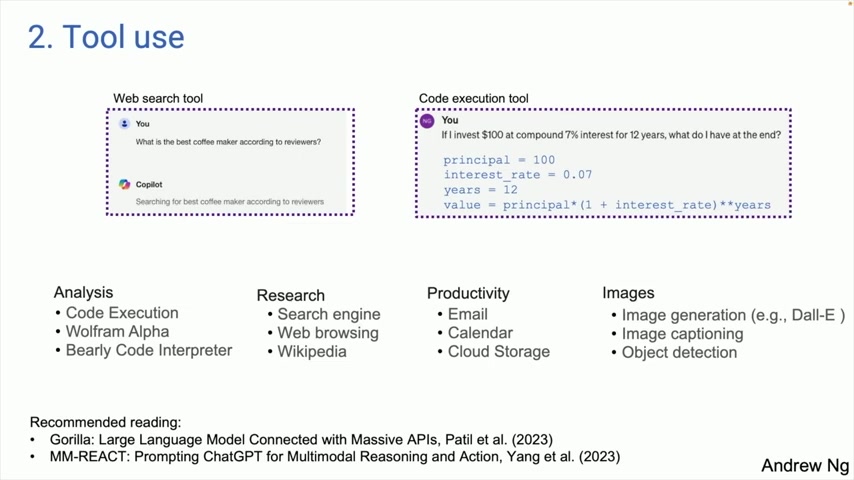
- Tool Use:

The ability to access and utilize external resources like search engines, databases, and code interpreters to enhance their problem-solving capabilities. This is especially helpful in areas like web search tool, code execution tool, analysis, research, productivity and processing images.
- Reflection: The process of analyzing past performance and identifying areas for improvement. This iterative refinement is essential for continuous learning and adaptation.
- Planning: Developing multi-step strategies to achieve complex goals. This involves breaking down large tasks into smaller, more manageable sub-tasks.
- Multi-Agent Collaboration: Enabling multiple AI agents to work together in a coordinated manner to tackle problems that are too complex for a single agent to solve.
By incorporating these elements, agentic workflows create more robust, adaptable, and intelligent AI systems.
These agentic workflows are seen as more and more important as fast token generation is seen as key to better results.
Zero-Shotting vs. Agentic Workflows
In zero-shotting, AI models are presented with a task and expected to generate a solution without any prior training or specific examples. While this can be effective for simpler tasks, it often falls short when faced with complex problems that require reasoning, planning, or access to external knowledge.
Agentic workflows, on the other HAND, provide a more structured and iterative approach. They allow AI agents to:
- Break down complex problems into smaller steps.
- Utilize tools to Gather information and perform specific actions.
- Reflect on their progress and adjust their strategy as needed.
- Collaborate with other agents to leverage diverse expertise.
This multi-faceted approach enables AI to tackle problems that are simply beyond the reach of zero-shotting methods.
Deep Dive into Tool Use Design Pattern
Exploring the Concept of Tool Use
The tool use design pattern is a cornerstone of agentic workflows. It allows AI agents to extend their capabilities by interfacing with a variety of external tools and resources.
This means the AI model can perform a wider array of tasks as it can utilize all sorts of tools to help, such as: code execution, Search Engine, email, or image generators, just to name a few. Without the tool use feature, a model would be heavily limited, but now it can take advantage of the internet, other apps, and APIs.
Here's a breakdown of how tool use works:
- Task Analysis: The AI agent first analyzes the task at hand and determines what tools are needed to complete it.
- Tool Selection: The agent selects the appropriate tools from its available repertoire.
- Tool Invocation: The agent calls the selected tool using specific parameters or instructions.
- Result Integration: The agent integrates the results from the tool into its decision-making process.
By seamlessly integrating external tools, AI agents can overcome their inherent limitations and tackle a much wider range of problems.
Types of Tools Used in Agentic Workflows
The specific tools used in agentic workflows can vary depending on the task and the AI agent's capabilities. However, some common types of tools include:
- Search Engines: Used to gather information from the internet.
- Web Browsers:

Allow agents to interact with web pages and extract specific data.
- Code Interpreters: Enable agents to execute code snippets for calculations, data manipulation, or automation.
- Databases: Provide access to structured information for retrieval and analysis.
- APIs (Application Programming Interfaces): Allow agents to interact with other applications and services. Tabilly Search Engine API and Serp API are two such examples.
- Email Clients: Allows the AI agent to interact with and send emails and other forms of digital communications
- Calendars: Allow models to work with dates and plan events.
- Cloud Storage: Allows models to read and store information to assist users.
The list of possible tools is constantly expanding, paving the way for even more sophisticated AI applications.
The more of these tools the AI agent has access to, the more powerful it can become. In fact, as noted in the video, the number of tools turns the AI agent into an AI God.
Benefits of Tool Use in Agentic Workflows
Integrating tool use into agentic workflows offers numerous benefits:
- Increased Accuracy: By leveraging external tools, AI agents can avoid relying solely on their internal knowledge, which may be incomplete or outdated.
- Enhanced Efficiency: Automation tools can streamline tasks and reduce the need for manual intervention.
- Expanded Capabilities: Tool use enables AI agents to tackle problems that would otherwise be impossible to solve.
- Improved Adaptability: AI agents can adapt to changing circumstances by dynamically selecting and utilizing the appropriate tools.
- Better Reliability: Having access to external tools adds to the reliability of the results because you have external verification. The AI agent can verify its answers using the web or with another tool, ensuring that it is giving accurate answers.
Building a Tool-Enabled AI Agent
Step-by-Step Guide
Creating an AI agent capable of tool use requires careful planning and execution. Here's a step-by-step guide to help you get started:
- Define the Task: Clearly define the problem you want the AI agent to solve.
- Identify Required Tools: Determine which tools are necessary to complete the task effectively.
- Develop Tool Interfaces: Create interfaces that allow the AI agent to interact with the selected tools.
- Implement Tool Selection Logic: Design the logic that enables the AI agent to choose the right tool for each situation.
- Train the AI Agent: Train the AI agent to use the tools effectively and integrate the results into its decision-making process.
- Evaluate Performance: Regularly evaluate the AI agent's performance and identify areas for improvement.
By following these steps, you can build powerful AI agents that can leverage tool use to tackle complex problems.
Choosing the Right Model for Development Iteration
When building agentic systems, selecting the right model for each stage of development is crucial. For faster iteration during the development phase, consider using a lower-tier model like GPT-3.5.
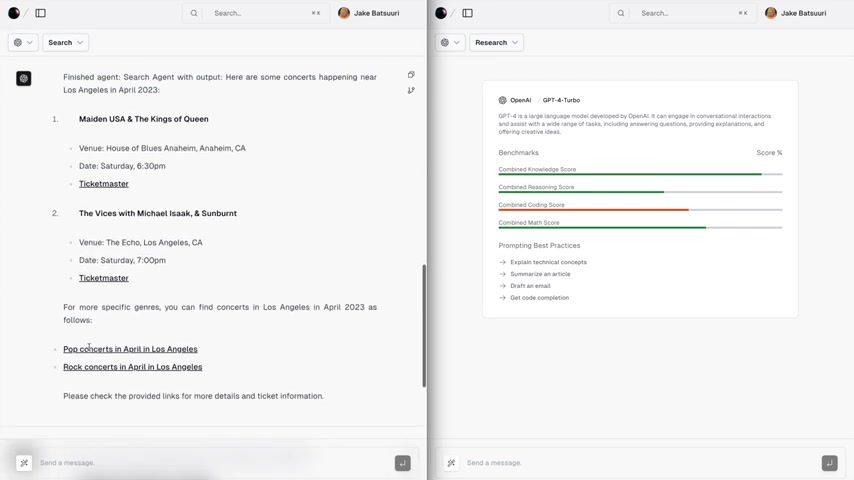
This approach allows for quicker testing and refinement of the system before investing in more powerful, but slower, models. It enables quicker testing and refines before choosing a more potent and costly model.
This Pragmatic approach is crucial to ensure more rapid testing in order to refine the AI Agent.
Once you have a working system, you can upgrade to a more sophisticated model like GPT-4 for improved performance.




Most people like


































Report
Please select a reason for reporting
- 13 Reasons to Switch from Snapchat to Text Messaging
- 7 Powerful Speech to Text Apps to Boost Productivity
- 10 Best Speech to Text Tools for Effortless Transcription
- 13 Free Tools to Easily Transcribe Audio to Text
- 15 Surprising Ways Google's Speech-to-Text Boosts Productivity
- 7 Best Free Online Audio to Text Transcription Tools
- 9 Tips to Transcribe Speech to Text Faster and Better
- 13 Best Speech to Text Software for Windows 10 in 2023
- 7 Tips for Choosing the Best Transcriber for Audio to Text
- 11 Reasons Why Dragon Speech-to-Text Apps are Game-Changers
- 6 Secrets to Enhance Your Speech to Text Transcription
- 6 Brilliant Ways to Boost Productivity with Talk-to-Text on Your MacBook
- 6 Ways Transcription Software Converts Audio to Text
- 8 Tips to Transcribe Speech to Text Like a Pro
- 6 Reasons IBM Watson Speech to Text is a Game-Changer
- 14 Powerful Ways Talk-to-Text Improves Your Workflow
- 12 Top Windows Speech-to-Text Software for Efficient Transcription
- 12 Game-Changing Benefits of Apple's Speech to Text Technology
- 9 Powerful Use Cases for AWS Speech to Text Technology
- 10 Easy Steps to Transcribe YouTube Videos to Text
- transcription audio en texte
- online audio transcription
- free audio file transcription
- free ai audio transcription
- audio transcription service
- audio transcription online free
- audio transcription free online
- audio to transcription software
- audio and transcript
- ai audio transcription free
- voice recording to text converter
- translate voice recording to text
- record voice to text
- audio recording to text converter
- voice recording and transcription
- chatgpt voice to text
- gmail voice to text
- speech to text reader
- speech to text ai free
- speech to talk
- Meshy AI: How to Create 3D Models from Text and Images
- How SEO and Marketing Dashboards Empower Agencies to Drive Results
- How to Use AI Tools to Find Internal Linking Opportunities Across a Business Website
- Discover Your Perfect Haircut with AI Hairstyle Apps
- Free Reputation Calculator Tools: How They're Adapting to Score AI Visibility, Not Just Rankings
- Design Professional Flyers for Free on Your Phone
- Best Free Flyer Maker Apps for Android: Design Like a Pro
- How to Know If Your Business Is Ready for an AI Customer Service Agent
- Revolutionizing Storytelling: From Novels to Screenplays with AI
- Create Engaging Animated Explainer Videos with a Free AI Tool
- Automate Lead Generation: A Comprehensive Guide with AI Agents
- Revideo.io: The Future of Reverse Video Search Technology
- Revolutionizing Email Marketing Agency with AI
- Breaking the Character Drift Dilemma: A Practical Test of Smart Shot
- Meshy AI: How to Create 3D Models from Text and Images
- ASOMobile Helps Teams Benchmark App Store Screenshots Against Competitors
- How to Match LMS Software With Your Organization's Training Plan
- How to Convert BTC to HNT
- Unleashing the Power of AI: Cognizant's Roadmap for Transformation
- Frame to Video Review: A Practical Look at Turning Two Still Frames Into Motion

Copyright ©2026 toolify