































Table of Contents
- Key Points
- Data, Information, Knowledge, and Wisdom: A Foundational Understanding
- The Shifting Sands of AI Limits: A Historical Perspective
- AI's Role: Augmenting Human Capabilities, Not Replacing Them
- AI's Performance and Sustainability: A Balancing Act
- Navigating the Future: AI's Potential and Present Limits
- Frequently Asked Questions About AI
- Related Questions



Data, Information, Knowledge, and Wisdom: A Foundational Understanding
Defining the DIKW Pyramid
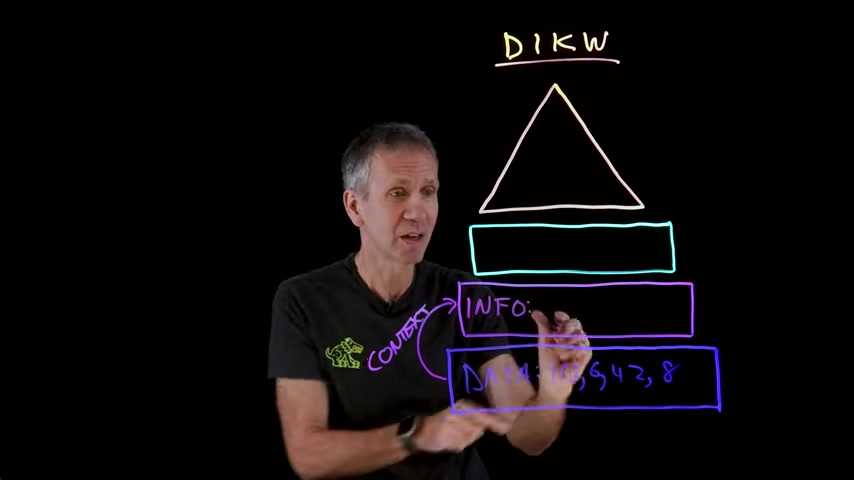
To truly grasp the limits of AI, it's essential to understand the hierarchical relationship between data, information, knowledge, and wisdom (DIKW). This model, often represented as a pyramid, illustrates how raw data evolves into actionable wisdom.
-
Data: At the base of the pyramid lies raw data. This is unprocessed, unorganized facts and figures. It lacks context and inherent meaning. For instance, the numbers '10, 6, 42, and 8' by themselves are simply data.
-
Information: Data gains meaning when context is added. This transformation turns data into information. Providing context converts mere data into information. For example, stating that ‘10, 6, 42, and 8’ represent the ages of people in a room provides context. The following is a brief summary of the previous information.
| Level | Description | Example |
|---|---|---|
| Data | Raw, unorganized facts and figures without context. | 10, 6, 42, 8 |
| Information | Data that has been given context and meaning. | Ages of people in a room: 10, 6, 42, 8 |
| Knowledge | Information that has been interpreted, analyzed, and understood. It provides actionable insights. | Most people in the room are under 21. |
| Wisdom | Applied knowledge used to make informed decisions and judgments. It considers broader implications and ethical considerations. | Plan age-appropriate games for the people in the room. |
-
Knowledge: Knowledge arises from interpreting information. It involves understanding relationships, patterns, and trends within the information. If we observe that ‘most of the people in the room are under 21,’ we gain knowledge about the demographic.
-
Wisdom: Wisdom represents the pinnacle of the DIKW pyramid. It's the application of knowledge to make sound judgments and ethical decisions. Using the knowledge of ages, we make a wise decision to ‘plan age-appropriate games’ to keep the occupants engaged. In the AI context, while systems can process data and deliver information effectively, true wisdom necessitates ethical understanding. This is where AI needs human help.
This pyramid illustrates the gap between what AI can currently achieve and true human-level intelligence. AI can process and analyze data and extract information, but the application of wisdom, influenced by ethical and emotional considerations, remains a uniquely human domain.
The Shifting Sands of AI Limits: A Historical Perspective
Past Predictions and Present Realities
Over the past decades, numerous predictions have confidently asserted AI's capabilities, coupled with limitations.
A common refrain has been, ‘AI can do X, but it will never be able to do Y.’ However, time and again, these limitations have been shattered. This underscores a critical point: predicting the future of AI is a precarious endeavor.
AI's exponential growth has consistently defied expectations, transitioning it from research labs to everyday life. It's now commonplace to find AI integrated into smartphones, vehicles, and even email writing tools. These past limitations were proven wrong. With time, what seemed impossible became a reality. Therefore, it is important to not bet against AI. For the AI, we need to focus on where its limitations are.
| Area | Formerly Considered a Limit | Current Status |
|---|---|---|
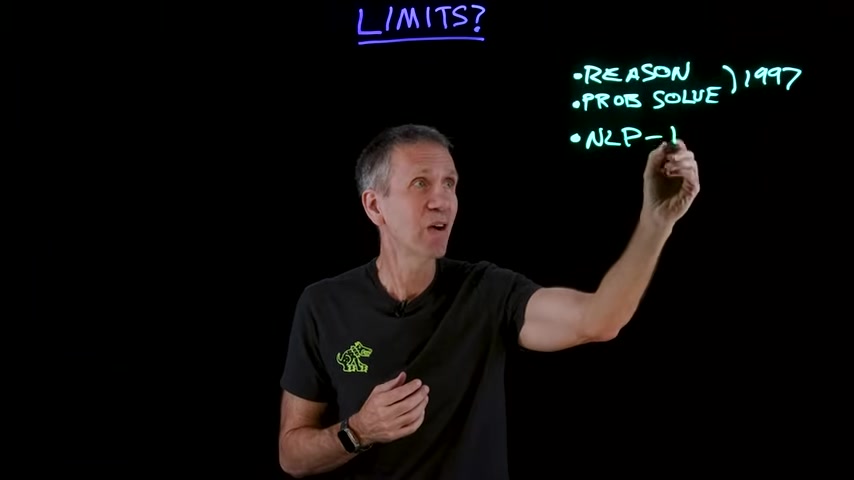
| Reasoning & Problem Solving | AI couldn't perform complex problem-solving like humans. | AI can play chess at a grandmaster level (Deep Blue), exceeding human capabilities in specific domains. |
| Natural Language Processing (NLP) | AI couldn't understand the nuances of human language. | Modern chatbots (like those from OpenAI) display a high degree of understanding and generate creative text formats. |
| Creativity | AI cannot create original art or Music. | AI can generate unique and compelling works of art and music based on learned patterns. |
| Real-Time Perception | AI can't react in real-time to its surrounding environment. | Self-driving cars demonstrate AI's ability to perceive and react to surroundings in real time. |
| Emotional Intelligence | AI cannot understand or process human emotions. | AI can mimic human emotions to some degree. |
AI's Performance and Sustainability: A Balancing Act
Balancing Performance and Sustainability for AI's Future
While AI's capabilities are expanding rapidly, it's critical to address the challenge of sustainability.
Training and running complex AI models demands significant computing power, leading to high energy consumption and environmental impact.
Achieving a sustainable AI future requires:
-
Developing more energy-efficient algorithms and hardware.
-
Optimizing AI models for resource utilization.
-
Exploring renewable energy sources to power AI infrastructure.
-
Adopting ‘right-sized models’. By prioritizing sustainability, we can ensure that AI's transformative potential benefits society without compromising the environment.






Most people like





































Report
Please select a reason for reporting
- 13 Reasons to Switch from Snapchat to Text Messaging
- 7 Powerful Speech to Text Apps to Boost Productivity
- 10 Best Speech to Text Tools for Effortless Transcription
- 13 Free Tools to Easily Transcribe Audio to Text
- 15 Surprising Ways Google's Speech-to-Text Boosts Productivity
- 7 Best Free Online Audio to Text Transcription Tools
- 9 Tips to Transcribe Speech to Text Faster and Better
- 13 Best Speech to Text Software for Windows 10 in 2023
- 7 Tips for Choosing the Best Transcriber for Audio to Text
- 11 Reasons Why Dragon Speech-to-Text Apps are Game-Changers
- 6 Secrets to Enhance Your Speech to Text Transcription
- 6 Brilliant Ways to Boost Productivity with Talk-to-Text on Your MacBook
- 6 Ways Transcription Software Converts Audio to Text
- 8 Tips to Transcribe Speech to Text Like a Pro
- 6 Reasons IBM Watson Speech to Text is a Game-Changer
- 14 Powerful Ways Talk-to-Text Improves Your Workflow
- 12 Top Windows Speech-to-Text Software for Efficient Transcription
- 12 Game-Changing Benefits of Apple's Speech to Text Technology
- 9 Powerful Use Cases for AWS Speech to Text Technology
- 10 Easy Steps to Transcribe YouTube Videos to Text
- transcription audio en texte
- online audio transcription
- free audio file transcription
- free ai audio transcription
- audio transcription service
- audio transcription online free
- audio transcription free online
- audio to transcription software
- audio and transcript
- ai audio transcription free
- voice recording to text converter
- translate voice recording to text
- record voice to text
- audio recording to text converter
- voice recording and transcription
- chatgpt voice to text
- gmail voice to text
- speech to text reader
- speech to text ai free
- speech to talk
- How SEO and Marketing Dashboards Empower Agencies to Drive Results
- How to Use AI Tools to Find Internal Linking Opportunities Across a Business Website
- Discover Your Perfect Haircut with AI Hairstyle Apps
- Free Reputation Calculator Tools: How They're Adapting to Score AI Visibility, Not Just Rankings
- Design Professional Flyers for Free on Your Phone
- Best Free Flyer Maker Apps for Android: Design Like a Pro
- How to Know If Your Business Is Ready for an AI Customer Service Agent
- Revolutionizing Storytelling: From Novels to Screenplays with AI
- Create Engaging Animated Explainer Videos with a Free AI Tool
- Stop Multi-Subscribing: Benchmark Top AI Visual Models in One Canvas
- AI & Elections: Defending Democracy Against Misinformation
- Navigating Political Discourse: AI, Deepfakes, and Reality Checks
- Detecting Political Bias in News Articles: A Powerful AI Algorithm
- AI Bias Unveiled: Political Leanings in ChatGPT & Beyond
- Revolutionize Learning: Discover Quizzes AI for Engaging Interactive Quizzes
- From AI-Generated to Audience-Ready: How Quillbot Humanize AI Is Changing the Content Editing Process
- Building an AI Writing Stack in 2026: LLMs, Detectors, and Humanizers
- 7 Top AI-Powered Database Assistant Platforms
- An Objective Look at Modern Web-Based Visual Modifications
- My Honest Experience with VideoAI: The Secret Weapon for Creators Who Need Character Voices

Copyright ©2026 toolify