






Table of Contents
- Key Points
- Introduction to AI-Powered Structured Report Generation
- The AI-Powered Report Generation Workflow
- Getting Started: Prerequisites
- Advantages and Disadvantages of AI-Powered Report Generation
- Key Components and Technologies
- FAQ
- Related Questions


Introduction to AI-Powered Structured Report Generation
The Need for Structured Reports
Organizations today grapple with vast amounts of data from diverse sources. Extracting actionable insights from this data requires more than just answering individual questions. It demands comprehensive, structured reports that provide context, analysis, and clear recommendations. Structured reports offer a significant advantage over traditional methods by presenting information in a logical, organized manner, facilitating better understanding and decision-making.
Traditional report generation often involves manual effort, which is time-consuming and prone to human error. AI-powered solutions automate this process, significantly reducing the time and resources required to produce high-quality reports.
LangChain: The Foundation for AI Agents
LangChain serves as the core framework for building the AI agents that drive the structured report generation process. It provides a flexible and modular platform for creating chains of AI agents, each specialized in a specific task such as planning, research, or writing.
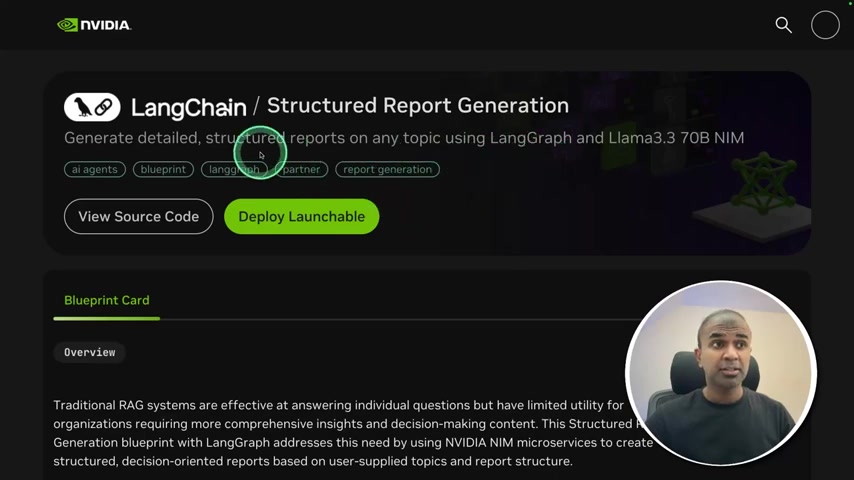
By orchestrating these agents, LangChain enables the creation of sophisticated workflows that automate the entire report generation pipeline.
LangChain's ability to integrate with various language models, tools, and data sources makes it an ideal choice for building custom AI-powered reporting solutions.
NVIDIA NIM: Powering AI Inference
NVIDIA NIM (NVIDIA Inference Microservice) provides the high-performance computing infrastructure needed to run complex AI models efficiently. In the context of structured report generation, NVIDIA NIM powers the language models that perform tasks such as text summarization, question answering, and content generation. By leveraging NVIDIA's optimized hardware and software, NVIDIA NIM ensures that the AI agents can process large volumes of data quickly and accurately.
Specifically, the blueprint utilizes the Llama 3.3 70B NVIDIA NIM, a state-of-the-art language model capable of generating high-quality text and understanding complex instructions.
Tavily: Web Search for Enhanced Research
Tavily acts as the AI agent's gateway to the vast information available on the internet. It provides a powerful web search API that enables the AI agents to Gather Relevant information for their research tasks.
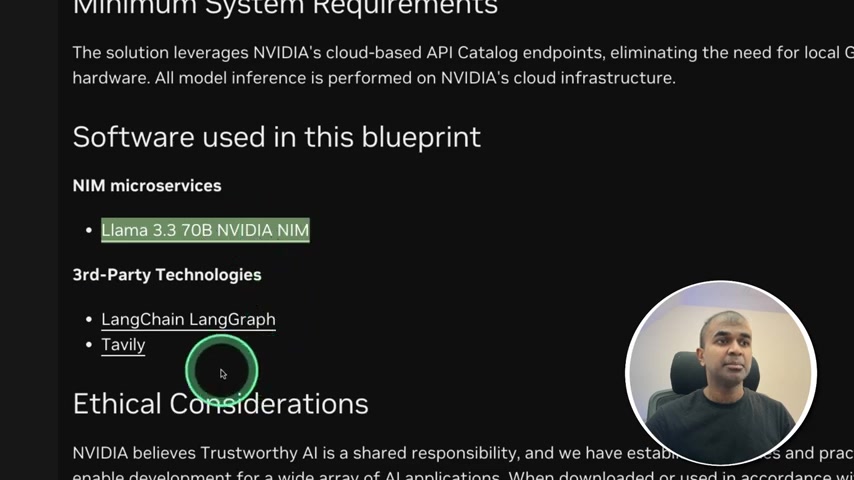
By using Tavily, the AI agents can access a wide range of sources, including news articles, blog posts, research Papers, and other web content, ensuring that the reports are based on the latest and most accurate information. This is how you can create a report with headers and subheaders including a conclusion. All powered by AI.
The AI-Powered Report Generation Workflow
Planning Stage
The report generation process begins with a planning stage, where a planning agent analyzes the user's input and defines the structure of the report. The user provides a topic and an Outline, which the planning agent uses to determine the different sections of the report, including the introduction, body, and conclusion. This agent lays the foundation for the entire report, defining the scope and structure of the content.
This planning phase involves:
- Analyzing user inputs, ensuring the topic is well understood.
- Mapping out the report sections, determining the key areas to cover.

The planning agent acts as a virtual project manager, organizing the information and tasks to ensure a Cohesive and informative report.
Research Stage
Once the report structure is defined, the process moves to the research stage.
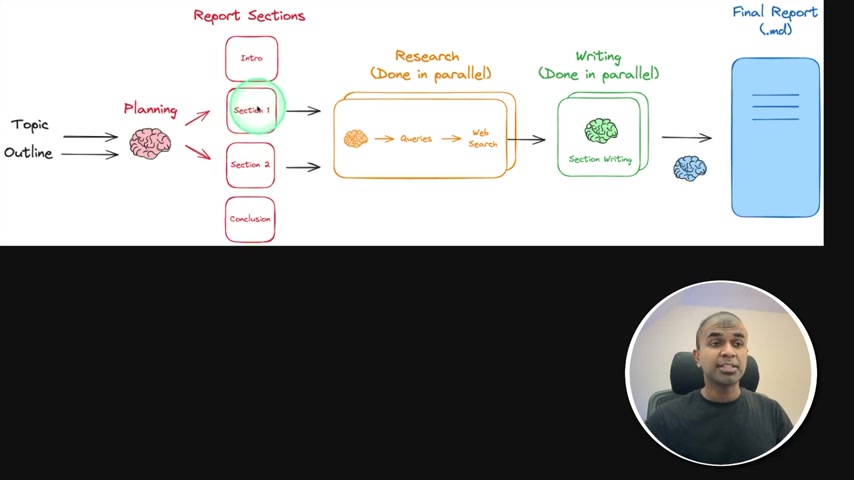
In this phase, multiple research agents work in parallel to gather information for each section of the report. These agents use the Tavily web search API to query the internet, collecting relevant articles, data, and insights. By working in Parallel, the research agents significantly reduce the time required to gather information.
The research phase involves:
- Generating multiple search queries for each section.
- Searching the web using Tavily's API, gathering relevant data.
- Processing and filtering the data, ensuring accuracy and relevance.
This parallel research approach streamlines the information-gathering process, providing a comprehensive and up-to-date foundation for the report.
Writing Stage
With the research complete, the process enters the writing stage. In this phase, writing agents use the information gathered by the research agents to generate the content for each section of the report. These agents leverage the power of the Llama 3.3 70B NVIDIA NIM language model to create well-written, informative, and engaging content. Each agent is specialized in writing a specific section, ensuring consistency and quality throughout the report.
The writing phase involves:
- Creating content for each section based on research findings.
- Ensuring technical accuracy and Clarity.
- Maintaining a consistent style and tone.
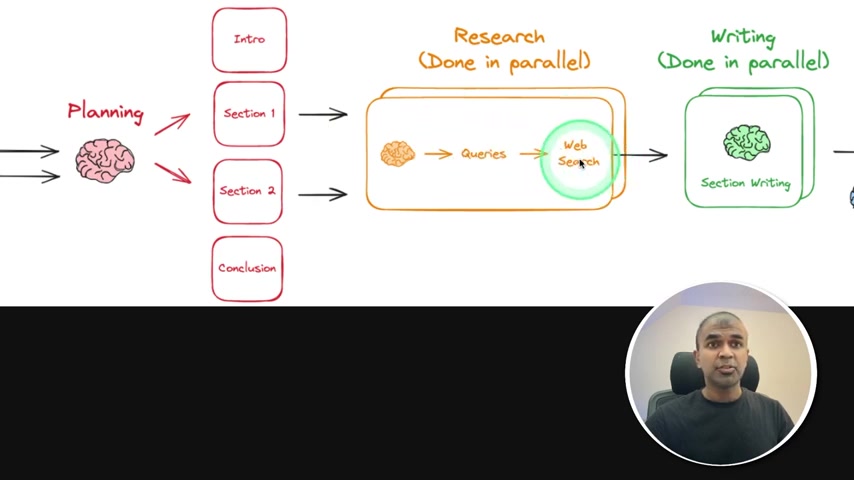
This collaborative writing approach leverages AI to produce a professional, structured report efficiently.





Most people like


































Report
Please select a reason for reporting
- 13 Reasons to Switch from Snapchat to Text Messaging
- 7 Powerful Speech to Text Apps to Boost Productivity
- 10 Best Speech to Text Tools for Effortless Transcription
- 13 Free Tools to Easily Transcribe Audio to Text
- 15 Surprising Ways Google's Speech-to-Text Boosts Productivity
- 7 Best Free Online Audio to Text Transcription Tools
- 9 Tips to Transcribe Speech to Text Faster and Better
- 13 Best Speech to Text Software for Windows 10 in 2023
- 7 Tips for Choosing the Best Transcriber for Audio to Text
- 11 Reasons Why Dragon Speech-to-Text Apps are Game-Changers
- 6 Secrets to Enhance Your Speech to Text Transcription
- 6 Brilliant Ways to Boost Productivity with Talk-to-Text on Your MacBook
- 6 Ways Transcription Software Converts Audio to Text
- 8 Tips to Transcribe Speech to Text Like a Pro
- 6 Reasons IBM Watson Speech to Text is a Game-Changer
- 14 Powerful Ways Talk-to-Text Improves Your Workflow
- 12 Top Windows Speech-to-Text Software for Efficient Transcription
- 12 Game-Changing Benefits of Apple's Speech to Text Technology
- 9 Powerful Use Cases for AWS Speech to Text Technology
- 10 Easy Steps to Transcribe YouTube Videos to Text
- transcription audio en texte
- online audio transcription
- free audio file transcription
- free ai audio transcription
- audio transcription service
- audio transcription online free
- audio transcription free online
- audio to transcription software
- audio and transcript
- ai audio transcription free
- voice recording to text converter
- translate voice recording to text
- record voice to text
- audio recording to text converter
- voice recording and transcription
- chatgpt voice to text
- gmail voice to text
- speech to text reader
- speech to text ai free
- speech to talk
- Meshy AI: How to Create 3D Models from Text and Images
- How SEO and Marketing Dashboards Empower Agencies to Drive Results
- How to Use AI Tools to Find Internal Linking Opportunities Across a Business Website
- Discover Your Perfect Haircut with AI Hairstyle Apps
- Free Reputation Calculator Tools: How They're Adapting to Score AI Visibility, Not Just Rankings
- Design Professional Flyers for Free on Your Phone
- Best Free Flyer Maker Apps for Android: Design Like a Pro
- How to Know If Your Business Is Ready for an AI Customer Service Agent
- Revolutionizing Storytelling: From Novels to Screenplays with AI
- Create Engaging Animated Explainer Videos with a Free AI Tool
- Automate Lead Generation: A Comprehensive Guide with AI Agents
- Revideo.io: The Future of Reverse Video Search Technology
- Revolutionizing Email Marketing Agency with AI
- Breaking the Character Drift Dilemma: A Practical Test of Smart Shot
- Meshy AI: How to Create 3D Models from Text and Images
- ASOMobile Helps Teams Benchmark App Store Screenshots Against Competitors
- How to Match LMS Software With Your Organization's Training Plan
- How to Convert BTC to HNT
- Unleashing the Power of AI: Cognizant's Roadmap for Transformation
- Frame to Video Review: A Practical Look at Turning Two Still Frames Into Motion

Copyright ©2026 toolify