































Table of Contents
- Key Points
- Introduction to IDLVISION and Artificial Intelligence
- Exploring IDLVISION's Capabilities
- Step-by-Step Guide to Using IDLVISION
- Pricing
- Weighing the Advantages and Disadvantages of IDLVISION
- Key Core Features
- Exploring Real-World Use Cases
- FAQ
- Related Questions



Introduction to IDLVISION and Artificial Intelligence
What is IDLVISION?
IDLVISION is a software stack designed to demonstrate and facilitate the application of artificial intelligence in real-world scenarios. It offers a comprehensive Graphical User Interface (GUI), built using QT, that simplifies the workflow of developing and deploying AI models, especially in the realm of deep learning. The tool aims to bridge the gap between complex AI algorithms and practical applications by providing an intuitive platform for users of varying technical backgrounds.
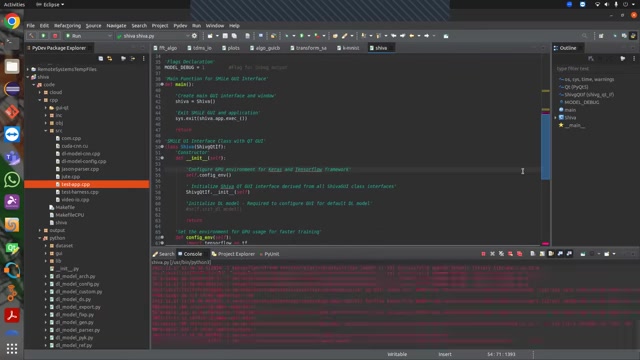
The primary goal of IDLVISION is to lower the entry barrier for AI development, enabling more individuals and organizations to leverage this technology effectively. IDLVISION focuses on simplifying the process, from creating datasets to optimizing and testing AI models. By using this tool, developers can concentrate more on innovating and implementing AI solutions rather than struggling with the underlying technical complexities.
Key features of IDLVISION include:
- Data Generation Tools: Generating synthetic datasets for training deep learning models.
- Model Selection: Pre-built reference models and customization options.
- Training and Testing: Creating, training, testing, and optimizing models.
- Real-Time Implementation: Converting and deploying models to embedded platforms.
With IDLVISION, it’s much easier to understand and implement AI in various sectors, including automotive, medical imaging, and biometrics.
The Growing Importance of Artificial Intelligence
Artificial Intelligence (AI) is rapidly transforming industries worldwide, becoming an indispensable tool for innovation and efficiency. From automating mundane tasks to providing deep insights from complex data, AI is reshaping how businesses operate and how people interact with technology. Its applications are virtually limitless, including Healthcare, finance, transportation, and entertainment. AI's impact extends beyond automation. Machine learning algorithms can analyze vast datasets to predict market trends, improve medical diagnoses, and optimize supply chains. These capabilities drive better decision-making, reduce costs, and enhance overall productivity. As AI technology evolves, the demand for skilled professionals who can harness its power continues to grow. Tools like IDLVISION play a crucial role in educating and equipping individuals with the necessary skills to participate in this technological revolution. By simplifying AI development, these platforms promote innovation and broaden the accessibility of AI, ensuring that its benefits are widely distributed.
Exploring IDLVISION's Capabilities
Data Generation and Dataset Management
IDLVISION excels in data generation, a critical aspect of training robust AI models. The tool allows users to create synthetic datasets, which are especially useful when real-world data is scarce or expensive to obtain.
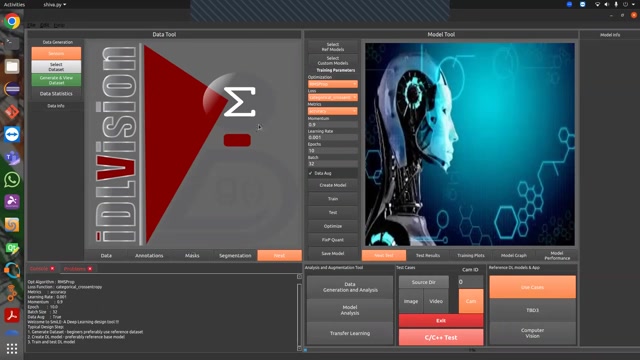
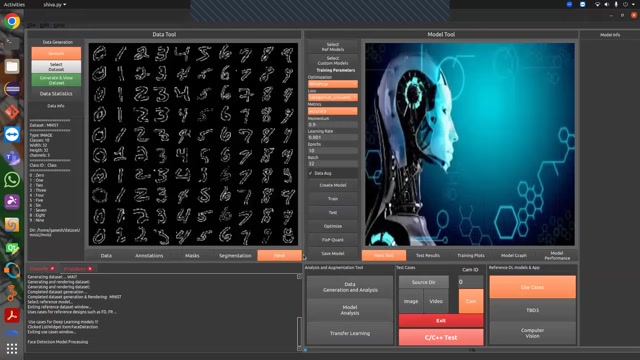
It supports various data types, including image, video, radar, and LiDAR, catering to diverse application needs. The data tool section showcases various data selection options, including MNIST and Quick Access datasets. Users can generate and visualize datasets, which is crucial for understanding the data and verifying its quality. Features include class list filtering, data statistics and quick access. The GUI simplifies dataset management, enabling users to:
- Select custom datasets.
- Generate new datasets with specified parameters.
- View and analyze existing datasets.
- Process images by annotations, masks and segmentation
This capability accelerates the AI development process, enabling developers to start training models even without extensive real-world data.
Model Selection and Training
IDLVISION provides a robust model selection and training environment that supports multiple deep learning frameworks. Users can select from pre-built reference models such as CNN, YOLO, and MLP, or customize their own models. The tool allows for detailed configuration of training parameters, including optimization algorithms, loss functions, momentum, learning rate, and batch size. The Model Tool also supports the transfer learning. The real-time performance metrics are displayed. By incorporating diverse sensor types and optimization algorithms, IDLVISION caters to the distinct requirements of each AI project, making it a versatile tool for diverse applications.
Real-World AI Implementation with IDLVISION
IDLVISION goes beyond the theoretical aspects of AI, offering practical tools for real-world implementation. Users can convert trained models into fixed-point quantized models, suitable for deployment on embedded platforms with limited computational resources. It allows to deploy it on embedded system or run an inference based on the results of model training in other software. The software allows for direct output of C/C++ which allows you to run the training or output models directly inside an software application using C/C++. The focus on embedded deployment makes IDLVISION particularly valuable for applications like ADAS, robotics, and IoT devices, where resource efficiency is paramount.
IDLVISION is a versatile platform for AI development, providing end-to-end solutions from data creation to model deployment. Its intuitive GUI and comprehensive feature set empower users to:
- Develop and test AI models quickly.
- Optimize models for real-time performance.
- Deploy AI solutions on resource-constrained devices.
The features makes it an indispensable tool for anyone looking to harness the power of AI in real-world applications.
Step-by-Step Guide to Using IDLVISION
Setting Up the Environment
Before diving into AI development, setting up the environment is crucial. IDLVISION requires configuring the GPU environment for Keras and TensorFlow frameworks.
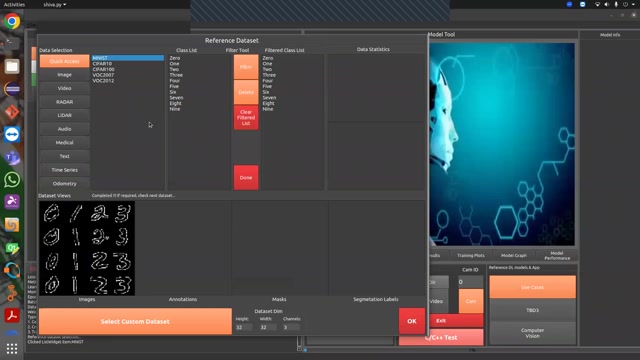
This involves initializing the DL model and setting up the environment for GPU usage to facilitate faster training. The tool includes configuration scripts to streamline this process, ensuring that the hardware resources are optimally utilized. Follow the step-by-step process for setting up the environment:
- Install Necessary Libraries: Ensure that Keras, TensorFlow, and other dependencies are installed.
- Configure GPU: Set up the GPU environment to accelerate training.
- Initialize DL Model: Initialize the DL model within IDLVISION.
- Verify Configuration: Confirm that the GPU is being used effectively by monitoring performance metrics during training.
Generating and Managing Datasets
Data is the lifeblood of AI, and IDLVISION provides robust tools for generating and managing datasets. Start by selecting or creating a dataset using the Data Tool.
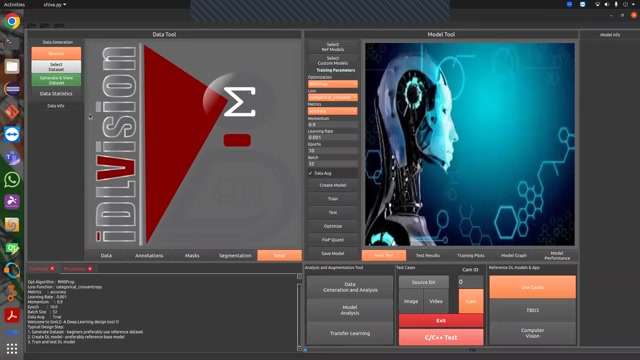
You can import existing datasets or generate synthetic data with custom parameters. IDLVISION supports various data types, including images, videos, and sensor data. To generate and manage datasets:
- Select Data Source: Choose between existing datasets or create a new one.
- Define Data Parameters: Specify parameters such as image resolution, data volume, and class distribution.
- Generate Dataset: Use IDLVISION to generate the dataset based on the specified parameters.
- Visualize Dataset: Review the generated data to ensure quality and relevance.
Training and Testing AI Models
With a dataset in hand, the next step is to train and test the AI model.
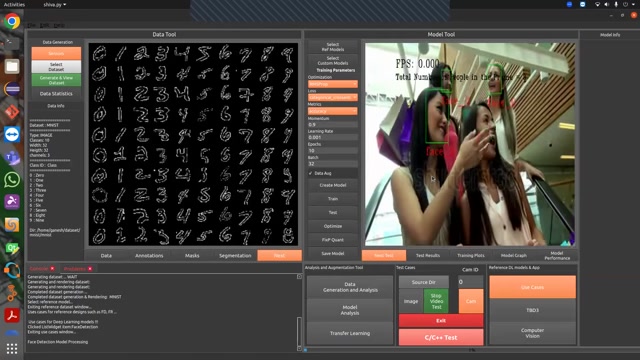
IDLVISION simplifies this process by providing a user-friendly interface for model selection, parameter tuning, and performance evaluation. To train and test the model:
- Select Model: Choose a pre-built reference model or upload a custom model.
- Configure Training Parameters: Set the optimization algorithm, learning rate, batch size, and other parameters.
- Start Training: Initiate the training process and monitor performance metrics.
- Test Model: Evaluate the trained model using test data to assess its accuracy and reliability.
Implementing AI in Real-World Applications
The ultimate goal is to deploy AI models in real-world applications, and IDLVISION supports this through its model conversion and deployment tools.
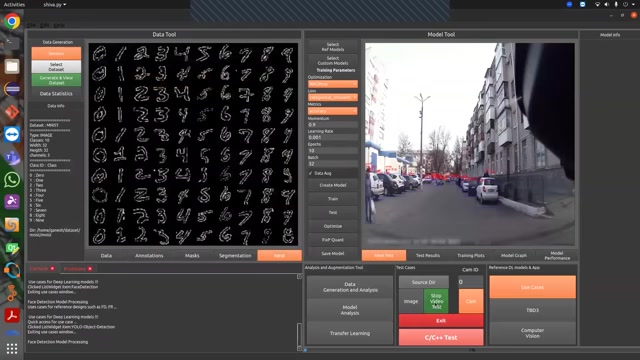
You can convert the trained model into a fixed-point quantized model for use on embedded platforms. For real-world implementation:
- Convert Model: Convert the trained model into a suitable format for deployment.
- Optimize Model: Optimize the model for real-time performance.
- Deploy Model: Deploy the model on the target platform, such as an embedded system or cloud server.
- Monitor Performance: Continuously monitor the model's performance to ensure optimal operation.
Key Core Features
Data Generation and Management
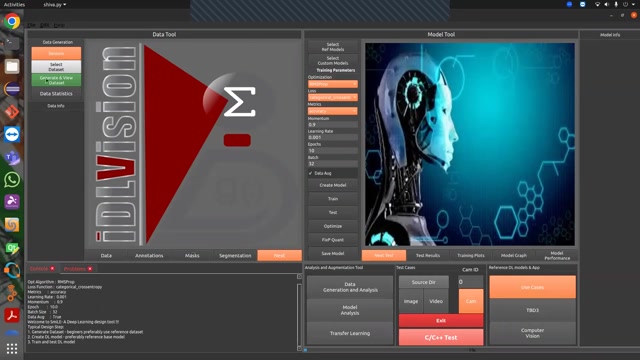
IDLVISION provides a complete data generation toolkit, which enables users to create synthetic datasets, which are especially helpful when real-world data is scarce. It supports multiple data formats, such as pictures, movies, radar, and LiDAR, in order to meet a wide range of application demands.
-
Quick Data Generation: Rapid creation of synthetic datasets.
-
Diverse Data Formats: Supports various data types, including images, video, radar, and LiDAR.
-
Class List Filtering: Allows fine-grained control over data content.
-
Data Statistics: Gives useful information for ensuring data quality.
Model Selection and Training
IDLVISION provides a good model selection and training environment that supports many deep learning frameworks.
- Reference Models: Gives the option to chose between the reference models and customise your own models.
- Parameter Tuning: Enabling detailed settings for optimization algorithms, batch size and learning rate.
- Performance Evaluation: Real time display of real time performance metrics.
- Transfer Learning: Support for transfer learning.
Real-World AI Implementation
IDLVISION offers some practical tools for real-world implementation.
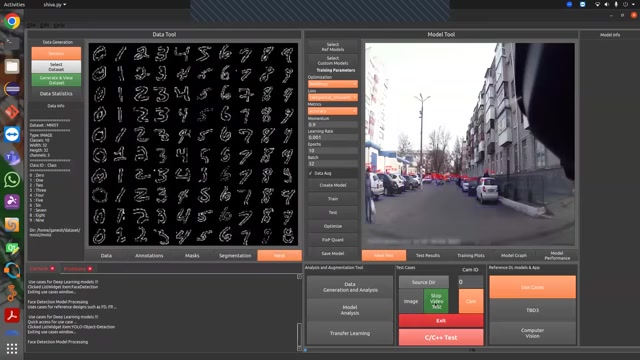
This makes IDLVISION especially useful for uses like robotics and IoT devices, where resource efficiency is so important.
- Model Conversion: Converting models into quantized, fixed-point models.
- Optimization: Optimization of the model for real-time performance.
- Deployment: Deployment on a target such as a cloud server or an embedded system.
- C/C++ Output: Support for direct output of C/C++ which allows for running the training or output models inside an C/C++ software application.
Exploring Real-World Use Cases
Advanced Driver Assistance Systems (ADAS)
IDLVISION is a great tool for improving and validating Advanced Driver Assistance Systems because of its object identification and pedestrian identification skills. ADAS technology is revolutionising automotive safety by including features such as lane keep assistance and automated emergency braking.
- Vehicle Identification: Allows for a precise detection of vehicles, improving ADAS technologies.
- Pedestrian Detection: It increases the car’s safety features by identifying pedestrians.
- Traffic Signal Identification: Supports for traffic signals which is vital for self-driving features.
Biometrics and Face Recognition
IDLVISION is very good at biometric security uses since it has very precise face identification abilities. These methods are essential in access control, surveillance systems, and personalized user experiences.
- Real-Time Facial Recognition: Enables biometric security devices and improves face recognition systems.
- Access Control Systems: Enables safe and efficient access by precisely identifying authorized workers.
- Surveillance Applications: Improving the accuracy and efficiency of face detection in surveillance.
Medical Image Analysis
IDLVISION has many uses in medical image analysis, which makes it easier to identify and diagnose illnesses more precisely using machine learning.
Applications for this technology are diagnostic help and improving treatment plans.
- Diagnostic Assistance: Helps doctors find illnesses more efficiently, which is especially helpful when examining medical images.
- Treatment Planning: Provides information to make treatment plans that are more individualized, improving patient results.
- Improved Accuracy: AI's power to analyse medical imaging enables more precise and trustworthy diagnoses.





Most people like





































Report
Please select a reason for reporting
- 13 Reasons to Switch from Snapchat to Text Messaging
- 7 Powerful Speech to Text Apps to Boost Productivity
- 10 Best Speech to Text Tools for Effortless Transcription
- 13 Free Tools to Easily Transcribe Audio to Text
- 15 Surprising Ways Google's Speech-to-Text Boosts Productivity
- 7 Best Free Online Audio to Text Transcription Tools
- 9 Tips to Transcribe Speech to Text Faster and Better
- 13 Best Speech to Text Software for Windows 10 in 2023
- 7 Tips for Choosing the Best Transcriber for Audio to Text
- 11 Reasons Why Dragon Speech-to-Text Apps are Game-Changers
- 6 Secrets to Enhance Your Speech to Text Transcription
- 6 Brilliant Ways to Boost Productivity with Talk-to-Text on Your MacBook
- 6 Ways Transcription Software Converts Audio to Text
- 8 Tips to Transcribe Speech to Text Like a Pro
- 6 Reasons IBM Watson Speech to Text is a Game-Changer
- 14 Powerful Ways Talk-to-Text Improves Your Workflow
- 12 Top Windows Speech-to-Text Software for Efficient Transcription
- 12 Game-Changing Benefits of Apple's Speech to Text Technology
- 9 Powerful Use Cases for AWS Speech to Text Technology
- 10 Easy Steps to Transcribe YouTube Videos to Text
- transcription audio en texte
- online audio transcription
- free audio file transcription
- free ai audio transcription
- audio transcription service
- audio transcription online free
- audio transcription free online
- audio to transcription software
- audio and transcript
- ai audio transcription free
- voice recording to text converter
- translate voice recording to text
- record voice to text
- audio recording to text converter
- voice recording and transcription
- chatgpt voice to text
- gmail voice to text
- speech to text reader
- speech to text ai free
- speech to talk
- Meshy AI: How to Create 3D Models from Text and Images
- How SEO and Marketing Dashboards Empower Agencies to Drive Results
- How to Use AI Tools to Find Internal Linking Opportunities Across a Business Website
- Discover Your Perfect Haircut with AI Hairstyle Apps
- Free Reputation Calculator Tools: How They're Adapting to Score AI Visibility, Not Just Rankings
- Design Professional Flyers for Free on Your Phone
- Best Free Flyer Maker Apps for Android: Design Like a Pro
- How to Know If Your Business Is Ready for an AI Customer Service Agent
- Revolutionizing Storytelling: From Novels to Screenplays with AI
- Create Engaging Animated Explainer Videos with a Free AI Tool
- Meshy AI: How to Create 3D Models from Text and Images
- ASOMobile Helps Teams Benchmark App Store Screenshots Against Competitors
- How to Match LMS Software With Your Organization's Training Plan
- Revolutionizing Email Marketing Agency with AI
- How to Convert BTC to HNT
- Unleashing the Power of AI: Cognizant's Roadmap for Transformation
- Frame to Video Review: A Practical Look at Turning Two Still Frames Into Motion
- NVIDIA NIM: Revolutionizing Supply Chain Data Analysis with AI
- Top AI Tools That Help Brands Stand Out Offline (Not Just Online)
- Top 5 Cold Email Software: Maximize Your Outreach in 2025

Copyright ©2026 toolify