































Table of Contents
- Key Points
- Understanding Bank Statements: A Detailed Breakdown
- Navigating Common Bank Statement Challenges
- How to Decipher Each Part of Your Bank Statement
- Understanding the Pros and Cons of Bank Statements
- FAQ
- Related Questions


Understanding Bank Statements: A Detailed Breakdown
What is a Bank Statement?
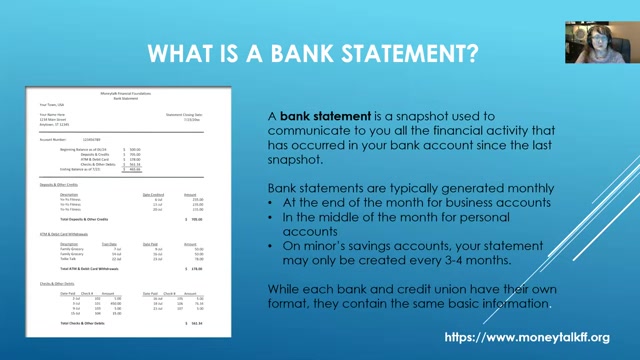
A bank statement is a regularly generated report from your bank or credit union summarizing all the financial transactions in your account during a specific period.

It acts as a record of your account's history, showing deposits, withdrawals, fees, and interest earned. Bank statements are usually generated monthly, providing a consistent overview of your financial activity. For business accounts, these statements are usually generated at the end of the month. For personal accounts, the statement is usually generated in the middle of the month. Bank statements are vital for tracking expenses, detecting errors, and maintaining accurate financial records. It's a snapshot of time. In minor savings accounts, statements might be generated every 3-4 months. While each bank has its own layout and feel, they all contain the same important information.
Why are Bank Statements Important?
- Tracking Your Finances: Bank statements allow you to monitor where your money is going and coming from.
- Identifying Errors: By reviewing your statement, you can detect unauthorized transactions or incorrect fees.
- Reconciling Accounts: Bank statements are crucial for reconciling your records with the bank's records, ensuring accuracy.
- Budgeting and Financial Planning: Analyzing your statements helps you understand your spending patterns and make informed budgeting decisions.
- Fraud Protection: Regular reviews can help you quickly spot and report fraudulent activity.
Generic Information: The Essentials
The top portion of your bank statement typically includes generic information related to both the bank and your account. This helps ensure the accuracy of the statement and provides necessary contact details.
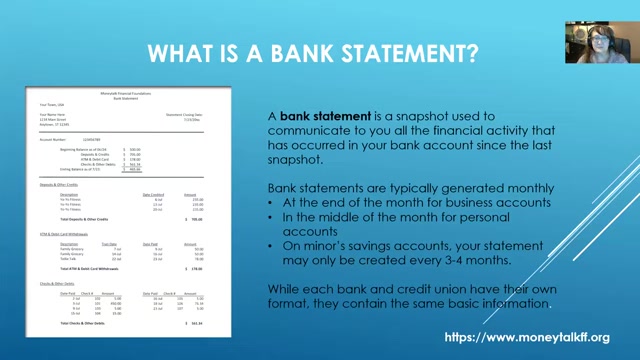
- Bank or Credit Union Name and Address: This is the official name and address of the financial institution providing the statement. This is usually listed on the top left of the statement.
- Account Holder Name(s) and Address: The names of all individuals who own the account are listed, along with the address the bank has on file for the account. This address is where all statements are sent to. If you share the account with a spouse, or family member, both names will be displayed.
- Account Number: This unique identifier is essential for accessing your account and should be kept confidential. Most of the time, only the last three or four digits are displayed. This is for data protection and security reasons. This ensures that if someone gains access to your statement, they don't have all the information to access your account.
- Statement Closing Date: This date indicates the end of the period covered by the statement. It is a very important part of bank reconciliation. Anything that happens on or before that date is accounted for in the statement. The statement date is also known as the statement cut.
Summary Information: A Quick Overview
The summary information section provides a concise overview of your account's activity for the statement period. This section allows you to quickly grasp the key changes in your account balance.
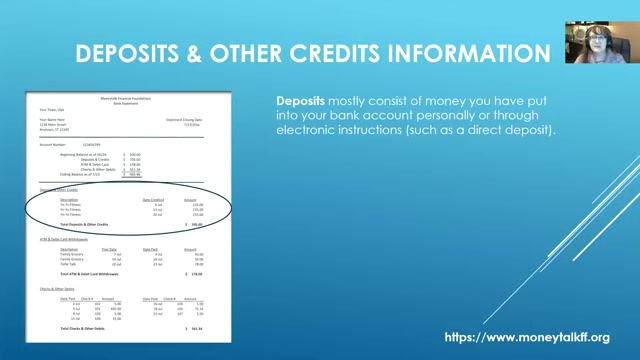
- Beginning Balance: This reflects the account balance at the start of the statement period, matching the ending balance of the previous statement.
- Total Deposits and Credits: This represents the total amount of money deposited into your account during the period, including direct deposits, cash deposits, and other credits.
- Total Withdrawals and Debits: This shows the total amount of money withdrawn from your account during the period, including ATM withdrawals, debit card purchases, and other debits.
- Ending Balance: This reflects the final account balance at the end of the statement period, calculated by adding total deposits and subtracting total withdrawals from the beginning balance.
Deposits and Other Credits Information: In Detail
This section provides a detailed listing of all deposits and other credits made to your account during the statement period.
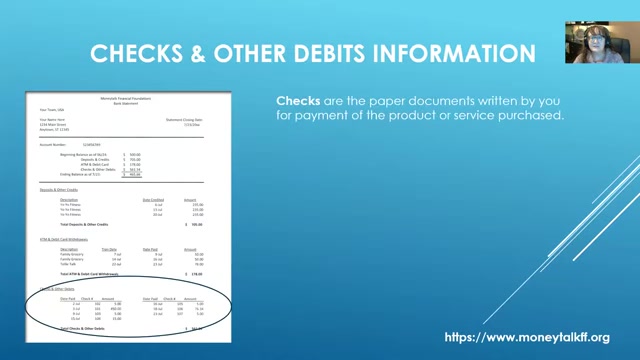
This helps you verify that all incoming funds were properly credited to your account. Deposits mostly consist of the money that you have put into your bank account in person, or through electronic transfers.
- Description: A brief description of each deposit or credit, such as "Direct Deposit - Employer Name" or "ATM Deposit". Most descriptions will have a company name listed.
- Date Credited: The date the deposit or credit was officially added to your account.
- Amount: The exact amount of the deposit or credit.
Other credits are typically reimbursements, such as returning a purchase, or being refunded a fee. All transactions are listed in the order that the bank has processed them.
It is important to note that the deposit section might not have a description attached to it.
ATM and Debit Card Withdrawals Information: What Went Out
This section provides a detailed listing of all ATM withdrawals and debit card purchases made from your account during the statement period. This section can help you track your spending habits and identify any unauthorized activity.
- Description: A brief description of the transaction, such as "ATM Withdrawal" or "Debit Card Purchase - Merchant Name". You can use this section to monitor which merchants are charging your account.
- Transaction Date: The date you made the transaction.
- Date Paid: The day the bank completed the financial processing for the transaction.
- Amount: The exact amount of the withdrawal or purchase.
Checks and Other Debits Information: Paper Trails
This section provides a detailed listing of all checks and other debits from your account during the statement period. This section is essential for confirming the accuracy of your written checks and recurring payments. If you do not write many checks, then you might see that this section is relatively empty.
- Date Paid: The date the check was cleared and the funds were transferred from your account.
- Check Number: The unique identification number assigned to each check. This can help you trace a specific payment.
- Amount: The exact amount the check was written for.
It should be noted that the amount in numbers needs to match the amount written in words on the check. If there is a discrepancy, the bank will use the check amount in words.
Navigating Common Bank Statement Challenges
Handling Unrecognized Transactions
When reviewing your bank statement, you may encounter transactions that you don't recognize or cannot immediately identify. These transactions could be due to various reasons, such as automatic payments, subscription renewals, or recurring charges that you may have forgotten about. Before jumping to conclusions or assuming fraudulent activity, take the time to investigate the transaction further. Start by looking at the transaction description and searching for any related information online or through your records. Contact the merchant or vendor associated with the transaction and inquire about the nature of the charge. Provide them with the transaction details from your bank statement and ask for clarification. Most merchants or vendors should be able to provide additional information or documentation to help you understand the transaction. If you are still unable to identify the transaction after contacting the merchant or vendor, reach out to your bank or credit union to report the suspicious activity. Provide them with all the relevant details, including the transaction date, amount, and description, and request a formal investigation. Your bank may initiate a fraud claim or issue a provisional credit to your account while they conduct their inquiry. Monitor your account closely and promptly review any updates or correspondence from your bank regarding the investigation. By taking swift and proactive steps to address unrecognized transactions, you can protect your account from potential fraud and unauthorized activity.
Disputing Fraudulent Charges
One of the critical reasons to meticulously review your bank statements is to detect and dispute fraudulent charges promptly.
Fraudulent charges occur when unauthorized transactions are made using your account information without your knowledge or consent. These charges can range from small amounts to substantial sums and may originate from various sources, such as stolen credit card numbers, compromised accounts, or identity theft. When you suspect fraudulent activity on your bank statement, take immediate action to minimize potential losses and protect your account. Start by contacting your bank or credit union to report the unauthorized transactions as soon as possible. Provide them with all the necessary details, including the transaction date, amount, and description, and explain why you believe the charges to be fraudulent. Request a formal investigation and ask for a fraud claim to be initiated. Additionally, consider placing a temporary hold or restriction on your account to prevent further unauthorized activity. In some cases, your bank may issue a new account number or replace your debit card to enhance security. Follow up in writing with your bank to document your claim and provide any supporting evidence, such as copies of fraudulent transactions or identity theft reports. Be sure to keep copies of all correspondence and records related to the dispute for your reference. The burden of proof typically rests on the bank to demonstrate the validity of the disputed charges. In most cases, you will not be held liable for unauthorized transactions that are reported promptly. By taking swift action and cooperating with your bank's investigation, you can minimize potential losses and restore your account to good standing after experiencing fraudulent charges.





Most people like


































Report
Please select a reason for reporting
- 13 Reasons to Switch from Snapchat to Text Messaging
- 7 Powerful Speech to Text Apps to Boost Productivity
- 10 Best Speech to Text Tools for Effortless Transcription
- 13 Free Tools to Easily Transcribe Audio to Text
- 15 Surprising Ways Google's Speech-to-Text Boosts Productivity
- 7 Best Free Online Audio to Text Transcription Tools
- 9 Tips to Transcribe Speech to Text Faster and Better
- 13 Best Speech to Text Software for Windows 10 in 2023
- 7 Tips for Choosing the Best Transcriber for Audio to Text
- 11 Reasons Why Dragon Speech-to-Text Apps are Game-Changers
- 6 Secrets to Enhance Your Speech to Text Transcription
- 6 Brilliant Ways to Boost Productivity with Talk-to-Text on Your MacBook
- 6 Ways Transcription Software Converts Audio to Text
- 8 Tips to Transcribe Speech to Text Like a Pro
- 6 Reasons IBM Watson Speech to Text is a Game-Changer
- 14 Powerful Ways Talk-to-Text Improves Your Workflow
- 12 Top Windows Speech-to-Text Software for Efficient Transcription
- 12 Game-Changing Benefits of Apple's Speech to Text Technology
- 9 Powerful Use Cases for AWS Speech to Text Technology
- 10 Easy Steps to Transcribe YouTube Videos to Text
- transcription audio en texte
- online audio transcription
- free audio file transcription
- free ai audio transcription
- audio transcription service
- audio transcription online free
- audio transcription free online
- audio to transcription software
- audio and transcript
- ai audio transcription free
- voice recording to text converter
- translate voice recording to text
- record voice to text
- audio recording to text converter
- voice recording and transcription
- chatgpt voice to text
- gmail voice to text
- speech to text reader
- speech to text ai free
- speech to talk
- How to Use AI Tools to Find Internal Linking Opportunities Across a Business Website
- Discover Your Perfect Haircut with AI Hairstyle Apps
- Free Reputation Calculator Tools: How They're Adapting to Score AI Visibility, Not Just Rankings
- Design Professional Flyers for Free on Your Phone
- Best Free Flyer Maker Apps for Android: Design Like a Pro
- How to Know If Your Business Is Ready for an AI Customer Service Agent
- Revolutionizing Storytelling: From Novels to Screenplays with AI
- Create Engaging Animated Explainer Videos with a Free AI Tool
- Stop Multi-Subscribing: Benchmark Top AI Visual Models in One Canvas
- Best Seedance 2.5 API Provider: Every Price on the Market, Checked at Source
- Top AI Social Media Management Tools: Automate Your Content Strategy
- Free AI Text to Video Generator: Create Stunning Videos from Text
- Discover 17 ChatGPT Alternatives: A Comprehensive Comparison
- Character.AI vs. Janitor AI: Which AI Chat Platform Reigns Supreme?
- Top Virtual Assistant Companies in 2026: Reviews, Pricing, and Plans Compared
- Unveiling FaceCheck.ID: Revolutionizing Reverse Image Searches with AI
- 11 Best AI Dialers in 2026: Features, Pricing, Pros and Cons
- How I Direct Consistent AI Clips: A Hands-On Guide to Multi-Model Generation
- A Realistic Review of the Photo Generator Image Tool
- Playwright MCP Server: Automated Web Testing with Agent Mode

Copyright ©2026 toolify