























Edge AI: Revolutionizing Computing with Open Source Hardware & Software

Updated on Aug 20,2025








Table of Contents
- Key Points
- Understanding Edge AI and Its Significance
- Exploring RISC-V and SiFive: Open Source Powerhouses
- Leveraging Macintosh Resources for Edge AI Prototyping
- Pricing of Edge AI Development Resources
- Weighing the Advantages and Disadvantages of Edge AI
- Key Capabilities of Edge AI Solutions
- Real-World Applications of Edge AI
- Frequently Asked Questions about Edge AI
- Related Questions and Considerations


Understanding Edge AI and Its Significance
What is Edge AI?
Edge AI, or Edge Artificial Intelligence, refers to the deployment of AI algorithms and AI models directly on local edge devices such as sensors or Internet of Things (IoT) devices, which enables real-time data processing and analysis without constant reliance on cloud infrastructure

. This approach contrasts with traditional cloud-based AI, where data is sent to a remote server for processing. By bringing AI closer to the source of data, Edge AI offers several advantages, including reduced latency, improved privacy, and increased efficiency. The rise of Edge AI represents a paradigm shift in computing, offering opportunities for innovation across various industries.
Edge AI offers significant advantages over traditional cloud-based AI. Reduced latency is one of the primary benefits, which is critical in applications that require real-time responses, such as autonomous vehicles and industrial automation. Since data is processed locally, there is no need to send it to a remote server, which eliminates the delays associated with network transmission. Improved privacy is another key advantage, as sensitive data remains on the edge device, reducing the risk of data breaches. In addition, Edge AI can improve efficiency by reducing the bandwidth requirements and computational load on cloud infrastructure. This can result in significant cost savings and improved performance.
The Role of Open Source in Edge AI
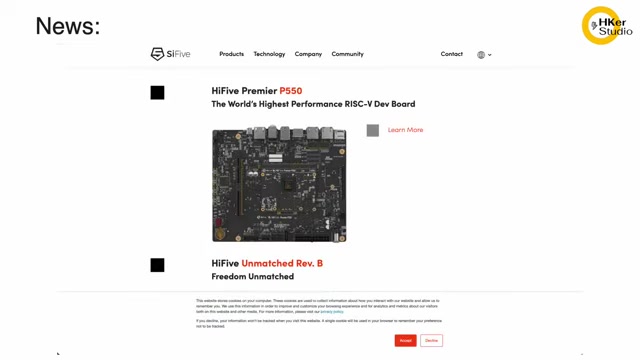
Open source technologies play a vital role in the development and adoption of Edge AI. Open-source hardware platforms, such as those based on the RISC-V architecture, provide developers with the flexibility and customization needed to create optimized Edge AI solutions
. Open-source software libraries and frameworks, such as TensorFlow Lite and ONNX Runtime, enable developers to deploy AI models on resource-constrained edge devices. By leveraging open source technologies, developers can accelerate the development of Edge AI applications, reduce costs, and foster innovation. The collaborative nature of open source also allows for continuous improvement and optimization, ensuring that Edge AI solutions remain at the cutting edge. The open-source nature of these resources promotes accessibility and accelerates innovation in Edge AI, fostering a collaborative ecosystem.
Exploring RISC-V and SiFive: Open Source Powerhouses
RISC-V Architecture: A Foundation for Open Computing
RISC-V stands for Reduced Instruction Set Computer - Version V, and it represents a revolutionary open standard instruction set architecture (ISA)
. Unlike proprietary ISAs like x86, RISC-V is freely available and customizable, empowering developers to create tailored hardware solutions for specific applications. This flexibility is particularly valuable in Edge AI, where optimizing performance and power consumption is paramount. RISC-V's open nature also fosters a collaborative ecosystem, with contributions from researchers, developers, and industry leaders. This ensures continuous improvement and innovation, making RISC-V a compelling alternative to traditional ISAs.
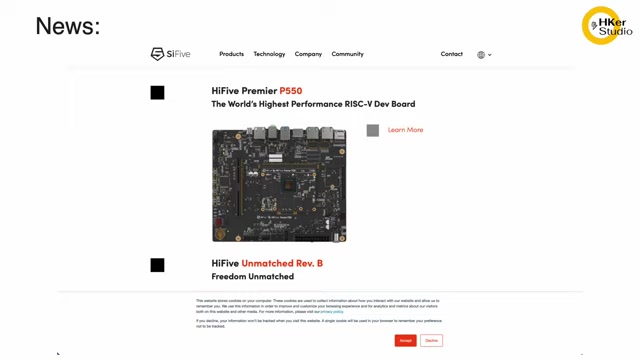
SiFive, a leading provider of RISC-V-based silicon, offers a range of development boards and tools to facilitate Edge AI development. SiFive's HiFive Unleashed and HiFive Unmatched boards provide developers with a powerful platform for prototyping and experimenting with RISC-V-based AI solutions. These boards feature high-performance RISC-V processors, ample memory, and a variety of peripherals, making them well-suited for a wide range of Edge AI applications .
HiFive Boards: Development Platforms for Edge AI
SiFive's HiFive boards provide a comprehensive platform for Edge AI development, offering a combination of hardware and software resources to accelerate prototyping and deployment. HiFive boards incorporate high-performance RISC-V processors designed for AI workloads, integrated with a wealth of peripherals such as documentation, software development kits, toolchains, utilities, and software ecosystem solutions, essential for Edge AI applications . These resources, in conjunction with the RISC-V architecture, enable developers to experiment with different AI algorithms, optimize performance for specific applications, and seamlessly integrate with existing systems.
Leveraging Macintosh Resources for Edge AI Prototyping
Utilizing Existing Macintosh Hardware
While dedicated Edge AI development boards offer a convenient starting point, developers can also leverage existing Macintosh hardware for prototyping and experimentation

. Modern Macs come equipped with powerful processors and GPUs, making them capable of running many AI workloads. By utilizing frameworks such as Core ML and TensorFlow, developers can deploy and test AI models directly on their Macs, providing a valuable platform for evaluating performance and optimizing algorithms. To effectively use Macintosh systems for Edge AI development, focus should be on the software and toolchain available on Mac, and not to use the Mac as a final edge deployment device.




Most people like


































Report
Please select a reason for reporting
- 13 Reasons to Switch from Snapchat to Text Messaging
- 7 Powerful Speech to Text Apps to Boost Productivity
- 10 Best Speech to Text Tools for Effortless Transcription
- 13 Free Tools to Easily Transcribe Audio to Text
- 15 Surprising Ways Google's Speech-to-Text Boosts Productivity
- 7 Best Free Online Audio to Text Transcription Tools
- 9 Tips to Transcribe Speech to Text Faster and Better
- 13 Best Speech to Text Software for Windows 10 in 2023
- 7 Tips for Choosing the Best Transcriber for Audio to Text
- 11 Reasons Why Dragon Speech-to-Text Apps are Game-Changers
- 6 Secrets to Enhance Your Speech to Text Transcription
- 6 Brilliant Ways to Boost Productivity with Talk-to-Text on Your MacBook
- 6 Ways Transcription Software Converts Audio to Text
- 8 Tips to Transcribe Speech to Text Like a Pro
- 6 Reasons IBM Watson Speech to Text is a Game-Changer
- 14 Powerful Ways Talk-to-Text Improves Your Workflow
- 12 Top Windows Speech-to-Text Software for Efficient Transcription
- 12 Game-Changing Benefits of Apple's Speech to Text Technology
- 9 Powerful Use Cases for AWS Speech to Text Technology
- 10 Easy Steps to Transcribe YouTube Videos to Text
- transcription audio en texte
- online audio transcription
- free audio file transcription
- free ai audio transcription
- audio transcription service
- audio transcription online free
- audio transcription free online
- audio to transcription software
- audio and transcript
- ai audio transcription free
- voice recording to text converter
- translate voice recording to text
- record voice to text
- audio recording to text converter
- voice recording and transcription
- chatgpt voice to text
- gmail voice to text
- speech to text reader
- speech to text ai free
- speech to talk
- How to Use AI Tools to Find Internal Linking Opportunities Across a Business Website
- Discover Your Perfect Haircut with AI Hairstyle Apps
- Free Reputation Calculator Tools: How They're Adapting to Score AI Visibility, Not Just Rankings
- Design Professional Flyers for Free on Your Phone
- Best Free Flyer Maker Apps for Android: Design Like a Pro
- How to Know If Your Business Is Ready for an AI Customer Service Agent
- Revolutionizing Storytelling: From Novels to Screenplays with AI
- Create Engaging Animated Explainer Videos with a Free AI Tool
- Stop Multi-Subscribing: Benchmark Top AI Visual Models in One Canvas
- Best Seedance 2.5 API Provider: Every Price on the Market, Checked at Source
- Top AI Social Media Management Tools: Automate Your Content Strategy
- Free AI Text to Video Generator: Create Stunning Videos from Text
- Discover 17 ChatGPT Alternatives: A Comprehensive Comparison
- Character.AI vs. Janitor AI: Which AI Chat Platform Reigns Supreme?
- Top Virtual Assistant Companies in 2026: Reviews, Pricing, and Plans Compared
- Unveiling FaceCheck.ID: Revolutionizing Reverse Image Searches with AI
- 11 Best AI Dialers in 2026: Features, Pricing, Pros and Cons
- How I Direct Consistent AI Clips: A Hands-On Guide to Multi-Model Generation
- A Realistic Review of the Photo Generator Image Tool
- Playwright MCP Server: Automated Web Testing with Agent Mode

Copyright ©2026 toolify