































Table of Contents
- Key Points
- Understanding the Case-Solving Framework
- Real-World Applications of the Case-Solving Framework
- Step-by-Step Guide: Implementing the Framework
- Pricing
- Pros and Cons of the Case-Solving Framework
- Core Features
- Use Cases
- FAQ
- Related Questions



Understanding the Case-Solving Framework
What is the Case-Solving Framework?
The case-solving framework is a systematic approach designed to simplify complex problems. It's a strategy that helps break down large, daunting challenges into smaller, more manageable pieces. While not directly tied to Prompt engineering, it’s an invaluable thinking technique that enhances clarity and precision in defining problems and crafting requests.
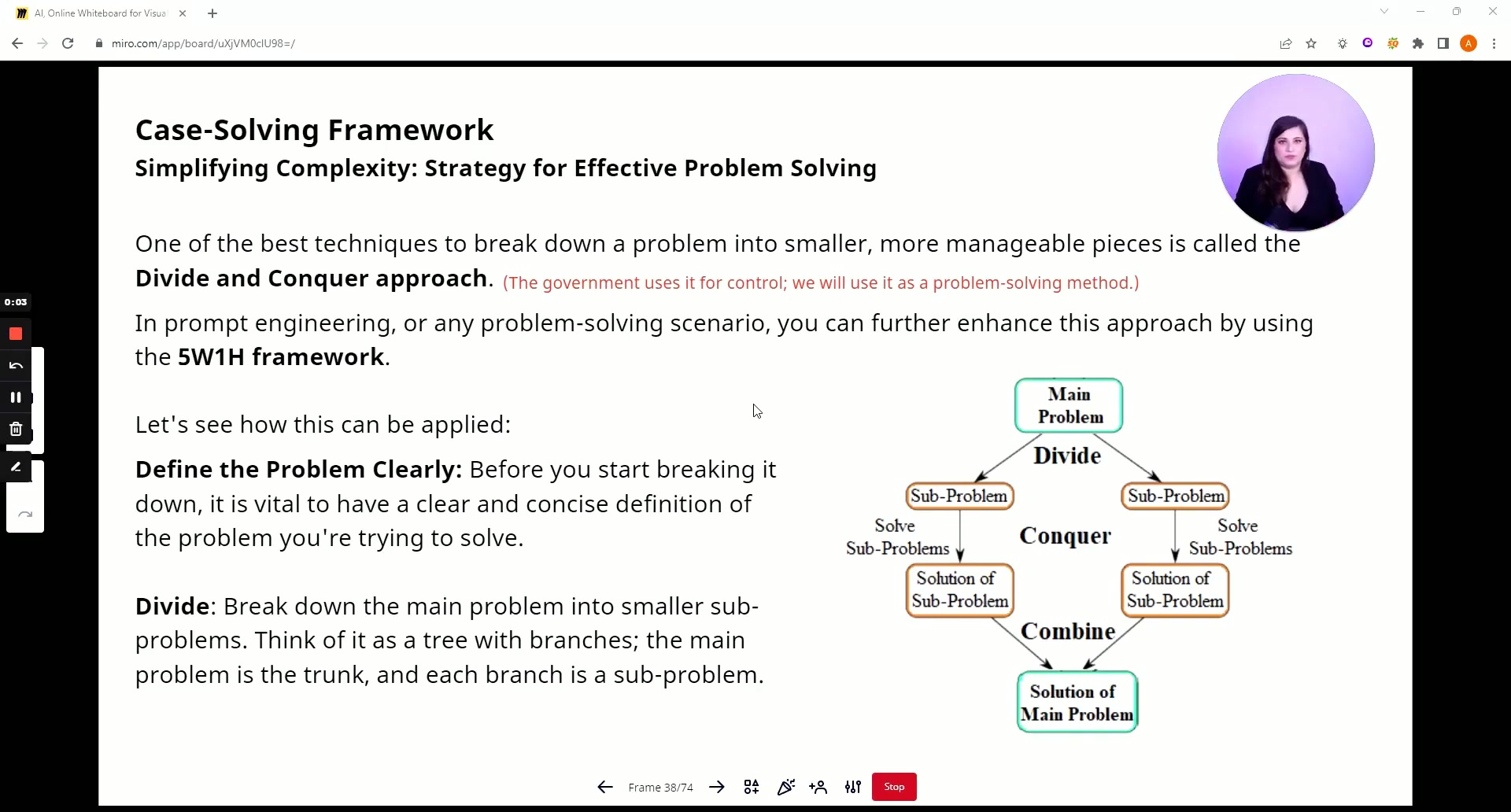
This enables you to formulate more effective prompts that yield the desired results.
The core principle behind the case-solving framework is the 'divide and conquer' approach. By breaking down a significant problem into smaller sub-problems, each sub-problem becomes easier to analyze and resolve. Once you’ve addressed each individual component, you can then combine the solutions to achieve a comprehensive resolution of the initial, larger problem. This approach not only makes the problem-solving process less overwhelming but also improves accuracy and efficiency.
This structured approach allows for better organization and focus, preventing important details from being overlooked. It is particularly useful in situations where the problem is multifaceted and complex, such as strategic planning, risk assessment, or large-scale Project Management. By using the case-solving framework, individuals and teams can work more effectively and ensure that all aspects of the problem are carefully considered and addressed.
The Divide and Conquer Approach: A Key Component
The divide and conquer approach is a central strategy within the case-solving framework.
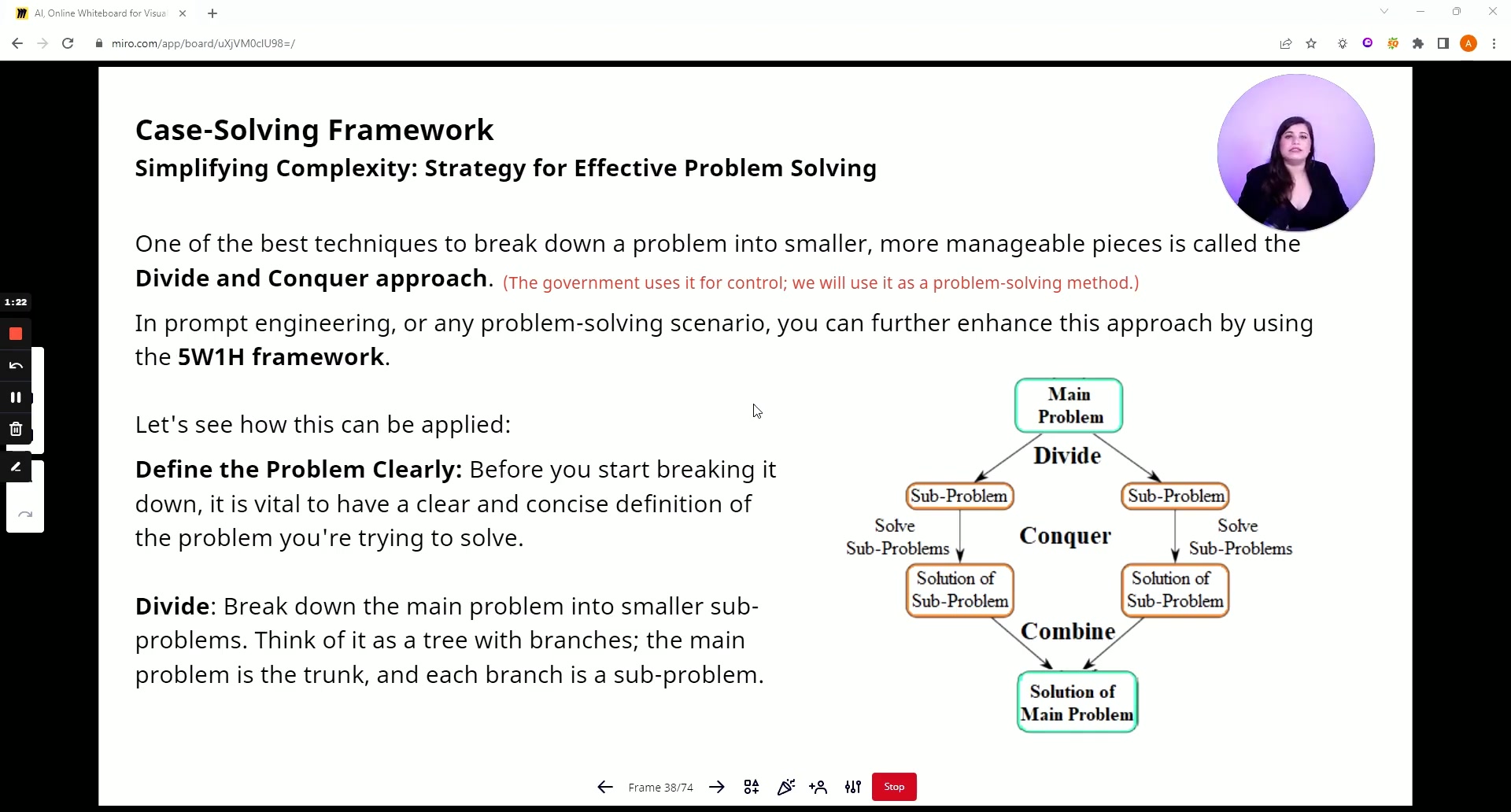
It involves breaking down a problem into smaller, more manageable parts, solving each part independently, and then combining the solutions to resolve the original problem. This approach is based on the idea that smaller, simpler problems are easier to understand and address effectively.
The process begins by identifying the main problem and dividing it into several sub-problems. Each sub-problem should be independent enough to be solved without needing to resolve other sub-problems first. This allows for parallel work, where different team members can focus on different aspects of the overall challenge. Once each sub-problem is solved, the individual solutions are integrated to create a comprehensive solution for the initial problem.
This approach has several advantages. It reduces the complexity of the problem, making it easier to understand and manage. It also allows for specialization, where individuals or teams can focus on areas where they have expertise. Additionally, it promotes flexibility, as changes or adjustments to one sub-problem have minimal impact on the other sub-problems.
The divide and conquer approach is widely used in computer science, algorithm design, and project management. It is particularly effective for problems that can be naturally divided into independent parts, such as sorting algorithms, data processing, and large-scale software development.
Real-World Applications of the Case-Solving Framework
Diverse Applications Across Industries
The case-solving framework, enhanced by the 5W1H technique, is not limited to prompt engineering.
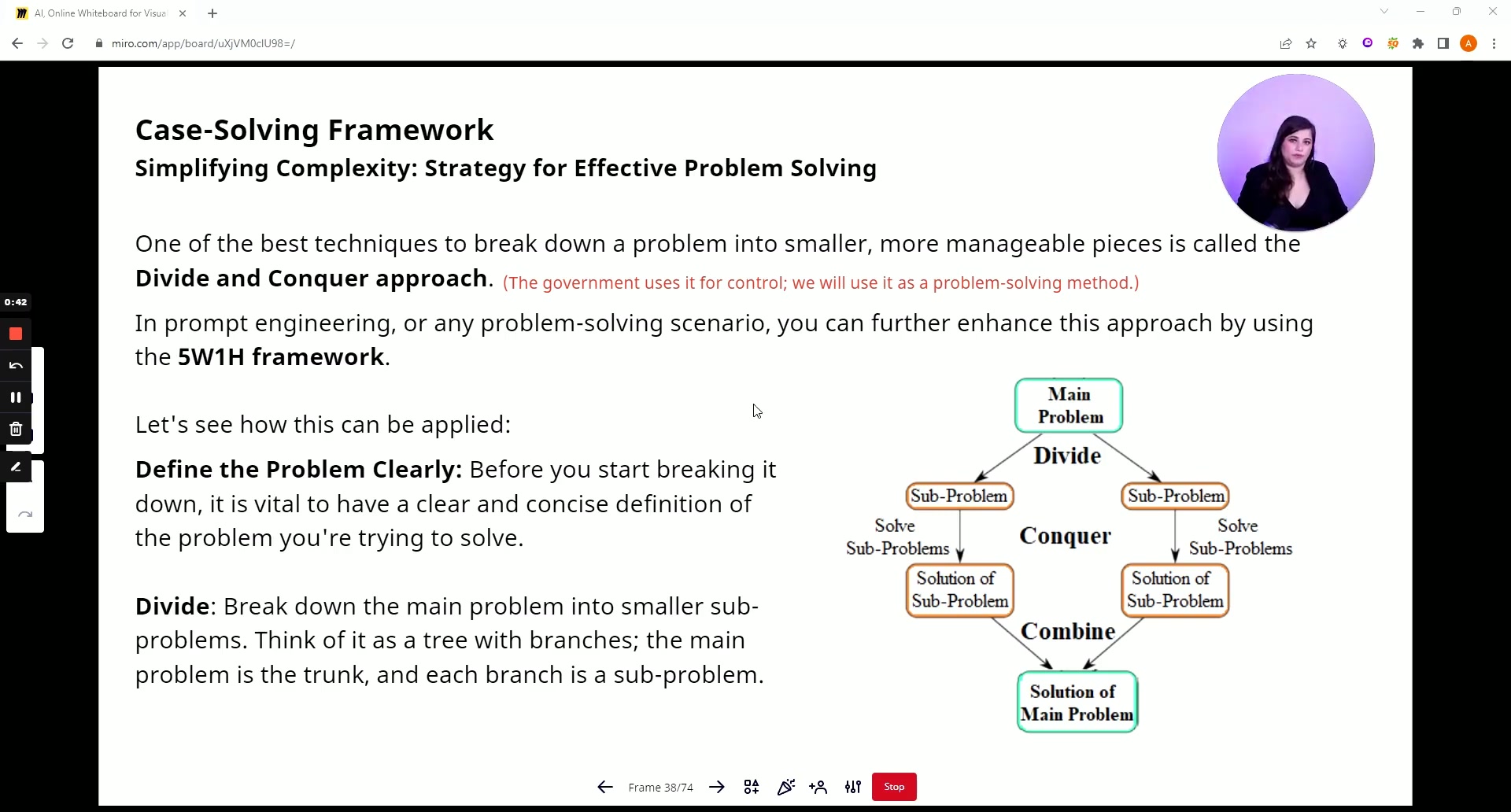
It can be applied to a wide range of tasks and industries, including:
- Marketing: Defining target audiences (Who), identifying key messages (What), planning campaign timelines (When), targeting specific regions (Where), understanding customer motivations (Why), and implementing marketing strategies (How).
- Managing Office Tasks: Assigning responsibilities (Who), prioritizing tasks (What), setting deadlines (When), organizing workspace (Where), understanding task objectives (Why), and streamlining workflows (How).
- Defending Clients in Court: Identifying the client and opposing party (Who), defining the legal issue (What), establishing the timeline of events (When), determining the jurisdiction (Where), understanding the legal basis of the claims (Why), and developing a defense strategy (How).
- Challenging Opposite Counsel: Understanding the opposing counsel's arguments (What), identifying weaknesses in their case (Why), determining the appropriate legal venue (Where), considering the timing of legal actions (When), identifying key players (Who), and formulating counter-arguments (How).
- Immigration Cases: Identifying the applicant and relevant parties (Who), defining the immigration issue (What), understanding the relevant deadlines (When), determining the jurisdiction (Where), understanding the legal basis for the application (Why), and preparing the application (How).
These examples illustrate the versatility of the case-solving framework. By adapting the 5W1H questions to the specific context of each task, you can gain a comprehensive understanding of the situation and develop effective solutions.
Example: Solving a Marketing Challenge with 5W1H
Let's consider a practical example of how the case-solving framework can be applied to solve a marketing challenge. Suppose a company is experiencing declining sales for a particular product. Here’s how to use the 5W1H framework to define and address the problem:
- Who: Identify the target audience (e.g., young adults aged 18-25) and key stakeholders (e.g., marketing team, sales team, product managers).
- What: Define the specific problem (e.g., declining sales of Product X) and desired outcome (e.g., increase sales by 15% in the next quarter).
- When: Establish the timeline (e.g., sales decline started three months ago, campaign launch in one month, results expected in three months).
- Where: Determine the geographic region (e.g., North America) and channels (e.g., social media, online Advertising, retail stores) where the problem is most prevalent.
- Why: Understand the underlying causes (e.g., increased competition, changing consumer preferences, ineffective marketing campaigns). Analyze why the product is not resonating with the target audience.
- How: Explore potential solutions (e.g., develop a new marketing campaign, adjust pricing, improve product features). Determine how to reach the target audience effectively and measure the campaign's success.
By systematically answering these questions, the company can gain a comprehensive understanding of the marketing challenge and develop targeted strategies to address the declining sales. This approach ensures that all relevant factors are considered, leading to more effective and sustainable solutions.
Step-by-Step Guide: Implementing the Framework
Step 1: Define the Problem Clearly
The first step in implementing the case-solving framework is to define the problem clearly.
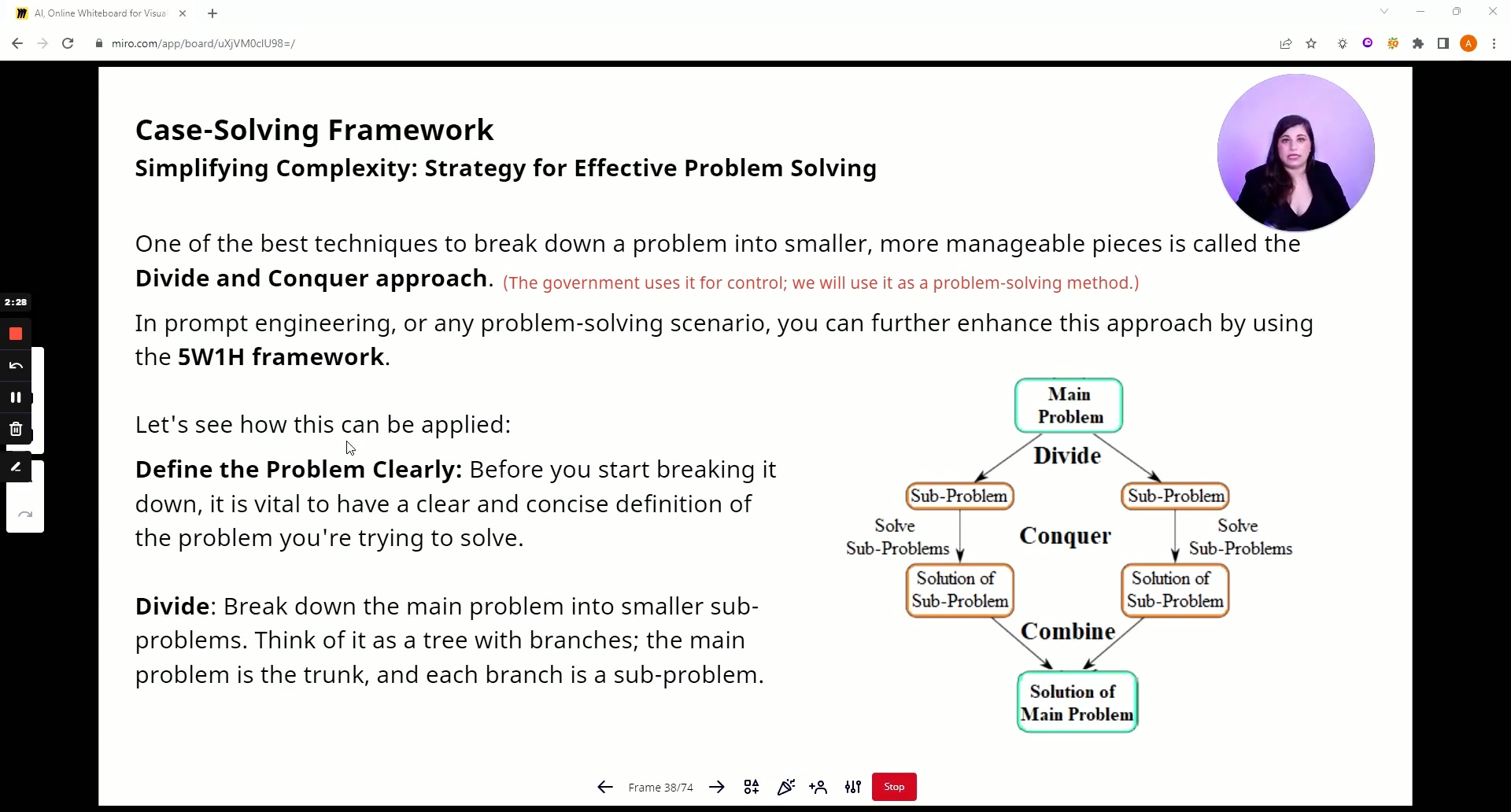
This involves articulating the issue in a concise and unambiguous manner. A well-defined problem serves as the foundation for all subsequent steps, ensuring that the problem-solving efforts are focused and effective.
To define the problem clearly:
- Identify the core issue: What is the central problem that needs to be addressed?
- Specify the symptoms: What are the observable signs that indicate the presence of the problem?
- Determine the scope: What are the boundaries of the problem? What is included and excluded?
- Establish the objectives: What are the desired outcomes of solving the problem?
For example, instead of stating the problem as 'low sales,' a clearer definition might be 'a 20% decrease in sales of Product X in the North American market over the past three months, resulting in reduced revenue and market share. The objective is to increase sales by 15% in the next quarter through targeted marketing campaigns and improved product features.'
A well-defined problem provides a clear direction for problem-solving efforts, preventing confusion and wasted resources. It also allows for easier communication and collaboration among team members.
Step 2: Divide the Problem into Sub-Problems
Once the problem is clearly defined, the next step is to divide it into smaller, more manageable sub-problems. This allows you to approach the problem in a structured way, breaking it down into components that are easier to analyze and address individually.
To divide the problem effectively:
- Identify the key components: What are the main parts or aspects of the problem?
- Break down each component: Can each component be further divided into smaller sub-problems?
- Ensure independence: Are the sub-problems independent enough to be solved separately?
- Prioritize the sub-problems: Which sub-problems are most critical to address first?
For example, if the main problem is 'declining sales of Product X,' the sub-problems might include:
- Ineffective marketing campaigns
- Increased competition
- Changing consumer preferences
- Pricing issues
- Product features not meeting customer needs
By breaking down the main problem into these sub-problems, you can focus on each area separately, identifying the root causes and developing targeted solutions. This approach makes the problem-solving process more manageable and efficient.
Step 3: Apply the 5W1H Framework to Each Sub-Problem
After dividing the problem into sub-problems, apply the 5W1H framework to each sub-problem to gather comprehensive information and insights. This will help you understand the underlying causes and identify potential solutions.
For each sub-problem, ask the following questions:
- Who: Who is involved in this sub-problem? Who is affected by it? Who has the expertise to solve it?
- What: What is the specific issue within this sub-problem? What are the key components?
- When: When did this sub-problem start? When does it need to be resolved? Are there any deadlines?
- Where: Where is this sub-problem occurring? What are the relevant environmental factors?
- Why: Why is this sub-problem happening? What are the underlying causes?
- How: How can this sub-problem be resolved? What resources are needed? What steps need to be taken?
For example, consider the sub-problem 'Ineffective marketing campaigns.' Applying the 5W1H framework might reveal that:
- The target audience is not clearly defined (Who).
- The key messages are not resonating with the audience (What).
- The campaign is not reaching the target audience effectively (Where).
- The budget is not allocated efficiently (How).
By thoroughly answering these questions for each sub-problem, you can gain a deep understanding of the issues and develop targeted solutions.
Step 4: Develop and Implement Solutions
Based on the insights gained from the 5W1H analysis, develop and implement solutions for each sub-problem. This involves identifying potential strategies, allocating resources, and taking action to address the issues. It's crucial to define metrics to allow you to measure progress
To develop and implement solutions effectively:
- Brainstorm potential solutions: What are the possible ways to address each sub-problem?
- Evaluate the solutions: Which solutions are most feasible, effective, and sustainable?
- Develop an action plan: What steps need to be taken to implement the solutions?
- Allocate resources: What resources are needed to implement the solutions (e.g., budget, personnel, technology)?
- Monitor progress: How will you track the progress of the solutions? What metrics will you use to measure success?
For example, to address the sub-problem 'Ineffective marketing campaigns,' the solutions might include:
- Conducting market research to better understand the target audience.
- Developing new key messages that resonate with the audience.
- Optimizing the campaign channels to reach the target audience effectively.
- Allocating the budget more efficiently based on performance data.
By implementing these solutions and monitoring their progress, you can address each sub-problem and move towards resolving the main problem.
Step 5: Combine the Solutions and Evaluate the Results
Once you have implemented solutions for each sub-problem, the final step is to combine the solutions and evaluate the results. This involves integrating the individual solutions to create a comprehensive approach to resolving the main problem.
To combine the solutions and evaluate the results effectively:
- Integrate the solutions: How do the individual solutions work together to address the main problem?
- Evaluate the results: Did the solutions achieve the desired outcomes? What was the impact on the main problem?
- Identify lessons learned: What did you learn from the problem-solving process? What could be done differently in the future?
- Adjust the approach: Based on the evaluation, are any adjustments needed to the solutions or the overall approach?
For example, after implementing solutions for the marketing campaign, competition, and consumer preference, evaluate the overall sales performance and ensure the targets you established have been met. Refine strategies where needed.
By combining the solutions and evaluating the results, you can ensure that the main problem is effectively resolved and learn valuable lessons for future problem-solving efforts.





Most people like





































Report
Please select a reason for reporting
- 13 Reasons to Switch from Snapchat to Text Messaging
- 7 Powerful Speech to Text Apps to Boost Productivity
- 10 Best Speech to Text Tools for Effortless Transcription
- 13 Free Tools to Easily Transcribe Audio to Text
- 15 Surprising Ways Google's Speech-to-Text Boosts Productivity
- 7 Best Free Online Audio to Text Transcription Tools
- 9 Tips to Transcribe Speech to Text Faster and Better
- 13 Best Speech to Text Software for Windows 10 in 2023
- 7 Tips for Choosing the Best Transcriber for Audio to Text
- 11 Reasons Why Dragon Speech-to-Text Apps are Game-Changers
- 6 Secrets to Enhance Your Speech to Text Transcription
- 6 Brilliant Ways to Boost Productivity with Talk-to-Text on Your MacBook
- 6 Ways Transcription Software Converts Audio to Text
- 8 Tips to Transcribe Speech to Text Like a Pro
- 6 Reasons IBM Watson Speech to Text is a Game-Changer
- 14 Powerful Ways Talk-to-Text Improves Your Workflow
- 12 Top Windows Speech-to-Text Software for Efficient Transcription
- 12 Game-Changing Benefits of Apple's Speech to Text Technology
- 9 Powerful Use Cases for AWS Speech to Text Technology
- 10 Easy Steps to Transcribe YouTube Videos to Text
- transcription audio en texte
- online audio transcription
- free audio file transcription
- free ai audio transcription
- audio transcription service
- audio transcription online free
- audio transcription free online
- audio to transcription software
- audio and transcript
- ai audio transcription free
- voice recording to text converter
- translate voice recording to text
- record voice to text
- audio recording to text converter
- voice recording and transcription
- chatgpt voice to text
- gmail voice to text
- speech to text reader
- speech to text ai free
- speech to talk
- Meshy AI: How to Create 3D Models from Text and Images
- How SEO and Marketing Dashboards Empower Agencies to Drive Results
- How to Use AI Tools to Find Internal Linking Opportunities Across a Business Website
- Discover Your Perfect Haircut with AI Hairstyle Apps
- Free Reputation Calculator Tools: How They're Adapting to Score AI Visibility, Not Just Rankings
- Design Professional Flyers for Free on Your Phone
- Best Free Flyer Maker Apps for Android: Design Like a Pro
- How to Know If Your Business Is Ready for an AI Customer Service Agent
- Revolutionizing Storytelling: From Novels to Screenplays with AI
- Create Engaging Animated Explainer Videos with a Free AI Tool
- Meshy AI: How to Create 3D Models from Text and Images
- ASOMobile Helps Teams Benchmark App Store Screenshots Against Competitors
- How to Match LMS Software With Your Organization's Training Plan
- Revolutionizing Email Marketing Agency with AI
- How to Convert BTC to HNT
- Unleashing the Power of AI: Cognizant's Roadmap for Transformation
- Frame to Video Review: A Practical Look at Turning Two Still Frames Into Motion
- NVIDIA NIM: Revolutionizing Supply Chain Data Analysis with AI
- Top AI Tools That Help Brands Stand Out Offline (Not Just Online)
- Top 5 Cold Email Software: Maximize Your Outreach in 2025

Copyright ©2026 toolify