























EfficientVIT: Revolutionizing High-Resolution Computer Vision with AI

Updated on Nov 13,2025








Table of Contents
- Key Points
- Understanding the Need for Speed in Computer Vision
- EfficientVIT: The Breakthrough
- Steps of Semantic Segmentation
- EfficientVIT: Weighing the Advantages and Disadvantages
- Use Cases of EfficientVIT
- Frequently Asked Questions about EfficientVIT
- Related Questions on High-Resolution Computer Vision


Understanding the Need for Speed in Computer Vision
What is High-Resolution Computer Vision?
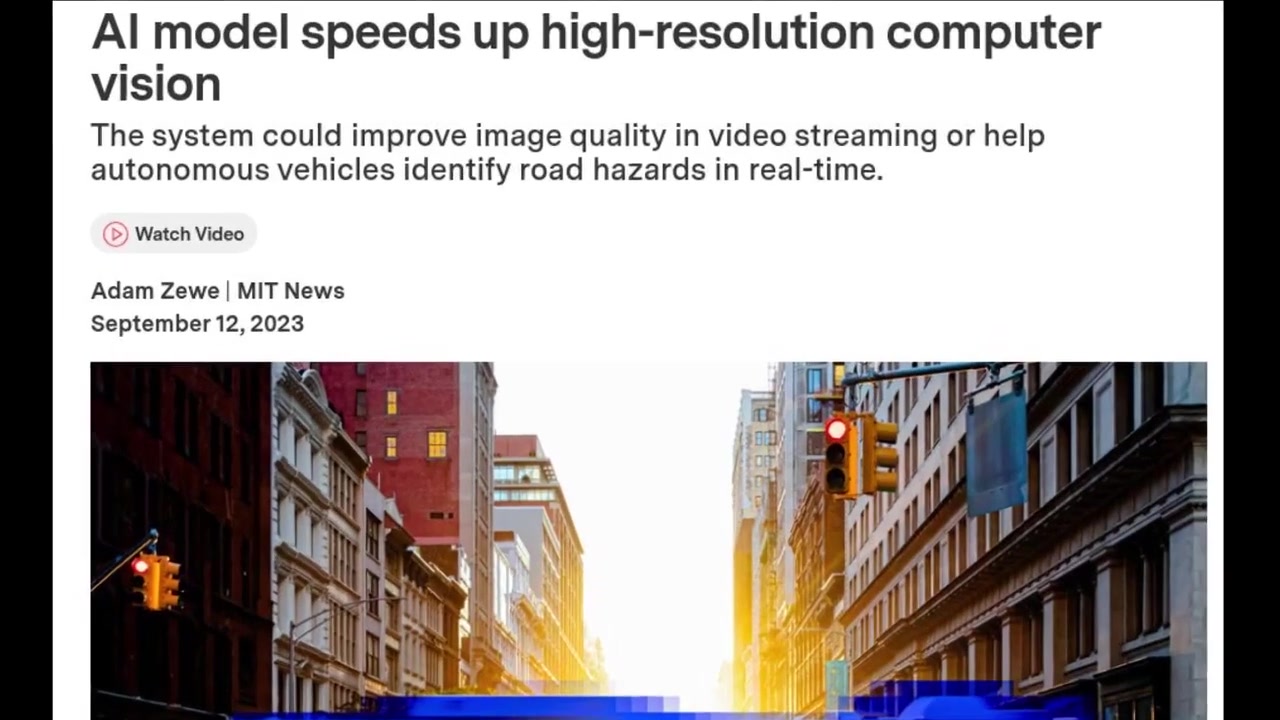
High-resolution computer vision involves processing images with a large number of pixels, allowing for greater detail and accuracy in object recognition and scene understanding. This level of detail is crucial in various applications, particularly where safety and precision are paramount. For example, in autonomous driving, the ability to identify road hazards, traffic signals, and pedestrians with high accuracy can be the difference between a safe journey and a catastrophic accident.
Similarly, in medical imaging, high-resolution analysis can aid in the early detection of subtle anomalies, improving diagnostic accuracy and patient outcomes.
However, the computational demands of processing high-resolution images are substantial. Traditional computer vision models often require significant processing power and time, making them impractical for real-time applications. This is where EfficientVIT steps in to bridge the gap, offering a solution that maintains high accuracy while drastically reducing computational complexity.
The Challenge of Semantic Segmentation
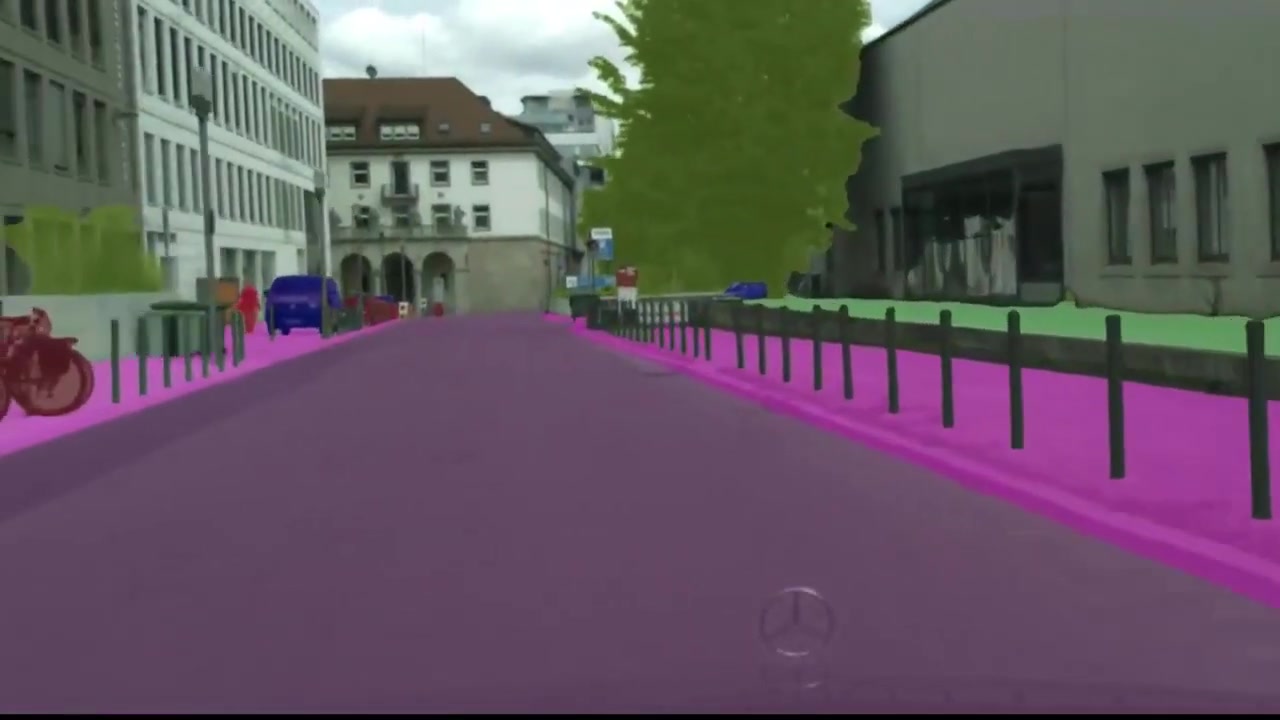
Semantic segmentation is a core technique in computer vision that involves categorizing every pixel in an image, assigning it to a specific object or class. This detailed analysis allows machines to understand the content of an image at a granular level, distinguishing between different elements in a scene. For instance, in an urban environment, semantic segmentation can differentiate between roads, sidewalks, buildings, and vehicles, providing a comprehensive understanding of the surroundings.

The challenge lies in the computational intensity of semantic segmentation, especially with high-resolution images. The need to analyze and classify each pixel individually requires significant processing power, making it a bottleneck for real-time applications. Existing state-of-the-art models often struggle to achieve the necessary speed and efficiency, limiting their practicality in resource-constrained environments. EfficientVIT addresses this challenge by introducing a more efficient approach to semantic segmentation, enabling faster processing without sacrificing accuracy.
EfficientVIT: The Breakthrough
The EfficientVIT Model Architecture
EfficientVIT introduces a Novel approach to computer vision that significantly reduces computational demands. Unlike traditional models that may use quadratic computational complexity, EfficientVIT employs a linear approach. This means that the processing power required increases linearly with the size of the image, rather than exponentially, allowing for much faster processing of high-resolution images.
The MIT researchers designed a new building block for semantic segmentation models that achieves the same abilities as state-of-the-art models, but with only linear computational complexity and hardware-efficient operations. This was achieved by utilizing a vision transformer model, which initially chops images into patches of pixels, and encodes each small patch into a token, before generating an attention map.
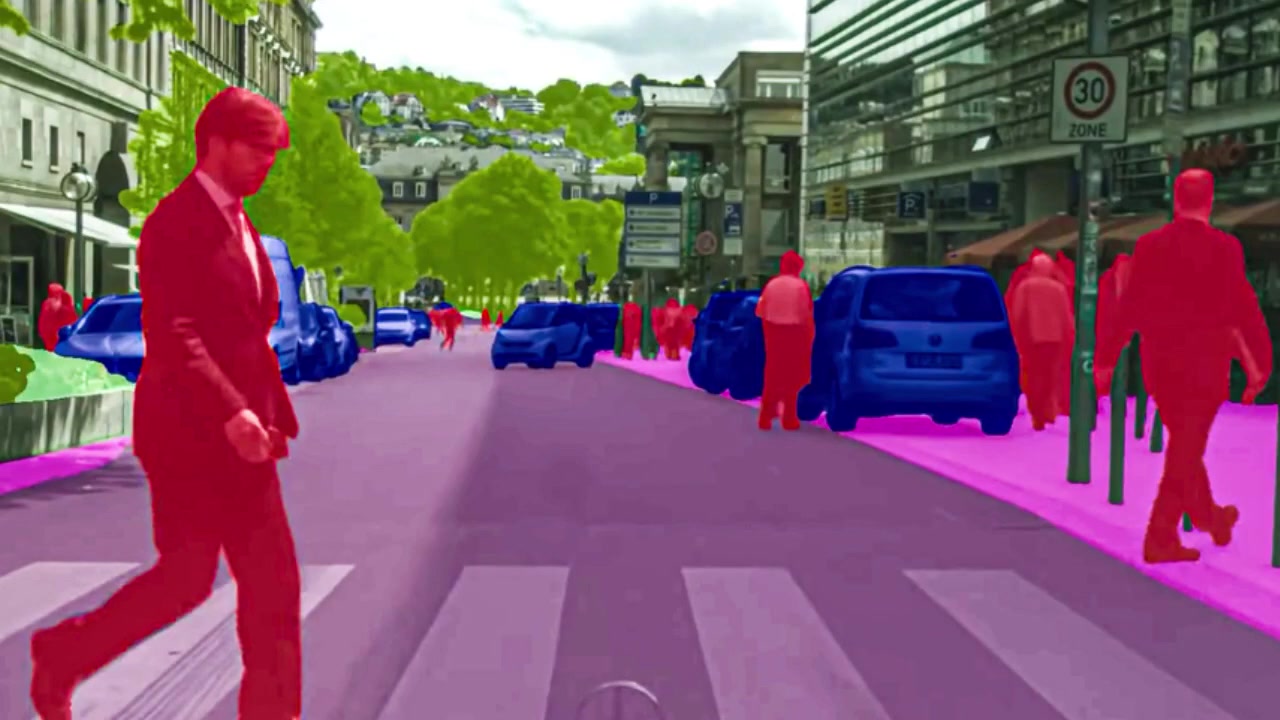
The attention map is an effective way to learn the interaction between each pair of pixels in the image.
Moreover, EfficientVIT is designed with a hardware-friendly architecture, making it suitable for deployment on devices with limited resources, such as onboard computers in autonomous vehicles or mobile devices. This is crucial for enabling real-time processing in environments where computational resources are constrained.
By combining these innovative techniques, EfficientVIT achieves a significant breakthrough in high-resolution computer vision, making it more practical and accessible for a wide range of applications.
Overcoming Accuracy Challenges
While reducing computational complexity is essential for speed, it is equally important to maintain accuracy in object recognition. The researchers at MIT addressed this challenge by incorporating two extra components into the EfficientVIT model:
- Local Feature Interactions: The first component helps the model capture local feature interactions, mitigating the linear function's weakness in local information extraction. This ensures that the model can accurately recognize small details and nuances in the image.
- Multi-Scale Learning: The second component enables multi-scale learning, allowing the model to recognize both large and small objects effectively. This is crucial for achieving a comprehensive understanding of the scene, capturing details that might otherwise be missed.
These components work together to compensate for any potential accuracy loss due to the linear computational approach, ensuring that EfficientVIT maintains a high level of precision in its analysis.
Results and Performance
When tested on datasets used for semantic segmentation, the EfficientVIT model performed up to nine times faster on an NVIDIA graphics processing unit (GPU) than other popular vision transformer models, with the same or better accuracy. These results demonstrate the practical benefits of EfficientVIT, showcasing its ability to accelerate high-resolution computer vision without sacrificing precision.

The efficiency gains make it a viable solution for real-time applications, such as autonomous driving and video streaming, where speed and accuracy are equally critical.
The EfficientVIT model, furthermore, offers better energy efficiency, an important consideration for edge computing devices such as sensors or mobile phones. Lower energy consumption translates to longer battery life and reduced operational costs, making it an attractive solution for a variety of resource-constrained applications.








Most people like































Report
Please select a reason for reporting
- 13 Reasons to Switch from Snapchat to Text Messaging
- 7 Powerful Speech to Text Apps to Boost Productivity
- 10 Best Speech to Text Tools for Effortless Transcription
- 13 Free Tools to Easily Transcribe Audio to Text
- 15 Surprising Ways Google's Speech-to-Text Boosts Productivity
- 7 Best Free Online Audio to Text Transcription Tools
- 9 Tips to Transcribe Speech to Text Faster and Better
- 13 Best Speech to Text Software for Windows 10 in 2023
- 7 Tips for Choosing the Best Transcriber for Audio to Text
- 11 Reasons Why Dragon Speech-to-Text Apps are Game-Changers
- 6 Secrets to Enhance Your Speech to Text Transcription
- 6 Brilliant Ways to Boost Productivity with Talk-to-Text on Your MacBook
- 6 Ways Transcription Software Converts Audio to Text
- 8 Tips to Transcribe Speech to Text Like a Pro
- 6 Reasons IBM Watson Speech to Text is a Game-Changer
- 14 Powerful Ways Talk-to-Text Improves Your Workflow
- 12 Top Windows Speech-to-Text Software for Efficient Transcription
- 12 Game-Changing Benefits of Apple's Speech to Text Technology
- 9 Powerful Use Cases for AWS Speech to Text Technology
- 10 Easy Steps to Transcribe YouTube Videos to Text
- transcription audio en texte
- online audio transcription
- free audio file transcription
- free ai audio transcription
- audio transcription service
- audio transcription online free
- audio transcription free online
- audio to transcription software
- audio and transcript
- ai audio transcription free
- voice recording to text converter
- translate voice recording to text
- record voice to text
- audio recording to text converter
- voice recording and transcription
- chatgpt voice to text
- gmail voice to text
- speech to text reader
- speech to text ai free
- speech to talk
- Revolutionizing Storytelling: From Novels to Screenplays with AI
- Create Engaging Animated Explainer Videos with a Free AI Tool
- Stop Multi-Subscribing: Benchmark Top AI Visual Models in One Canvas
- Best Seedance 2.5 API Provider: Every Price on the Market, Checked at Source
- AI OnlyFans: How to Generate $30,000/Month (Legally)
- Transform Your Script into an Engaging Video with AI Video Maker!
- AI Marketing Automation: A Comprehensive Guide for Small Businesses
- Midjourney Alternative for Anime Art Creators: Why PixAI May Be Better for Character Workflows
- 10 Things Most People Get Wrong About AI Image Search
- AI Girlfriend Apps: Top Choices Redefining Relationships 2025
- Experience the Future of Virtual Assistants with F.R.I.D.A.Y. AI
- Learn How to Train an AI to Play Snake with Reinforcement Learning
- Creating a Unique AI Game Environment with Pygame
- Mastering the Classic Java Snake Game
- Discover the Power of Codex: Snake Game Created in Python
- Building an AI to Master Snake Game
- Revolutionize the Classic Snake Game with AI
- Websim AI: Create Games and Apps with Just a Few Prompts
- Reviving Childhood Memories: Snake Game Enhanced with AI
- Unleashing the Power of AI in the Snake Game

Copyright ©2026 toolify