































Table of Contents
- Key Points
- The Challenge of Converting Handwritten Notes
- Introducing AI-Powered Text Conversion
- Step-by-Step Guide: Converting Handwritten Notes with ChatGPT
- Pros and Cons of Using ChatGPT for Text Conversion
- Frequently Asked Questions
- Related Questions



The Challenge of Converting Handwritten Notes
Why Digital Conversion Matters
In today's digital age, converting handwritten notes into text format is essential for numerous reasons. Digital text is easily searchable, editable, and shareable, making it a more efficient way to manage and utilize information. The ability to quickly transform handwritten notes into digital text streamlines workflows and boosts productivity significantly. This is especially beneficial for students, professionals, and anyone who frequently takes notes by HAND.
Converting your notes can improve organization and accessibility. Imagine having all your important thoughts, ideas, and meeting notes neatly organized in a digital format that you can access from anywhere. No more sifting through piles of paper! Instead, you can quickly find the information you need with a simple search.
Moreover, digital text is far more versatile. You can easily copy and paste it into documents, emails, or presentations. You can edit, reformat, and integrate it with other digital tools. This level of flexibility is simply not possible with traditional handwritten notes.
For these reasons, finding an efficient and accurate way to convert Handwriting to text is a valuable skill in today's digital landscape. It bridges the gap between traditional note-taking and modern information management, allowing you to maximize the benefits of both.
The Traditional Typing Method: Time-Consuming and Laborious
The traditional method of converting handwritten notes involves manually typing them into a computer.
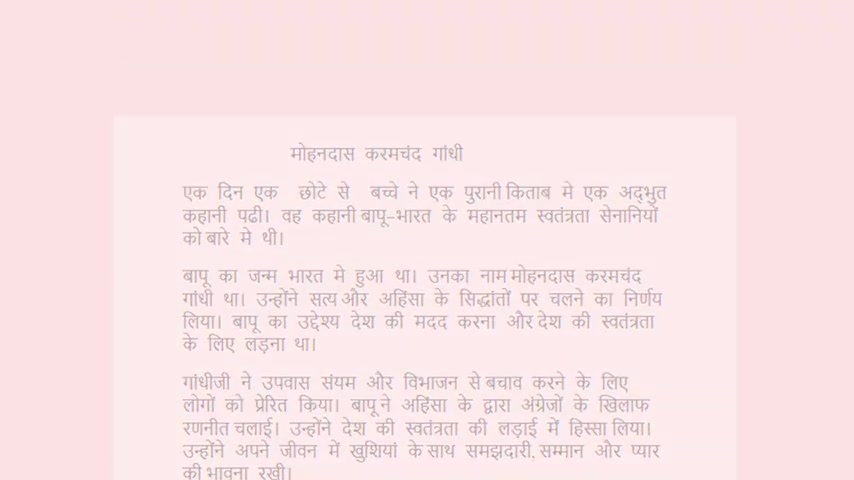
While this approach is straightforward, it is often time-consuming and laborious. For individuals with large volumes of notes, this process can be incredibly daunting, leading to delays and reduced productivity.
Typing out notes can take hours, especially if your handwriting isn't perfectly clear. This is time that could be better spent on more important tasks. Moreover, the repetitive nature of typing can lead to fatigue and errors, further impacting efficiency. While skilled typists may be more efficient, the process is still significantly slower compared to automated conversion methods.
Moreover, manual typing doesn't offer any additional benefits beyond simply transcribing the text. There's no opportunity to automatically organize, tag, or analyze the information in your notes. This limits the value you can derive from the conversion process.
The need for a better solution is clear. Traditional typing is simply not an efficient or effective way to convert handwritten notes into digital text in today's fast-paced world. The next-generation tool is needed and has arrived.
Introducing AI-Powered Text Conversion
Leveraging ChatGPT for Handwriting Recognition
Fortunately, advancements in artificial intelligence (AI) have paved the way for more efficient and accurate methods of converting handwritten notes into digital text. One of the most promising approaches involves leveraging AI-powered language models like ChatGPT.

These models are trained on vast datasets of text and images, enabling them to recognize and interpret handwriting with remarkable accuracy.
ChatGPT, in particular, is well-suited for this task due to its advanced natural language processing capabilities. It can understand the context of your notes, correct errors, and even suggest improvements to the text. This level of intelligence goes far beyond simple optical character recognition (OCR) software, which often struggles with handwriting.
The process is surprisingly simple. You can upload an image of your handwritten notes to ChatGPT and instruct it to convert the text. The model will analyze the image, identify the characters, and generate a digital version of your notes in seconds. This can save you hours of tedious typing and dramatically improve your productivity.
With AI-powered text conversion, handwritten notes become a valuable asset that can be easily integrated into your digital workflow. You can search, edit, share, and analyze your notes with ease, unlocking new levels of efficiency and insight.
Step-by-Step Guide: Converting Handwritten Notes with ChatGPT
Capturing Your Handwritten Notes
The first step in converting your handwritten notes is to capture a clear image of them.

This can be done using your mobile phone's camera or a scanner. Ensure the image is well-lit and the handwriting is legible. Cropping the image to focus solely on the notes can also improve accuracy.
If using a mobile phone, make sure the camera lens is clean and the image is taken from a stable position to avoid blurriness. Scanning is often preferable as it provides a higher resolution and Clarity, but a good quality phone camera can also yield excellent results.
For best results, take the photo or scan in a well-lit environment with minimal shadows. This will help ChatGPT accurately recognize the characters in your notes.
Transferring the Image to Your Computer
Once you have captured the image of your handwritten notes, the next step is to transfer it to your computer. There are several ways to do this, depending on your preference and available tools:
- WhatsApp: You can send the image to yourself via WhatsApp Web and download it on your computer.
This is a quick and convenient method if you already use WhatsApp on your computer.
- Pen Drive: Save the image to a pen drive and then transfer it to your computer. This method is useful if you don't have internet access or prefer a direct transfer.
- Data Cable: Connect your mobile phone to your computer using a data cable and transfer the image directly. This is a reliable method that ensures a stable connection.
Choose the method that best suits your needs and ensure the image is successfully transferred to your computer before proceeding to the next step.
Accessing ChatGPT
With the image on your computer, you now need to access ChatGPT.
This can be done through a web browser such as Chrome. Follow these steps:
- Open your Chrome browser.
- Type 'ChatGPT' in the Search Engine.
- Click on the official ChatGPT link to open the application.
If you already have ChatGPT downloaded, you can directly open the application. Otherwise, you'll need to log in using your Gmail ID. This is a straightforward process that takes only a few minutes. If you don't have an account, you can create one quickly.
Once logged in, you'll be ready to upload your image and start the conversion process.
Uploading the Image to ChatGPT
Once you have ChatGPT open, you need to upload the image of your handwritten notes. Follow these steps:
-
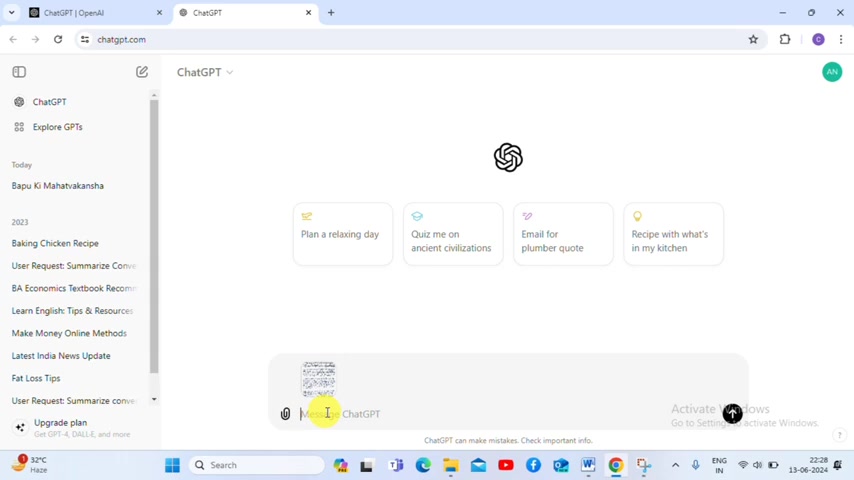
Locate the 'Insert Gallery' option at the bottom of the ChatGPT interface.
-
Click on the 'Insert Gallery' option.
-
Select 'Upload from Computer'.
-
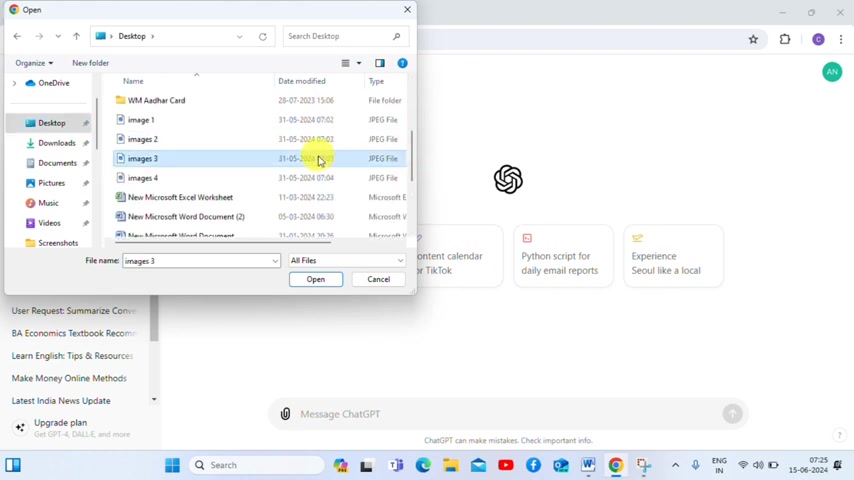
Choose the image from the location where you saved it on your computer.
-
Click 'Open' to upload the image.
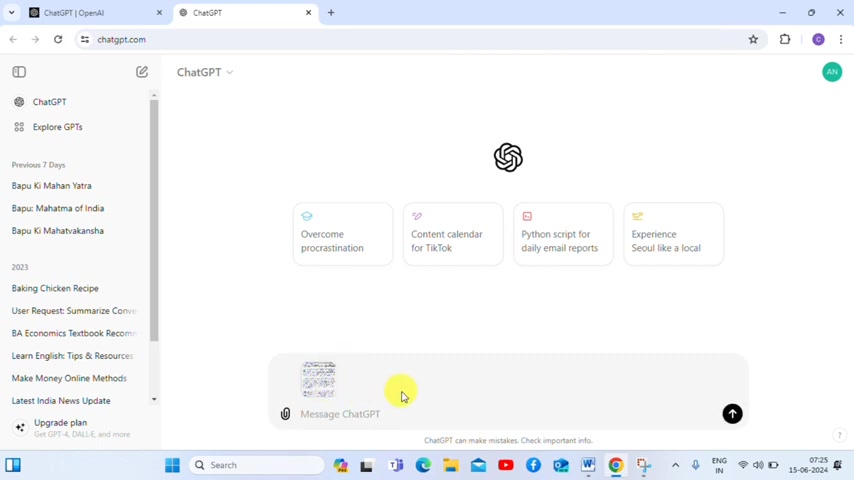
After uploading, the image will be displayed in the ChatGPT interface, ready for conversion.
Instructing ChatGPT to Convert the Image to Text
Now that the image is uploaded, you need to instruct ChatGPT to convert it to text.
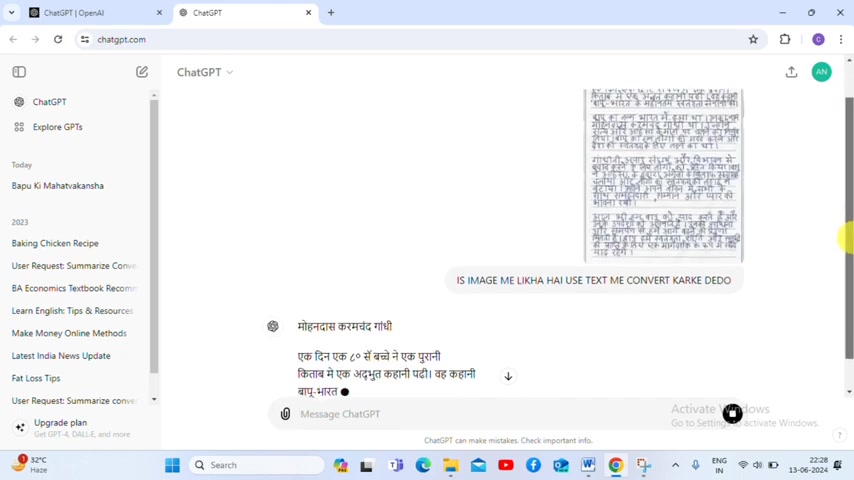
This is where clear and concise prompts are crucial. Here’s how you can do it:
- In the message box, type the following command: "Is image me likha Hai use text me convert karke dedo"
- Press Enter to send the command.
It’s essential to communicate effectively with ChatGPT. The better you Prompt, the more accurate the conversion will be. Here are some tips for writing effective prompts:
- Be specific: Clearly state what you want ChatGPT to do.
- Provide context: If necessary, provide additional information about the image or the content of the notes.
- Use clear language: Avoid jargon or ambiguous terms.
By following these tips, you can ensure that ChatGPT accurately converts your handwritten notes into digital text.
Copying and Pasting the Converted Text
After ChatGPT processes the image, it will generate the converted text in the chat window. The final step is to copy and paste this text into a document of your choice. Here's how to do it:
- Select all the text generated by ChatGPT.
- Copy the text (Ctrl+C or right-click and select 'Copy').
- Open a blank document in MS WORD or any text editor.
- Paste the text into the document (Ctrl+V or right-click and select 'Paste').
Once the text is pasted, you can edit, reformat, and save it as needed. This completes the process of converting your handwritten notes into digital text using ChatGPT.





Most people like







































Report
Please select a reason for reporting
- 13 Reasons to Switch from Snapchat to Text Messaging
- 7 Powerful Speech to Text Apps to Boost Productivity
- 10 Best Speech to Text Tools for Effortless Transcription
- 13 Free Tools to Easily Transcribe Audio to Text
- 15 Surprising Ways Google's Speech-to-Text Boosts Productivity
- 7 Best Free Online Audio to Text Transcription Tools
- 9 Tips to Transcribe Speech to Text Faster and Better
- 13 Best Speech to Text Software for Windows 10 in 2023
- 7 Tips for Choosing the Best Transcriber for Audio to Text
- 11 Reasons Why Dragon Speech-to-Text Apps are Game-Changers
- 6 Secrets to Enhance Your Speech to Text Transcription
- 6 Brilliant Ways to Boost Productivity with Talk-to-Text on Your MacBook
- 6 Ways Transcription Software Converts Audio to Text
- 8 Tips to Transcribe Speech to Text Like a Pro
- 6 Reasons IBM Watson Speech to Text is a Game-Changer
- 14 Powerful Ways Talk-to-Text Improves Your Workflow
- 12 Top Windows Speech-to-Text Software for Efficient Transcription
- 12 Game-Changing Benefits of Apple's Speech to Text Technology
- 9 Powerful Use Cases for AWS Speech to Text Technology
- 10 Easy Steps to Transcribe YouTube Videos to Text
- transcription audio en texte
- online audio transcription
- free audio file transcription
- free ai audio transcription
- audio transcription service
- audio transcription online free
- audio transcription free online
- audio to transcription software
- audio and transcript
- ai audio transcription free
- voice recording to text converter
- translate voice recording to text
- record voice to text
- audio recording to text converter
- voice recording and transcription
- chatgpt voice to text
- gmail voice to text
- speech to text reader
- speech to text ai free
- speech to talk
- How SEO and Marketing Dashboards Empower Agencies to Drive Results
- How to Use AI Tools to Find Internal Linking Opportunities Across a Business Website
- Discover Your Perfect Haircut with AI Hairstyle Apps
- Free Reputation Calculator Tools: How They're Adapting to Score AI Visibility, Not Just Rankings
- Design Professional Flyers for Free on Your Phone
- Best Free Flyer Maker Apps for Android: Design Like a Pro
- How to Know If Your Business Is Ready for an AI Customer Service Agent
- Revolutionizing Storytelling: From Novels to Screenplays with AI
- Create Engaging Animated Explainer Videos with a Free AI Tool
- Stop Multi-Subscribing: Benchmark Top AI Visual Models in One Canvas
- 7 Top AI-Powered Database Assistant Platforms
- An Objective Look at Modern Web-Based Visual Modifications
- My Honest Experience with VideoAI: The Secret Weapon for Creators Who Need Character Voices
- 5 Data Problems That Stall AI Projects in Financial Compliance
- The Future of Smart Glasses: Explained & Assembling Guide
- DeepL Translator: The AI-Powered Translation Tool
- AI Video Upscaling: Top Tools Compared for Enhanced Quality
- Bridging the Gap: How One Indie Developer Solved the "Art Asset Nightmare" Using AI Style Transfer
- How I Direct Consistent AI Clips: A Hands-On Guide to Multi-Model Generation
- My Honest Review of VideoAI: The Ultimate Character Voice Generator I've Been Using Lately

Copyright ©2026 toolify