






Table of Contents
- Key Points
- The Quest for True AI Understanding
- Understanding Enhanced Knowledge Graphs (UKS)
- Using Brain Simulator III to Build and Explore UKS
- Evaluating Enhanced Knowledge Graphs (UKS)
- Frequently Asked Questions
- Related Questions



The Quest for True AI Understanding
Current AI’s Lack of Fundamental Understanding
To truly elevate AI capabilities, systems must possess a deep, fundamental understanding of the world around them.

They need to grasp concepts such as object permanence, the understanding that objects continue to exist even when out of sight; three-dimensionality, the recognition of objects as existing in a three-dimensional space; the passage of time, the awareness of temporal flow and sequencing of events; and cause and effect, the comprehension of relationships between actions and their outcomes. These are basic things that a child knows.
Unfortunately, current AI often falls short in these areas. While they can process large amounts of data and identify Patterns, they lack the ability to reason and make inferences based on a comprehensive understanding of the world. This deficit Stems from the fact that many AI models, such as ANNs and LLMs, primarily focus on pattern recognition and statistical correlations. This leads to AI systems that can perform well on specific tasks but struggle with generalization and adaptation to new or unforeseen situations. AI needs knowledge and understanding for the future to truly be intelligent.
Limitations of Artificial Neural Networks (ANNs) and Large Language Models (LLMs)
Artificial Neural Networks (ANNs) and Large Language Models (LLMs) have achieved impressive results in various fields, they are not without limitations. ANNs, while Adept at tasks like Image Recognition, often treat data as isolated points without understanding the relationships between them. LLMs, capable of generating human-quality text, may lack the capacity to truly comprehend the meaning behind their words. That is why the solution is to look at how our brains are structured.
These approaches often struggle with tasks that require commonsense reasoning or the ability to make inferences based on contextual information. To overcome these limitations, it's necessary to explore alternative approaches that focus on explicitly representing and reasoning with knowledge.
Enhanced Knowledge Graphs: A New Paradigm for AI
Enhanced Knowledge Graphs (UKS) represent a significant leap forward in AI development.
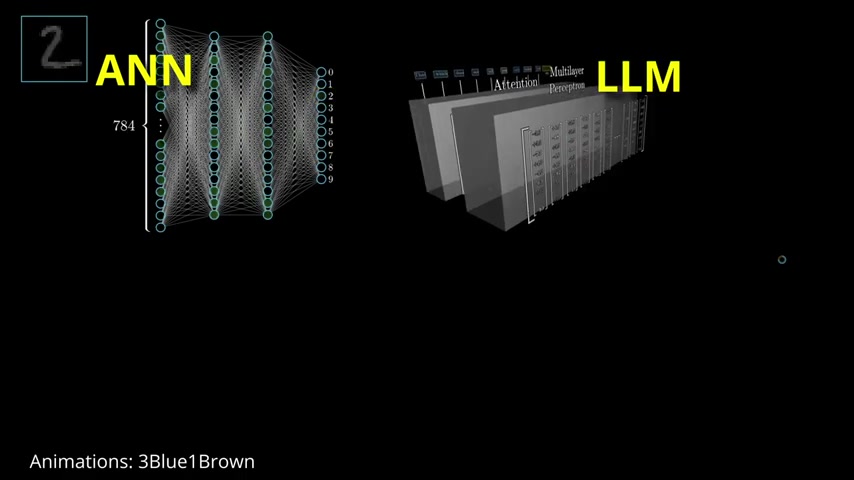
These graphs, built upon the principles of knowledge representation and reasoning, aim to provide AI systems with the structured knowledge they need to understand and interact with the real world. By encoding facts, concepts, and relationships in a graph format, UKS enable AI to perform tasks such as:
- Reasoning and Inference: Inferring new knowledge from existing facts and relationships
- Contextual Understanding: Interpreting information within its Relevant context
- Adaptive Learning: Adjusting behavior and knowledge based on new experiences
- Explainability: Providing transparency and justifications for decisions and actions
UKS offer a powerful framework for building AI systems that are more intelligent, adaptable, and capable of solving real-world problems. A Game changing approach to AI.
Understanding Enhanced Knowledge Graphs (UKS)
Graph-Based Knowledge Representation
The heart of UKS lies in its ability to represent knowledge in a graph format.
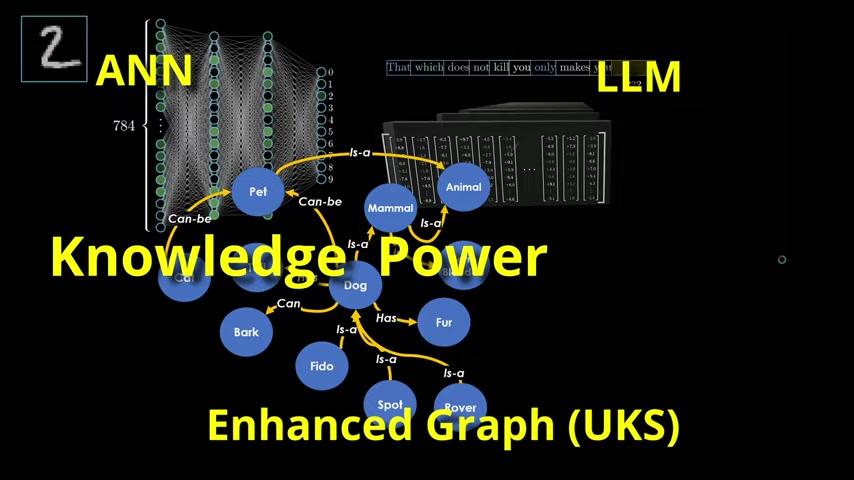
A graph consists of nodes (representing entities, concepts, or objects) and edges (representing relationships between nodes). This graph-based representation allows AI systems to navigate and understand complex relationships between different pieces of information.
In the context of UKS:
- Nodes: Known as "things", represent entities, concepts, or objects.
- Edges: Known as “relationships”, represent the connections between nodes.
For example, to represent the concept that "Fido is a dog," UKS would create a node for "Fido" and a node for "dog", then connect them with an edge representing the "is a" relationship. As knowledge becomes more complex, the graph expands to include more nodes and edges. Relationships in AI also are a node. Also unlike most knowledge graphs, it can infer relationships between things, something other methods can't achieve.
The Unique Universal Knowledge Store (UKS)
The universal knowledge store (UKS) within Brain Simulator III, like all graphs, is made up of nodes (known as 'things') connected by edges (known as 'relationships').
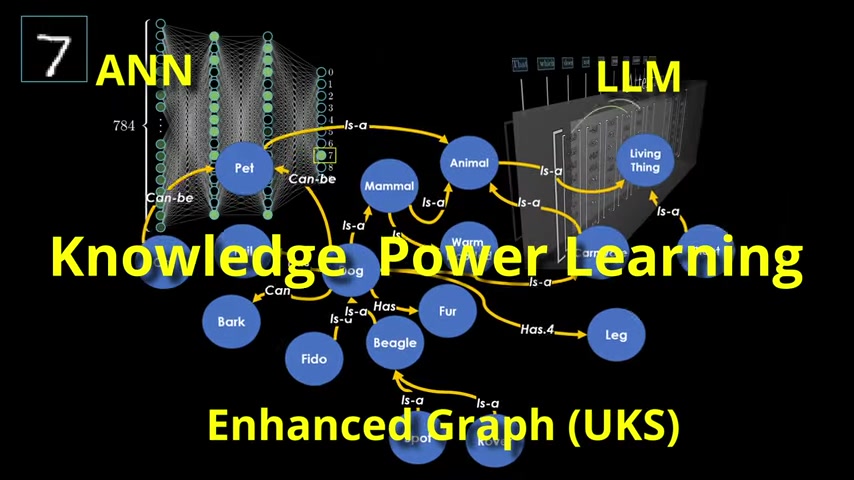
Charles states that this is how a real human brain stores information.
One of the defining characteristics of UKS is that relationships are also nodes. For example, rather than simply connecting “Fido” to “Dog” with an “is a” relationship, UKS creates a distinct “is a” node and connects both “Fido” and “Dog” to it.
This approach, as explained in the video, allows for a more nuanced and flexible representation of knowledge, enabling the system to capture subtle differences in relationships and make more accurate inferences.
In your own brain, we’d see that neurons don’t have these convenient labels. Meaning that we often assume that the relationships are already known even though they’re still a mystery to our brain and the ai.
Decoupling Words from Meanings: A Key to Unlocking AI Understanding
Traditional AI systems often treat words as synonymous with their meanings. This oversimplification can lead to inaccuracies, especially when dealing with words that have multiple interpretations or meanings.
Enhanced Knowledge Graphs, particularly the Universal Knowledge Store (UKS), address this issue by decoupling words from their underlying meanings. In the sound of 'Fido is a dog' can then be turned into things that represent those sounds.
The concept of decoupling words from meaning is so that AI systems do not get the meanings confused as it is likely for AI to have multiple meanings. It is important that the meaning of the data be interpreted correctly. For example the system will need to know which Fido or which Dog you are speaking about.
This enables UKS to represent and reason with knowledge at a more fundamental level, allowing it to handle ambiguity and understand the subtle nuances of human language. AI needs to understand words so the relationships can actually be created.
Inheritance and Exceptions: Mirroring Human Cognitive Flexibility
One of the most remarkable aspects of human cognition is our ability to learn general rules and then adapt them to specific situations.

Enhanced Knowledge Graphs aim to emulate this flexibility through the mechanisms of inheritance and exceptions. Just like all children learn new information, AI does too.
In UKS, “things” can inherit attributes and relationships from their ancestors in the graph hierarchy. However, UKS also allows for exceptions to these inherited rules. For example, we know in general that “birds can fly.” But this can be adapted, for the exception that a penguin is a bird that can not fly. Inheritance plus exceptions results in a powerful knowledge representation. This mechanism enables UKS to efficiently encode general knowledge while accommodating the variations and complexities of the real world.
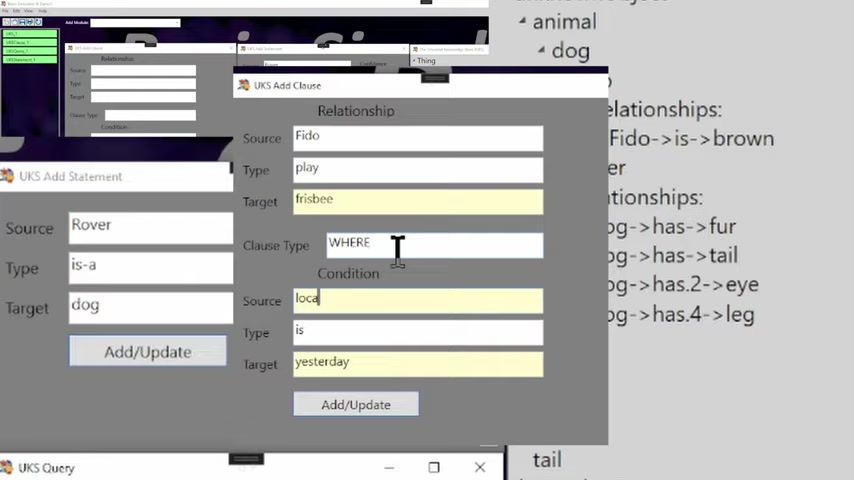
The role of clauses
Adding context requires clauses and having the AI know certain parameters that modify existing information. When a child sees something they don't have all the pieces and components, but they're still able to piece it together. It is the same for AI, there is still some information missing when the sentence first appears. This context can be added in three ways by either;
1.Adding a condition 2.What the day is 3.The location With all these new additions, the AI should now have a better understanding of the prompt.




Most people like


































Report
Please select a reason for reporting
- 13 Reasons to Switch from Snapchat to Text Messaging
- 7 Powerful Speech to Text Apps to Boost Productivity
- 10 Best Speech to Text Tools for Effortless Transcription
- 13 Free Tools to Easily Transcribe Audio to Text
- 15 Surprising Ways Google's Speech-to-Text Boosts Productivity
- 7 Best Free Online Audio to Text Transcription Tools
- 9 Tips to Transcribe Speech to Text Faster and Better
- 13 Best Speech to Text Software for Windows 10 in 2023
- 7 Tips for Choosing the Best Transcriber for Audio to Text
- 11 Reasons Why Dragon Speech-to-Text Apps are Game-Changers
- 6 Secrets to Enhance Your Speech to Text Transcription
- 6 Brilliant Ways to Boost Productivity with Talk-to-Text on Your MacBook
- 6 Ways Transcription Software Converts Audio to Text
- 8 Tips to Transcribe Speech to Text Like a Pro
- 6 Reasons IBM Watson Speech to Text is a Game-Changer
- 14 Powerful Ways Talk-to-Text Improves Your Workflow
- 12 Top Windows Speech-to-Text Software for Efficient Transcription
- 12 Game-Changing Benefits of Apple's Speech to Text Technology
- 9 Powerful Use Cases for AWS Speech to Text Technology
- 10 Easy Steps to Transcribe YouTube Videos to Text
- transcription audio en texte
- online audio transcription
- free audio file transcription
- free ai audio transcription
- audio transcription service
- audio transcription online free
- audio transcription free online
- audio to transcription software
- audio and transcript
- ai audio transcription free
- voice recording to text converter
- translate voice recording to text
- record voice to text
- audio recording to text converter
- voice recording and transcription
- chatgpt voice to text
- gmail voice to text
- speech to text reader
- speech to text ai free
- speech to talk
- Meshy AI: How to Create 3D Models from Text and Images
- How SEO and Marketing Dashboards Empower Agencies to Drive Results
- How to Use AI Tools to Find Internal Linking Opportunities Across a Business Website
- Discover Your Perfect Haircut with AI Hairstyle Apps
- Free Reputation Calculator Tools: How They're Adapting to Score AI Visibility, Not Just Rankings
- Design Professional Flyers for Free on Your Phone
- Best Free Flyer Maker Apps for Android: Design Like a Pro
- How to Know If Your Business Is Ready for an AI Customer Service Agent
- Revolutionizing Storytelling: From Novels to Screenplays with AI
- Create Engaging Animated Explainer Videos with a Free AI Tool
- Automate Lead Generation: A Comprehensive Guide with AI Agents
- Revideo.io: The Future of Reverse Video Search Technology
- Revolutionizing Email Marketing Agency with AI
- Breaking the Character Drift Dilemma: A Practical Test of Smart Shot
- Meshy AI: How to Create 3D Models from Text and Images
- ASOMobile Helps Teams Benchmark App Store Screenshots Against Competitors
- How to Match LMS Software With Your Organization's Training Plan
- How to Convert BTC to HNT
- Unleashing the Power of AI: Cognizant's Roadmap for Transformation
- Frame to Video Review: A Practical Look at Turning Two Still Frames Into Motion

Copyright ©2026 toolify