































Table of Contents
- Key Points
- Understanding Knowledge Augmented Generation (KAG)
- How to Use Knowledge Augmented Generation (KAG)
- Open Source Availability of Knowledge Augmented Generation (KAG)
- Advantages and Disadvantages of Knowledge Augmented Generation (KAG)
- Exploring the Core Features of KAG
- Real-World Use Cases
- Frequently Asked Questions (FAQ)
- Related Questions


Understanding Knowledge Augmented Generation (KAG)
The Rise of RAG and Its Limitations
As AI technology booms, Retrieval Augmented Generation (RAG) is becoming a Game-changer, quickly becoming partners in problem-solving and domain applications. Retrieval Augmented Generation (RAG) systems have emerged as crucial components in enhancing the capabilities of Large Language Models (LLMs). RAG systems retrieve information from external knowledge sources to augment the LLM's Knowledge Base, improving the relevance and accuracy of generated content. However, RAG architectures face some problems, such as a large gap between vector similarity and knowledge reasoning relevance, and insensitivity to knowledge logic, such as numerical values, time relationships, expert rules, etc.

. These limitations can hinder the implementation of professional knowledge services, leading to incomplete and repeated search results.
Enter KAG: A New Paradigm
Knowledge Augmented Generation (KAG) aims to fully utilize the advantages of knowledge graphs and vector retrieval, bidirectionally enhancing Large Language Models (LLMs) and knowledge graphs to solve these problems. While RAG often relies on the similarity of text or vectors for reference information, KAG leverages knowledge graphs for semantic reasoning. KAG represents an evolutionary step beyond traditional RAG, incorporating semantic relationships and logical structures to provide richer context and improved accuracy.
Key Characteristics of KAG
KAG offers several key characteristics that set it apart from other methods:
- Knowledge Alignment Based on Semantic Reasoning: KAG's knowledge alignment, based on semantic reasoning, significantly outperforms methods such as Naive RAG and Hippo RAG in multi-hop question answering tasks.

With a relative improvement of 19.6% in the F1 score on HotpotQA and 33.5% on 2Wiki, these performance leaps are mainly attributed to the more efficient index construction, knowledge alignment, and development of hybrid problem-solving libraries in the framework.
- LLM-Friendly Knowledge Representation: KAG provides an LLM-friendly knowledge representation that helps large language models understand and utilize knowledge graphs effectively.
- Mutual Indexing: KAG uses a mutual indexing mechanism that links knowledge graphs with original text chunks, allowing for efficient retrieval of Relevant information based on user queries. It connects structured knowledge with unstructured data.
- Logical Form-Guided Reasoning: KAG's logical form-guided hybrid reasoning engine enables advanced reasoning, such as planning and math, to tackle complex questions.
How to Use Knowledge Augmented Generation (KAG)
Setting Up the Knowledge Base
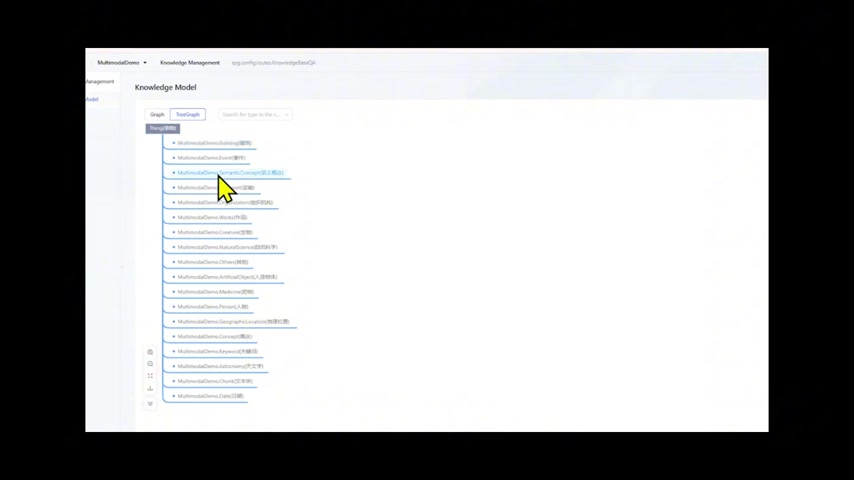
To effectively use Knowledge Augmented Generation (KAG), it's essential to set up a robust knowledge base that incorporates structured and unstructured data. This section outlines the steps to upload documents, extract data, and construct knowledge graphs
.
Knowledge Management
- Start with Knowledge Management by uploading a PDF document that includes charts, tables, and images.
- KAG employs a knowledge representation model to organize information into a structured format, compatible with both structured and unstructured data.
- KAG uses a mutual indexing mechanism that links knowledge graphs with original text chunks, enabling efficient retrieval of relevant information based on user queries.
Extracting Data with KAG
Extracting data with Knowledge Augmented Generation (KAG) involves leveraging its mutual indexing mechanism to link knowledge graphs with original text chunks effectively
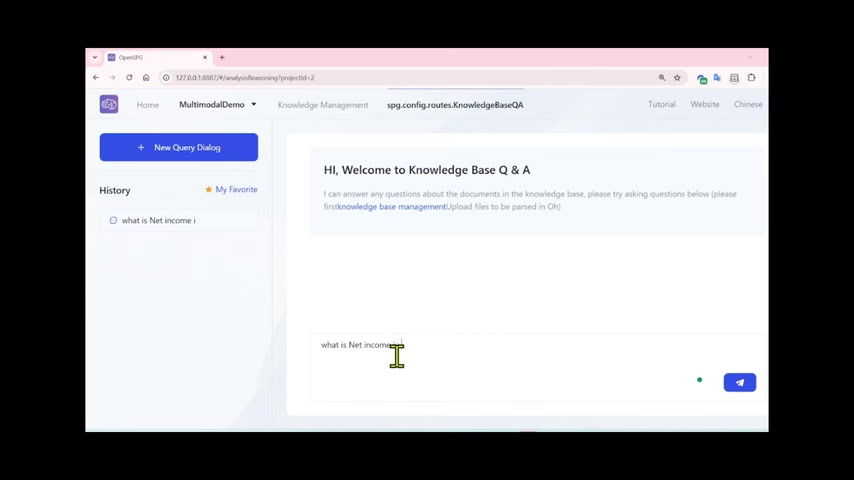
. This allows for seamless integration of structured and unstructured data, enhancing information retrieval and overall performance.
Step 1: Knowledge Representation
- KAG employs a structured knowledge representation model to organize information extracted from documents.
Step 2: Mutual Indexing
- KAG utilizes a mutual indexing mechanism that links knowledge graphs with original text chunks, improving information retrieval.
Question Answering with KAG
Utilizing the question-answering capabilities of Knowledge Augmented Generation (KAG) involves understanding the intent and context of user queries. This section demonstrates how KAG processes questions and generates logical forms to extract accurate and precise answers
.
Step 1: Query Processing
- KAG processes the query to understand its intent and context, identifying key entities and relationships.
Step 2: Logical Form Generation
- KAG generates a logical form based on the query, retrieving relevant information from the Knowledge Graph.
Step 3: Answer Generation
- KAG generates a clear and understandable answer for the user, integrating data aggregation and logical reasoning.
Technical Implementation with Code Examples
Implementing Knowledge Augmented Generation (KAG) involves setting up a development environment, building graph servers, and running necessary commands. This section provides code examples to guide users through the setup process
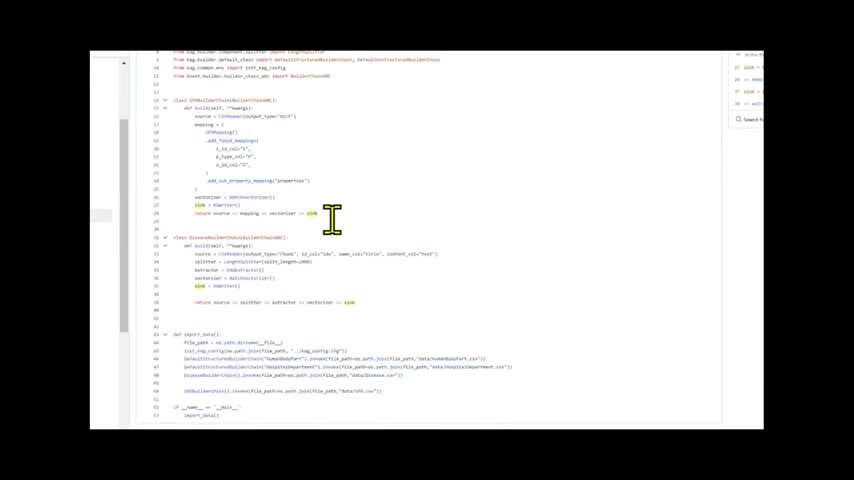
.
Setting Up the Development Environment
- Install Python virtual environment:
conda create -n kag-demo python=3.10 && conda activate kag-demo - Clone the KAG source code:
git clone <KAG Repository URL> - Enter the project root directory and install KAG:
cd <KAG Directory> && pip install -e . - Verify the installation:
knext --version
Building the Graph Server
- Download Docker Desktop from the official Docker website.
- Open the terminal and run:
curl -SL <Docker Compose URL> -o docker-Compose.yml - Check if the services are up and running:
docker ps - Start the services:
docker-compose up
Accessing KAG Product Interface
- Copy the link from the terminal and paste it into the browser to access the KAG product interface.
Open Source Availability of Knowledge Augmented Generation (KAG)
Open Source Framework Benefits
Knowledge Augmented Generation (KAG) stands out due to its open-source nature, which fosters transparency, collaboration, and community-driven enhancements. This open framework encourages innovation, allowing developers and researchers to adapt and improve the technology, as well as a Github link
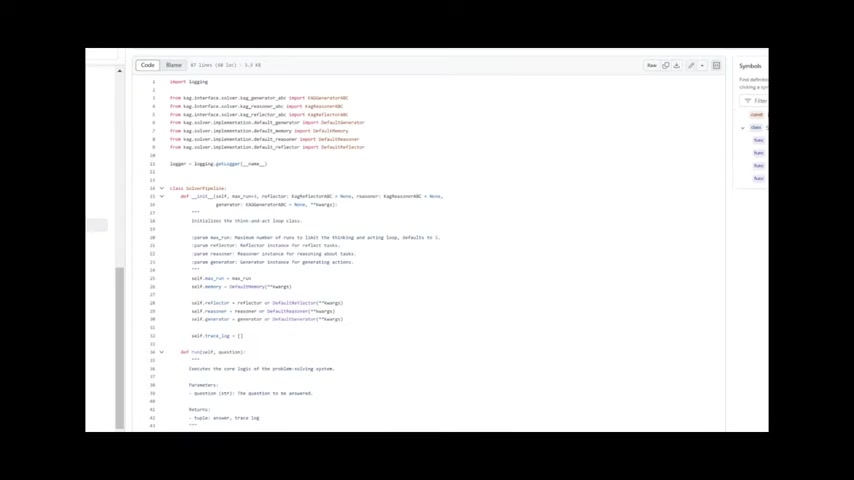
.
By being open source, KAG ensures that its benefits are widely accessible, promoting the democratization of AI and knowledge-driven solutions.
Exploring the Core Features of KAG
LLM-Friendly Knowledge Representation
Semantic Types and Relations: KAG integrates semantic types and relations to enable a more contextual understanding of knowledge. This enhances the ability of LLMs to process complex queries effectively
. Logical Reasoning: KAG's framework supports logical reasoning to connect knowledge fragments and extract relevant information. This ensures that the generated responses are not only accurate but also logically sound, mirroring human-like reasoning processes. This feature significantly enhances the depth and reliability of knowledge-driven applications.
Mutual Indexing and Knowledge Alignment
Bidirectional Links: KAG features mutual indexing, linking structured knowledge graphs with unstructured text. This bidirectional approach facilitates seamless data retrieval and integration. By establishing connections between structured and unstructured data, KAG optimizes information retrieval and ensures that users receive comprehensive and contextually relevant responses. Knowledge Alignment and Semantic Reasoning: Knowledge alignment is achieved through sophisticated semantic reasoning techniques, ensuring queries are accurately aligned with domain-specific knowledge, further boosting relevance and precision. It guarantees a high degree of precision in the generated responses.
Knowledge Graph Integration and Hybrid Reasoning
Logical Retrieval and Numerical Tasks: KAG employs a hybrid reasoning engine that combines logical retrieval with numerical tasks, enabling a more structured and nuanced approach to problem-solving
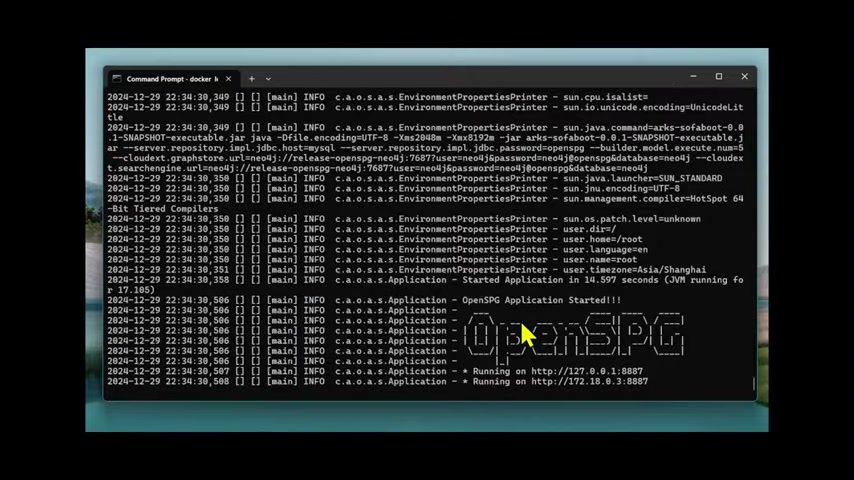
. By providing a logical structure for the information, KAG's generated responses are not only accurate but also highly structured and easy to understand. This improves the usefulness of the chatbot and ensures that non-technical users can readily comprehend the responses.





Most people like





































Report
Please select a reason for reporting
- 13 Reasons to Switch from Snapchat to Text Messaging
- 7 Powerful Speech to Text Apps to Boost Productivity
- 10 Best Speech to Text Tools for Effortless Transcription
- 13 Free Tools to Easily Transcribe Audio to Text
- 15 Surprising Ways Google's Speech-to-Text Boosts Productivity
- 7 Best Free Online Audio to Text Transcription Tools
- 9 Tips to Transcribe Speech to Text Faster and Better
- 13 Best Speech to Text Software for Windows 10 in 2023
- 7 Tips for Choosing the Best Transcriber for Audio to Text
- 11 Reasons Why Dragon Speech-to-Text Apps are Game-Changers
- 6 Secrets to Enhance Your Speech to Text Transcription
- 6 Brilliant Ways to Boost Productivity with Talk-to-Text on Your MacBook
- 6 Ways Transcription Software Converts Audio to Text
- 8 Tips to Transcribe Speech to Text Like a Pro
- 6 Reasons IBM Watson Speech to Text is a Game-Changer
- 14 Powerful Ways Talk-to-Text Improves Your Workflow
- 12 Top Windows Speech-to-Text Software for Efficient Transcription
- 12 Game-Changing Benefits of Apple's Speech to Text Technology
- 9 Powerful Use Cases for AWS Speech to Text Technology
- 10 Easy Steps to Transcribe YouTube Videos to Text
- transcription audio en texte
- online audio transcription
- free audio file transcription
- free ai audio transcription
- audio transcription service
- audio transcription online free
- audio transcription free online
- audio to transcription software
- audio and transcript
- ai audio transcription free
- voice recording to text converter
- translate voice recording to text
- record voice to text
- audio recording to text converter
- voice recording and transcription
- chatgpt voice to text
- gmail voice to text
- speech to text reader
- speech to text ai free
- speech to talk
- Meshy AI: How to Create 3D Models from Text and Images
- How SEO and Marketing Dashboards Empower Agencies to Drive Results
- How to Use AI Tools to Find Internal Linking Opportunities Across a Business Website
- Discover Your Perfect Haircut with AI Hairstyle Apps
- Free Reputation Calculator Tools: How They're Adapting to Score AI Visibility, Not Just Rankings
- Design Professional Flyers for Free on Your Phone
- Best Free Flyer Maker Apps for Android: Design Like a Pro
- How to Know If Your Business Is Ready for an AI Customer Service Agent
- Revolutionizing Storytelling: From Novels to Screenplays with AI
- Create Engaging Animated Explainer Videos with a Free AI Tool
- Meshy AI: How to Create 3D Models from Text and Images
- ASOMobile Helps Teams Benchmark App Store Screenshots Against Competitors
- How to Match LMS Software With Your Organization's Training Plan
- Revolutionizing Email Marketing Agency with AI
- How to Convert BTC to HNT
- Unleashing the Power of AI: Cognizant's Roadmap for Transformation
- Frame to Video Review: A Practical Look at Turning Two Still Frames Into Motion
- NVIDIA NIM: Revolutionizing Supply Chain Data Analysis with AI
- Top AI Tools That Help Brands Stand Out Offline (Not Just Online)
- Top 5 Cold Email Software: Maximize Your Outreach in 2025

Copyright ©2026 toolify