































Table of Contents
- Key Points
- Understanding the Problem: Greater Element on Right Side
- Solving the Greater Element Problem: A Step-by-Step Guide
- Right-to-Left Traversal: Pros and Cons
- Frequently Asked Questions
- Related Questions



Understanding the Problem: Greater Element on Right Side
Problem Statement
The core task is to analyze a given array and, for every element, identify the greatest element that appears to its right. If an element doesn't have any elements to its right that are greater than itself, then you should assign -1 to that element. This challenges you to think about array traversal, comparison logic, and conditional updates, reflecting skills highly valued in coding interviews.
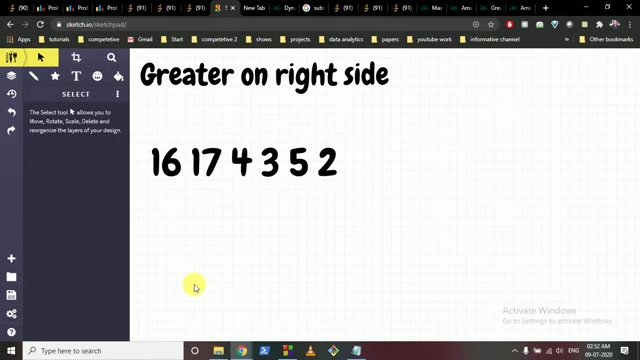
Consider this array as an example: [16, 17, 4, 3, 5, 2]
Here's how we would process it:
- For
16, the greatest element on its right is17. So,16becomes17. - For
17, there's no greater element on its right. So,17becomes-1. - For
4, the greatest element on its right is5. So,4becomes5. - For
3, the greatest element on its right is5. So,3becomes5. - For
5, the greatest element on its right is2. So,5becomes2. - For
2, there is no right element. So,2becomes-1.
The resulting array would be: [17, -1, 5, 5, 2, -1]
This exercise effectively tests your abilities to traverse arrays, apply conditional logic, and perform in-place modifications, making it a practical example for assessing coding proficiency. The greater element problem is a key concept to master for technical interviews.
Why is this Problem Important for Coding Interviews?
This problem is favored in coding interviews because it's more than just about coding; it's about demonstrating your problem-solving approach. Companies like Amazon assess your ability to:
- Analyze a problem: Can you break down the problem into smaller, manageable parts?
- Develop an algorithm: Can you create a step-by-step plan to solve it efficiently?
- Write clean code: Can you Translate your algorithm into readable and maintainable code?
- Optimize for performance: Can you consider the time and space complexity of your solution? The emphasis on optimization and algorithmic thinking highlights key attributes companies seek when evaluating coding interviews. Further emphasizing the key skills are needed to solve the problem.
By mastering this type of question, you're showing that you can not only code but also think critically and solve problems in a real-world context. Demonstrating these core skills is critical in Amazon interview. Effective preparation is critical in coding interviews.
Solving the Greater Element Problem: A Step-by-Step Guide
The Naive Approach (and Why to Avoid It)
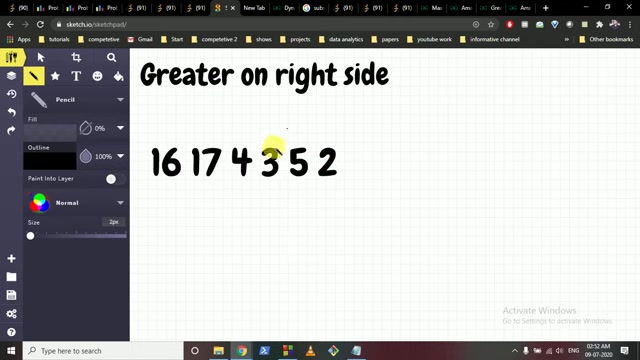
A straightforward but inefficient solution involves using nested loops. For each element, iterate through the rest of the array to find the maximum. This approach has a time complexity of O(n^2), where n is the number of elements in the array.
Here’s why it's not recommended:
- Inefficiency: Nested loops make it slow for large arrays.
- Not scalable: Doesn't perform well as the array size increases.
- Doesn't impress: Interviewers look for more optimized solutions.
While it can serve as a starting point to demonstrate your basic understanding, you should quickly move towards a more optimized approach.
An Optimized Approach: Right-to-Left Traversal
A more efficient solution involves traversing the array from right to left. Keep track of the maximum element seen so far as you move towards the beginning of the array. This approach has a time complexity of O(n) and a space complexity of O(1).
Here's the algorithm:
- Initialize a variable
max_so_farwith the last element of the array. - Start traversing the array from the second last element (right to left).
- For each element, compare it with
max_so_far:- If the element is greater than
max_so_far, updatemax_so_farwith the element's value. - Otherwise, replace the element with
max_so_far.
- If the element is greater than
- For the last element, replace it with -1 (since there are no elements to its right).
This approach drastically reduces the number of comparisons, making it much faster and scalable. By following the above, the code can be efficiently optimized.
Detailed Steps with Example
Let's walk through an example array: [16, 17, 4, 3, 5, 2]
- Start from the last element:
2. There's nothing to its right, so it becomes-1. - Move to
5. Themax_so_faris2. Since5 > 2, replace5with2, Now max_so_far =5. - Move to
3. Themax_so_faris5. Since3 < 5, replace3with5. - Move to
4. Themax_so_faris5. Since4 < 5, replace4with5. - Move to
17. Themax_so_faris5. Since17 > 5, replace17with5, Now max_so_far=17. - Move to
16. Themax_so_faris17. Since16 < 17, replace16with17. - For the element at index 0 replace the old values with the latest greatest value. This process requires understanding the algorithm.
Following these steps, the final array is [17, -1, 5, 5, 2, -1], which satisfies the problem statement.





Most people like



































Report
Please select a reason for reporting
- 13 Reasons to Switch from Snapchat to Text Messaging
- 7 Powerful Speech to Text Apps to Boost Productivity
- 10 Best Speech to Text Tools for Effortless Transcription
- 13 Free Tools to Easily Transcribe Audio to Text
- 15 Surprising Ways Google's Speech-to-Text Boosts Productivity
- 7 Best Free Online Audio to Text Transcription Tools
- 9 Tips to Transcribe Speech to Text Faster and Better
- 13 Best Speech to Text Software for Windows 10 in 2023
- 7 Tips for Choosing the Best Transcriber for Audio to Text
- 11 Reasons Why Dragon Speech-to-Text Apps are Game-Changers
- 6 Secrets to Enhance Your Speech to Text Transcription
- 6 Brilliant Ways to Boost Productivity with Talk-to-Text on Your MacBook
- 6 Ways Transcription Software Converts Audio to Text
- 8 Tips to Transcribe Speech to Text Like a Pro
- 6 Reasons IBM Watson Speech to Text is a Game-Changer
- 14 Powerful Ways Talk-to-Text Improves Your Workflow
- 12 Top Windows Speech-to-Text Software for Efficient Transcription
- 12 Game-Changing Benefits of Apple's Speech to Text Technology
- 9 Powerful Use Cases for AWS Speech to Text Technology
- 10 Easy Steps to Transcribe YouTube Videos to Text
- transcription audio en texte
- online audio transcription
- free audio file transcription
- free ai audio transcription
- audio transcription service
- audio transcription online free
- audio transcription free online
- audio to transcription software
- audio and transcript
- ai audio transcription free
- voice recording to text converter
- translate voice recording to text
- record voice to text
- audio recording to text converter
- voice recording and transcription
- chatgpt voice to text
- gmail voice to text
- speech to text reader
- speech to text ai free
- speech to talk
- How to Use AI Tools to Find Internal Linking Opportunities Across a Business Website
- Discover Your Perfect Haircut with AI Hairstyle Apps
- Free Reputation Calculator Tools: How They're Adapting to Score AI Visibility, Not Just Rankings
- Design Professional Flyers for Free on Your Phone
- Best Free Flyer Maker Apps for Android: Design Like a Pro
- How to Know If Your Business Is Ready for an AI Customer Service Agent
- Revolutionizing Storytelling: From Novels to Screenplays with AI
- Create Engaging Animated Explainer Videos with a Free AI Tool
- Stop Multi-Subscribing: Benchmark Top AI Visual Models in One Canvas
- Best Seedance 2.5 API Provider: Every Price on the Market, Checked at Source
- Top AI Social Media Management Tools: Automate Your Content Strategy
- Free AI Text to Video Generator: Create Stunning Videos from Text
- Discover 17 ChatGPT Alternatives: A Comprehensive Comparison
- Character.AI vs. Janitor AI: Which AI Chat Platform Reigns Supreme?
- Top Virtual Assistant Companies in 2026: Reviews, Pricing, and Plans Compared
- Unveiling FaceCheck.ID: Revolutionizing Reverse Image Searches with AI
- 11 Best AI Dialers in 2026: Features, Pricing, Pros and Cons
- How I Direct Consistent AI Clips: A Hands-On Guide to Multi-Model Generation
- A Realistic Review of the Photo Generator Image Tool
- Playwright MCP Server: Automated Web Testing with Agent Mode

Copyright ©2026 toolify