































Table of Contents
- Key Points
- Understanding Retrieval Augmented Generation (RAG)
- Building Your Own RAG System: Key Considerations
- How to Ask the Right Question for Better Results
- RAG for Local LLMs: Balancing Benefits and Challenges
- Frequently Asked Questions
- Further Exploration: Advanced RAG Techniques


Understanding Retrieval Augmented Generation (RAG)
What is Retrieval Augmented Generation?
Retrieval Augmented Generation, or RAG, represents a crucial advancement in how we leverage Large Language Models
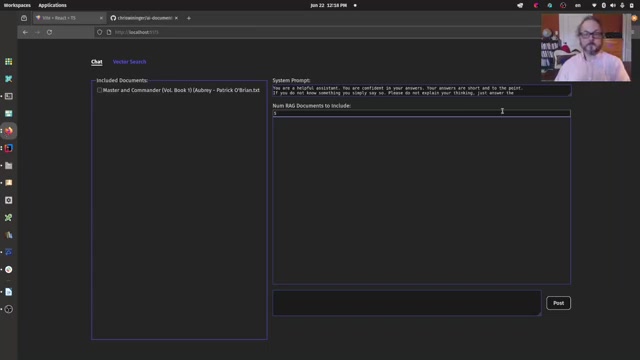
. Traditional LLMs are limited by their context window, meaning they can only process a certain amount of text at a time. This limitation prevents them from effectively querying vast repositories of information. RAG circumvents this by first retrieving relevant documents from a Knowledge Base and then using the LLM to generate an answer based on this retrieved context.
The core idea is to augment the LLM's knowledge with external data, enabling it to answer questions and generate content based on information it wasn't originally trained on. This is particularly useful when dealing with specialized domains or proprietary data where pre-training the LLM is not feasible or cost-effective.
RAG offers a compelling solution for leveraging LLMs in scenarios where access to extensive, up-to-date information is paramount. It allows LLMs to remain agile and adaptable, drawing insights from vast document collections without requiring constant retraining.
Benefits of RAG:
- Enhanced Accuracy: RAG improves the factual accuracy of LLM responses by grounding them in retrieved documents.
- Reduced Hallucination: By providing a verifiable source of information, RAG helps to minimize the generation of fabricated or nonsensical content.
- Increased Agility: RAG allows LLMs to adapt quickly to new information and changing knowledge domains.
- Cost-Effectiveness: RAG reduces the need for costly and time-consuming pre-training on specialized datasets.
The Importance of RAG for Local LLM Deployments
RAG’s relevance amplifies when considering local LLM deployments
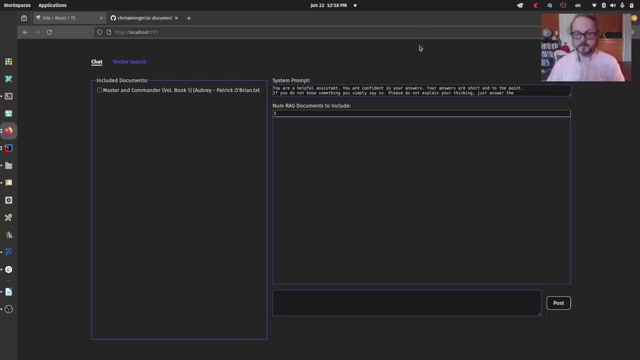
. Unlike services like OpenAI or Google, local setups often grapple with constrained computational resources. Implementing RAG allows you to harness the power of LLMs on your own hardware, mitigating dependence on external APIs and optimizing performance within the confines of your local network.
Why is this important?
- Data Privacy and Security: Keeping your data and computations within your own network ensures greater control over data privacy.
- Reduced Latency: Local LLMs combined with RAG eliminate the latency associated with sending requests to external servers.
- Customization: You retain full control over the data sources, preprocessing techniques, and the LLM itself.
- Offline Functionality: Local LLMs can operate without an internet connection, offering resilience and reliability in various environments.
Contrasting RAG with Traditional LLM Approaches
Traditionally, LLMs relied solely on their pre-trained knowledge to generate responses. This approach suffers from several limitations:
- Knowledge Cutoff: LLMs have a finite knowledge base, making them unable to answer questions about recent events or emerging trends.
- Factual Inaccuracies: LLMs can sometimes generate incorrect information due to biases or gaps in their training data.
- Limited Adaptability: Retraining LLMs on new data is a computationally expensive and time-consuming process.
RAG fundamentally alters this paradigm by integrating an information retrieval component into the LLM pipeline. This component searches external knowledge bases to fetch relevant documents, which are then fed into the LLM to generate a response. This approach ensures that the LLM has access to the latest information and can provide more accurate and contextually relevant answers.
Here's a table summarizing the key differences:
| Feature | Traditional LLM | Retrieval Augmented Generation (RAG) |
|---|---|---|
| Knowledge Source | Pre-trained Data | External Knowledge Base |
| Accuracy | Varies based on training data | Grounded in Retrieved Documents |
| Adaptability | Requires Retraining | Dynamic, Adapts to New Information |
| Cost | High Retraining Costs | Lower, Avoids Retraining |
| Context Window | Limited | Circumvents Limitations |
Building Your Own RAG System: Key Considerations
AI Document Query System: A Practical Implementation
Creating a RAG system involves several key steps, and building an AI Document Query System is the ultimate goal
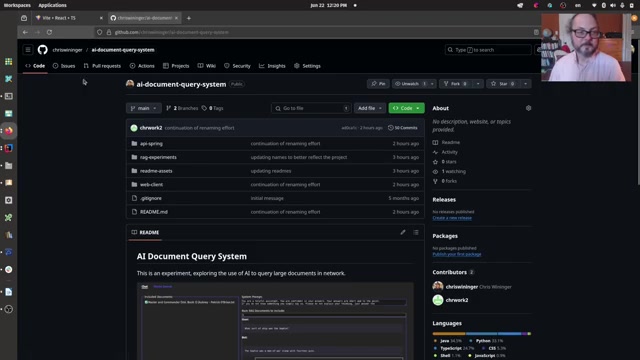
. This system empowers you to import documents from your library, divide them into smaller, manageable pieces (a process known as chunking), store them in vector databases, and then perform semantic queries to retrieve the most relevant information for your LLM.
The core components of such a system include:
- Document Loader: Responsible for ingesting documents from various formats (e.g., TXT, PDF, etc.).
- Chunker: Divides the documents into smaller chunks to fit within the LLM's context window.
- Vector Database: Stores the document chunks in a vector format, enabling efficient semantic similarity searches.
- LLM Interface: Provides a user interface for querying the system and generating responses.
Let's delve into each of these components in more detail.
Document Chunking Techniques for Optimal Retrieval
The method used to divide documents into smaller chunks significantly impacts the effectiveness of RAG
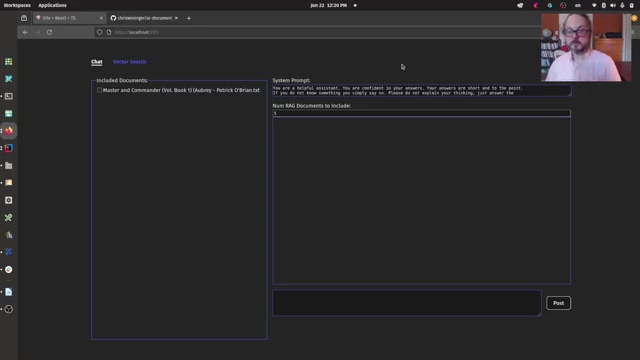
. Several chunking techniques are available:
- Fixed-Size Chunking: This simple approach divides the document into chunks of a fixed length. While easy to implement, it may not preserve the semantic coherence of the text.
- Semantic Chunking: This technique uses natural language processing (NLP) to identify semantic boundaries (e.g., sentences, paragraphs) and divides the document accordingly. This approach tends to produce more coherent and relevant chunks.
- Recursive Chunking: A hierarchical approach that recursively divides the document into smaller chunks until a desired size is reached.
Choosing the right chunking strategy requires careful consideration of the LLM's context window and the nature of the documents being processed. Smaller chunk sizes may improve retrieval precision, while larger chunk sizes can preserve more context.
Experimentation is key to finding the optimal balance for your specific use case. For example, using sentence splitting and combining it with paragraph information is more useful.
Vector Databases: The Backbone of Semantic Similarity Search
Vector databases are specialized databases designed to store and query high-dimensional vectors, which represent the semantic meaning of text chunks
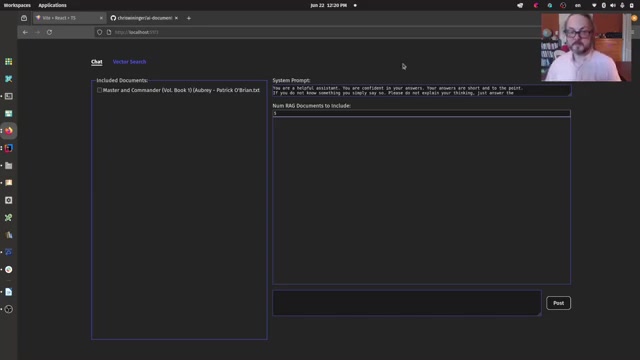
. These databases use techniques like approximate nearest neighbor (ANN) search to efficiently find vectors that are semantically similar to a given query vector.
Popular vector databases include:
- Pinecone: A fully managed vector database service.
- Chroma: An open-source embedding database.
- FAISS: A library for efficient similarity search and clustering of dense vectors.
Selecting a vector database depends on your specific requirements, including scalability, performance, and cost. Consider factors like the size of your knowledge base, the query frequency, and the desired level of accuracy.
Challenges in RAG Implementation: Optimizing Context
The **art of RAG lies in optimizing the context window
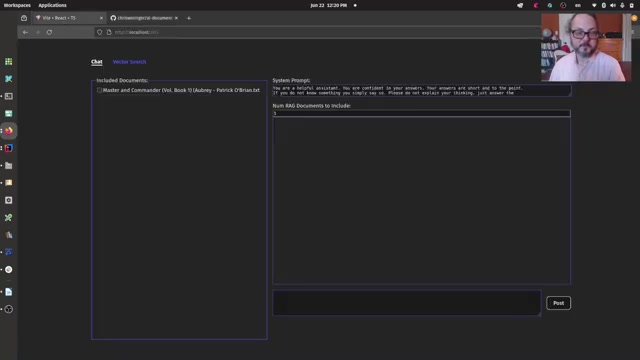
**. Too little context can lead to inaccurate or incomplete answers, while too much can overwhelm the LLM and reduce its performance. This is a non-trivial balancing act that requires careful tuning.
One key challenge involves identifying and filtering irrelevant information from the retrieved documents. Techniques like keyword filtering, topic modeling, and relevance scoring can be used to prioritize the most relevant content.
Another challenge is optimizing the order and presentation of the retrieved documents to the LLM. Experimenting with different Prompt engineering techniques can help to guide the LLM's attention and improve the quality of its responses.
How to Ask the Right Question for Better Results
Illustrative Example: Interacting with a RAG System
Let's consider a practical example. Suppose you've ingested the Novel 'Master and Commander' into your RAG system
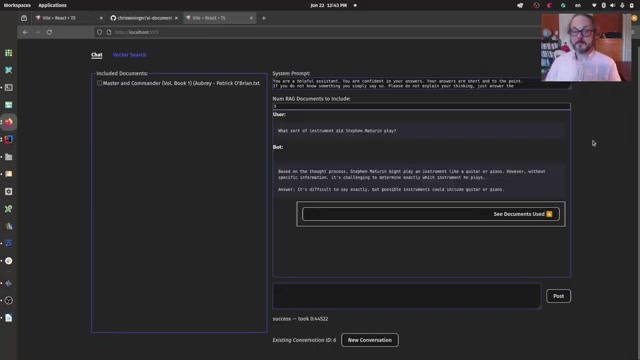
. You might ask the LLM, 'What sort of instrument did Stephen Maturin play?'
Without RAG, the LLM would likely provide a generic answer, perhaps suggesting common instruments like a guitar or piano. However, with RAG, the system retrieves relevant passages from the novel that mention Maturin's musical activities.
In reality, the LLM correctly identifies the fiddle (violin) as Maturin's instrument. This example highlights the power of RAG in grounding LLM responses in specific, verifiable information.
Understanding Context Window Limitations: It is important to not that even with the retrieval process, non-deterministic answers may appear . An appropriate system prompt with proper parameters is important to keep the LLM on track. A clear direction helps to achieve better results.










Most people like




























Report
Please select a reason for reporting
- 13 Reasons to Switch from Snapchat to Text Messaging
- 7 Powerful Speech to Text Apps to Boost Productivity
- 10 Best Speech to Text Tools for Effortless Transcription
- 13 Free Tools to Easily Transcribe Audio to Text
- 15 Surprising Ways Google's Speech-to-Text Boosts Productivity
- 7 Best Free Online Audio to Text Transcription Tools
- 9 Tips to Transcribe Speech to Text Faster and Better
- 13 Best Speech to Text Software for Windows 10 in 2023
- 7 Tips for Choosing the Best Transcriber for Audio to Text
- 11 Reasons Why Dragon Speech-to-Text Apps are Game-Changers
- 6 Secrets to Enhance Your Speech to Text Transcription
- 6 Brilliant Ways to Boost Productivity with Talk-to-Text on Your MacBook
- 6 Ways Transcription Software Converts Audio to Text
- 8 Tips to Transcribe Speech to Text Like a Pro
- 6 Reasons IBM Watson Speech to Text is a Game-Changer
- 14 Powerful Ways Talk-to-Text Improves Your Workflow
- 12 Top Windows Speech-to-Text Software for Efficient Transcription
- 12 Game-Changing Benefits of Apple's Speech to Text Technology
- 9 Powerful Use Cases for AWS Speech to Text Technology
- 10 Easy Steps to Transcribe YouTube Videos to Text
- transcription audio en texte
- online audio transcription
- free audio file transcription
- free ai audio transcription
- audio transcription service
- audio transcription online free
- audio transcription free online
- audio to transcription software
- audio and transcript
- ai audio transcription free
- voice recording to text converter
- translate voice recording to text
- record voice to text
- audio recording to text converter
- voice recording and transcription
- chatgpt voice to text
- gmail voice to text
- speech to text reader
- speech to text ai free
- speech to talk
- Create Engaging Animated Explainer Videos with a Free AI Tool
- Stop Multi-Subscribing: Benchmark Top AI Visual Models in One Canvas
- Best Seedance 2.5 API Provider: Every Price on the Market, Checked at Source
- AI OnlyFans: How to Generate $30,000/Month (Legally)
- Transform Your Script into an Engaging Video with AI Video Maker!
- AI Marketing Automation: A Comprehensive Guide for Small Businesses
- Midjourney Alternative for Anime Art Creators: Why PixAI May Be Better for Character Workflows
- 10 Things Most People Get Wrong About AI Image Search
- AI Girlfriend Apps: Top Choices Redefining Relationships 2025
- How to Reduce Quoting Errors in Salesforce with AI-Assisted Quote Creation
- Why AI Language Tutors Underperform in Low-Resource Languages (And How to Work Around It)
- Top 5 AI Detector Tools: Ensuring Originality in Your Content
- How to Tell If an AI Study Tool Is Actually Helping You Learn (6 Checks for 2026)
- From Auto-Cuts to Generative Clips: Top 4 AI Video Editor Platforms Tested
- AI Resume Builders: EnhanceCV, ResumeNerd AI, & Teal Compared
- ResumeAI: Crafting ATS-Optimized Resumes with AI
- AI in Resume Writing: A New Era for Job Seekers
- AI Resume Tools: Streamline Your Job Search and Land Your Dream Role
- AI Resume Optimization: The Right Way to Land Interviews
- Crafting a Killer Resume with AI: A Step-by-Step Guide

Copyright ©2026 toolify