































Table of Contents
- Key Points
- The Challenge of Traditional Input Methods
- The Promise of Natural Brain-Computer Interfaces (BCIs)
- How to Use a Natural Brain Computer Interface (BCI)
- Pricing and Availability
- The Double-Edged Sword: Exploring the Pros and Cons of Natural BCIs
- Frequently Asked Questions About BCI and Artificial Intelligence
- Related Questions About Artificial Inteligence and Brains.



The Challenge of Traditional Input Methods
The Limitations of Keyboards and Touchscreens
For decades, the keyboard has been the primary interface for interacting with computers. While effective, typing can be a slow, and error-prone process.
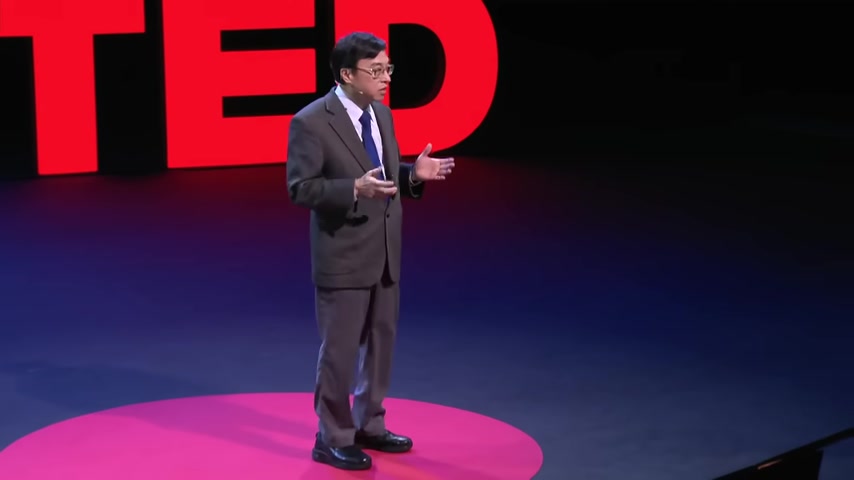
This is magnified for individuals whose first language is not based on Latin letters and the QWERTY layout itself is an artifact of early typewriter designs, optimized more for preventing jams than for ergonomic efficiency. Touchscreens offer a more intuitive experience for some tasks, but finger-driven interaction can still be cumbersome for detailed tasks like writing long documents. Imagine trying to compose a nuanced email using only your thumbs – the experience is rarely fluid or enjoyable.
These traditional input methods present significant challenges:
- Speed: Typing speed often lags behind the speed of thought, creating a bottleneck in the creative process.
- Accuracy: Typos and errors are common, requiring constant correction and slowing down workflow.
- Accessibility: Individuals with motor impairments may find it difficult or impossible to use keyboards and touchscreens effectively, limiting their access to technology.
- Cognitive Load: Learning to type efficiently requires significant training, and even skilled typists must devote conscious effort to the process, diverting attention from the task at hand.
These limitations highlight the need for a more natural, seamless way to interface with computers, one that leverages our inherent cognitive abilities rather than relying on learned skills.
Beyond Letters: Addressing the Needs of Diverse Languages
The speaker highlights a particularly relevant challenge: the difficulty of inputting non-letter-based languages like Chinese into computers.
Imagine trying to input complex characters using a standard keyboard – a task that can be extremely time-consuming and frustrating. This isn't just a matter of convenience; it's a matter of equitable access to technology.
Therefore BCI could potentially provide a more direct and efficient method for inputting these languages: Instead of having to Translate thought into a complex series of keystrokes, the BCI could learn to recognize brain patterns associated with specific characters or concepts, drastically reducing the time and effort required to communicate. This focus on linguistic diversity is important in the development of BCI and artificial intelligence to guarantee that technology can be used by everyone.
The Promise of Natural Brain-Computer Interfaces (BCIs)
Decoding Thoughts with AI: A Revolution in Communication
Brain-computer interfaces (BCIs) offer an innovative solution, by creating a direct communication pathway between the brain and external devices.
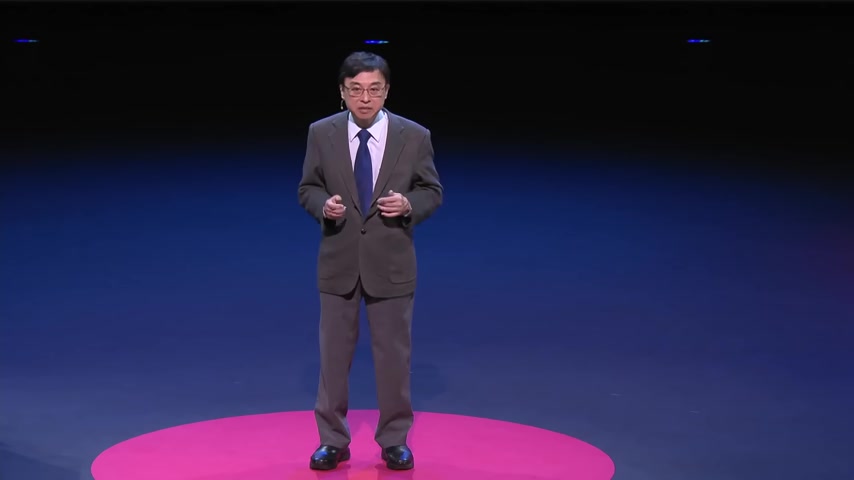
BCIs, especially when powered by artificial intelligence (AI), are more efficient than traditional methods such as Handwriting or voice recognition, and will potentially overcome these limitations. This can revolutionize how we interact with technology. Instead of learning to type or swipe, we could simply think our commands, allowing for a much faster, and more intuitive experience.
Key Benefits of Natural BCIs:
- Enhanced Speed: Thoughts translate directly into actions, bypassing the limitations of physical input.
- Improved Accessibility: BCIs can provide a vital communication channel for individuals with paralysis, locked-in syndrome, or other severe motor impairments.
- Increased Naturalness: By leveraging our innate cognitive abilities, BCIs can offer a more intuitive and effortless user experience.
- New Possibilities for Creativity: With the ability to directly capture and express thoughts, BCIs can unlock new avenues for artistic expression and creative innovation.
The convergence of BCI technology with sophisticated AI algorithms is leading to breakthroughs that were once considered science fiction. AI algorithms are trained to recognize patterns in brain activity, allowing them to decode thoughts, intentions, and emotions. This translation of brain signals into actionable commands opens up a vast array of possibilities, from controlling prosthetic limbs to composing Music with the power of thought.
How Natural BCIs Work: A Glimpse into the Technology
The TED talk explores the practical side of natural BCIs, emphasizing that the technology relies on non-invasive EEG headsets
that measure brain activity without requiring surgical implants. These headsets detect electrical signals generated by neurons in the brain, which are then processed by sophisticated AI algorithms.
These algorithms, often based on deep learning techniques, analyze the EEG data to identify specific patterns associated with different thoughts or intentions. For example, the AI might learn to distinguish between brain activity patterns associated with "moving left" and "moving right." Once these patterns are recognized, the BCI can translate them into commands that control external devices. Despite the advancement in technology, it is important to note that decoding brain waves is very difficult. The current technology is running on a 50% average success rate. However, the speaker shows that they plan to continue to make improvement to their algorithm.
The BCI Process (EEG-to-text):
- EEG Acquisition: EEG signals are captured from the scalp using non-invasive sensors.
- Signal Processing: Raw EEG data is filtered and pre-processed to remove noise and artifacts.
- Feature Extraction: Relevant features are extracted from the EEG signals, such as frequency bands and amplitude variations.
- AI Decoding: AI algorithms, including deep learning models, are trained to map EEG features to specific thoughts or intentions.
- Command Translation: Decoded thoughts are translated into commands that control external devices or software applications.
The following is a description of the process the AI takes to translate a user's thoughts into a workable command.
| Step | Description |
|---|---|
| EEG Signal | The brain gives off an EEG signal |
| Filtering | The signal then goes through a filtering process |
| Noise Removal | After being filtered, the signals noise is then removed |
| Biomarkers | The AI analyses the Biomarkers to pick out the thought/command |
| Deep learning | A deep learning process is used to determine a set of workable commands |
| Words, LLM, Sentences | Finally a sentence is outputted to the user, as the computer's best understanding of their thoughts |
While the technology is still under development, these BCIs are already demonstrating promising results in various applications. By enhancing our communication and expression, these BCIs are helping improve our quality of life.
Demonstration: AI Brain Reading for Text
The speaker invited two team members on stage for an AI brain reading demo. The team members used an EEG to non-invasively read thoughts from another teammate.

The speaker said that they have an algorithm that runs for the EEG headsets. After the EEG read what the team member was thinking, it displayed it on the screen. The project runs on a 50% accuracy rate. The first thought test involved turning the thoughts into text.
- The speaker displayed many words and asked the team mate to think of one. After some time, it picked up certain key words, with an AI score assigned to each WORD.
- The AI then created a sentence with the information it was able to read.
Next the speaker had a collection of objects: Toy car, plant, yellow rubber duck, and hamburger.
The AI brain reader was asked to focus on one of the items, and it accurately read that he was looking at the duck.
TheIn summary, AI is reading brain waves for key words.
Visual Identification using AI
The AI BCI visual identification is a demonstration of the next stage of Brain Computer AI reading and thinking. This technology is still underdeveloped and at a 50% success rate.
How it works: there are a display of items and the AI brain waves reader is asked to choose one of the items in their mind. As the brain reader looks at the item, that object is then selected in the program.
This shows how AI can use brain patterns for people to select what they want.
The team successfully demonstrates how they were thinking of the duck by selecting the rubber ducky on display.





Most people like






































Report
Please select a reason for reporting
- 13 Reasons to Switch from Snapchat to Text Messaging
- 7 Powerful Speech to Text Apps to Boost Productivity
- 10 Best Speech to Text Tools for Effortless Transcription
- 13 Free Tools to Easily Transcribe Audio to Text
- 15 Surprising Ways Google's Speech-to-Text Boosts Productivity
- 7 Best Free Online Audio to Text Transcription Tools
- 9 Tips to Transcribe Speech to Text Faster and Better
- 13 Best Speech to Text Software for Windows 10 in 2023
- 7 Tips for Choosing the Best Transcriber for Audio to Text
- 11 Reasons Why Dragon Speech-to-Text Apps are Game-Changers
- 6 Secrets to Enhance Your Speech to Text Transcription
- 6 Brilliant Ways to Boost Productivity with Talk-to-Text on Your MacBook
- 6 Ways Transcription Software Converts Audio to Text
- 8 Tips to Transcribe Speech to Text Like a Pro
- 6 Reasons IBM Watson Speech to Text is a Game-Changer
- 14 Powerful Ways Talk-to-Text Improves Your Workflow
- 12 Top Windows Speech-to-Text Software for Efficient Transcription
- 12 Game-Changing Benefits of Apple's Speech to Text Technology
- 9 Powerful Use Cases for AWS Speech to Text Technology
- 10 Easy Steps to Transcribe YouTube Videos to Text
- transcription audio en texte
- online audio transcription
- free audio file transcription
- free ai audio transcription
- audio transcription service
- audio transcription online free
- audio transcription free online
- audio to transcription software
- audio and transcript
- ai audio transcription free
- voice recording to text converter
- translate voice recording to text
- record voice to text
- audio recording to text converter
- voice recording and transcription
- chatgpt voice to text
- gmail voice to text
- speech to text reader
- speech to text ai free
- speech to talk
- Meshy AI: How to Create 3D Models from Text and Images
- How SEO and Marketing Dashboards Empower Agencies to Drive Results
- How to Use AI Tools to Find Internal Linking Opportunities Across a Business Website
- Discover Your Perfect Haircut with AI Hairstyle Apps
- Free Reputation Calculator Tools: How They're Adapting to Score AI Visibility, Not Just Rankings
- Design Professional Flyers for Free on Your Phone
- Best Free Flyer Maker Apps for Android: Design Like a Pro
- How to Know If Your Business Is Ready for an AI Customer Service Agent
- Revolutionizing Storytelling: From Novels to Screenplays with AI
- Create Engaging Animated Explainer Videos with a Free AI Tool
- Meshy AI: How to Create 3D Models from Text and Images
- ASOMobile Helps Teams Benchmark App Store Screenshots Against Competitors
- How to Match LMS Software With Your Organization's Training Plan
- Revolutionizing Email Marketing Agency with AI
- How to Convert BTC to HNT
- Unleashing the Power of AI: Cognizant's Roadmap for Transformation
- Frame to Video Review: A Practical Look at Turning Two Still Frames Into Motion
- NVIDIA NIM: Revolutionizing Supply Chain Data Analysis with AI
- Top AI Tools That Help Brands Stand Out Offline (Not Just Online)
- Top 5 Cold Email Software: Maximize Your Outreach in 2025

Copyright ©2026 toolify