































Table of Contents
- Key Points
- Understanding Next Word Prediction with NLP
- Additional Tips for Improving Model Performance
- Building a Next Word Prediction Model with Python and GPT-2
- Pricing
- Pros and Cons of Next Word Prediction
- FAQ
- Related Questions



Understanding Next Word Prediction with NLP
What is Next Word Prediction?
Next word prediction, at its core, is the task of forecasting the most probable WORD that follows a given sequence of words. This technique falls under the umbrella of NLP, a field focused on enabling computers to understand, interpret, and generate human language. NLP combines computational linguistics with statistical, machine learning, and deep learning models. It has applications across various industries, from automating Customer Service with chatbots to enhancing Search Engine algorithms.
The magic of next word prediction lies in its ability to analyze vast amounts of text data, learn patterns and relationships between words, and then use this knowledge to anticipate what comes next. The better the NLP model can determine the context and coherence of a sentence, the more accurate its predictions become. To effectively perform NLP, you need to have a solid grasp of Python, along with its versatile array of libraries tailored to perform any machine learning related task.
NLP is not just about recognizing words; it is about understanding semantics, syntax, and context. For example, when you start typing a sentence in a search engine or messaging app, the suggested words are products of next word prediction models working in real-time. These models consider the words you have already typed, the language you are using, and even your past behavior to provide the most relevant suggestions.
By leveraging NLP, you can build sophisticated tools that can automatically complete sentences, generate creative content, or even assist individuals with writing difficulties. Techniques like language modeling, recurrent neural networks (RNNs), and transformers are pivotal in making these predictions accurate and context-aware. Understanding these concepts is fundamental to unlocking the potential of NLP and creating innovative solutions in the realm of text generation and analysis.
The Role of Python in NLP
Python has emerged as the go-to language for NLP due to its simplicity, extensive libraries, and robust community support. Several libraries make NLP tasks efficient and manageable, such as:
- NLTK (Natural Language Toolkit): A foundational library for tasks like tokenization, stemming, tagging, and parsing.
- spaCy: A high-performance library focused on providing production-ready NLP pipelines.
- Gensim: Specializes in topic modeling and similarity detection, essential for understanding document content.
- Scikit-learn: Offers a wide range of machine learning algorithms for classification, regression, and clustering of text data.
- TensorFlow and PyTorch: Deep learning frameworks used to build and train advanced NLP models like LSTMs and transformers.
Python's flexibility allows developers to quickly prototype and test new ideas, making it ideal for NLP research and development. Additionally, the large and active Python community ensures that there are plenty of resources, tutorials, and open-source projects available to help you along your NLP journey.
The combination of Python and NLP libraries provides a versatile toolkit for tackling a wide range of language-related tasks, from sentiment analysis to machine translation. As NLP continues to evolve, Python's role as a leading language in this field is set to become even more pronounced.
GPT-2: A Powerful Model for Text Generation
GPT-2 (Generative Pre-trained Transformer 2) is a groundbreaking language model developed by OpenAI. It is based on the transformer architecture, which has revolutionized the field of NLP. Unlike previous models, GPT-2 demonstrates an impressive ability to generate coherent and contextually relevant text without task-specific training.
The transformer architecture uses a self-attention mechanism, allowing the model to weigh the importance of different words in a sentence when making predictions. This enables GPT-2 to capture long-range dependencies and understand context more effectively. Pre-training on a massive dataset further enhances its ability to generate realistic and diverse text.
GPT-2’s power comes from its ability to learn the statistical structure of language. It can generate everything from news articles to poems, and even code, with minimal input. However, it is important to note that GPT-2’s capabilities also come with responsibilities. The model’s ability to generate realistic text has raised concerns about the potential for misuse, such as creating fake news or generating spam. Despite these concerns, GPT-2 remains a valuable tool for NLP research and development, pushing the boundaries of what is possible with text generation.
Building a Next Word Prediction Model with Python and GPT-2
Setting up the Development Environment
Before diving into the code, it is essential to set up a suitable development environment. Here are the recommended steps:
-
Install Python: Ensure you have Python 3.6 or higher installed on your system. You can download it from the official Python website.
-
Create a Virtual Environment: Use virtualenv or conda to create an isolated environment for your project. This helps manage dependencies and avoid conflicts with other Python projects.
# Using virtualenv virtualenv nlp_env source nlp_env/bin/activate # Using conda conda create -n nlp_env python=3.7 conda activate nlp_env -
Install Required Libraries: Use pip to install the necessary libraries. These typically include:
transformers(for using GPT-2)torch(for tensor computations)streamlit(for creating the web app)nltk(for text preprocessing)
pip install transformers torch streamlit nltk -
Download GPT-2 Model: Download the pre-trained GPT-2 model. The
transformerslibrary makes this easy:from transformers import GPT2Tokenizer, GPT2LMHeadModel tokenizer = GPT2Tokenizer.from_pretrained('gpt2') model = GPT2LMHeadModel.from_pretrained('gpt2')
With your environment set up, you are ready to start building the next word prediction model.
Implementing the NLP Pipeline
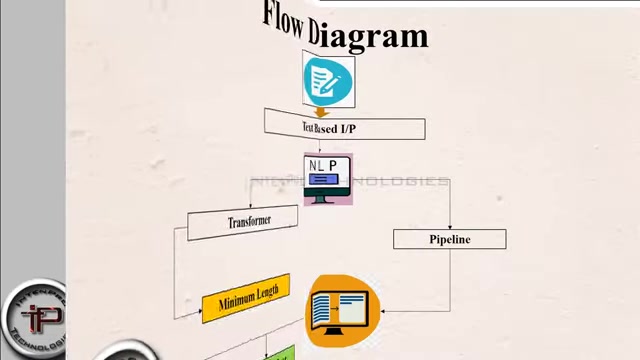
The NLP pipeline typically involves several steps to preprocess the text and prepare it for the model. These steps include:
-
Text Input: Accept text input from the user. This could be a single word, a sentence, or a paragraph.
-
Tokenization: Break the input text into individual tokens (words or subwords). The GPT-2 tokenizer is designed to handle this efficiently:
input_text = "This is an example sentence." input_ids = tokenizer.encode(input_text, return_tensors='pt') -
Model Prediction: Use the GPT-2 model to predict the next word. This involves passing the input tokens through the model and selecting the most probable next token:
output = model(input_ids) next_token_logits = output[0][:, -1, :] predicted_token_id = torch.argmax(next_token_logits).item() predicted_word = tokenizer.decode([predicted_token_id]) -
Text Generation: Generate multiple words by feeding the predicted word back into the model. This can be done iteratively to create longer sequences:
def generate_next_words(model, tokenizer, input_text, num_words=5): input_ids = tokenizer.encode(input_text, return_tensors='pt') generated_text = input_text for _ in range(num_words): output = model(input_ids) next_token_logits = output[0][:, -1, :] predicted_token_id = torch.argmax(next_token_logits).item() predicted_word = tokenizer.decode([predicted_token_id]) generated_text += ' ' + predicted_word input_ids = tokenizer.encode(generated_text, return_tensors='pt') return generated_text -
Output: Display the predicted words to the user.
By integrating these steps into a cohesive pipeline, you can create a robust system for generating text using NLP and GPT-2.
Creating an Interactive Web App with Streamlit
Streamlit is a Python library that makes it easy to create interactive web applications for showcasing machine learning models. To create a Streamlit app for next word prediction, follow these steps:
-
Import Libraries: Import the necessary libraries:
import streamlit as st from transformers import GPT2Tokenizer, GPT2LMHeadModel import torch -
Load Model and Tokenizer: Load the GPT-2 model and tokenizer:
tokenizer = GPT2Tokenizer.from_pretrained('gpt2') model = GPT2LMHeadModel.from_pretrained('gpt2') -
Define the App Layout: Use Streamlit components to define the app's layout. This includes input fields for the user to enter text, a slider for the number of words to predict, and a button to generate the text:
st.title("Next Word Prediction with GPT-2") input_text = st.text_input("Enter a sentence:", "Hello") num_words = st.slider("Number of words to predict:", 1, 10, 5) if st.button("Generate"): generated_text = generate_next_words(model, tokenizer, input_text, num_words) st.write("Generated Text:", generated_text) -
Run the App: Save the code to a Python file (e.g.,
nextword.py) and run the app using the command line
:
streamlit run nextword.py -
You may encounter a login page with a register option. Create your login, or choose the login option if you are already a registered user to start next word prediction. [t:11-14]
This will open the app in your web browser, allowing you to interact with the next word prediction model. [t:15-20]
By using Streamlit, you can quickly deploy and showcase your NLP models, making them accessible to a wider audience.








Most people like


































Report
Please select a reason for reporting
- 13 Reasons to Switch from Snapchat to Text Messaging
- 7 Powerful Speech to Text Apps to Boost Productivity
- 10 Best Speech to Text Tools for Effortless Transcription
- 13 Free Tools to Easily Transcribe Audio to Text
- 15 Surprising Ways Google's Speech-to-Text Boosts Productivity
- 7 Best Free Online Audio to Text Transcription Tools
- 9 Tips to Transcribe Speech to Text Faster and Better
- 13 Best Speech to Text Software for Windows 10 in 2023
- 7 Tips for Choosing the Best Transcriber for Audio to Text
- 11 Reasons Why Dragon Speech-to-Text Apps are Game-Changers
- 6 Secrets to Enhance Your Speech to Text Transcription
- 6 Brilliant Ways to Boost Productivity with Talk-to-Text on Your MacBook
- 6 Ways Transcription Software Converts Audio to Text
- 8 Tips to Transcribe Speech to Text Like a Pro
- 6 Reasons IBM Watson Speech to Text is a Game-Changer
- 14 Powerful Ways Talk-to-Text Improves Your Workflow
- 12 Top Windows Speech-to-Text Software for Efficient Transcription
- 12 Game-Changing Benefits of Apple's Speech to Text Technology
- 9 Powerful Use Cases for AWS Speech to Text Technology
- 10 Easy Steps to Transcribe YouTube Videos to Text
- transcription audio en texte
- online audio transcription
- free audio file transcription
- free ai audio transcription
- audio transcription service
- audio transcription online free
- audio transcription free online
- audio to transcription software
- audio and transcript
- ai audio transcription free
- voice recording to text converter
- translate voice recording to text
- record voice to text
- audio recording to text converter
- voice recording and transcription
- chatgpt voice to text
- gmail voice to text
- speech to text reader
- speech to text ai free
- speech to talk
- How SEO and Marketing Dashboards Empower Agencies to Drive Results
- How to Use AI Tools to Find Internal Linking Opportunities Across a Business Website
- Discover Your Perfect Haircut with AI Hairstyle Apps
- Free Reputation Calculator Tools: How They're Adapting to Score AI Visibility, Not Just Rankings
- Design Professional Flyers for Free on Your Phone
- Best Free Flyer Maker Apps for Android: Design Like a Pro
- How to Know If Your Business Is Ready for an AI Customer Service Agent
- Revolutionizing Storytelling: From Novels to Screenplays with AI
- Create Engaging Animated Explainer Videos with a Free AI Tool
- Stop Multi-Subscribing: Benchmark Top AI Visual Models in One Canvas
- DeepL Translator: The AI-Powered Translation Tool
- AI Video Upscaling: Top Tools Compared for Enhanced Quality
- Bridging the Gap: How One Indie Developer Solved the "Art Asset Nightmare" Using AI Style Transfer
- How I Direct Consistent AI Clips: A Hands-On Guide to Multi-Model Generation
- My Honest Review of VideoAI: The Ultimate Character Voice Generator I've Been Using Lately
- Why do so many AI tools underdeliver for online stores?
- My Brand New Logo: AI-Powered Logo Design for Startups
- Create Stunning Logos with Free AI Logo Generator!
- AI Logo Maker: Design a Stunning Logo in Minutes
- Elevate Your Zoom Experience with Enhanced Name Tags by Warmly

Copyright ©2026 toolify