































Table of Contents
- Key Points for AMD Driver Optimization
- Understanding AMD Drivers
- Tips for AMD Driver Optimization
- How to Optimize Your AMD Drivers
- AMD Driver Optimization: Weighing the Benefits and Risks
- Frequently Asked Questions About AMD Driver Optimization
- Further Resources on Optimizing AMD Graphics


Understanding AMD Drivers
The Ever-Evolving World of AMD Drivers
AMD drivers are constantly evolving.
To provide performance improvements and bug fixes. It's a dynamic landscape where updates are crucial. Unlike static software, graphics drivers are regularly updated to optimize performance for new games and hardware configurations. These updates often incorporate significant improvements in frame rates, stability, and overall gaming experience. Therefore, keeping your AMD drivers current is essential for extracting the most from your gaming setup. By updating your drivers, you're essentially upgrading the software interface between your games and graphics card, ensuring seamless communication and peak performance.
Think of updating your AMD drivers like tuning up a race car before a big race. Just as a finely tuned engine delivers optimal power and efficiency, updated drivers unlock the full potential of your graphics card. These updates can provide significant boosts in frame rates, reduce stuttering, and enhance visual fidelity in the latest games. They also address compatibility issues, ensuring that your graphics card works harmoniously with other hardware and software components.
However, sometimes the newest isn't always the best. Recent driver versions may introduce unforeseen problems. Be sure to monitor the community to avoid a potentially poor update.
Identifying Driver Changes: Performance Enhancements
Driver updates often target specific performance enhancements
. These improvements can range from general optimizations applicable across various games to targeted adjustments for specific titles. Keep an eye out for release notes that detail which games and hardware configurations have received performance boosts. Also, pay attention to community feedback to avoid possibly poor releases. If your preferred game is listed, updating the driver is likely to yield noticeable benefits. If you want a more consistent and stable Game experience, consider not updating your AMD drivers as soon as they come out.
While the newest drivers tend to get a lot of press attention, it is important to also look at stability too. It's also important to note that not all driver updates are created equal. Some updates may focus on stability and bug fixes, while others may prioritize performance enhancements. Therefore, consider your specific gaming needs when deciding whether to update. If you're encountering issues with a particular game, a stability-focused update may be more beneficial than a performance-centric one. Check the community comments to assess community feedback before making changes.
Driver updates also play a vital role in resolving compatibility issues between your graphics card and other hardware or software. As operating systems and game engines evolve, drivers must adapt to maintain seamless compatibility. If you're experiencing crashes, freezes, or other stability issues, updating to the latest driver may resolve these conflicts.
Potential Issues with New Drivers
While driver updates are generally beneficial, they can occasionally introduce new problems.
Compatibility conflicts, performance regression in certain games, or instability issues may arise after updating. Before updating, it's advisable to check online forums and community discussions for feedback from other users. If widespread issues are reported, consider waiting for a more stable release. Some users have reported problems. Before you update drivers, it's advisable to check for feedback from other users. If widespread issues are reported, consider waiting for a more stable release.
Having the newest driver isn't always the best! For troubleshooting, keep your older drivers and monitor AMD for potentially better releases. Some gaming communities will test out new drivers in beta, so be sure to keep watch there too.
Many of these driver issues resolve after a clean driver reinstall too.
Tips for AMD Driver Optimization
Tip 1: Keep Your Drivers Up-to-Date
This might seem obvious, but it's crucial. The latest drivers often contain optimizations for new games, and they fix bugs from previous releases. Updating is typically straightforward using the AMD Radeon Settings software. You can configure driver updates within AMD Radeon Settings. Configure it to notify when new drivers are available.
To update your drivers via the AMD website, follow these steps:
- Navigate to the official AMD support website
- Select your product and operating system
- Download the latest drivers and follow the on-screen prompts.
It's also a good idea to perform a clean installation of the drivers, removing any previous versions that may be causing conflicts. While it sounds good in theory, the new drivers might not be perfect. Many gaming communities test out drivers to help give feedback before making changes.
Tip 2: Explore and Adjust In-Game Graphics Settings
Most games offer a variety of graphics settings that can significantly impact performance. Experiment with these settings to find the optimal balance between visual quality and frame rate. Adjust settings such as: Resolution, Texture Quality, Shadows, Anti-Aliasing.
This gives you a good idea of the best settings for game performance.
Tweaking these settings isn't a one-size-fits-all. The optimal settings will vary depending on your hardware configuration and personal preferences. Start by setting the overall graphics preset to "Medium" or "High" and then fine-tune individual settings to achieve a smooth frame rate without sacrificing too much visual fidelity.
Here’s a table summarizing common graphics settings and their impact on performance:
| Setting | Impact on Performance | Visual Impact |
|---|---|---|
| Resolution | High | Determines the sharpness and clarity of the image. |
| Texture Quality | Medium | Affects the level of detail in textures. |
| Shadows | High | Adds depth and realism but can be performance-intensive. |
| Anti-Aliasing | High | Smooths jagged edges but can impact frame rates. |
| View Distance | Medium | Controls how far away objects are rendered. |
| Ambient Occlusion | High | Adds depth and realism to lighting. |
Tip 3: Leverage Radeon Settings for Additional Optimization
AMD Radeon Settings software provides a range of tools for further optimizing your gaming experience
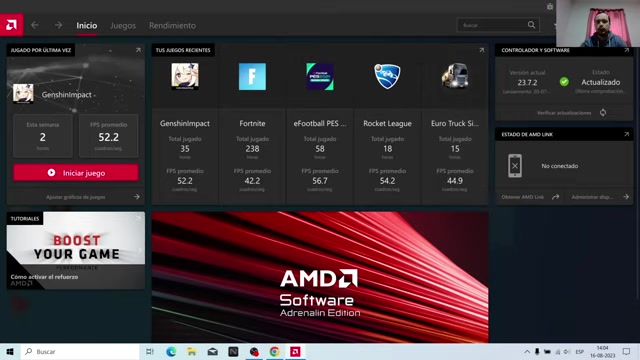
. Explore settings like Radeon Anti-Lag, Radeon Chill, and Radeon Image Sharpening to fine-tune performance and visual fidelity.
- Radeon Anti-Lag: Reduce input lag for a more responsive gaming experience, especially beneficial for competitive games.
- Radeon Chill: Dynamically regulate frame rates to save power and reduce heat when there is little on-screen movement.
- Radeon Image Sharpening: Sharpen visuals without significantly impacting performance, enhancing image clarity and detail.
Pay attention to the descriptions of each setting and experiment to find the best configuration for your specific needs. Remember that these settings may have varying effects depending on the game and hardware setup.
Tip 4: Power Consumption Awareness
Many new gaming laptops include AMD graphic cards. To maximize gaming performance, these may utilize more power. Be mindful of this when gaming on laptops, as thermal throttling can severely impact performance. Monitor temperatures and adjust settings to prevent overheating. Also be aware of what’s pulling the power in the background.
When gaming on laptops, it's crucial to monitor your system's temperature. Use monitoring software to track CPU and GPU temperatures. If temperatures consistently exceed safe limits, you can take steps to mitigate thermal throttling, such as cleaning out dust from vents, using a cooling pad, or adjusting in-game settings to reduce the graphics load.
How to Optimize Your AMD Drivers
Step 1: Accessing AMD Radeon Settings
The first step is accessing your AMD Radeon Settings. This is your central control panel for all things AMD graphics.
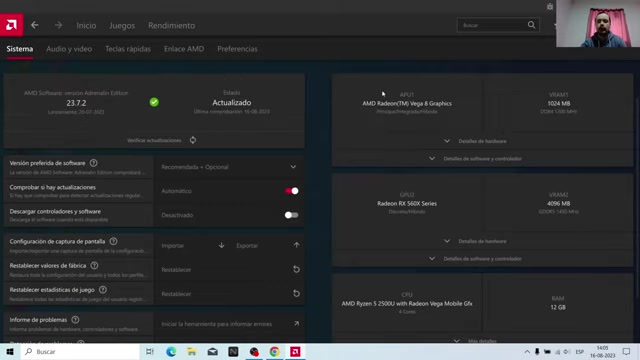
Typically, you can find this application by right-clicking on your desktop and selecting "AMD Radeon Settings" or finding it in your system tray. Make sure that you actually have this app!
AMD Radeon Settings acts as a central hub for customizing your graphics card's performance and visual settings. It allows you to create game-specific profiles, adjust display settings, monitor hardware performance, and access various advanced features. Navigating through this application is essential for optimizing your AMD gaming experience.
Step 2: Navigating the Interface
Once inside AMD Radeon Settings, you'll encounter a range of options categorized into different sections. Take some time to familiarize yourself with the layout and available settings. Some of the key sections to explore include:
- Gaming: Customize graphics settings for individual games.
- Display: Adjust display settings like resolution, refresh rate, and color profiles.
- Wattman: Monitor hardware performance and adjust fan speeds and voltages (advanced users only).
-
System: View system information, driver version, and hardware specifications.
The specific layout and options may vary slightly depending on your driver version, but the core functionalities remain consistent.
Step 3: Creating a Game Profile
To tailor settings for individual games
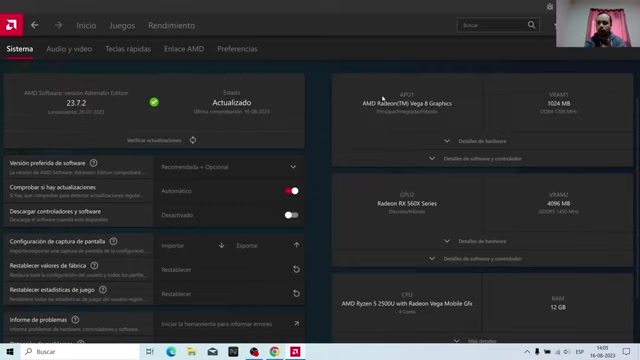
, it's best practice to create a game profile. This allows you to apply specific configurations to each game without affecting global settings. To create a game profile:
- Navigate to the "Gaming" section of AMD Radeon Settings.
- Click on "Add" or "Scan" to locate the executable file (.exe) of your game.
- Once the game is added, select it from the list to access its individual settings.
Creating game profiles enables you to fine-tune the performance and visuals for each game based on its specific requirements. This can be especially useful for older or less optimized titles that may benefit from custom configurations.
Step 4: Tuning Graphics Settings
Within each game profile, you'll find a range of graphics settings that can be adjusted to optimize performance. Key settings to consider include:
- Graphics Preset: Set an overall graphics quality level (Low, Medium, High, Ultra) to quickly adjust multiple settings.
- Texture Quality: Adjust the level of detail in textures, with higher quality settings requiring more VRAM.
- Anti-Aliasing: Smooth jagged edges by blending pixels, but can impact frame rates.
- Shadow Quality: Adjust the detail level of shadows, with higher quality settings being more performance-intensive.
- Anisotropic Filtering: Enhance the clarity of textures at oblique angles, improving overall image quality.
Experiment with these settings to find the optimal balance between visuals and performance.





Most people like






































Report
Please select a reason for reporting
- 13 Reasons to Switch from Snapchat to Text Messaging
- 7 Powerful Speech to Text Apps to Boost Productivity
- 10 Best Speech to Text Tools for Effortless Transcription
- 13 Free Tools to Easily Transcribe Audio to Text
- 15 Surprising Ways Google's Speech-to-Text Boosts Productivity
- 7 Best Free Online Audio to Text Transcription Tools
- 9 Tips to Transcribe Speech to Text Faster and Better
- 13 Best Speech to Text Software for Windows 10 in 2023
- 7 Tips for Choosing the Best Transcriber for Audio to Text
- 11 Reasons Why Dragon Speech-to-Text Apps are Game-Changers
- 6 Secrets to Enhance Your Speech to Text Transcription
- 6 Brilliant Ways to Boost Productivity with Talk-to-Text on Your MacBook
- 6 Ways Transcription Software Converts Audio to Text
- 8 Tips to Transcribe Speech to Text Like a Pro
- 6 Reasons IBM Watson Speech to Text is a Game-Changer
- 14 Powerful Ways Talk-to-Text Improves Your Workflow
- 12 Top Windows Speech-to-Text Software for Efficient Transcription
- 12 Game-Changing Benefits of Apple's Speech to Text Technology
- 9 Powerful Use Cases for AWS Speech to Text Technology
- 10 Easy Steps to Transcribe YouTube Videos to Text
- transcription audio en texte
- online audio transcription
- free audio file transcription
- free ai audio transcription
- audio transcription service
- audio transcription online free
- audio transcription free online
- audio to transcription software
- audio and transcript
- ai audio transcription free
- voice recording to text converter
- translate voice recording to text
- record voice to text
- audio recording to text converter
- voice recording and transcription
- chatgpt voice to text
- gmail voice to text
- speech to text reader
- speech to text ai free
- speech to talk
- How to Use AI Tools to Find Internal Linking Opportunities Across a Business Website
- Discover Your Perfect Haircut with AI Hairstyle Apps
- Free Reputation Calculator Tools: How They're Adapting to Score AI Visibility, Not Just Rankings
- Design Professional Flyers for Free on Your Phone
- Best Free Flyer Maker Apps for Android: Design Like a Pro
- How to Know If Your Business Is Ready for an AI Customer Service Agent
- Revolutionizing Storytelling: From Novels to Screenplays with AI
- Create Engaging Animated Explainer Videos with a Free AI Tool
- Stop Multi-Subscribing: Benchmark Top AI Visual Models in One Canvas
- Best Seedance 2.5 API Provider: Every Price on the Market, Checked at Source
- Top AI Social Media Management Tools: Automate Your Content Strategy
- Free AI Text to Video Generator: Create Stunning Videos from Text
- Discover 17 ChatGPT Alternatives: A Comprehensive Comparison
- Character.AI vs. Janitor AI: Which AI Chat Platform Reigns Supreme?
- Top Virtual Assistant Companies in 2026: Reviews, Pricing, and Plans Compared
- Unveiling FaceCheck.ID: Revolutionizing Reverse Image Searches with AI
- 11 Best AI Dialers in 2026: Features, Pricing, Pros and Cons
- How I Direct Consistent AI Clips: A Hands-On Guide to Multi-Model Generation
- A Realistic Review of the Photo Generator Image Tool
- Playwright MCP Server: Automated Web Testing with Agent Mode

Copyright ©2026 toolify