































Table of Contents
- Key Points
- Understanding Platform Engineering
- Understanding the Role of Observability
- Tools for the Future: Costs for Platform Engineering
- Platform Engineering: Pros, Cons, and Potential Challenges
- Frequently Asked Questions
- Related Questions


Understanding Platform Engineering
What is Platform Engineering?
Platform engineering is about enabling software engineers to write and own their code in production. Instead of throwing code 'over the wall' to operations teams, developers are empowered with self-service tools and infrastructure to manage their applications throughout the entire lifecycle. This approach fosters a sense of ownership, promotes faster iteration cycles, and reduces friction between development and operations.

At its heart, platform engineering is about creating a developer-centric ecosystem. Platform teams build and maintain internal platforms that simplify the complexities of cloud infrastructure, allowing developers to focus on delivering value to end-users. These platforms provide a standardized set of tools, services, and workflows for tasks such as:
- Application deployment
- Monitoring and logging
- Security and compliance
- Data management
By abstracting away the underlying infrastructure, platform engineering significantly reduces the cognitive load on developers, allowing them to ship code faster and with greater confidence.
Think of it as building a paved road for developers: they don't have to worry about paving it themselves, just driving efficiently on the clear and consistent road.
The Evolution from DevOps and SRE
While platform engineering builds upon the principles of DevOps and SRE, it represents a more structured and product-oriented approach.
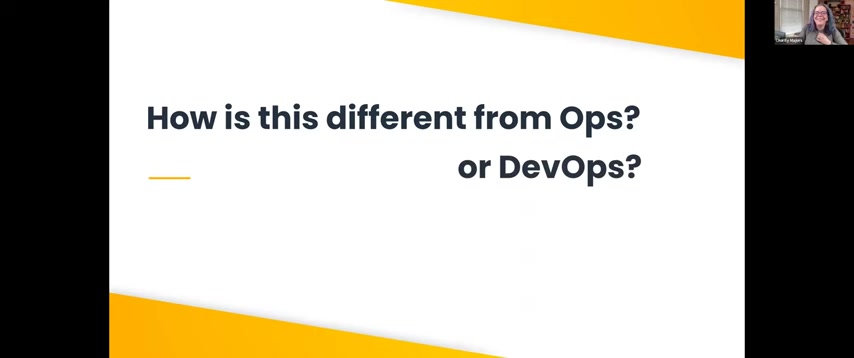
DevOps DevOps is about the cultural philosophies, practices, and tools that automate and integrate the work of developers and operations as a means for improving and shortening the development lifecycle. It addresses the need to break down silos between dev and ops teams
SRE SRE, pioneered by Google, applies software engineering principles to infrastructure and operations. SRE teams focus on reliability, scalability, and performance, often taking on operational responsibilities directly alongside developers. Many think of SRE a specific implementation of DevOps.
So what does that mean? If SRE is an implementation of DevOps, then Platform Engineering may be thought of as an evolution from it.
| Feature | DevOps | SRE | Platform Engineering |
|---|---|---|---|
| Core Focus | Breaking down silos, improving collaboration | Applying software engineering to operations, ensuring reliability | Enabling developer self-service and ownership, improving developer velocity |
| Team Structure | Cross-functional teams, shared responsibility | Dedicated SRE teams, shared operational responsibilities | Dedicated platform teams building internal developer platforms as a product |
| Scope | Broader cultural and process transformation | Focused on reliability, performance, and automation | Specific platforms, tools, and services that empower developer autonomy |
| Key Activities | Automating release pipelines, improving communication, shared tooling | Monitoring, incident response, capacity planning, code-based infrastructure | Building and maintaining internal platforms, standardizing developer workflows, vendor engineering |
While all these approaches share common ground, platform engineering takes a more proactive approach, focusing on building dedicated tools and services to specifically address developer needs. The goal is to enable developers to largely operate independently, reducing their reliance on specialized operations teams. The core idea being: All of these assume a split between development and operations – separate teams, separate roles collaborating across the divide.
Why Platform Engineering Matters
In today's fast-paced development environment, developer velocity is paramount. Companies need to be able to ship code quickly and reliably to stay competitive. The benefits of platform engineering include:
- Increased Developer productivity: By abstracting away complexity, developers can focus on building features rather than managing infrastructure.
- Faster Time to Market: Streamlined workflows and automated processes accelerate the release cycle.
- Improved Developer Experience: Developers are empowered with self-service tools and infrastructure, leading to greater satisfaction and a stronger sense of ownership.
- Reduced Operational Overhead: Platform teams handle the underlying infrastructure, freeing up development teams to concentrate on code.
- Enhanced Security and Compliance: Standardized platforms enforce consistent security policies and ensure compliance with regulations.
- Better Resource Utilization: Platforms can be designed to optimize resource allocation and reduce infrastructure costs.
Understanding the Role of Observability
From Old-School Monitoring to Platform-Style Observability
Traditional monitoring tools and practices focused on tracking system-level metrics, often relying on predefined thresholds and alerts. This approach could be reactive, making it difficult to proactively identify and resolve issues. Platform-style observability, on the other hand, provides a more holistic and granular view of system behavior.
Instead of simply tracking metrics, modern observability tools capture rich data about application performance, user behavior, and underlying infrastructure. This data is then used to identify patterns, pinpoint anomalies, and gain a deeper understanding of how systems are performing.
This shift requires a change in mindset and tooling. Instead of running in-house systems and looking at system-level metrics, platform teams need to evaluate the best vendor for the job then write glue code, create libraries and examples, and drive standarization.
This approach can then lead to actionable tasks across the development teams.








Most people like






























Report
Please select a reason for reporting
- 13 Reasons to Switch from Snapchat to Text Messaging
- 7 Powerful Speech to Text Apps to Boost Productivity
- 10 Best Speech to Text Tools for Effortless Transcription
- 13 Free Tools to Easily Transcribe Audio to Text
- 15 Surprising Ways Google's Speech-to-Text Boosts Productivity
- 7 Best Free Online Audio to Text Transcription Tools
- 9 Tips to Transcribe Speech to Text Faster and Better
- 13 Best Speech to Text Software for Windows 10 in 2023
- 7 Tips for Choosing the Best Transcriber for Audio to Text
- 11 Reasons Why Dragon Speech-to-Text Apps are Game-Changers
- 6 Secrets to Enhance Your Speech to Text Transcription
- 6 Brilliant Ways to Boost Productivity with Talk-to-Text on Your MacBook
- 6 Ways Transcription Software Converts Audio to Text
- 8 Tips to Transcribe Speech to Text Like a Pro
- 6 Reasons IBM Watson Speech to Text is a Game-Changer
- 14 Powerful Ways Talk-to-Text Improves Your Workflow
- 12 Top Windows Speech-to-Text Software for Efficient Transcription
- 12 Game-Changing Benefits of Apple's Speech to Text Technology
- 9 Powerful Use Cases for AWS Speech to Text Technology
- 10 Easy Steps to Transcribe YouTube Videos to Text
- transcription audio en texte
- online audio transcription
- free audio file transcription
- free ai audio transcription
- audio transcription service
- audio transcription online free
- audio transcription free online
- audio to transcription software
- audio and transcript
- ai audio transcription free
- voice recording to text converter
- translate voice recording to text
- record voice to text
- audio recording to text converter
- voice recording and transcription
- chatgpt voice to text
- gmail voice to text
- speech to text reader
- speech to text ai free
- speech to talk
- Design Professional Flyers for Free on Your Phone
- Best Free Flyer Maker Apps for Android: Design Like a Pro
- How to Know If Your Business Is Ready for an AI Customer Service Agent
- Revolutionizing Storytelling: From Novels to Screenplays with AI
- Create Engaging Animated Explainer Videos with a Free AI Tool
- Stop Multi-Subscribing: Benchmark Top AI Visual Models in One Canvas
- Best Seedance 2.5 API Provider: Every Price on the Market, Checked at Source
- AI OnlyFans: How to Generate $30,000/Month (Legally)
- Transform Your Script into an Engaging Video with AI Video Maker!
- AI Marketing Automation: A Comprehensive Guide for Small Businesses
- Design Professional Flyers for Free on Your Phone
- Best Free Flyer Maker Apps for Android: Design Like a Pro
- Unleash Creativity: AI Coloring Pages with ColoringBook.ai
- Generate Stunning AI Photos with Google Gemini: A Guide
- Boost Your Etsy Sales with Stunning Digital Invitations!
- Revolutionize Your Etsy Listing with AI Text Generator
- Create Coloring Pages with AI: A Bing AI Tutorial
- Photo Lab App: Transform Your Photos with Stunning AI Effects
- Effortless Design: Rewriting Text with Microsoft Designer's AI
- Create & Sell Kids' Coloring Books with AI - KDP Guide

Copyright ©2026 toolify