






















QueryGPT: Streamlining SQL Query Generation with Generative AI

Updated on May 02,2025

In today's data-driven world, the ability to efficiently query and manipulate data is crucial for businesses of all sizes. SQL, or Structured Query Language, is the standard language for interacting with databases. However, writing SQL queries can be time-consuming and require specialized knowledge. This is where QueryGPT comes in. Developed by Uber, QueryGPT leverages generative AI to translate natural language into SQL queries, making data access more accessible and boosting productivity for engineers, operations managers, and data scientists. Let's delve into how QueryGPT is revolutionizing the way we interact with data and the key learnings from its development.

Key Points

QueryGPT is a generative AI solution developed by Uber to convert natural language into SQL queries.

The primary motivation behind QueryGPT was to bridge the gap between natural language questions and complex SQL syntax, enhancing productivity.

QueryGPT utilizes large language models (LLMs), vector databases, and similarity search to generate SQL queries.

Key learnings from QueryGPT's development include the importance of data quality, model architecture, and a robust evaluation strategy.

SQL is a vital tool used daily by engineers, operation managers and data scientists at Uber to access and manipulate terabytes of data.

Understanding QueryGPT: Natural Language to SQL

What is QueryGPT?

QueryGPT is a cutting-edge solution developed by Uber that utilizes Generative AI to Translate natural language questions into SQL queries. This innovative tool addresses the challenge of efficiently querying and manipulating vast amounts of data, a common need for engineers, operations managers, and data scientists.
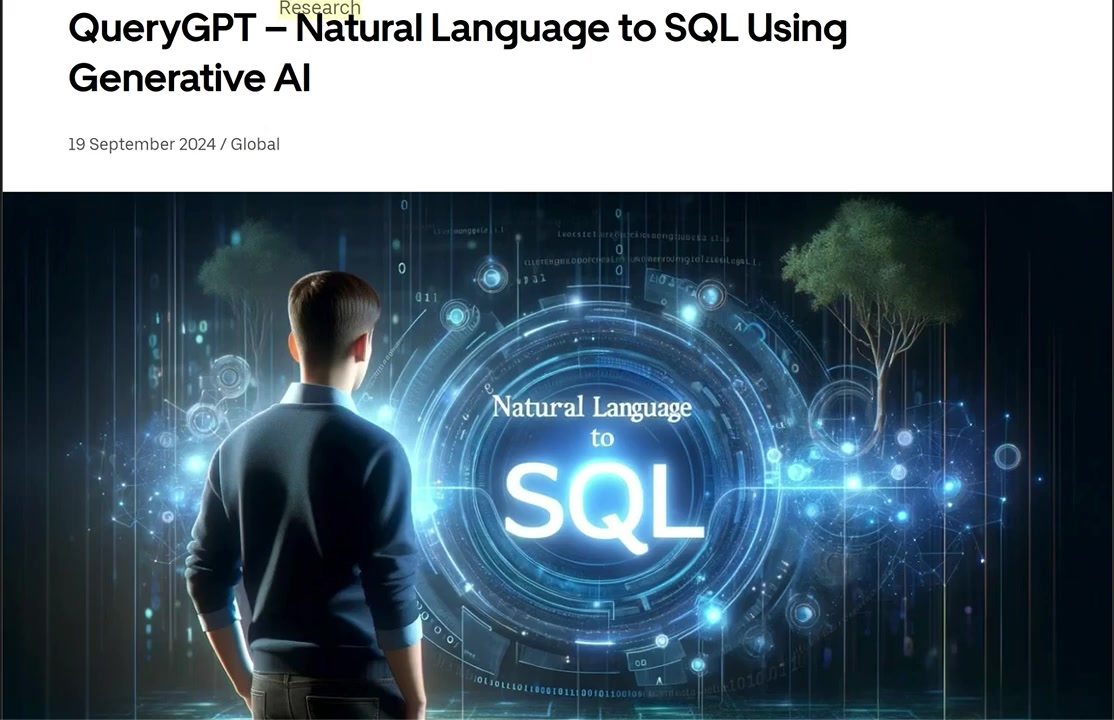
By bridging the gap between natural language and SQL, QueryGPT empowers users to generate complex queries with ease, significantly enhancing productivity. It relies on Large Language Models (LLMs) along with vector databases, and similarity search. The LLMs provide the ability to understand the question while the vector databases help to provide Relevant context of the database being questioned. Similarity searches help to fine tune the SQL query that is eventually generated.

The core function of QueryGPT is to make data more accessible to a wider range of users within an organization. Individuals without extensive SQL knowledge can now extract valuable insights from databases simply by posing questions in plain English. This democratization of data access fosters data-driven decision-making across various departments and roles.

The development of QueryGPT reflects a growing trend in the industry towards AI-powered solutions for data management and analysis. As businesses continue to accumulate massive datasets, tools like QueryGPT become increasingly essential for unlocking the potential Hidden within the data. It represents a significant step forward in making data more user-friendly and actionable.

The Motivation Behind QueryGPT

The impetus for creating QueryGPT stemmed from the inherent complexities and time investment associated with crafting SQL queries manually.
SQL, while powerful, requires a solid understanding of its syntax and the underlying database schema. Crafting effective SQL queries requires not only a solid understanding of SQL syntax, but also deep knowledge of how the internal data models represent business concepts. The goal was to democratize data access within Uber, allowing individuals with limited SQL expertise to efficiently retrieve and analyze information.

The traditional method of writing SQL queries often involves:

  • Understanding the database schema: Navigating complex tables and relationships can be daunting.
  • Remembering SQL syntax: Errors are common, leading to debugging and wasted time.
  • Optimizing queries for performance: Ensuring queries run efficiently requires advanced knowledge.

QueryGPT addresses these challenges by providing a user-friendly interface where users can simply type their questions in natural language. The AI-powered engine then translates these questions into optimized SQL queries, ready to be executed. This streamlined process frees up valuable time for data scientists and engineers, allowing them to focus on higher-level tasks such as data analysis and model building.

Ultimately, the motivation behind QueryGPT was to accelerate Data Insights and empower users to make better decisions based on readily available information. By simplifying the query process, QueryGPT fosters a more data-driven culture throughout the organization.

Deep Dive into QueryGPT's Architecture

Components of the QueryGPT System

QueryGPT's architecture is built around a sophisticated Blend of AI technologies, including Large Language Models (LLMs), vector databases, and similarity search algorithms. This combination enables it to accurately interpret natural language queries and translate them into precise SQL commands.

  1. Large Language Models (LLMs): At the heart of QueryGPT lies a powerful LLM. This model has been trained on massive datasets of text and code, enabling it to understand the nuances of human language and SQL syntax. When a user inputs a natural language query, the LLM analyzes the question, identifies key entities and relationships, and formulates a preliminary SQL query structure.

  2. Vector Databases: To enhance the accuracy and context of the generated queries, QueryGPT incorporates a vector database. This database stores embeddings of the database schema, including table names, column names, and relationships between tables. These embeddings capture the semantic meaning of the schema elements, allowing the system to identify relevant tables and columns based on the user's query.

  3. Similarity Search: The similarity search component plays a crucial role in refining the generated SQL query. It compares the LLM's preliminary query structure with similar queries stored in the database. By identifying and incorporating elements from previously successful queries, the system can improve the accuracy and efficiency of the final SQL command.

The interplay between these components is what makes QueryGPT so effective. The LLM provides the initial understanding of the query, the vector database provides context from the database schema, and the similarity search component refines the query based on past examples. This multi-layered approach ensures that the generated SQL queries are both accurate and optimized for performance.

The Benefits of This Architecture

QueryGPT's unique architecture provides several key advantages:

  • Improved Accuracy: The combination of LLMs, vector databases, and similarity search leads to more accurate SQL query generation.
  • Enhanced Efficiency: The system can quickly identify relevant tables and columns, reducing the time required to formulate a query.
  • Increased Scalability: The architecture is designed to handle large and complex databases, making it suitable for enterprise-level deployments.
  • Reduced Development Costs: By automating the query generation process, QueryGPT reduces the need for manual coding and debugging.

By leveraging these advanced AI technologies, QueryGPT offers a powerful and efficient solution for accessing and manipulating data. It empowers users to unlock valuable insights from their databases without the need for extensive SQL knowledge, driving data-driven decision-making across the organization.

How to Use QueryGPT

Step-by-Step Guide to Generating SQL Queries

Using QueryGPT is straightforward. Here's a step-by-step guide to generating SQL queries from natural language:

  1. Access the QueryGPT Interface: Open the QueryGPT application or web interface.
  2. Enter Your Question: Type your question in natural language into the query box. For example, "Show me the total number of rides per day."
  3. Select the Database: Choose the database you want to query from the available options.
  4. Review the Generated SQL: QueryGPT will generate an SQL query based on your question. Review the query to ensure it accurately reflects your intent.
  5. Execute the Query: Click the "Execute" button to run the generated SQL query against the database.
  6. Analyze the Results: The results of the query will be displayed in a table format. Analyze the data to gain insights.

Tips for Effective Querying:

  • Be Specific: The more specific your question, the more accurate the generated SQL query will be.
  • Use Clear Language: Avoid jargon and ambiguous terms in your questions.
  • Provide Context: If necessary, provide additional context to help QueryGPT understand your intent.
  • Review the Generated SQL: Always review the generated SQL query before executing it to ensure its accuracy.

With these simple steps, anyone can leverage QueryGPT to access and analyze data without needing to write SQL code manually. The key is to be clear, specific, and to review the results to ensure accuracy. SQL query can be easily generated with the help of natural language through generative AI.

QueryGPT Pricing

Understanding the Cost Structure

As QueryGPT is an internal tool developed by Uber, it is not offered as a standalone product for external customers. Therefore, there is no specific pricing information available for QueryGPT itself.

However, businesses interested in implementing similar natural language to SQL solutions can explore various commercial offerings. These solutions often have different pricing models, including:

  • Subscription-based pricing: Users pay a recurring fee (monthly or annually) for access to the software.
  • Usage-based pricing: Charges are based on the number of queries executed or the amount of data processed.
  • Enterprise licensing: Custom pricing agreements are negotiated for large organizations with specific needs.

When evaluating different natural language to SQL solutions, consider factors such as the accuracy of query generation, the scalability of the platform, the level of customer support provided, and the overall cost-effectiveness. SQL query generated through natural language can reduce cost and make the team more efficient.

Advantages and Disadvantages of QueryGPT

👍 Pros

Improved data accessibility for non-technical users

Increased productivity for data scientists and engineers

Faster time to insight

Reduced development costs

Enhanced data-driven decision-making

👎 Cons

Potential for inaccuracies in query generation

Dependence on data quality

Limited support for complex SQL features

Security concerns related to data access

Core Features of QueryGPT

Key Functionalities and Capabilities

QueryGPT boasts a rich set of features designed to streamline the SQL query generation process and enhance data accessibility.

  • Natural Language Processing: The system utilizes advanced NLP techniques to understand and interpret user questions in natural language. The NLP feature helps to generate SQL queries in a simple and easy format.
  • SQL Query Generation: QueryGPT automatically generates SQL queries based on the user's natural language input. This helps to automate the SQL query generation.
  • Database Schema Understanding: The system can analyze and understand the schema of various databases, allowing it to generate accurate queries. Understanding the database schema helps in accurate queries.
  • Query Optimization: QueryGPT optimizes the generated SQL queries for performance, ensuring efficient data retrieval. QueryGPT ensures performance by optimizing the SQL queries.
  • User-Friendly Interface: The system provides a simple and intuitive interface for users to interact with. A user-friendly interface makes it easy for everyone to use the system.
  • Integration with Data Visualization Tools: QueryGPT can be integrated with popular data visualization tools for seamless data analysis. With data visualization tools, the system can display data in graphical form.

These core features make QueryGPT a powerful tool for empowering data-driven decision-making within organizations. It simplifies the query process, reduces the need for specialized SQL knowledge, and accelerates the time to insight.

Use Cases for QueryGPT

Real-World Applications of Natural Language to SQL

QueryGPT has a wide range of potential use cases across various industries and roles.

  • Data Analysis: Data scientists can use QueryGPT to quickly extract and analyze data for research and model building.
  • Business Intelligence: Business analysts can leverage QueryGPT to generate reports and dashboards for tracking key performance indicators (KPIs). KPIs can be tracked through reports and dashboards generated from SQL queries.
  • Customer Support: Customer support representatives can use QueryGPT to quickly retrieve customer information and resolve issues.
  • Operations Management: Operations managers can utilize QueryGPT to monitor system performance and identify potential problems.
  • Self-Service Analytics: Empowering non-technical users to access and analyze data on their own. With self-service analytics, users can get data at their own convinience.

Specific Examples:

  • Retail: A retail company could use QueryGPT to analyze sales data and identify top-selling products.
  • Finance: A financial institution could use QueryGPT to detect fraudulent transactions.
  • Healthcare: A Healthcare provider could use QueryGPT to track patient outcomes and improve care quality.

QueryGPT enables individuals across different departments and roles to access and analyze data, fostering a more data-driven culture throughout the organization. This results in better decision-making, improved efficiency, and a competitive advantage.

Frequently Asked Questions (FAQ)

What types of databases does QueryGPT support?
QueryGPT is designed to support a wide range of relational databases, including MySQL, PostgreSQL, SQL Server, and Oracle. The specific database support may vary depending on the implementation and configuration. Make sure you have one of the support relational databases.
How accurate is QueryGPT in generating SQL queries?
QueryGPT's accuracy depends on several factors, including the complexity of the query, the clarity of the natural language input, and the quality of the underlying data. In general, the system achieves a high level of accuracy, but it is always recommended to review the generated SQL query before executing it. Always review the generated SQL query for accuracy.
Can I customize the generated SQL queries?
Yes, QueryGPT provides options for customizing the generated SQL queries. Users can modify the query structure, add or remove filters, and adjust other parameters to fine-tune the query to their specific needs. The system offers you a way to customize the SQL queries for accuracy and efficiency.
Is QueryGPT secure?
Security is a top priority for QueryGPT. The system incorporates various security measures to protect sensitive data, including access controls, encryption, and audit logging. The access controls ensure that the sensitive data is safe.
Does QueryGPT require any special hardware or software?
QueryGPT can be deployed on standard hardware and software infrastructure. The specific requirements may vary depending on the size of the database and the number of users. The system requirements depend on the number of users and the size of the databases.

Related Questions

How does QueryGPT compare to other natural language to SQL solutions?
QueryGPT distinguishes itself from other natural language to SQL solutions through its unique architecture, its focus on accuracy and efficiency, and its seamless integration with existing data infrastructure. Compared to other available options, QueryGPT has a superior architecture and is designed for efficiency. Here’s a comparative table: Feature QueryGPT Alternative Solution A Alternative Solution B Core Architecture LLMs, Vector Databases, Similarity Search Rule-Based System Statistical Model Accuracy High Moderate Moderate Efficiency Very Efficient Less Efficient Less Efficient Scalability Highly Scalable Limited Scalability Limited Scalability Customization Extensive Customization Options Limited Customization Options Limited Customization Options Security Robust Security Measures Basic Security Features Basic Security Features Integration Seamless Integration with Existing Data Infrastructure Requires Significant Integration Effort Requires Significant Integration Effort Pricing Internal Tool - No Direct Cost Subscription-Based Usage-Based Here is a deeper exploration of how QueryGPT stacks up against other natural language to SQL solutions: Architecture: QueryGPT’s unique architecture, combining LLMs, vector databases, and similarity search, enables it to better understand the context and nuances of user queries. Rule-based systems rely on predefined rules and patterns, which can be inflexible and struggle with complex queries. Statistical models, on the other hand, may lack the contextual understanding necessary for accurate query generation. Accuracy: QueryGPT’s multi-layered approach to query generation results in higher accuracy compared to other solutions. The LLM provides the initial understanding of the query, the vector database provides context from the database schema, and the similarity search component refines the query based on past examples. This leads to more accurate and reliable results. Efficiency: QueryGPT is designed for efficiency, with the ability to quickly identify relevant tables and columns and generate optimized SQL queries. This reduces the time required to formulate a query and improves overall performance. Scalability: QueryGPT’s architecture is highly scalable, making it suitable for enterprise-level deployments. It can handle large and complex databases without compromising performance. Customization: QueryGPT offers extensive customization options, allowing users to fine-tune the generated SQL queries to their specific needs. This level of customization is not typically available in other natural language to SQL solutions. In summary, QueryGPT offers a superior combination of accuracy, efficiency, scalability, and customization compared to other natural language to SQL solutions. Its unique architecture and focus on data quality make it a powerful tool for empowering data-driven decision-making within organizations.

Most people like














