































Table of Contents
- Key Points
- Understanding Physics Solver Apps
- Step-by-Step Guide: Vector Calculations with Physics Solver Apps
- How to solve exercises with Physics Solver Apps?
- Pricing of Physics Solver Apps
- Advantages and Disadvantages of Using Physics Solver Apps
- Core Features of Solver for Physics Apps
- Use Cases
- FAQ
- Related Questions


Understanding Physics Solver Apps
What is a Physics Solver App?
A Physics Solver app is a software application designed to assist in solving physics-related problems. These apps typically include a range of tools and features to help users input, calculate, and understand various physics concepts.
These tools often go beyond simple calculators, offering simulations, diagrams, and step-by-step solutions to aid in comprehension and problem-solving skills. These apps can handle a wide variety of topics from simple mechanics to electromagnetism, thermodynamics and even quantum mechanics, all in one integrated environment. Users find them immensely helpful for both learning and real-world applications.
For students, these physics solver applications can be invaluable resources, particularly when dealing with challenging Homework assignments or exam preparation. They bridge the gap between theoretical knowledge and practical application. For professionals, they can serve as a quick reference or calculation tool, making complex analyses simpler and more efficient.
The availability of such tools has significantly impacted the approach to physics education and practice. By providing immediate feedback and detailed solutions, users can better grasp the underlying principles and develop stronger analytical skills. These applications promote self-directed learning, allowing individuals to explore various physics concepts at their own pace and Deepen their understanding through hands-on problem-solving.
Benefits of Using Physics Solver Apps
Using Physics Solver apps offers several key benefits:
-
Efficiency: These apps drastically reduce the time it takes to solve complex physics problems. Manual calculations can be time-consuming and prone to errors, but apps provide quick, accurate results.
-
Accuracy: Physics Solver apps minimize the risk of human error by automating calculations. This ensures accurate answers, which are critical in both academic and professional settings.
-
Learning Aid: Many Physics Solver apps provide step-by-step solutions, allowing users to understand the logic and methods behind each calculation. This enhances learning and retention, making it easier to apply concepts to future problems.
-
Accessibility: Physics Solver apps are readily available on smartphones and tablets, making them accessible anytime, anywhere. This is particularly useful for students who need to work on assignments outside of the classroom.
-
Comprehensive Coverage: Physics Solver apps usually cover a broad range of physics topics, from mechanics to thermodynamics. This comprehensive coverage ensures that users have a versatile tool to tackle diverse problem types.
-
Visualization: Some apps include diagrams, graphs, and simulations that help users Visualize abstract physics concepts. Visual aids can greatly enhance understanding and make complex theories easier to grasp.
-
Personalized Learning: Many apps offer personalized learning experiences by tracking progress and identifying areas where the user needs additional support. This helps students focus their efforts on the topics where they struggle the most.
-
Cost-Effectiveness: Physics Solver apps are often more affordable than traditional textbooks and tutoring services. Many apps offer free versions with basic features or paid versions with advanced capabilities, giving users flexible options to choose from.
Step-by-Step Guide: Vector Calculations with Physics Solver Apps
Calculating the Sum of Vectors
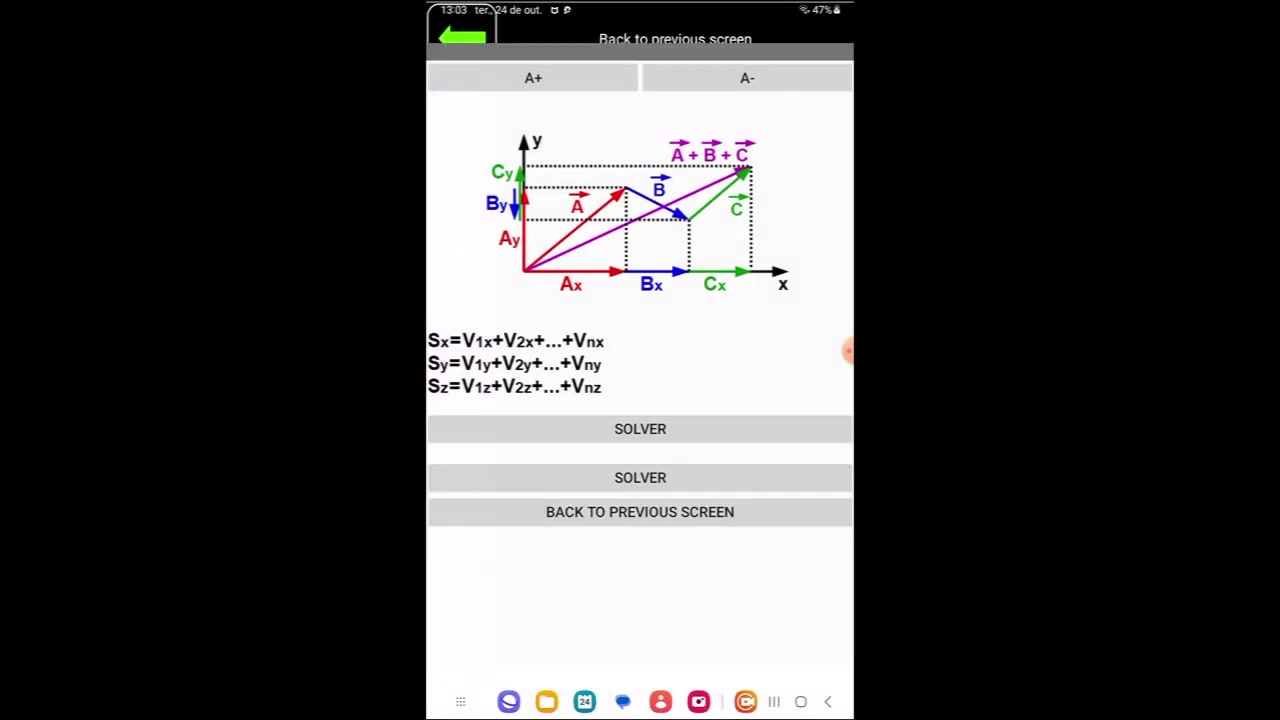
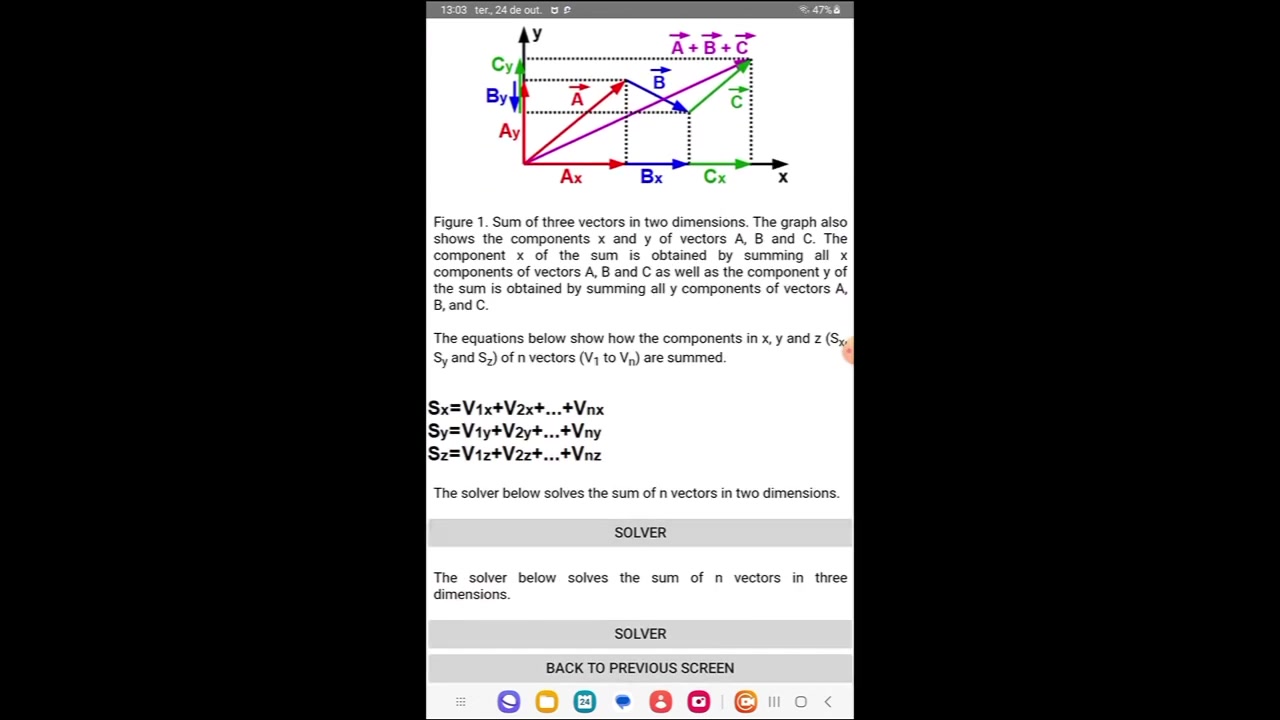
One fundamental aspect of physics is understanding and manipulating vectors.
Physics Solver apps make it easy to add vectors, calculate their magnitudes, and resolve them into components. Here's a step-by-step guide:
- Input the Vectors: Launch your Physics Solver app and navigate to the vector calculation section. You'll typically find options for 2D or 3D vector operations.
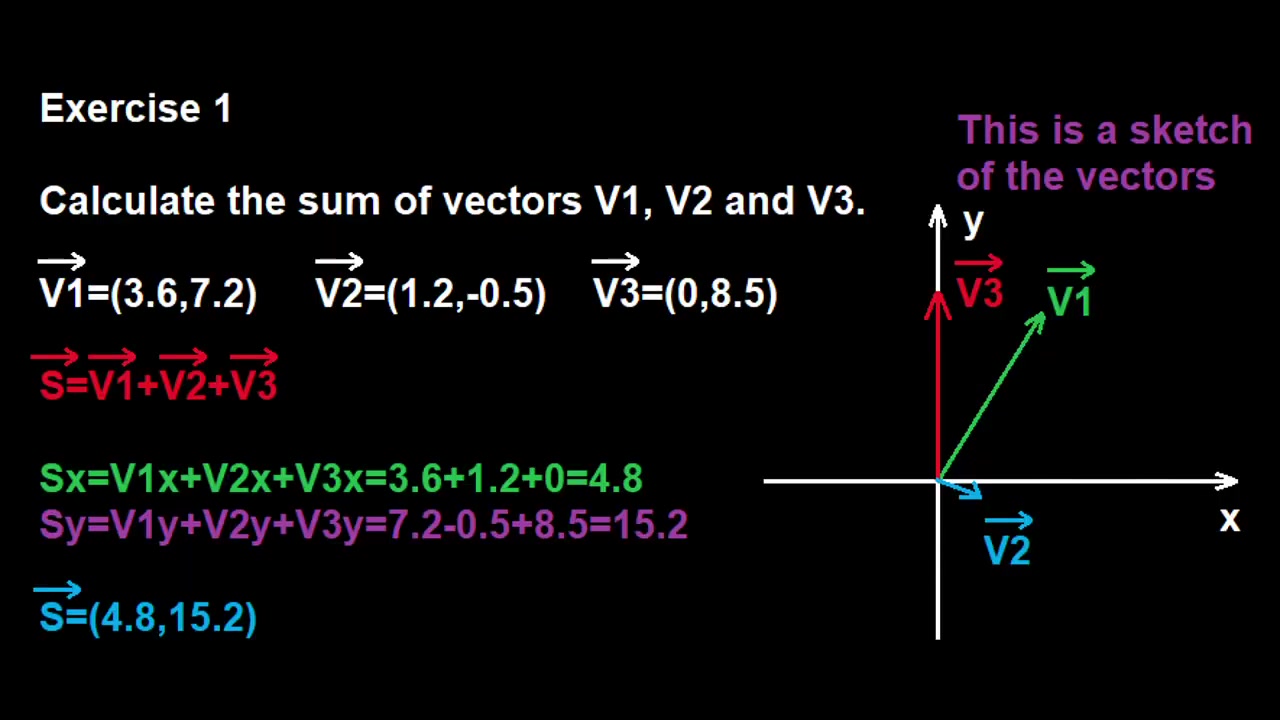
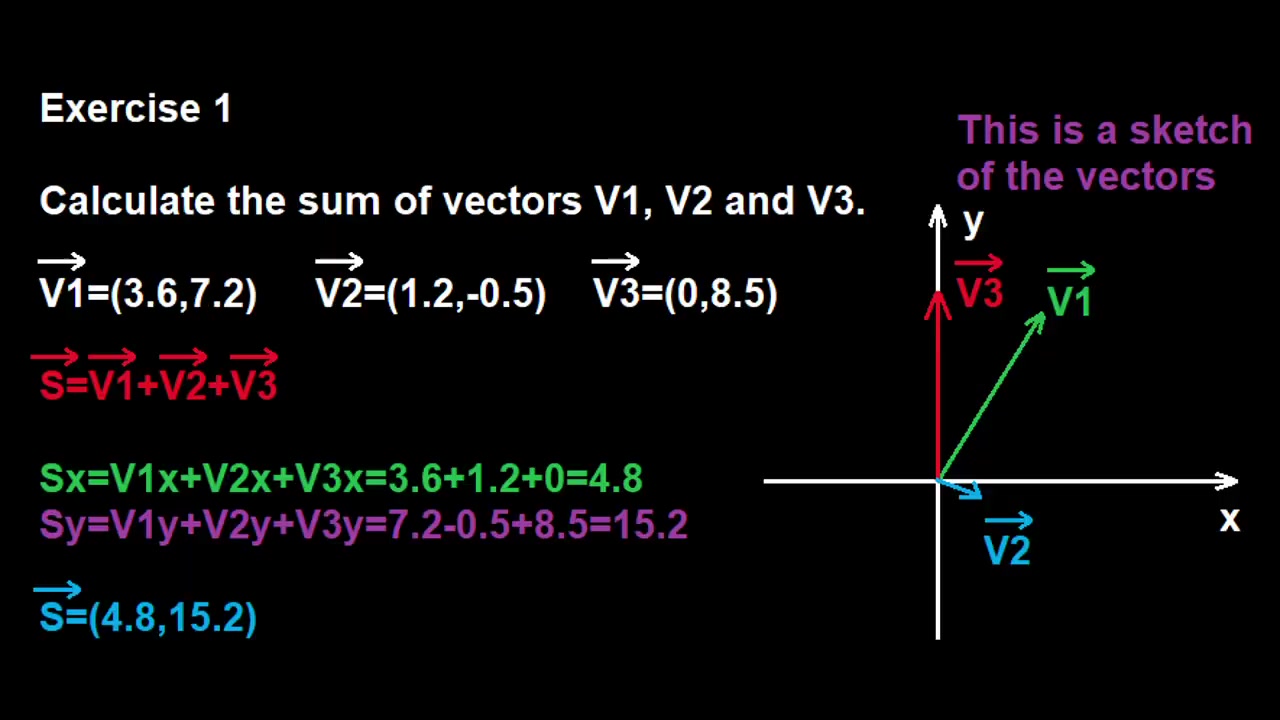
- Enter the Components: Input the x, y, and z components (if applicable) of each vector. For example, if you have vectors V1 = (3.6, 7.2), V2 = (1.2, -0.5), and V3 = (0, 8.5), enter these values accordingly.
- Calculate the Sum: Use the app's function to calculate the sum of the vectors. The app will add the corresponding components of each vector to find the resultant vector (S).
- Understand the Result: The app will display the components of the resultant vector. For example, Sx = V1x + V2x + V3x = 3.6 + 1.2 + 0 = 4.8 and Sy = V1y + V2y + V3y = 7.2 - 0.5 + 8.5 = 15.2, giving you the resultant vector S = (4.8, 15.2).
- Visualize (If Available): Some Physics Solver apps provide a visual representation of the vectors, helping you understand their direction and magnitude. This can be particularly useful for visualizing the resultant vector.
By following these steps, you can quickly and accurately calculate the sum of vectors using a Physics Solver app. This is a crucial skill in many areas of physics, including mechanics, electromagnetism, and more.
Solving Kinematics Problems
Kinematics, the study of motion, is another core area where Physics Solver apps can be invaluable. Let's explore how to use these apps to solve common kinematics problems:
-
Identify the Known Variables: Determine the known variables in your problem, such as initial velocity (V0), acceleration (a), time (t), and displacement (Δx).
-
Select the Appropriate Equation: Choose the Relevant kinematics equation based on the known variables and what you need to find. Commonly used equations include:
- V = V0 + a⋅t
- Δx = V0⋅t + 0.5⋅a⋅t^2
- V^2 = V0^2 + 2⋅a⋅Δx
-
Input the Values: Enter the known values into the Physics Solver app's kinematics calculator. Be sure to use the correct units for each variable.
-
Calculate the Unknown: Use the app to calculate the unknown variable. For example, if you want to find the final velocity (V) given V0, a, and t, input those values and solve for V.
-
Analyze the Result: Ensure the answer makes sense in the context of the problem. Check the units and consider whether the magnitude of the result is reasonable.
Let's consider an example: A body has an initial velocity of 20 m/s and a constant acceleration of 10 m/s². Calculate its speed after it moves 100 m. Using Torricelli's equation (V^2 = V0^2 + 2⋅a⋅Δx), we input V0 = 20 m/s, a = 10 m/s², and Δx = 100 m into the Physics Solver app. The app calculates V ≈ 49.0 m/s.
With Physics Solver apps, complex kinematics calculations become straightforward, helping you grasp the fundamental principles of motion.
How to solve exercises with Physics Solver Apps?
Solving Circular Motion Problems
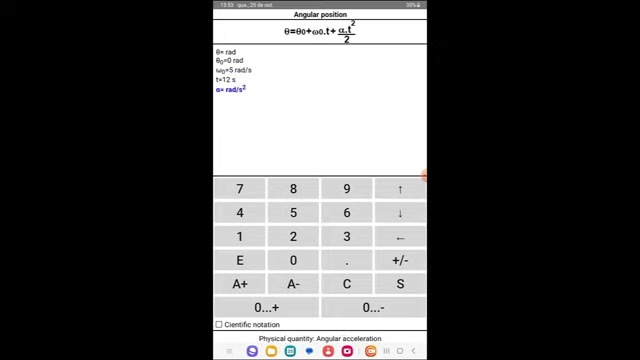
Circular motion is another topic that can be Simplified with the right Physics Solver app. Let's consider an example where we have a constant acceleration of 15 rad/s² and an initial speed of 5 rad/s and we want to calculate the final angular position after 12 s if the initial angular position is 0.
-
Identify the Parameters: Determine the parameters like initial angular position (θ0), initial speed (ω0), constant angular acceleration (α), and the time (t) for which you want to calculate the final angular position (θ).
-
Select the Appropriate Equation: Choose the equation that relates the parameters to find the final angular position:
θ = θ0 + ω0⋅t + 0.5⋅α⋅t^2
-
Substitute the known values into the equation:
θ = 0 + 5⋅12 + 0.5⋅15⋅12^2
-
Use your Physics Solver app to calculate the final answer.
θ = 1140 rads
By using these steps, Physics Solver apps makes it simple to solve even complex circular motion problems.
Pricing of Physics Solver Apps
Cost-Effective Solutions
Physics Solver apps come in various pricing models. Many offer free versions with basic functionalities, allowing users to test the waters before committing to a subscription. Premium versions unlock advanced features, step-by-step solutions, and ad-free experiences.
Here's a general overview of the pricing structure:
- Free Version: Includes basic calculations and limited access to features.
- Premium Subscription (Monthly): Offers full access to all features, step-by-step solutions, and no ads, typically ranging from $2.99 to $9.99 per month.
- Premium Subscription (Annual): Provides a more cost-effective solution for long-term use, usually priced between $29.99 and $99.99 per year.
- One-Time Purchase: Some apps offer a one-time purchase option for lifetime access, which can range from $49.99 to $199.99.
Note: Pricing may vary depending on the app platform (iOS, Android) and the specific features offered. Some apps also provide educational discounts for students and teachers.
Core Features of Solver for Physics Apps
What features these apps can bring
Solver for Physics apps have a range of features that are designed to assist in solving physics-related problems. These typically include
-
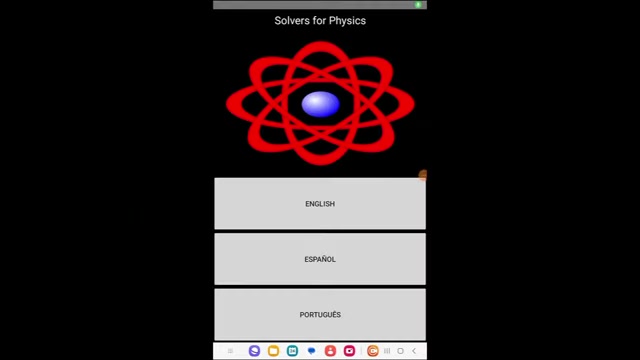
Multiple Languages: This app supports English, Spanish, and Portuguese.
-
Mechanics: Provides tools for solving problems related to motion, forces, energy, and Momentum.
-
Electricity: Includes calculators and solvers for electrical circuits, electromagnetism, and electrostatics.
-
Magnetism: Helps in calculating magnetic fields, forces, and electromagnetic induction.
-
Thermodynamics: Assists with problems related to heat, energy, and entropy.
-
Optics, Waves and Oscillations: Covers lenses, wave interference, simple harmonic motion (SHM), and Wave propagation.
-
Quantum Mechanics: Offers solvers for basic quantum mechanical systems and calculations.
-
Relativity: Provides tools for special and general relativity calculations.
-
Atoms: Includes solvers for atomic structure and properties.
-
Vectors and Coordinates: Enables vector manipulation, coordinate transformations, and related calculations.
-
Statistics: Supports statistical analysis for physics-related data.
Additionally, these physics solver apps also come with an extensive help feature. This comprehensive help feature will explain how each section of the app is used, ensuring that users get the maximum possible use of the application's functions.





Most people like



































Report
Please select a reason for reporting
- 13 Reasons to Switch from Snapchat to Text Messaging
- 7 Powerful Speech to Text Apps to Boost Productivity
- 10 Best Speech to Text Tools for Effortless Transcription
- 13 Free Tools to Easily Transcribe Audio to Text
- 15 Surprising Ways Google's Speech-to-Text Boosts Productivity
- 7 Best Free Online Audio to Text Transcription Tools
- 9 Tips to Transcribe Speech to Text Faster and Better
- 13 Best Speech to Text Software for Windows 10 in 2023
- 7 Tips for Choosing the Best Transcriber for Audio to Text
- 11 Reasons Why Dragon Speech-to-Text Apps are Game-Changers
- 6 Secrets to Enhance Your Speech to Text Transcription
- 6 Brilliant Ways to Boost Productivity with Talk-to-Text on Your MacBook
- 6 Ways Transcription Software Converts Audio to Text
- 8 Tips to Transcribe Speech to Text Like a Pro
- 6 Reasons IBM Watson Speech to Text is a Game-Changer
- 14 Powerful Ways Talk-to-Text Improves Your Workflow
- 12 Top Windows Speech-to-Text Software for Efficient Transcription
- 12 Game-Changing Benefits of Apple's Speech to Text Technology
- 9 Powerful Use Cases for AWS Speech to Text Technology
- 10 Easy Steps to Transcribe YouTube Videos to Text
- transcription audio en texte
- online audio transcription
- free audio file transcription
- free ai audio transcription
- audio transcription service
- audio transcription online free
- audio transcription free online
- audio to transcription software
- audio and transcript
- ai audio transcription free
- voice recording to text converter
- translate voice recording to text
- record voice to text
- audio recording to text converter
- voice recording and transcription
- chatgpt voice to text
- gmail voice to text
- speech to text reader
- speech to text ai free
- speech to talk
- How to Use AI Tools to Find Internal Linking Opportunities Across a Business Website
- Discover Your Perfect Haircut with AI Hairstyle Apps
- Free Reputation Calculator Tools: How They're Adapting to Score AI Visibility, Not Just Rankings
- Design Professional Flyers for Free on Your Phone
- Best Free Flyer Maker Apps for Android: Design Like a Pro
- How to Know If Your Business Is Ready for an AI Customer Service Agent
- Revolutionizing Storytelling: From Novels to Screenplays with AI
- Create Engaging Animated Explainer Videos with a Free AI Tool
- Stop Multi-Subscribing: Benchmark Top AI Visual Models in One Canvas
- Best Seedance 2.5 API Provider: Every Price on the Market, Checked at Source
- Top AI Social Media Management Tools: Automate Your Content Strategy
- Free AI Text to Video Generator: Create Stunning Videos from Text
- Discover 17 ChatGPT Alternatives: A Comprehensive Comparison
- Character.AI vs. Janitor AI: Which AI Chat Platform Reigns Supreme?
- Top Virtual Assistant Companies in 2026: Reviews, Pricing, and Plans Compared
- Unveiling FaceCheck.ID: Revolutionizing Reverse Image Searches with AI
- 11 Best AI Dialers in 2026: Features, Pricing, Pros and Cons
- How I Direct Consistent AI Clips: A Hands-On Guide to Multi-Model Generation
- A Realistic Review of the Photo Generator Image Tool
- Playwright MCP Server: Automated Web Testing with Agent Mode

Copyright ©2026 toolify