






Table of Contents
- Key Points
- Essential Python Cheat Sheets for 2025
- Markdown Tables for Structuring Data in Python Cheat Sheets
- How to Effectively Use Python Cheat Sheets
- Pros and Cons of Using Python Cheat Sheets
- Frequently Asked Questions
- Related Questions


Essential Python Cheat Sheets for 2025
Why Every Python Coder Needs Cheat Sheets
In the fast-paced world of Python development, efficiency is key. Cheat sheets are incredibly useful tools that provide quick access to critical information,
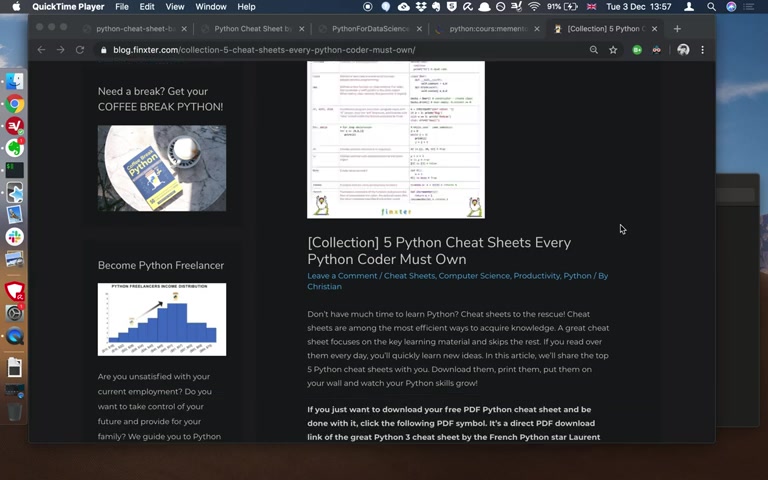
saving time and improving productivity. Especially for beginners, cheat sheets offer a structured way to understand and remember important Python concepts. Even experienced developers can benefit from having these resources handy, enabling them to quickly reference syntax, functions, and modules.
Cheat sheets also promote continuous learning. By reviewing them regularly, you can reinforce your knowledge and discover new features or best practices. They serve as a constant reminder of essential Python concepts, ensuring you're always at the top of your Game. As the programming landscape evolves, these quick references keep you updated with the latest changes and improvements in Python.
Cheat sheets also serve as memory aids, allowing developers to recall rarely used, but important, coding elements, which helps in the writing of code and reduction of errors.
- Key Benefits:
- Faster Coding: Instantly access syntax and functions.
- Improved Accuracy: Reduce errors with quick references.
- Continuous Learning: Reinforce knowledge and discover new features.
- Time Saving: No need to search through extensive documentation.
- Enhanced Productivity: Streamline your Python projects.
Cheat Sheet #1: Laurent Pointal's Python 3 Cheat Sheet
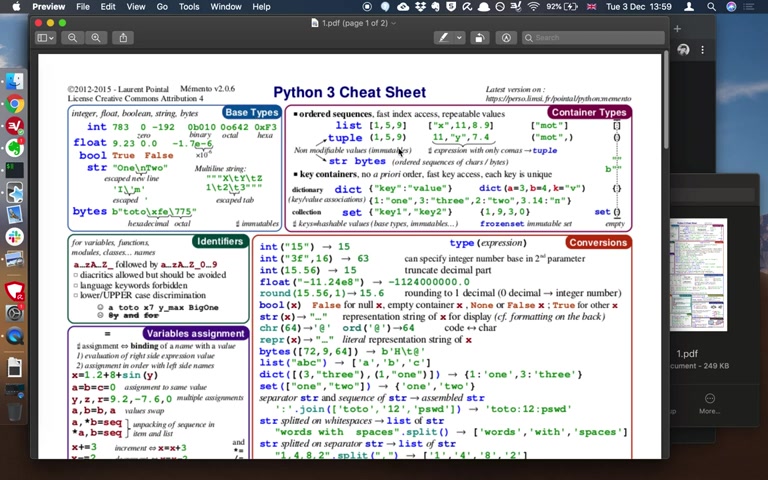
This cheat sheet is considered a top choice for its concise and comprehensive coverage of Python. At only two pages long, it is designed to pack as much value as possible into a small area, making it an efficient resource. It is best suited for those who want to quickly refresh their knowledge or need a compact reference during coding Sessions.
It provides valuable information for the full range of Python users, from the beginner to the advanced coder.
- Core Features:
- Comprehensive Coverage: Covers a wide range of Python topics.
- Concise Format: Only two pages for quick referencing.
- Suitable for All Levels: From beginners to advanced coders.
Cheat Sheet #2: Python Beginner Cheat Sheet From Python Crash Course
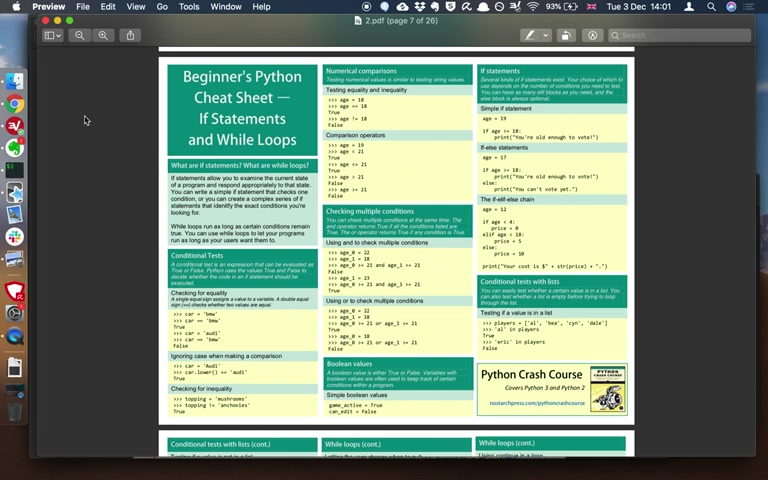
This cheat sheet, part of the 'Python Crash Course' book, provides more depth with 26 pages of detailed information. It is ideal for those looking for a thorough review of Python concepts, including variables, data structures, exceptions, and classes. It's perfect for someone wanting a very complete and well organized cheat sheet.
- Key Highlights:
- Extensive Detail: Includes 26 pages of in-depth explanations.
- Beginner-Friendly: Clear and structured for new learners.
- Comprehensive Coverage: Covers variables, data structures, exceptions, and classes.
Cheat Sheet #3: Python for Data Science
Aimed at data scientists and machine learning enthusiasts, this cheat sheet focuses on the essentials of Python for data analysis. It includes key libraries like NumPy and provides a quick reference for performing data manipulation, analysis, and visualization tasks. For those working with data science applications, this cheat sheet is very valuable.
- Core Components:
- Data Science Focus: Targeted at data analysis and machine learning.
- NumPy Essentials: Quick reference for NumPy arrays and operations.
- Ideal for Data Tasks: Perfect for data manipulation, analysis, and visualization.
Cheat Sheet #4: Cheatography's Python Cheat Sheet
Cheatography offers a Python cheat sheet geared towards more advanced learners. It covers class and STRING methods, as well as system calls from the sys module. Once you’re comfortable defining basic classes and command-line interfaces, getting this cheat sheet will take you to another level.
Cheatography’s focus is for advanced learners with class and string knowledge.
- Features:
- Covers Class and String: Provides information on methods and other details.
- System Modules Covered: Information on sys calls included.
- Suited for Advanced Users: Ideal for users already comfortable with class definitions and command-line interfaces.
How to Effectively Use Python Cheat Sheets
Printing and Displaying Cheat Sheets
To get the most out of your Python cheat sheets, consider printing them and placing them within easy reach. The act of physically handling the cheat sheets can enhance retention and make them more accessible during coding sessions. Stick them on your wall so that you can look at them when you get stuck. A lot of developers have had great success when doing so.

- Tips for Effective Use:
- Print and Display: Keep physical copies nearby for quick reference.
- Review Regularly: Refresh your knowledge by reading them daily.
- Focus on Key Areas: Highlight the most Relevant sections for your projects.
- Use as a Starting Point: Encourage deeper exploration into Python topics.
- Integrate into Workflow: Use cheat sheets as part of your regular coding process.





Most people like


































Report
Please select a reason for reporting
- 13 Reasons to Switch from Snapchat to Text Messaging
- 7 Powerful Speech to Text Apps to Boost Productivity
- 10 Best Speech to Text Tools for Effortless Transcription
- 13 Free Tools to Easily Transcribe Audio to Text
- 15 Surprising Ways Google's Speech-to-Text Boosts Productivity
- 7 Best Free Online Audio to Text Transcription Tools
- 9 Tips to Transcribe Speech to Text Faster and Better
- 13 Best Speech to Text Software for Windows 10 in 2023
- 7 Tips for Choosing the Best Transcriber for Audio to Text
- 11 Reasons Why Dragon Speech-to-Text Apps are Game-Changers
- 6 Secrets to Enhance Your Speech to Text Transcription
- 6 Brilliant Ways to Boost Productivity with Talk-to-Text on Your MacBook
- 6 Ways Transcription Software Converts Audio to Text
- 8 Tips to Transcribe Speech to Text Like a Pro
- 6 Reasons IBM Watson Speech to Text is a Game-Changer
- 14 Powerful Ways Talk-to-Text Improves Your Workflow
- 12 Top Windows Speech-to-Text Software for Efficient Transcription
- 12 Game-Changing Benefits of Apple's Speech to Text Technology
- 9 Powerful Use Cases for AWS Speech to Text Technology
- 10 Easy Steps to Transcribe YouTube Videos to Text
- transcription audio en texte
- online audio transcription
- free audio file transcription
- free ai audio transcription
- audio transcription service
- audio transcription online free
- audio transcription free online
- audio to transcription software
- audio and transcript
- ai audio transcription free
- voice recording to text converter
- translate voice recording to text
- record voice to text
- audio recording to text converter
- voice recording and transcription
- chatgpt voice to text
- gmail voice to text
- speech to text reader
- speech to text ai free
- speech to talk
- ChatGPT Knows Ford. It Just Doesn't Quote Ford
- Meshy AI: How to Create 3D Models from Text and Images
- How SEO and Marketing Dashboards Empower Agencies to Drive Results
- How to Use AI Tools to Find Internal Linking Opportunities Across a Business Website
- Discover Your Perfect Haircut with AI Hairstyle Apps
- Free Reputation Calculator Tools: How They're Adapting to Score AI Visibility, Not Just Rankings
- Design Professional Flyers for Free on Your Phone
- Best Free Flyer Maker Apps for Android: Design Like a Pro
- How to Know If Your Business Is Ready for an AI Customer Service Agent
- Revolutionizing Storytelling: From Novels to Screenplays with AI
- Your Business Data Could Be Worth Up to $4M. Find Out Without Uploading a Single File.
- Can an eSIM Plan Save You Time During Travel Setup?
- AI Video Editor Review: A Hands-On Look at Prompt-Based Video Editing
- Keep Characters Consistent Across Scenes With Image-to-Video AI
- How to Convert BTC to HNT
- ProxyWing DuckDuckGo Proxy Review: Plans, Setup and Who It Is For
- ChatGPT Knows Ford. It Just Doesn't Quote Ford
- Automate Lead Generation: A Comprehensive Guide with AI Agents
- Revideo.io: The Future of Reverse Video Search Technology
- Revolutionizing Email Marketing Agency with AI

Copyright ©2026 toolify