































Table of Contents
- Key Points
- Fundamentals of Classification in Machine Learning
- Diving Deeper: Binary vs. Multi-Class Classification
- How to Train a Classification Model
- Pricing
- Advantages and Disadvantages of Classification
- Core Features
- Use Cases
- Frequently Asked Questions (FAQ)
- Related Questions



Fundamentals of Classification in Machine Learning
What is Classification?
In the realm of machine learning, classification is a supervised learning approach where the goal is to assign a data point to a predefined category or class
. Unlike regression, which predicts continuous values, classification predicts categorical outcomes. Imagine sorting emails into ‘spam’ or ‘not spam,’ or identifying the breed of a dog in an image; these are examples of classification tasks.
Supervised learning implies that the algorithm learns from a labeled dataset, where each data point is associated with a known class. The algorithm then uses this knowledge to classify new, unseen data.
Classification algorithms work by identifying patterns and relationships within the data that correlate with each class. The algorithm builds a model capable of predicting these classes by analyzing features (input variables) and their associations with target variables (output classes). The model learns how to discriminate among these classes.
Key classification tasks include:
- Binary Classification: Assigning data points to one of two classes (e.g., yes/no, true/false).
- Multi-class Classification: Assigning data points to one of several classes (e.g., identifying different species of plants).
- Multi-label Classification: Assigning multiple labels to each data point (e.g., categorizing a news article into multiple topics). This is beyond the scope of this guide but worth mentioning.
Effective classification requires high-quality data, careful feature selection, and appropriate model evaluation. A well-trained classification model provides valuable insights and automates decision-making processes in various applications.
How Classification Works: A Toothpaste Review Example
Let’s illustrate how classification works with a practical example: analyzing customer reviews of a new toothpaste
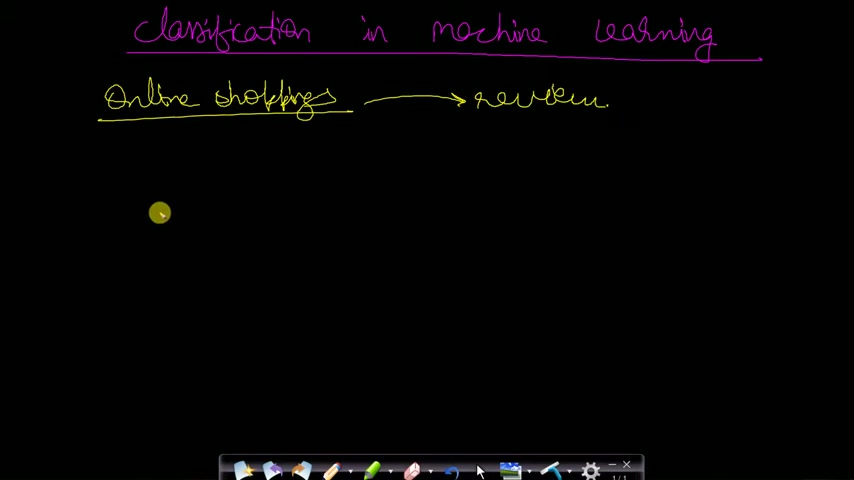
. Imagine an online shopping platform where customers can rate products and leave text reviews.
Suppose you and a friend both purchase the same toothpaste online. After using it, you write a review stating, “The paste was excellent!” and give it a 5-star rating . Your friend, however, has a negative experience and writes, “The paste is unhealthy” and rates it 2 stars.
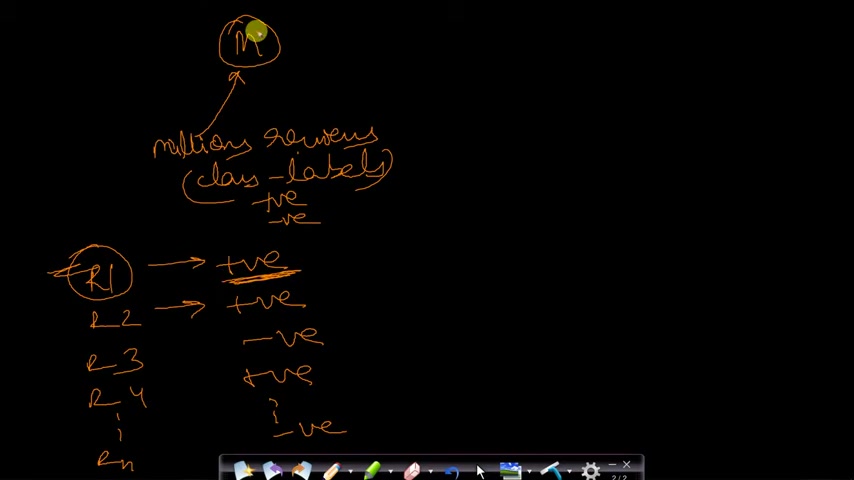
Using this information, how can we automatically categorize these reviews as either positive or negative? This is where classification algorithms come into play.
- Feature Extraction: First, we need to convert the text reviews into numerical features that the algorithm can understand. This can be done using techniques like term frequency-inverse document frequency (TF-IDF) or WORD embeddings .
- Model Training: Next, we train a classification model using these features along with their corresponding labels (positive or negative). The model learns the relationship between the words in the reviews and their sentiment.
- Prediction: Once the model is trained, we can feed it new, unseen reviews, and it will predict whether they are positive or negative based on what it has learned.
This process allows businesses to automatically analyze customer feedback, identify trends, and make data-driven decisions to improve product quality and customer satisfaction. Classification isn’t just about reviews; it’s a robust tool applicable across many domains.
Diving Deeper: Binary vs. Multi-Class Classification
Binary Classification Explained
Binary classification is perhaps the simplest form of classification, dealing with only two possible outcomes.
Examples include:
- Spam Detection: Classifying emails as spam or not spam.
- Medical Diagnosis: Determining if a patient has a disease (positive) or not (negative).
- Fraud Detection: Identifying transactions as fraudulent or legitimate.
In binary classification, the algorithm learns to differentiate between the two classes based on a set of features. The output is typically a probability score indicating the likelihood of belonging to one of the classes. A threshold is then applied to assign the data point to the appropriate class.
Common Algorithms:
- Logistic Regression: A linear model that predicts the probability of a binary outcome.
- Support Vector Machines (SVM): Finds the optimal hyperplane to separate the two classes.
- Decision Trees: Creates a tree-like structure to classify data based on feature values.
Binary classification is widely used and forms the foundation for more complex classification tasks. It provides a clear and straightforward approach to solving problems with two distinct outcomes.
Multi-Class Classification Explained
Multi-class classification, on the other hand, handles scenarios with more than two possible outcomes . Examples include:
- Image Recognition: Identifying different objects in an image (e.g., cat, dog, bird).
- Document Categorization: Classifying news articles into various topics (e.g., Sports, politics, technology).
- Handwritten Digit Recognition: Identifying digits from 0 to 9.
In multi-class classification, the algorithm learns to distinguish among multiple classes based on their features. The output is typically a probability distribution across all classes, and the data point is assigned to the class with the highest probability.
Common Algorithms:
- Multinomial Logistic Regression: An extension of logistic regression to handle multiple classes.
- Decision Trees: Creates a tree-like structure to classify data based on feature values.
- Random Forests: An ensemble of decision trees that improves accuracy and reduces overfitting.
- Naive Bayes: A probabilistic classifier based on Bayes' theorem.
- Neural Networks: Deep learning models capable of learning complex patterns and relationships for multi-class classification.
Multi-class classification is essential for addressing complex real-world problems with diverse categorical outcomes. The choice of algorithm depends on the nature of the data and the desired level of accuracy.







Most people like

































Report
Please select a reason for reporting
- 13 Reasons to Switch from Snapchat to Text Messaging
- 7 Powerful Speech to Text Apps to Boost Productivity
- 10 Best Speech to Text Tools for Effortless Transcription
- 13 Free Tools to Easily Transcribe Audio to Text
- 15 Surprising Ways Google's Speech-to-Text Boosts Productivity
- 7 Best Free Online Audio to Text Transcription Tools
- 9 Tips to Transcribe Speech to Text Faster and Better
- 13 Best Speech to Text Software for Windows 10 in 2023
- 7 Tips for Choosing the Best Transcriber for Audio to Text
- 11 Reasons Why Dragon Speech-to-Text Apps are Game-Changers
- 6 Secrets to Enhance Your Speech to Text Transcription
- 6 Brilliant Ways to Boost Productivity with Talk-to-Text on Your MacBook
- 6 Ways Transcription Software Converts Audio to Text
- 8 Tips to Transcribe Speech to Text Like a Pro
- 6 Reasons IBM Watson Speech to Text is a Game-Changer
- 14 Powerful Ways Talk-to-Text Improves Your Workflow
- 12 Top Windows Speech-to-Text Software for Efficient Transcription
- 12 Game-Changing Benefits of Apple's Speech to Text Technology
- 9 Powerful Use Cases for AWS Speech to Text Technology
- 10 Easy Steps to Transcribe YouTube Videos to Text
- transcription audio en texte
- online audio transcription
- free audio file transcription
- free ai audio transcription
- audio transcription service
- audio transcription online free
- audio transcription free online
- audio to transcription software
- audio and transcript
- ai audio transcription free
- voice recording to text converter
- translate voice recording to text
- record voice to text
- audio recording to text converter
- voice recording and transcription
- chatgpt voice to text
- gmail voice to text
- speech to text reader
- speech to text ai free
- speech to talk
- How SEO and Marketing Dashboards Empower Agencies to Drive Results
- How to Use AI Tools to Find Internal Linking Opportunities Across a Business Website
- Discover Your Perfect Haircut with AI Hairstyle Apps
- Free Reputation Calculator Tools: How They're Adapting to Score AI Visibility, Not Just Rankings
- Design Professional Flyers for Free on Your Phone
- Best Free Flyer Maker Apps for Android: Design Like a Pro
- How to Know If Your Business Is Ready for an AI Customer Service Agent
- Revolutionizing Storytelling: From Novels to Screenplays with AI
- Create Engaging Animated Explainer Videos with a Free AI Tool
- Stop Multi-Subscribing: Benchmark Top AI Visual Models in One Canvas
- ASOMobile Helps Teams Benchmark App Store Screenshots Against Competitors
- How to Match LMS Software With Your Organization's Training Plan
- Revolutionizing Email Marketing Agency with AI
- How to Convert BTC to HNT
- Unleashing the Power of AI: Cognizant's Roadmap for Transformation
- Frame to Video Review: A Practical Look at Turning Two Still Frames Into Motion
- NVIDIA NIM: Revolutionizing Supply Chain Data Analysis with AI
- Top AI Tools That Help Brands Stand Out Offline (Not Just Online)
- Top 5 Cold Email Software: Maximize Your Outreach in 2025
- Magic School AI: Revolutionizing Quiz & Assessment Generation

Copyright ©2026 toolify